Una marca DTC sustituye la iguala de un estudio fotográfico con flujos de catálogo y lifestyle con IA
Unos 400 SKU, ciclos de lanzamiento de seis semanas reducidos a días, iguala eliminada y una conversión de fichas que suele subir con las nuevas imágenes lifestyle.
Empieza gratis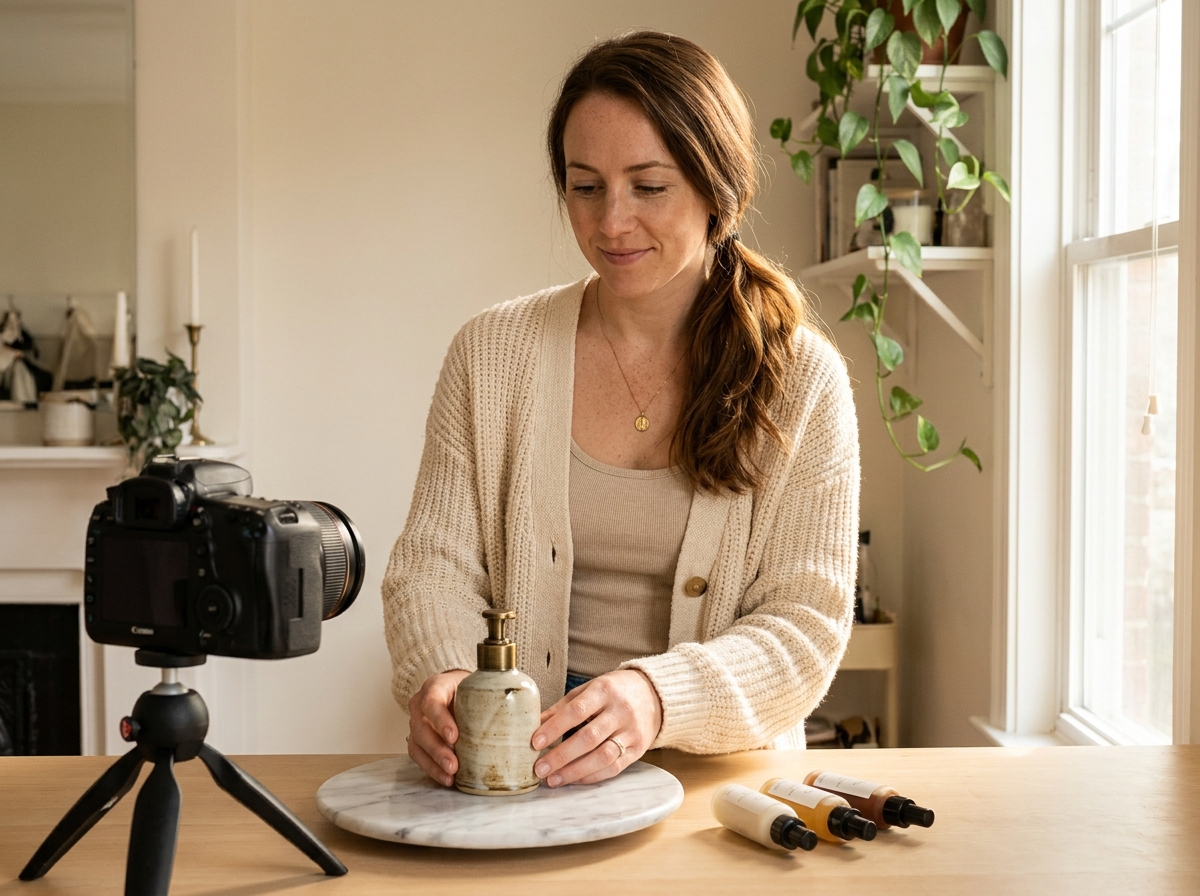
El perfil de un vistazo
Marca DTC de artículos para el hogar sin atribución. Representa los patrones habituales entre las marcas con las que trabajamos.
Tamaño y categoría de la marca
Marca DTC de artículos para el hogar en fase de crecimiento, con unos 400 SKU activos entre mobiliario, decoración y cápsulas de temporada. Equipo creativo interno de unas 5 personas. Vende directamente en Shopify y a través de fichas en los marketplaces de Amazon y Walmart.
Estructura de costes antes de la IA
Iguala con un estudio fotográfico por un gasto mensual habitual de cuatro o cinco cifras. Tarifa diaria de estilista por sesión. Ciclos de seis semanas desde la muestra hasta la ficha publicada. Un circuito de aprobación en los marketplaces con varios reenvíos por SKU.
La presión que fuerza la decisión
El coste de fotografía crece más rápido que los ingresos. Las desviaciones respecto a las especificaciones de cada marketplace provocan rechazos y reenvíos. El ritmo de nuevas colecciones no alcanza al de la competencia. El director financiero pregunta por qué el gasto creativo sigue subiendo mientras bajan las facturas de agencia.
Lo que quería el equipo
Mantener el realismo de las fotos de producto. Recortar el tiempo de lanzamiento lo suficiente para sacar dos colecciones más al año. Sustituir las jornadas de estilismo por flujos repetibles. Aprobar a la primera en Amazon y Walmart con sus reglas de especificación.
El despliegue en 90 días
Las cinco fases que el equipo suele recorrer desde el arranque hasta la producción madura.
Resultados habituales (según referencias del sector)
Seis categorías de resultados en las que la producción con IA suele cambiar los números de una marca DTC de este tamaño.
Ciclos de lanzamiento más cortos
El recorrido de la muestra a la ficha suele pasar de seis semanas (método tradicional) a menos de una (con IA), en línea con las referencias del sector para marcas que concentran la producción de catálogo en una sola plataforma.
Fin de la iguala fotográfica
Las igualas de estudio, con ese gasto mensual habitual de cuatro o cinco cifras, se pueden eliminar en cuanto los flujos de catálogo masivo superan los 50 SKU por semana. El presupuesto liberado suele reinvertirse en campañas de marca.
Mejora de la conversión de las fichas
Las nuevas imágenes lifestyle suelen rendir igual o mejor que las sesiones de estudio en la conversión de la ficha. Las referencias del sector muestran subidas de conversión de un solo dígito porcentual, pero relevantes, cuando las bibliotecas lifestyle sustituyen a las cabeceras sobre fondo blanco.
Aprobación a la primera en marketplaces
Los flujos con las especificaciones ya integradas suelen elevar de forma notable la tasa de aprobación a la primera frente a la fotografía manual. Menos ciclos de rechazo significan facturar antes cada SKU lanzado.
Cambio en la composición del equipo
La plantilla suele mantenerse; lo que cambia es su composición, que se desplaza hacia la dirección creativa sénior y las campañas de marca, y se aleja de la logística fotográfica por SKU.
Ritmo anual de colecciones
La mayoría de las marcas DTC de artículos para el hogar de este tamaño duplican su ritmo anual de colecciones (de dos a cuatro cápsulas más al año) en cuanto el ciclo de lanzamiento baja a una semana.
Preguntas frecuentes
Lo que preguntan los responsables creativos de las marcas DTC antes de adoptar este flujo.
¿La foto de producto se conserva de verdad?
Sí. Lifestyle Scene Builder integra tu foto real de producto en un contexto generado; solo el entorno se crea con IA. Las cabeceras de ficha y las fotos principales de catálogo siguen siendo fotografía real de producto.
¿Amazon y Walmart aceptarán las nuevas imágenes?
Sí, siempre que se generen según sus especificaciones. Bulk Catalog Processor integra en el flujo las reglas de imagen de Amazon, Walmart, eBay y Shopify. La aprobación a la primera suele mejorar frente a la fotografía manual.
¿Y la coherencia de marca con cientos de SKU?
El brand kit se fija a nivel de flujo. Colores, tipografía y patrones de composición se mantienen en cada SKU del lote. Cualquier desviación se detecta en el control de calidad creativo antes de publicar nada.
¿Cuánto tarda en poder cancelarse la iguala?
La mayoría de las marcas mantienen la iguala los primeros 60 o 90 días como red de seguridad mientras el flujo madura. Cuando dos lanzamientos seguidos salen limpios con el flujo de IA, la iguala suele cancelarse a cierre de trimestre.
¿Qué pasa con el fotógrafo interno, si lo tenemos?
Los fotógrafos de producto sénior suelen dar el salto a la dirección de arte y a las campañas de marca. El flujo necesita un ojo creativo que sepa qué hace buena a una foto de catálogo; ese criterio gana valor, no lo pierde.
¿Cómo funciona esto en marcas de moda o textil?
La moda es más difícil porque el producto se lleva puesto. Para las marcas de moda aplican los flujos Fashion Factory y Virtual Try-On. Este escenario está pensado para categorías de producto que no se visten.
¿Y los ciclos de cápsulas de temporada?
Las cápsulas de temporada pasan a ser una tarea por lotes en vez de una sesión por temporada. Muchas marcas DTC resuelven cada cápsula en una sola sesión por lotes de un día, en lugar de repartir la fotografía a lo largo de semanas.
¿Hay una prueba gratuita?
Sí. El plan Free permite una primera ejecución de Bulk Catalog Processor. Las marcas DTC en fase de crecimiento suelen pasar a Pro o Premium por la asignación de créditos que exige el volumen de catálogo.
Monta este mismo flujo con tu catálogo esta semana
Empieza gratis con créditos y lanza un piloto de 20 SKU con los flujos Bulk Catalog Processor y Lifestyle Scene Builder. El piloto te dirá si los números de la iguala del estudio cuadran igual en tu marca.
Empieza gratis
40% de descuentoen todos los planes anuales
Pásate al plan anual antes de irte y ahorra un 40% todo el año.
- Los mejores modelos de imagen, vídeo y avatar incluidos.
- Un solo espacio de trabajo para toda tu campaña.
- 7 días de prueba gratis. Cancela cuando quieras.