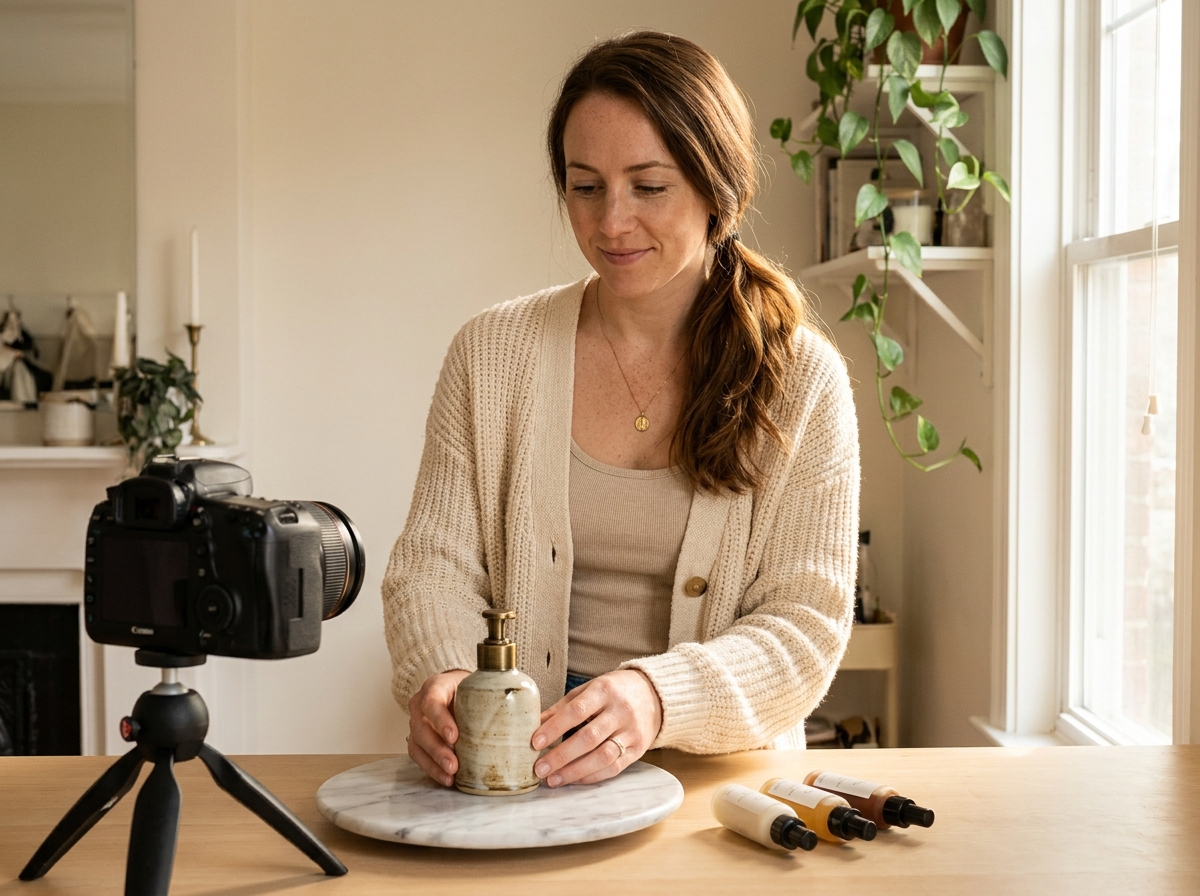
DTC brand replaces a studio photography retainer with AI catalog plus lifestyle workflows

Roughly 400 SKUs, six-week launch cycles cut to days, retainer eliminated, listing conversion typically lifts on the new lifestyle imagery.

Start free

The persona at a glance

Non-attributed DTC home goods brand. Representative of typical patterns across the brands we work with.

400Roughly SKUs, six-week launch cycles cut to days, retainer eliminated,...
5.Mid-stage DTC home goods brand, roughly 400 active SKUs across furniture,...
20First SKUs processed through rescue and standardisation

Brand size and category

Mid-stage DTC home goods brand, roughly 400 active SKUs across furniture, decor, and seasonal capsules. In-house creative team of about 5. Sells direct via Shopify plus Amazon and Walmart marketplace listings.

Pre-AI baseline cost structure

Studio photography retainer at a typical four to five figure monthly spend. Stylist day rate per shoot. Six-week launch cycles from sample to listing. Marketplace approval pipeline requiring multiple resubmissions per SKU.

The decision pressure

Photography cost rising faster than revenue. Marketplace spec drift causing rejection-and-resubmit cycles. New collection cadence too slow to match competitor refresh rates. CFO asking why creative spend keeps rising even as agency invoices fell.

What the team wanted

Maintain product photo realism. Cut launch time enough to ship two extra collections per year. Replace per-shoot stylist days with repeatable workflows. Pass marketplace approval on first submission across Amazon and Walmart spec rules.

The 90-day rollout

Five phases the team typically runs from kickoff to mature production.

1
Weeks 1-2: Workflow setup
Brand kit locked into the Bulk Catalog Processor workflow. Marketplace spec presets selected (Amazon, Walmart, Shopify). First 20 SKUs processed through rescue and standardisation.
2
Weeks 3-4: Lifestyle library buildout
Lifestyle Scene Builder workflow produces 5 to 10 lifestyle context shots per hero SKU. Real product photos composited into generated kitchen, living, and seasonal contexts.
3
Weeks 5-6: A-plus content and PDP refresh
A+ Content Infographic workflow ships full Amazon A+ module sets per top SKU. Shopify PDP heroes refreshed with new lifestyle imagery. First conversion comparisons against legacy imagery.
4
Weeks 7-10: New collection launches at the new cadence
Next collection launches at four-day cycle from sample to listing. Marketplace approval first-pass. Studio retainer cancelled at quarter end after the new workflow has proven on two consecutive launches.
5
Weeks 11-12: Steady-state production and audit
Production runs at 6 to 10 SKUs per day through the bulk workflow. Quarterly conversion review. Team reassigns recovered creative hours to brand campaign work that the studio cycle had crowded out.

Typical outcomes (anchored to sourced industry benchmarks)

Six outcome categories where AI-augmented production typically shifts the math for DTC brands at this scale.

Launch cycle compression

Sample-to-listing typically compresses from six weeks (traditional) to under a week (AI-augmented), matching industry benchmarks for brands that consolidate catalog production onto a single platform.

Photography retainer elimination

Studio retainers in the typical four to five figure monthly range become eliminable once bulk catalog workflows reach 50+ SKUs per week. Recovered budget typically reinvests in brand campaign work.

Listing conversion lift

Refreshed lifestyle imagery typically tests as well as or better than studio shoots on PDP conversion. Industry benchmarks show meaningful single-digit-percent conversion lifts when lifestyle libraries replace bare white-background hero imagery.

Marketplace approval first-pass rate

Spec-baked workflows typically lift first-pass approval rates substantially over manual photography. Fewer rejection cycles means faster time to revenue per launched SKU.

Team composition shift

Headcount typically stable; composition shifts toward senior creative direction and brand campaign work, away from per-SKU photography logistics.

Annual collection cadence

Most DTC home goods brands at this size double their annual collection cadence (two to four extra capsules per year) once launch cycle drops to a week.

Frequently asked questions

What in-house DTC creative leads ask before adopting this workflow.

Yes. The Lifestyle Scene Builder composites your real product photo into a generated context; only the surrounding context is AI-generated. PDP heroes and primary catalog shots stay real product photography.

Yes when generated to spec. The Bulk Catalog Processor bakes Amazon, Walmart, eBay, and Shopify image rules into the workflow. First-pass approval rates typically lift over manual photography.

Brand kit locks at the workflow level. Colors, type, layout patterns persist across every SKU in the batch. Brand drift catches in senior creative QA before any output ships.

Most brands keep the retainer for the first 60 to 90 days as fallback while the workflow matures. Once two consecutive launches ship cleanly through the AI workflow, the retainer typically cancels at quarter end.

Senior product photographers typically pivot to art direction and brand campaign work. The workflow needs a creative eye for what makes a good catalog shot; that judgment becomes more valuable, not less.

Apparel is harder because the product is worn. For fashion brands the Fashion Factory and Virtual Try-On workflows apply. This scenario is built for non-worn product categories.

Seasonal capsules become a batch task instead of a per-season shoot. Many DTC brands run one batch session per capsule lasting a single focused day rather than spreading photography across weeks.

Yes. The Free plan supports a starter Bulk Catalog Processor run. Mid-stage DTC brands typically move to Pro or Premium for credit allocation across catalog scale.

Build the same workflow on your catalog this week

Start free with credits and run a 20-SKU pilot through the Bulk Catalog Processor and Lifestyle Scene Builder workflows. The pilot informs whether the studio retainer math works the same for your brand.

Start free
×