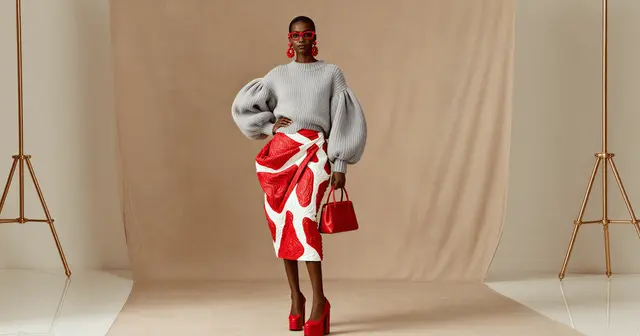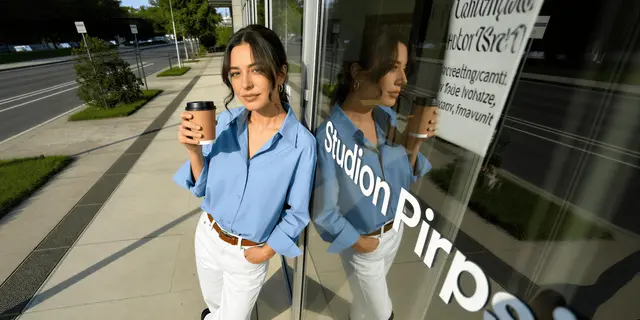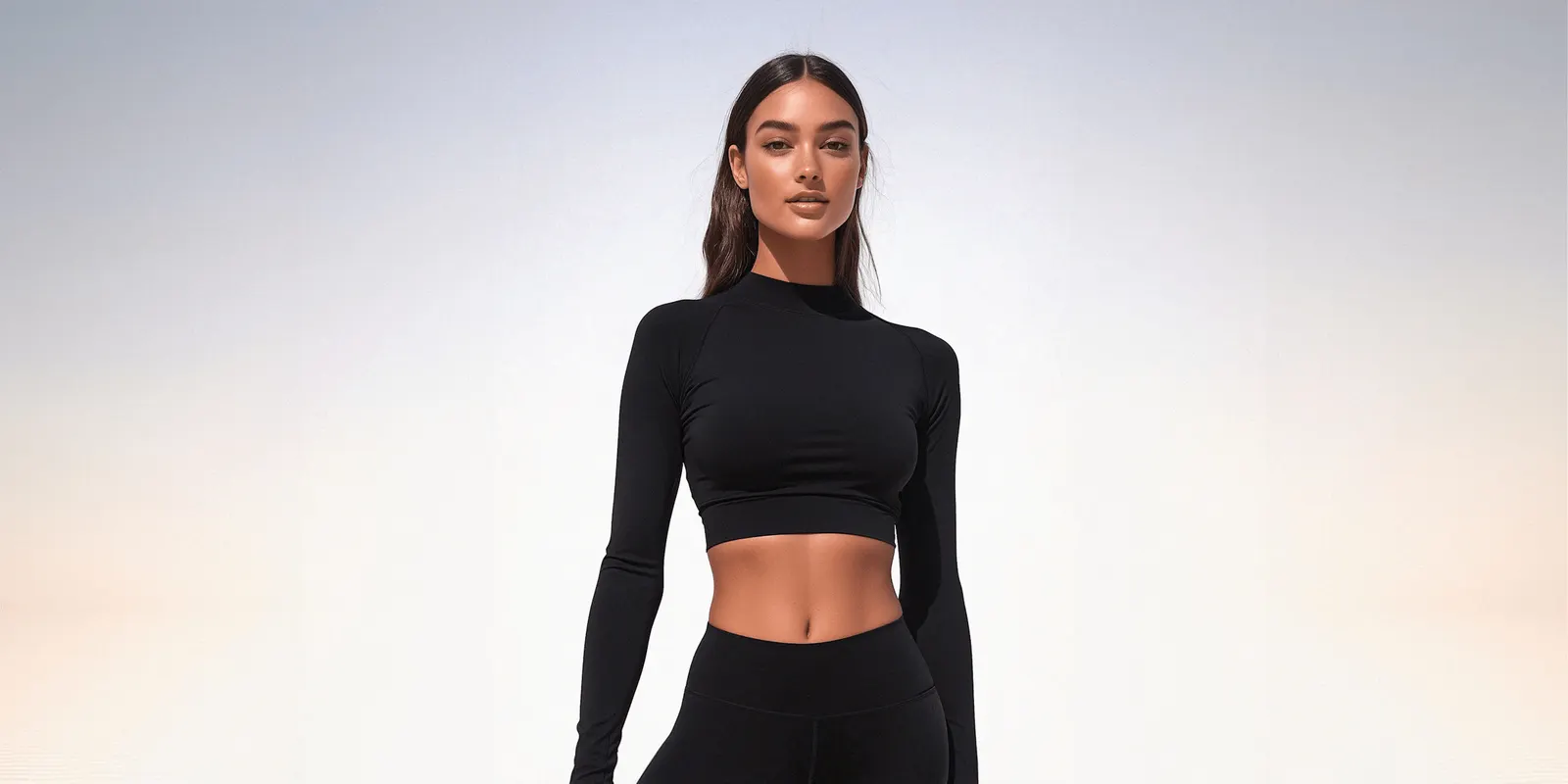
AI dress photography turns one photo of a dress into on-model and scene imagery using a generative model. It works well for campaign frames: backgrounds, colourways, crops and lifestyle scenes built off a base capture. It works badly for the frames a marketplace specifies, because Amazon’s clothing rule fixes the pose, the background and the fill, and wants an AI-person tag written into the file before upload.
Most guides in this category skip both halves of that. They open with a studio day rate, put a cost table against it, then list a dozen scenic locations: a terrace, a garden, a coastal balcony, golden hour on sand. Every one of those is a campaign frame. None of them can be a dress listing’s main image, and the rule that says so has been published on Seller Central the whole time.
This guide runs in the order the work happens. The platform rule first, because it decides the compulsory frames before you write a prompt. Then the split between what you have to capture and what you can multiply. Then the honest boundary on what a model does and does not know about a dress, and the tag you write into the file on the way out.
Key Takeaways
- Amazon’s clothing main image is a fixed brief, not a style choice. On a model, pure white at RGB 255-255-255, frontal, nothing clipped, roughly 3:4 and 85% of the frame filled (Amazon Seller Central, Image guidelines for clothing, accessed August 2026).
- The same page rules out most editorial poses. Models must stand, not kneel, lean or lie down. Eyes open, mouth closed, arms along the body, legs not spread. Visible mannequins, hangers and holders are prohibited, and so are graphical representations, because only photos are allowed in the main slot.
- Amazon requires a tag on AI people. Media containing an AI-generated person must carry the keyword contains-synthetic-performer in the XMP dc:subject field before you upload it (Amazon Seller Central, How to tag media that contains an AI-generated person, accessed August 2026).
- Split the set in two. Compulsory frames are specified by the channel and need a verified base capture. Campaign frames are yours to choose, and that is where generation pays.
- Generation multiplies scenes, not facts. Backgrounds, colourways, crop ratios and lifestyle context all derive cleanly from one good frame. Hem drop on a specific body, fabric weight and how a bias cut falls are properties of the physical garment.
- In the EU the disclosure question is live. Article 50 transparency obligations have applied since 2 August 2026, and a photoreal generated person sits inside the deepfake definition rather than outside it.
- Check the tier before you plan the shoot. DesignerBox grants a commercial license from Pro up, and try-on clothes from Premium up.
What is AI dress photography?
AI dress photography is the practice of generating a dress’s product and campaign imagery from an existing capture rather than shooting each frame. You supply a flat, hanger, mannequin or on-model photo of the real garment. The model holds the dress fixed and generates what surrounds it: the person, the pose, the background, the light.
The useful distinction is what stays locked. A general text-to-image prompt invents a dress. A dress photography workflow treats your sample photo as a reference it has to preserve, so the print, the neckline and the seam placement come out as yours.
That distinction sets the whole boundary of the technique. Anything outside the garment is generated and cheap to vary. Anything about the garment itself was decided by the capture you fed in.
Why a dress is the hardest garment to generate on a model
A t-shirt is a colour, a fit and a print, and a flat laydown covers most of what a buyer checks. A dress fails that test on four counts at once.
Silhouette only exists when something is inside the garment. Drape only reads when the fabric hangs under its own weight. Colour has to survive both the capture and the generation. And the hem lands somewhere on a body, which is the single most-checked fact on a dress page and the one a flat photo cannot show.
Three of those four are recoverable from a good base frame. The hem is not, because it is a relationship between a garment and a specific body rather than a property of an image. That asymmetry is the reason a dress set has to be planned in two piles instead of one. The hem decides a dress shot list before the camera comes out, and it decides the prompt list too.
Amazon’s clothing rule sets the frame before you prompt
Amazon publishes the main-image brief for clothing, and it is more specific than most brands realise. The main image must be photographed on a model, on a pure white background at hex #FFFFFF, showing a frontal view with no part of the product clipped, at an aspect ratio close to 3:4 with 85% of the image area occupied.
The prohibitions matter more than the requirements. Backgrounds in any colour other than pure white are out. So are sketches, drawings and graphical representations, because only photos are allowed. So are borders, logos, watermarks and text. So is any visible mannequin, hanger or holder. Poses are constrained too: the model has to be standing, legs not spread, eyes open, mouth closed, arms along the body, with no suggestive expression and no distracting accessories such as large earrings, bags or sunglasses.
Read that list against a typical AI dress scene library. A terrace at midday, a walking street shot, golden hour on sand, a model laughing over her shoulder. Every one of those fails the main slot on background alone, and several fail again on pose. They are good campaign frames filed in the wrong slot.
The alternates are where they belong. Amazon allows up to eight alternate images per SKU, explicitly to clarify use, detail, fabric and cut, and it puts no white-background rule on them. That is a large, legitimate surface for generated scene work, and it is the one worth filling.
Amazon wants an AI-generated person tagged in the file
If your image or video contains an AI-generated person, Amazon requires you to add the keyword contains-synthetic-performer to the XMP dc:subject field before upload. The stated reason is compliance with jurisdictions that require disclosure of AI-generated people in product media. Amazon documents three ways to write it: the Keywords pane in Preview on macOS, the Tags field on the Details tab in Windows File Explorer, and exiftool on the command line.
Two details are easy to get wrong. On Windows, the Subject field and the Tags field write to different metadata locations, and only Tags is correct. With exiftool, the append operator adds the keyword without overwriting existing ones, but running it twice writes it twice.
Build the tagging step into the export, not into someone’s memory. A generated on-model dress frame that reaches a listing untagged is a compliance miss that no visual QA pass will catch, because there is nothing to see.
The EU adds a second disclosure question
Article 50 of the EU AI Act has applied since 2 August 2026. It puts two duties in play: the model provider marks outputs in a machine-readable format, and the deployer discloses when content is a deep fake. A brand generating on-model imagery is the deployer.
The definition is the part that catches fashion work. A deep fake is AI-generated image content that resembles existing persons, objects, places, entities or events and would falsely appear authentic (European Commission, EU Icons for labelling AI-generated content, accessed August 2026). A photoreal generated model in a studio that looks like a studio meets that reading, and the Commission declined to narrow it to people who exist.
The Commission publishes an optional icon set for the visible half of the disclosure. Using the icons is voluntary. The obligation is not. The full jurisdictional picture, including the French and Norwegian retouching notices and the US position, sits in the guide to labelling AI-generated fashion images.
Split the set: compulsory frames and campaign frames
Once both rules are on the table, the dress set sorts itself.
| Frame | Pile | Why |
|---|---|---|
| Main listing image | Compulsory | Pose, background, fill and crop are specified by the channel |
| Front, back, side detail | Compulsory | Buyers check zip, tie, cutout and closure before they buy |
| Fabric and texture close-up | Compulsory | Weave, sheen and weight are properties of the real garment |
| Colourway variants | Campaign | Derives from a verified base frame |
| Location and lifestyle scenes | Campaign | Nothing about the garment changes |
| Crop ratios for paid social | Campaign | Reframing, not reshooting |
| Seasonal and campaign restyles | Campaign | The dress is fixed, the world around it is not |
Compulsory frames need a verified capture behind them, because a mistake there is a wrong fact on a product page. Campaign frames need a good base frame and nothing else, because a mistake there is a scene you regenerate.
The arithmetic that makes the technique worth it lives entirely in the second column. A dress reshot from scratch for every colourway and every seasonal campaign is the line item that scales badly, and it is the one worth removing first.
What generation reliably does with a dress
Everything in the campaign column is a version of one job: hold the garment, change the world around it. Backgrounds and locations, colourways off a verified base, crop ratios for paid social, seasonal restyles. None of those asserts anything new about the dress, which is why they are safe to multiply.
The campaign pile is also where lookbook frames live, and a lookbook has its own shot list that a product page cannot reuse. The fashion lookbook shot list covers what separates the two.
The variable that repays the most planning is model consistency. Six dresses generated as six different people read as six brands, and a drop only reads as a campaign if the identity holds across it. The mechanics are in keeping one AI model consistent across a set.
For the underlying model choice, Kontext Multi is built for edit consistency across a set, while Nano Banana Pro and Seedream 5 cover generation. The side-by-side on one product brief sits at best AI image model for product photography.
What no model can tell you about a dress
Three facts are properties of a physical garment on a physical body, and no amount of prompting produces them.
Where the hem lands on a given size. A midi on a 5’4” body is a knee-length on someone taller. Generated frames render a plausible hem, not your hem.
How the fabric weighs. Drape is a function of gsm, weave and cut. A generated frame can show a convincing hang the real garment does not have, and a shopper finds out on delivery.
How a bias cut falls. Bias is the hardest case, because the whole point of the cut is that the fabric behaves unusually under its own weight.
Overstate any of the three and you are making a fit claim you cannot support, in the category where fit is already the return reason. The frame-by-frame version of which shots carry a claim about the garment is in the dress photography shot list, and if fit accuracy is the specific question, how close virtual try-on gets on fit covers what try-on does and does not resolve.
A production order that survives both checks
- Capture the garment once, properly. Steamed, even light, no bunching at the shoulder. Flat on a clean surface or on a mannequin front. The generated set inherits every flaw in this frame.
- Shoot or verify the compulsory frames. Main image to the channel’s spec, plus front, back, side and a fabric close-up. Back detail matters more on dresses than on any other garment, because that is where the zip, tie and cutout live.
- Lock one model identity for the drop. Decide body, skin tone, age range and pose energy once, then reuse it. A saved fashion model persona keeps it stable across SKUs.
- Generate the campaign frames off the verified base. Colourways, locations, seasonal restyles, social crops. This is the pile that multiplies.
- Tag before export. Write contains-synthetic-performer into any file containing a generated person, and apply your EU disclosure where the content is published in the Union.
- Save the sequence as a workflow. The second dress should not need the first dress’s decisions made again. The fashion OOTD workflow is the reusable version of steps 3 to 5.
What it costs,
Two things decide whether this fits your operation, and neither is the per-image price.
The first is the tier gate. DesignerBox grants a commercial license from Pro, at $35 a month for 1,000 credits, and try-on clothes from Premium, at $75 a month for 2,500 credits. A brand putting generated on-model dress imagery on a live PDP needs Pro at minimum for the license, and Premium if the workflow runs through try-on rather than scene generation. Basic at $15 a month for 500 credits is a testing tier here, not a production one.
The second is that image work is the cheap operation and video is not. Per-image credit rates vary by model, so check the current rate on pricing before you plan a catalogue against it. Video is priced per second of output and will dominate a budget if you add it without doing the arithmetic first.
The free plan carries 112 credits, enough to run one dress through a base capture and a handful of campaign frames before you commit. Model Studio is where the on-model half lives, and Outfit to Image is the single-purpose app if you only want the garment on a person. Starting from a flat photo, putting clothes on a model with AI walks the base step.
FAQ
Can I use an AI-generated dress photo as my Amazon main image?
Only if it meets the clothing main-image spec, and most generated scene work does not. The main image has to be on a model, on a pure white background at RGB 255-255-255, frontal, unclipped, close to 3:4 with 85% fill, with the model standing and arms along the body. If the frame satisfies all of that, tag it with contains-synthetic-performer before upload.
Does AI dress photography preserve the actual garment?
It preserves what you photograph. Print, neckline, seam placement and closure carry through from the base capture. Hem drop on a specific body, fabric weight and bias behaviour do not, because those are properties of the physical garment rather than of the image.
What photo of the dress should I upload to start?
One clean, steamed capture in even light. Flat on a bed, on a hanger against a plain wall, or a mannequin front all work. Avoid shadow-heavy angles and fabric bunched at the shoulder, because the generated set inherits both.
Do I have to disclose that a dress model is AI-generated?
On Amazon, yes, via the contains-synthetic-performer metadata keyword. In the EU, Article 50 disclosure applies to deployers where the content is a deep fake, and the Commission’s reading places photoreal generated people inside that definition rather than outside it.
How many frames does a dress listing need?
A main image plus front, back, side and a fabric close-up covers the compulsory set. Amazon allows up to eight alternates per SKU, which is where lifestyle and scene frames belong. Back detail earns its slot on a dress more than on almost any other garment.
Is a ghost mannequin shot acceptable for a dress?
Not in the Amazon main slot for adult clothing, because visible mannequins, hangers and holders are prohibited there and the main image must be on a model. Ghost mannequin frames belong in the alternates, where they are a clean way to show cut and interior finish.
Can I generate a whole collection from one model?
Yes, and you should. Locking a single model identity across a drop is what makes the frames read as one campaign. Six dresses generated as six different people read as six brands.
Sources
- Main-image requirements for clothing, the prohibited-image list, pose constraints and the eight-alternate allowance: Amazon Seller Central, Image guidelines for clothing, accessed August 2026
- The contains-synthetic-performer XMP keyword, the stated compliance rationale and the macOS, Windows and exiftool procedures: Amazon Seller Central, How to tag media that contains an AI-generated person, accessed August 2026
- The deep fake definition, the Article 50(4) deployer disclosure duty and the optional EU icon set: European Commission, EU Icons for labelling AI-generated content, last updated 10 August 2026
- Article 50 applicability from 2 August 2026 and the provider and deployer split: European Commission, Guidelines on transparency obligations, accessed August 2026
- DesignerBox plan allocations, the commercial-license gate at Pro and the try-on gate at Premium: DesignerBox product brief, August 2026
Platform requirements verified from Amazon Seller Central and EU obligations from the European Commission as of August 2026. Policy in this area moves quickly and this is not legal advice. Individual results vary.