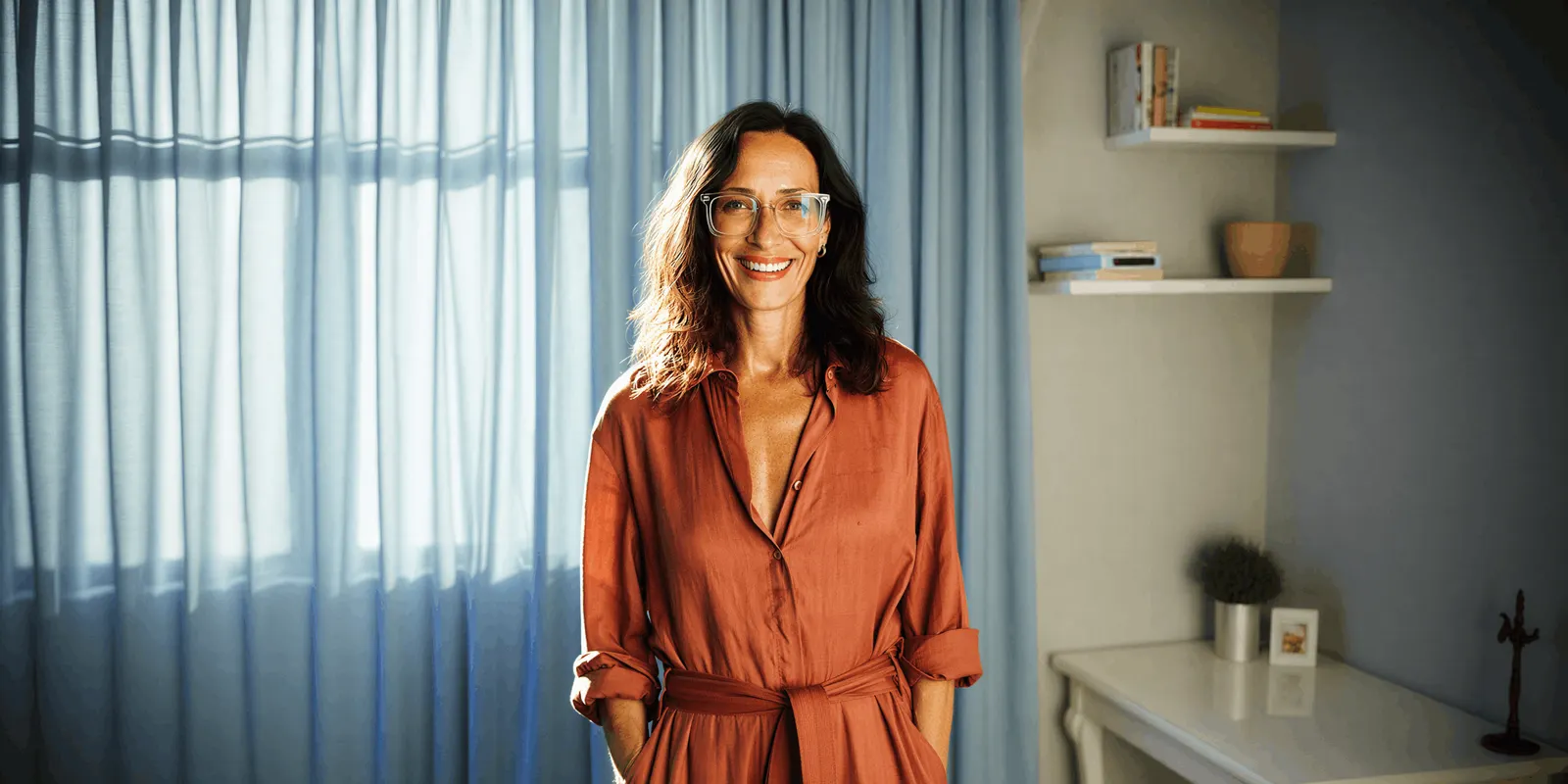
Dress photography is the set of images that prove a dress’s silhouette, drape, color and hem length before a shopper can touch it. The hem decides the shot list. Amazon’s Spring 2021 clothing guide files dresses under its full-length crop class. Amazon marks that guide as informational. The class is recommended for products that fall at or below the knee. Amazon’s current clothing guide asks for the whole product in a main image, so the frame is settled before you pick a lens. Everything after that is drape and color.
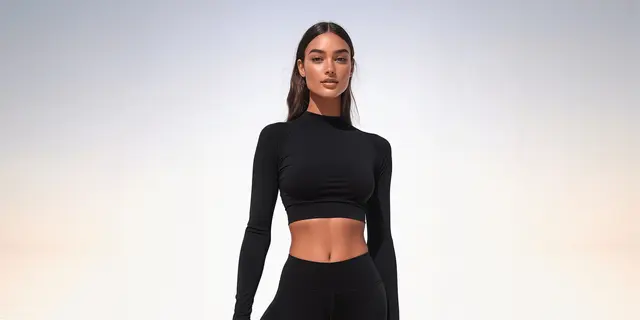
A three-quarter crop at mid-thigh flatters the dress but leaves the hem out of the frame. Amazon’s current clothing guide does not accept that in a main image. The hero image at the top of this page is a good photograph of a dress and a bad product shot, for exactly that reason. The hem is off-frame, so the one fact a dress buyer needs is missing.
This guide starts with the crop class, because a published platform guide decides it. Then it covers the frames a dress needs, the one color number in Amazon’s 2021 guide and the cost per frame rather than per day. It ends with which frames a generative model can make and which it cannot.
Key Takeaways
- Amazon puts dresses in the full-length crop class. Its Spring 2021 apparel imaging guide, which Amazon marks as informational, recommends a full-length image for products falling at or below the knee, and names dresses first in that group (Amazon Seller Imaging Guide: Clothing & Accessories, Spring 2021, read September 2026).
- Amazon’s current clothing guide says the main image “must be photographed on a model” and prohibits a product shown on a visible mannequin, hanger or holder (sellercentral.amazon.com, September 2026). That puts a ghost mannequin in the alternates, not the main slot.
- Amazon’s 2021 guide, marked informational, gives an exact gray value for white balance: 178 to 184. Shoot a gray card, click it with the white balance picker, and check the number. It is the cheapest color control available.
- Fit drives the returns bill. Coresight Research puts the US online apparel return rate at 23.4% in 2025, on an online apparel and footwear market of $201.1bn, roughly $47.1bn of returned goods. Nearly 70% of shoppers who returned clothing bought online cited size and fit (Coresight Research with Alvanon, May 2026, as summarized by Alvanon in partner content on FashionUnited, June 2026).
- We found no primary research that isolates a dress return rate, as of September 2026. The “dresses return at 33 to 38 percent” figures that circulate online cite no primary research we could find. Do not plan on them.
- Generated imagery splits cleanly. Backgrounds, colorways, scene variants and crop formats derive from one good capture. Hem drop on a specific body, fabric weight and how a bias cut falls are properties of the physical garment.
- The compulsory frames need shooting once. A dress reshot for every colorway is the line item that scales badly, and it is the one worth removing first.
What is dress photography?
Dress photography is product photography for a garment whose selling points are all three-dimensional. A dress has a silhouette that only exists when something is inside it, a drape that only reads when the fabric hangs under its own weight, and a hem whose position on the body is a fact shoppers check closely.
That makes it unlike a t-shirt shoot. A tee is a color, a fit and a print, and a flat laydown covers most of it. A dress laid flat tells a shopper almost nothing. The same rectangle of cloth can hang as an A-line or a column, depending on cut and weight, and flat kills both.
So a dress shoot is mostly a geometry problem. Get the crop and the hang right and standard lighting advice works fine. Get them wrong and no amount of retouching recovers the set.
Why a dress is a different shoot from a top
Four facts have to survive the trip from garment to screen, and each one fails in its own way.
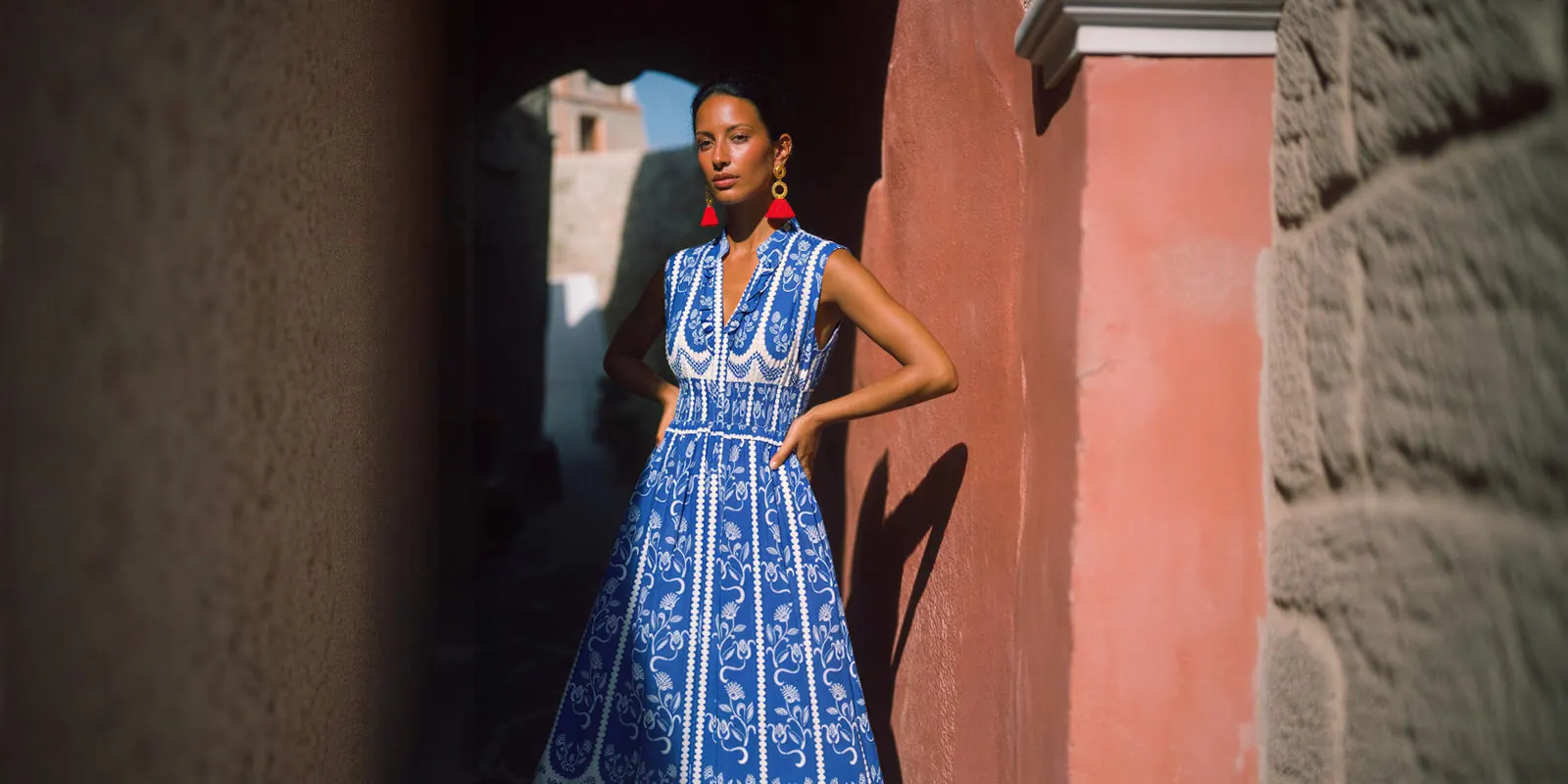
Silhouette. A-line, column, fit-and-flare, wrap, bias. The cut is the reason someone buys, and it disappears the moment the garment is not under tension from a body or a form.
Drape. How the fabric falls when nothing holds it. Viscose, crepe and satin read differently on the same pattern, and a still standing pose flattens the difference.
Color. The photo and the parcel often do not match, and the gap is largest on shades dresses often sell in. Deep black, ivory and saturated red are difficult for cameras and screens.
Hem position. Where the garment ends relative to a knee, on a stated model height. Shoppers look for it, and a mid-thigh crop deletes it.
A tee shoot can lose three of those four and still convert. A dress shoot that loses one generates a support ticket.
The hem decides the crop, and Amazon states it
Amazon’s Spring 2021 Seller Imaging Guide sorts apparel into crop classes by where the garment falls on the body. Amazon still hosts the guide and marks it as informational. The rule is one sentence: a full-length image is recommended for products that fall at or below the knee. Every dress length except one lands there without argument.
| Dress length | Where the hem falls | Crop class in Amazon’s 2021 guide | Main image frame |
|---|---|---|---|
| Mini | Above the knee | Named as a dress, scoped out by hem. See below | Full length, whole dress in frame |
| Midi | At or just below the knee | Full length | Whole dress in frame |
| Maxi | Ankle to floor | Full length | Whole dress in frame |
| Gown, floor length | Floor, often with a train | Full length | Whole dress in frame, train included |
Two consequences follow immediately. The sample on the rail decides the main image frame, before anyone makes a creative call. And the flattering mid-thigh crop belongs in a variant image. It leaves the hem out, and Amazon’s current clothing guide asks for the whole product in the main image. The crop classes for tops and bottoms are laid out in our clothing photography shot list. Bottoms get a waist-down frame that runs below the feet, which creates a problem of their own, covered in why the trouser frame runs below the feet.
Amazon’s current clothing guide is blunt about the body: for clothing, the main image “must be photographed on a model”. That puts a ghost mannequin in the alternate slots rather than the main slot for adult dresses. The technique is still worth shooting, and the full method sits in our ghost mannequin photography guide. It is a supporting frame here, not the hero.
The mini-dress gap in Amazon’s own rule
Read the two halves of the 2021 guide’s rule against each other and a real ambiguity appears. The garment list names dresses flatly, with no length qualifier. The rule text scopes full length to products falling at or below the knee. A mini dress satisfies the first and fails the second.
Amazon does not resolve it. The top-body class it would otherwise fall into names tops, tees, swimsuits and above-the-knee outerwear, and no dress of any length.
The practical answer is to follow the garment list and shoot every dress full length, including the minis. Two reasons. The named list is the more specific instruction. The guide also warns that failing to meet image requirements may result in an ASIN being removed from search. So the conservative read is the cheap one. The second reason is commercial. A mini dress is the length shoppers are least certain about, so a full-length frame with a stated model height does more work there than on a maxi.
Shoot full length, then crop down for the variant slots and for social. Cropping down from a full frame costs nothing. Cropping up does not exist.
The seven frames that cover a dress
Amazon recommends a main image plus at least six more images and one video, and its clothing guide allows up to eight alternate images per parent or child SKU. Seven frames sit inside that and cover every fact above. The image specs for Amazon and the other main sales channels are in our guide to ecommerce product photography.
- Full-length on-model front. The main image. The whole dress in frame, pure white background at RGB 255,255,255, product filling 85% of the frame, at least 1,000 pixels on the longest side to turn on zoom.
- Full-length on-model back. Zips, ties, cut-outs and open backs are purchase decisions, and they are invisible from the front. This frame prevents more tickets than any other alternate.
- Three-quarter or side. Where the silhouette reads. An A-line and a column look similar head-on and nothing alike from 45 degrees.
- Movement. A walk, a turn, or a skirt caught mid-swing. This is the only frame that proves drape rather than describing it, and it is where fabric weight becomes visible.
- Fabric and trim macro. Weave, sheen, print scale, and any button, tie or hardware. Print scale in particular is impossible to judge from a full-length frame at thumbnail size.
- Ghost mannequin or flat laydown. The frame that shows construction with no body interpreting it. The off-model spec in Amazon’s 2021 guide is worth following even off Amazon: shot flat with pins, liner or stuffing, seams used as the symmetry guide, steamed, free of loose threads.
- Scene or editorial. The frame that sells rather than informs. It supplements the six above and never replaces one of them.
Lock one camera height and one crop across the whole range before you start. Twenty dresses shot at twenty distances is what makes a brand’s own grid look like a marketplace, and it is the failure that no individual image reveals. If the drop mixes dresses with separates, sort the rail by hem length before booking anything, because that is what decides how many setups you need. For the off-model half of the set, flat lay photography covers the surface and symmetry rules.
Color: the one number Amazon publishes
Color is the highest-value fix on this page and the least glamorous. A shopper judges color at a glance, and a color that does not match the parcel is a reason to return it.
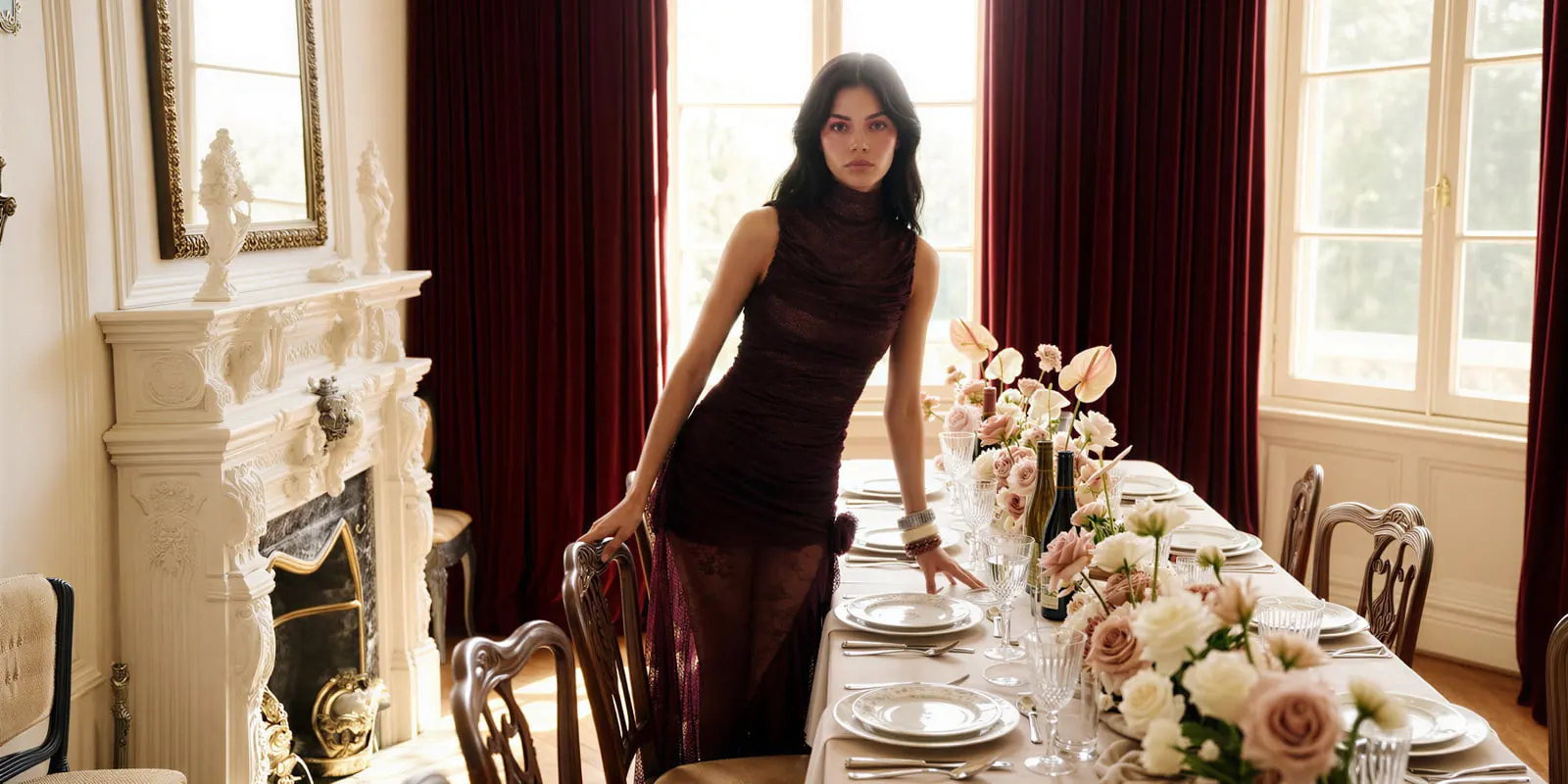
Amazon’s 2021 guide, marked informational, gives an exact target. Shoot a frame with a gray card in it, import it, click the middle gray with the white balance picker, and check the value. The acceptable gray reading is 178 to 184. It gives you a number to check, and it costs one extra frame per lighting setup.
Three rules do most of the rest.
One light source per shoot. Daylight through a window mixed with a warm bulb produces two color temperatures on one garment, and no single white balance corrects both. Turn off the room lights or block the window.
Expose for the dress, not the room. Ivory, cream and white lose highlight detail first, and a clipped highlight has no data left to recover. A slightly dark frame is fixable. A clipped one is a reshoot.
Say it in words when the fabric is difficult. Deep blacks and saturated reds photograph off-true on almost any setup. A line in the description reading “photographs slightly warmer than in person, the true color is a cool oxblood” prevents returns and costs nothing.
If the color in a generated frame drifts, regenerate it against the source photo rather than correcting it in post. Color-correcting a generated image compounds two approximations.
What a dress set costs, per frame not per day
Run the arithmetic on the shot list, because the shot list is what scales.
A 20-piece dress collection at seven frames each is 140 images. Traditionally that is booked as production days, with photographer, fit model, hair and makeup, steaming and styling, studio hire and per-image retouching. Photographer rates by hour, image and day are in our guide to product photography rates.
The line that hurts is the second colorway. The same dress in a new shade needs the same model, the same light and the same crop height, and the same model is not always free. A restock shot three months later with a different fit model produces a grid that no longer matches itself.
Generated images change the unit. DesignerBox has no flat price for an image, because each image model costs a different amount. It shows the cost of a run before you press Run. The model list shows the image models you can pick from per shot. Once you capture the source garment properly, extra colorways, crops and scene variants come from that file instead of a new setup. The saving grows with every variant.
Here are the plan facts. An 8-second video clip costs 40 to 560 credits, depending on the model. AI video and virtual try-on both start on the Premium plan. Uploading your own photos and the commercial license start on the Pro plan. Team features and shared brand kits sit on the Ultra plan. Every plan below Ultra is a single seat. Plans and credits are on the pricing page.
The capture, the on-model frames, the color reference, the brand rules and the finished files sit together in DesignerBox, in one subscription. A restock three months later starts from the file that produced the original set. The workflow reads your brand record on every run. Dress forty then looks like dress one.
Where generated imagery carries a dress set, and where it breaks
The split is whether the frame carries a claim about the physical garment.
Generates reliably. Backgrounds and locations. Colorway variants once the true color is established. Angle coverage around a captured pose. Seasonal and editorial scenes. Crop and format variants for 1:1, 4:5, 9:16 and 16:9. Model appearance variety across a set. These change context, not the product.
Needs a real capture behind it. Hem drop on a stated body. Fabric weight and how it behaves in motion. How a bias cut falls across the hip. Print scale and placement across a seam. Trim, hardware and closure construction. A model that has never seen your fabric produces a plausible version of it, and plausible is a fit misrepresentation in a category where fit is already the return reason.
The measured evidence points the same way. One published controlled experiment generated backgrounds behind products it never modified, then cut the original product back in. In live A/B tests it reported roughly 15% click-through gains against the original images in its first phase, and gains from about 4% to 40% across later experiments. The results were significant at p<0.05, on catalogs where most products were apparel (Czapp, Jani, Domián and Hidasi, RecSys ‘24). That is retargeting creative rather than a product detail page, and background generation rather than on-model generation. Both scopes are worth respecting.
The production order that satisfies both the marketplace spec and the disclosure step is set out in the guide to AI dress photography. The workable pattern is to capture each dress once, properly, then generate outward.
In DesignerBox the source photo drives the set. A model pose set template makes the on-model frames. A virtual try-on template puts a captured garment on a figure. A saved workflow runs the same set on the next drop, with no new brief. The step-by-step version is in our guide on putting clothes on a model with AI. To compare tools for the on-model frames, see the best AI on-model photography tools by product. The dress photography page covers the hem line, the fall of the skirt and the crop for a square slot.
That is where the arithmetic changes shape. Settle the crop, the light, the hem framing and the color reference on one dress. Save those steps as a workflow, then run the same workflow on the next dress. Dress two needs its own capture and its own run. The workflow reads the same settings for the twentieth dress as for the first. That is the thing a restock three months later usually breaks. Start from a template, add your brand and your products, and run it. See the templates.
Disclosure when the model is generated
If a person in your dress imagery is generated rather than photographed, two rules apply, and both took effect in 2026.
Article 50 of the EU AI Act has applied since 2 August 2026. It asks a deployer, usually the brand publishing the content, to disclose a deep fake: realistic AI images, audio or video of people, objects, places or events that could pass as real (European Commission, September 2026). The Commission’s guidelines, published on 20 July 2026, are not binding. They treat realistic AI-generated human avatars or personas as persons. They also say color correction, background replacement for clearly aesthetic purposes and rescaling usually have only a minor effect (European Commission, September 2026). A realistic generated model is the case to check.
New York’s synthetic performer law took effect on 9 June 2026. If you make an ad and you know it contains a synthetic performer, the ad must say so in a way people will notice. The civil penalty is $1,000 for a first violation and $5,000 for each later one (nysenate.gov, September 2026).
Most of a dress set is unaffected. A relit packshot, a swapped background and a flat laydown usually sit outside both rules, as long as the image does not mislead about the dress. The on-model frames are the ones to check. This is general information, not legal advice. Full jurisdictional detail is in our guide on labeling AI-generated fashion images.
FAQ
How many photos does a dress listing need?
Amazon recommends a main image plus at least six more images and one video, and allows up to eight alternate images per clothing SKU. Seven frames cover a dress properly: full-length front, full-length back, three-quarter, movement, fabric macro, off-model laydown, and one scene frame.
Does Amazon require dresses to be photographed on a model?
Amazon’s clothing guide says the main image “must be photographed on a model”, with exceptions for children’s and baby tight-fitting items and for accessories. It also prohibits a product shown on a visible mannequin, hanger or holder. Shoot dresses on-model for the main slot and use ghost mannequin or flat laydown in the alternates.
Where should I crop a dress photo?
Below the hem, with the whole dress in frame. Amazon’s Spring 2021 clothing guide, which Amazon marks as informational, files dresses under its full-length crop class, recommended for any product falling at or below the knee. The same guide shows main images from the nose down. Crop tighter for variant images and social formats. Amazon’s current clothing guide asks for the whole product in the main image, so the hem stays in frame.
What about mini dresses that sit above the knee?
In Amazon’s 2021 clothing guide, the garment list names dresses without a length qualifier, while the rule text scopes full length to garments at or below the knee. The guide does not resolve the conflict. Shoot minis full length anyway. The named list is the more specific instruction, and short lengths are where shoppers are least certain about hem position.
How do I get dress colors accurate?
Use one light source, shoot a gray card, and set white balance from it. Amazon’s 2021 clothing guide, marked informational, gives the target: the acceptable middle gray value is 178 to 184. Expose for the garment rather than the background, because blown highlights on ivory and white cannot be recovered, and describe difficult shades in words on the product page.
Can AI generate dress photos I can list?
Context frames yes, claim frames no. Backgrounds, colorways, angles, scene variants and crop formats generate reliably from one good capture. Hem drop on a specific body, fabric weight, drape in motion and print scale across a seam are properties of the physical garment and need a real photograph behind them.
Do I need to disclose an AI model wearing my dress?
In the EU, likely yes when the person is realistic enough to pass as real. Article 50 of the EU AI Act has applied since 2 August 2026 and usually puts the duty on the brand publishing the image. In New York, if you make an ad and you know it contains a synthetic performer, the ad must say so in a way people will notice, under a law in effect since 9 June 2026. Ordinary background swaps and color correction usually fall outside both.
Sources
- Crop classes, the full-length recommendation for products at or below the knee, the 178 to 184 gray card value and the off-model laydown spec: Amazon Seller Imaging Guide: Clothing & Accessories, Spring 2021, read September 2026. Amazon marks every page of this guide “for informational purposes only”
- The on-model rule for clothing, the whole product in frame, the prohibited main images and the eight alternate images per SKU: Amazon image guidelines for clothing, read September 2026. The 85% frame fill, the RGB 255,255,255 background, the 500 to 10,000 pixel range, zoom at 1,000 pixels and the recommended image count: Amazon product image guide, read September 2026
- US online apparel return rate, market size and the share of returners citing size and fit: Coresight Research with Alvanon, “Shifting the Size and Fit Paradigm”, 19 May 2026. The report page is now titled “Sizing Intelligence: Reducing Apparel Returns”, and the full report is gated. The figures are summarized by Alvanon in partner content on FashionUnited, June 2026, re-read October 2026
- Controlled A/B results on generated product imagery and click-through, majority apparel catalogs: Czapp, Jani, Domián and Hidasi, “Dynamic Product Image Generation and Recommendation at Scale for Personalized E-commerce”, RecSys ‘24, read September 2026
- New York synthetic performer disclosure and penalties: New York General Business Law section 396-b, September 2026
- EU AI Act Article 50 applicability and the deployer disclosure duty: European Commission FAQ on Article 50, read September 2026, and the Commission’s Article 50 guidelines, published 20 July 2026 and not binding
- DesignerBox plans and credits: DesignerBox pricing page (designerbox.ai/pricing), September 2026
Amazon image rules verified from Amazon’s current product image and clothing guides as of September 2026, with the crop classes and the gray card value taken from its Spring 2021 apparel guide, which Amazon marks as informational. Returns data from Coresight Research with Alvanon, May 2026. Disclosure obligations verified from the European Commission’s Article 50 FAQ and guidelines and from nysenate.gov as of September 2026. Policy in this area moves quickly. This is general information, not legal advice. Individual results vary.