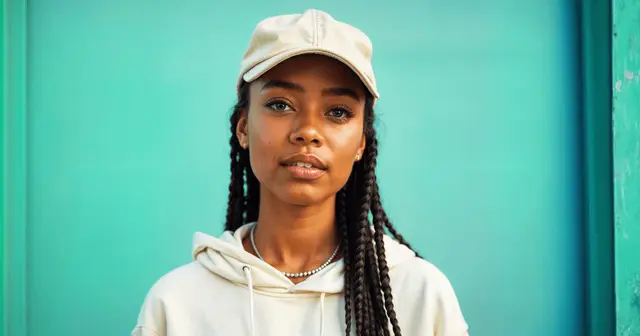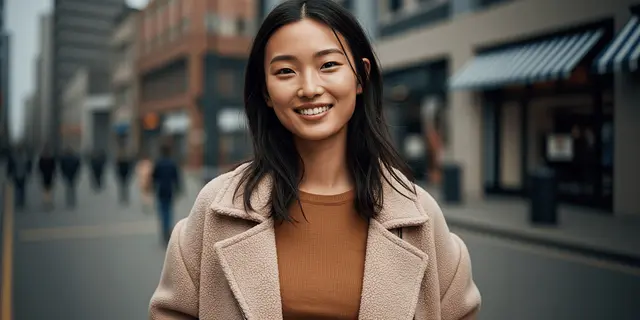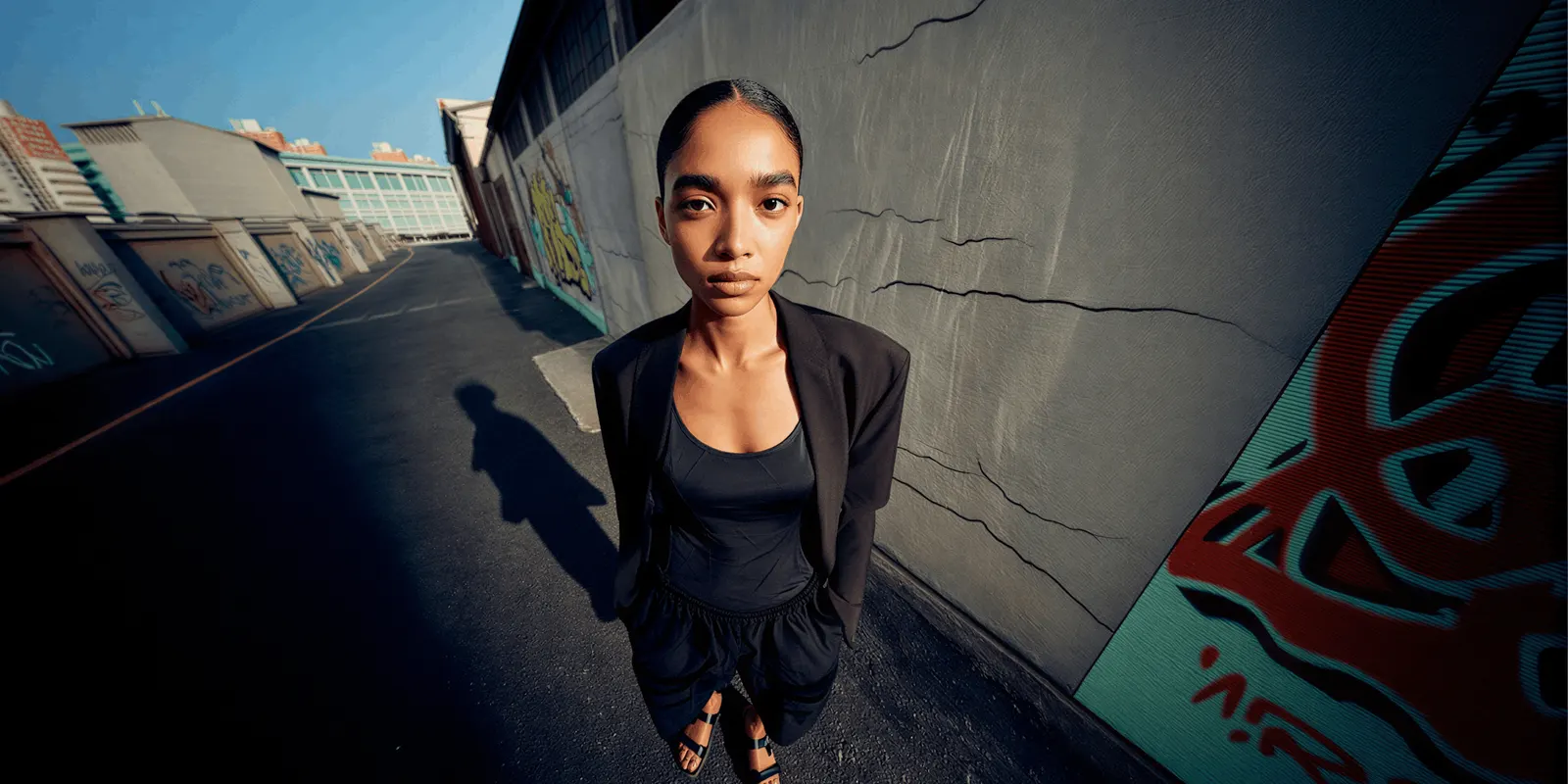
Fashion lookbook photography is the styled, on-model imagery that sells a collection’s mood to buyers, press and shoppers. It is one of three image sets a collection needs, alongside a line sheet and the product page and marketplace frames. The three are not interchangeable. The styling that makes a lookbook frame work is the same styling that makes a product page frame fail.
Most brands find that out late. You book two days, shoot fifteen looks, and come back with ninety beautiful frames. Then the wholesale buyer asks for colourways you did not shoot flat, and the product page needs a plain front view of a jacket that was photographed with the sleeves pushed up. The shoot was not short of images. It was short of the right ones.
This guide sorts the shot list by who reads it. Four readers, four jobs, four different frames. It covers what holds a book together across fifteen looks, where a generated frame stops working, and what the whole thing costs.
Key Takeaways
A lookbook is an inspiration tool, a line sheet is a conversion tool. Buyers use them for different decisions and they need different photography (joor.com, accessed August 2026).
Styling breaks the product page frame. Baymard’s usability testing found that when apparel is tucked, rolled or pinned, shoppers cannot judge length and fit. Every look needs one unstyled worn frame (baymard.com, accessed August 2026).
42% of shoppers try to judge product size from the images alone, and 28% of 60 major retailers give them nothing to judge it against (baymard.com, accessed August 2026).
Continuity beats location variety. One face, one lighting language and one lens register across fifteen looks is what makes a book read as a collection.
Generate the story frames, shoot the spec frames. The line sheet wants the real garment photographed plainly. That is a twenty minute job, not a studio day.
Model diversity is an enhancement on apparel, not a requirement. No shopper in Baymard’s apparel testing was deterred by a lack of body type range, though the finding reverses for cosmetics.
Nobody has proved on-model imagery reduces returns. The evidence for it is comprehension research and one observational marketplace dataset. Treat any vendor claiming a causal returns number as unsourced.
What is fashion lookbook photography?
Fashion lookbook photography is the editorial-style image set a brand produces for each collection, showing garments worn and styled in a chosen setting. It carries mood, silhouette and styling intent rather than ordering detail. Brands send it to wholesale buyers and press, and run it on the site and in paid social. It is refreshed every season, alongside the collection it sells.
JOOR, the B2B wholesale platform used by Selfridges, Dover Street Market and Harvey Nichols, defines a lookbook as an editorial-style catalog that conveys the essence, mood and inspiration behind a collection. A line sheet, by contrast, carries every SKU with wholesale price, suggested retail, size range, colourways, fabric composition and minimum order quantity. Their summary is the cleanest in the industry: the lookbook is your inspiration tool, the line sheet is your conversion tool (joor.com, accessed August 2026).
Why a lookbook and a line sheet are not the same shoot
Both documents go to the same buyer. That is why brands assume one shoot covers both, and it is the most expensive assumption in the seasonal calendar.
A lookbook frame is styled. Sleeves pushed, hem tucked, one piece worn open over another, a scarf doing work the garment cannot do alone. That styling is the point. It shows the buyer how the collection is meant to sit together on a floor.
A line sheet frame has the opposite job. The buyer is comparing your sheet against four other brands’ sheets and needs to see construction, proportion and colourway without interpretation. Wholesale guidance is consistent that flat lay or ghost mannequin imagery works better here, because buyers need to see the product clearly rather than styled on a body (kobolabs.io, accessed August 2026).
Run one shoot for both and you get a book where every colourway is missing and every hemline is ambiguous. Run them as two passes and the second one costs almost nothing, because it is a garment on a table under a window.
Who reads a lookbook, and what each one needs to see
Four readers, and each is deciding something different. The shot list falls out of the decisions, not out of the location list.
| Reader | What they are deciding | The frame that answers it | Styling |
|---|---|---|---|
| Wholesale buyer | Does this collection fit my floor and my customer | Full look head to toe, grouped by story block | Styled exactly as intended |
| Press and stylists | Is there an image here I can run | Editorial hero with negative space around the garment | Styled, with room to crop |
| Product page shopper | Will it fit me, and how long is it | One unstyled worn frame, front and back, plus a detail crop | Nothing tucked, rolled or pinned |
| Paid social | Is this worth stopping for | 4:5 and 9:16 built at capture, subject off centre | Styled, movement encouraged |
The product page row is the one brands get wrong, and there is research behind it. Baymard’s large-scale usability testing found that when garments are shown styled, critical product attributes get obscured, and recommends at least one basic unstyled image of the product being worn so shoppers can gauge length and fit (baymard.com, accessed August 2026).
The same body of testing found that 42% of shoppers try to work out a product’s physical size from the images, and that 28% of 60 major ecommerce sites provide no in-scale image at all (baymard.com, accessed August 2026). On a worn product, the human body is the scale reference. That is a lookbook frame doing a product page job, and it only works if one frame in the set is left plain.
Google says the same thing from the feed side. Merchant Center image guidance tells apparel sellers to provide images of products worn by people (support.google.com, accessed August 2026), so the worn frame is a Shopping requirement as well as a conversion one.
The largest behavioural dataset on this compared listings showing a garment flat, on a mannequin, and on a person, across 29,000 search sessions and 429,000 listing images. Sell-through on clicked items ran 41.88% for flat, 42.45% for mannequin and 47.94% for a person, and listings on a person were bookmarked roughly twice as often as flat ones (arxiv.org, Di et al., 2014, accessed August 2026).
Worth knowing what that evidence is and is not. The study is observational, from 2012 marketplace data, and sellers who shoot on a model are plausibly more professional across the board, so the gap is not a clean causal effect. Nothing published connects on-model imagery to return rates causally, and Baymard measures shopper comprehension rather than conversion. Anyone quoting a conversion lift from Baymard, or a returns reduction from on-model photography, is quoting something that has not been measured.
Four readers does not mean four shoots. It means four rows on one call sheet.
The frames every look needs
Fifteen looks is the common size of a capsule. Budget by the frame count, not the look count, because the frame count is where the number actually grows.
- The cover or hero. One per story block, not one per look. This is the frame that has to carry the mood.
- The full look, front. Head to toe, styled, the buyer’s frame.
- The full look, back. Skipped constantly. Wholesale buyers and product page shoppers both ask for it.
- The plain worn frame. Unstyled, front, nothing adjusted. The one Baymard’s research is about.
- The detail crop. Fabric, seam, hardware, print scale. Baymard classes these as textural images and notes that for apparel the tactile read is a decisive purchasing factor.
- The movement frame. Optional per look, mandatory across the book. Drape and weight do not read from a static frame.
Six frames across fifteen looks is ninety images before crops. Add the social ratios and you are past two hundred. That number, not the day rate, is what makes brands quietly postpone the lookbook until it is late.
There is no authoritative industry figure for how many frames a lookbook should carry, so treat the six above as a working list rather than a standard. What has been measured is the product page end of it. A sample of ten product pages each across the 25 most-trafficked fashion and apparel sites found an average of 8.36 photos per page, with 61.91% of apparel photos featuring a person, and ghost mannequin imagery used by 64% of the brands (pathedits.com, methodology published, data collected 2018, accessed August 2026). The sample predates the current generation cycle, so read it as a floor on frame count rather than a current benchmark.
What holds a book together across fifteen looks
A lookbook that changes face, light or lens between looks reads as three unrelated shoots stapled together. Four things have to stay locked while everything else varies.
One model identity. The same face and body across every look. On a booked shoot this breaks when an agency swaps the booking. On a generated shoot it breaks between prompts, which is a solvable problem with a deliberate mechanic rather than the same prompt typed twice. Our guide to keeping AI fashion images consistent across a drop covers the two routes and when each one applies.
One lighting language. Not one location. You can move from a gallery interior to a rooftop and still hold the book together if the key stays in the same relationship to the subject. Consistency across looks matters more than variety between them.
One lens register. A wide-angle street frame and an 85mm compressed portrait describe two different brands. Pick a register and let location carry the variation.
One styling grammar. If look three wears the shirt open and look eleven wears it buttoned, that is a decision, not an accident. Write it down before the shoot.
Rotate three to five settings across the book to give it rhythm. Rotate the model, the light or the lens and it stops being a book. If you are generating rather than booking, generating each look as a set rather than frame by frame is what stops the drift inside a single look.
Where a generated lookbook frame stops working
The honest version, because the category is full of the other kind.
The line sheet frame. Shoot it. The buyer is committing money against fabric and construction, and the source garment photograph is faster to take than to describe.
Fit fidelity. A generated on-model frame shows a garment on a body. It does not show how your garment fits that body, because nobody put it on. For anything cut close, the plain worn frame is the one to shoot.
Fabric at stitch level. Cable knit, bouclé, shearling and suede fail most often, because the detail sits below the level generation tends to resolve and flattens into a printed pattern. Test one piece per fabric family at full resolution before committing a season.
Shopper perception of rendered models. Baymard’s testing found that shoppers judged mannequins and virtually rendered models harshly and recommended them only as a last resort. That finding was published in December 2020 and predates current photoreal generation, so treat it as a reason to check your own output at full resolution rather than as a settled verdict (baymard.com, accessed August 2026).
Disclosure. EU AI Act transparency obligations under Article 50 apply from 2 August 2026, and deployers who generate image content constituting a deepfake must disclose it (digital-strategy.ec.europa.eu, accessed August 2026). The Commission’s Article 50 Guidelines of 20 July 2026 give the advertising test directly: a generated product image in an ad that could mislead as to the product’s actual appearance, characteristics or use counts as a deepfake, while a real product shown against a generated background does not, provided the ad is not likely to mislead. Realistic generated humans count as persons for that test. The wording and placement are covered in our guide to labelling AI-generated fashion images.
Feed metadata. If the images reach Google Shopping, disclosure is not the only obligation. Merchant Center requires that all images created using generative AI carry metadata marking them as AI-generated, naming the IPTC DigitalSourceType TrainedAlgorithmicMedia tag as the example, and prohibits stripping embedded metadata tags (support.google.com, accessed August 2026). It applies to the main image, additional images and lifestyle images alike. Check that your export path preserves the tag, because most resize and crop steps do not.
What the brands actually shipping this do is instructive. The verified record in our breakdown of what fashion brands using AI models really did shows most of them editing photographs of real models rather than generating people from nothing, and paying the model either way.
What a lookbook costs
Commercial photography day rates run $800 to $5,000, with licensing fees between $250 and $10,000 on top (vsco.co, accessed August 2026). A working throughput figure from a fashion photography manager puts a lookbook day at 10 to 30 looks, and a single-day, single-model shoot at a local studio or location at $3,500 to $9,000 all in (pixelz.com, published 2016, accessed August 2026). That figure is a decade old and understates current rates, so use it for the shape rather than the total.
Add a model, hair and makeup, a stylist, a location and per-image retouching across ninety frames and a fifteen-look book is a five-figure line for most brands. That is before the reshoot nobody budgets for.
Be careful with the cost comparisons circulating in this category. Several of the most-quoted lookbook budget breakdowns are published by companies selling AI photography, which gives them a direct interest in the traditional number looking large. Price your own last shoot instead.
The comparison worth making is not against that invoice. It is against the frames you currently do not produce. Most brands do not skip the lookbook. They ship it with three frames per look instead of six, and lose the back view and the detail crop first.
DesignerBox plans run $15 a month on Basic for 500 credits, $35 on Pro for 1,000, and $75 on Premium for 2,500. The free plan gives you 112 credits, which is enough to answer the fabric question on one garment before you plan a season around it. Virtual try-on and AI video need Premium or higher. Team collaboration and shared brand kits are Ultra at $200 a month, which is the tier to price if the lookbook goes through approvals.
Sector-wide production benchmarks sit in the 2026 AI creative cost benchmark if you need a number to take to a budget conversation.
How to run the shoot
- Write the call sheet by reader, not by location. Four rows, six frames per look, marked for which reader each frame serves.
- Photograph every garment flat first. Flat lay or ghost mannequin, even light, no styling. This is the line sheet asset and the input for everything generated after it. The clothing flat lay setup covers the capture.
- Lock the model before the first look. One identity carried across the whole book, and ideally into next season. A reusable fashion model persona is how that survives past one drop.
- Lock the light and the lens, then rotate settings. Three to five across the book.
- Shoot or generate the plain worn frame for every look. No exceptions, whatever the styling elsewhere.
- Review at full resolution before the crops. Fabric detail and hem finish, one piece per fabric family.
- Save the pass. Next season is the same job with different garments, so a saved production workflow turns it from a project into a repeat.
Autumn is the hardest one to run this way, for reasons that are specific to layers and low light. Those are covered in shooting an AW lookbook without a studio.
FAQ
What is the difference between a lookbook and a line sheet?
A lookbook is editorial. It carries mood, styling and silhouette, usually on a model, with no prices. A line sheet is a shoppable sales document with every SKU, wholesale and retail price, size range, colourways and minimum order quantity. JOOR frames the split as inspiration versus conversion. Most brands send both, and they need different photography.
How many images does a fashion lookbook need?
There is no industry standard, and any article quoting one is quoting a vendor. Budget six frames per look as a working list: hero, front, back, one plain worn frame, a detail crop and a movement frame. At fifteen looks that is ninety images before the social ratios. The look count is what brands plan against and the frame count is what decides the cost.
Can I use lookbook images on my product pages?
Use some of them. Styled lookbook frames work as secondary gallery images, but Baymard’s testing found styling obscures length and fit, so each product also needs one plain worn frame. That frame is usually the one missing from a lookbook shoot, and adding it to the call sheet costs nothing.
Do wholesale buyers accept AI-generated lookbook images?
For the styled story frames, brands are already sending them. Buyers still expect accurate flat or ghost mannequin imagery on the line sheet alongside, because that is the document they order from and fabric and construction have to read plainly. Generate the story, photograph the spec.
How do I keep the same model across a whole lookbook?
Lock one identity before the first look and carry it through every frame, then reuse it next season so the two drops read as one brand. It needs a deliberate consistency mechanic. Re-prompting the same description for each look produces a different person each time.
What does a lookbook photoshoot cost?
Commercial photography day rates run $800 to $5,000 plus licensing of $250 to $10,000 (vsco.co, accessed August 2026). Add model, hair and makeup, stylist, location and retouching and a fifteen-look book is a five-figure line for most brands. Most of the overrun comes from reshoots and from frames nobody put on the call sheet.
Do I have to disclose that lookbook images are AI-generated?
In the EU, yes, where a photorealistic person appears or where the image could mislead about how the product actually looks. Article 50 of the AI Act applies from 2 August 2026, and the Commission’s July 2026 Guidelines treat a realistic generated human as a person for the deepfake test. A generated background behind a real garment sits outside it, provided the ad is not otherwise misleading.
Do AI lookbook images need special metadata for Google Shopping?
Yes. Merchant Center requires every image created with generative AI to carry metadata marking it as AI-generated, and gives the IPTC DigitalSourceType TrainedAlgorithmicMedia tag as the example. Removing embedded metadata tags is prohibited. It covers main, additional and lifestyle images, so verify the tag survives your resize and crop steps.
Should I shoot the collection on multiple body types?
Baymard’s apparel testing found no shopper was deterred from buying by a lack of model body type range, so treat it as an enhancement rather than a requirement on apparel. The finding reverses for cosmetics, where shoppers rejected products when they could not see a model with a similar complexion.
Start with one look
The lookbook is not a hard shoot. It is a shoot with four readers and one call sheet, and the frames that get dropped are always the same three: the back, the detail and the plain worn frame.
Photograph one garment flat, build the six frames for that single look, and check the fabric at full resolution before you plan the rest of the season.
Sources
- Lookbook versus line sheet definitions, what each document carries, and the inspiration-versus-conversion split: joor.com, accessed August 2026
- Styled apparel images obscuring length and fit, the recommendation for one unstyled worn frame, the finding on rendered models, and model diversity as an enhancement on apparel: baymard.com, accessed August 2026
- 42% of shoppers judging product size from images and 28% of 60 major retailers providing no in-scale image: baymard.com, accessed August 2026
- Textural close-ups as a decisive purchasing factor for apparel: baymard.com, accessed August 2026
- EU AI Act Article 50 applying from 2 August 2026, the deployer disclosure duty for deepfake image content, and the advertising examples in the Commission’s Article 50 Guidelines of 20 July 2026: digital-strategy.ec.europa.eu, accessed August 2026
- Google Merchant Center requiring AI-generated images to carry metadata such as the IPTC DigitalSourceType TrainedAlgorithmicMedia tag, prohibiting removal of embedded tags, and advising worn images for apparel: support.google.com, accessed August 2026
- Line sheet imagery guidance favouring flat lay or ghost mannequin over styled on-model: kobolabs.io, accessed August 2026
- Commercial photography day rates of $800 to $5,000 and licensing fees of $250 to $10,000: vsco.co, accessed August 2026
- 10 to 30 looks per lookbook shoot day and a $3,500 to $9,000 single-day local shoot budget: pixelz.com, published 2016, accessed August 2026
- Average of 8.36 product photos per apparel product page, 61.91% of apparel photos featuring a person, and ghost mannequin use by 64% of brands, across ten sampled pages each on the 25 most-trafficked fashion and apparel sites: pathedits.com, data collected 2018, accessed August 2026
- Sell-through of 41.88% flat, 42.45% mannequin and 47.94% on a person for clicked listings, and roughly double the bookmark rate for person listings, across 29,000 search sessions and 429,000 listing images: arxiv.org, Di, Bhardwaj, Jagadeesh, Piramuthu and Churchill, 2014, data from 2012, accessed August 2026
- DesignerBox pricing, plan allocations and feature gating verified against designerbox.ai, August 2026
Lookbook and line sheet definitions verified from JOOR, product image research from Baymard Institute, and EU AI Act obligations from the European Commission’s Article 50 transparency guidelines, all as of August 2026. Baymard’s finding on rendered models was published in December 2020 and predates current generation quality. Photography rates vary by market and licensing scope. Individual results vary.