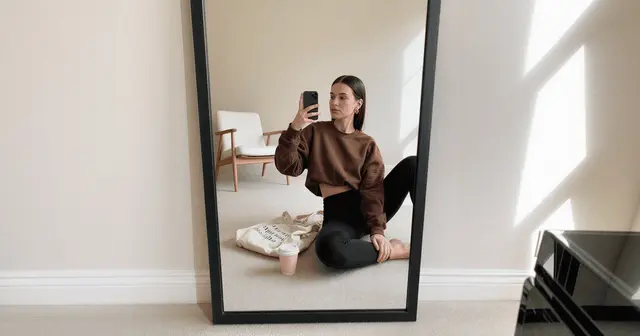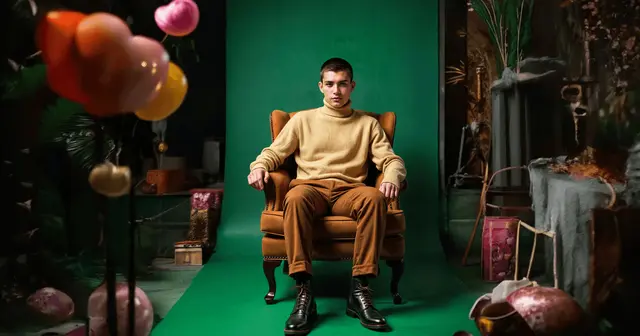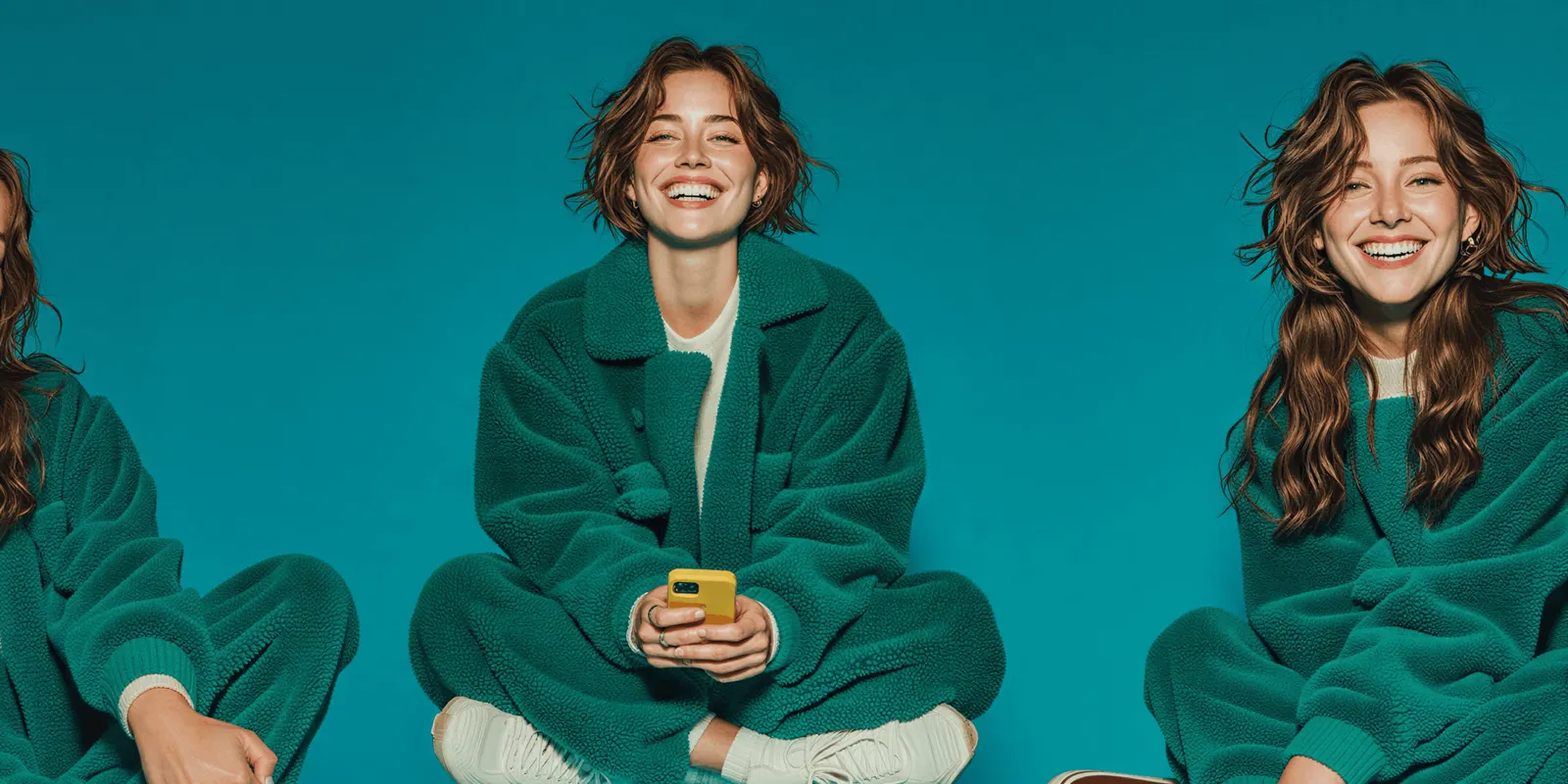
Consistent on-model product images come from locking four things before you generate: model identity, lighting, camera distance, and garment fidelity. Pick your route first, re-dressing a model you already have or generating one from a face reference. Then lock identity with reference images, hold the set with a fixed prompt, and check every output against the real product.
You have 40 SKUs and one drop date. The first eight on-model shots look great on their own. Put them in a grid on the collection page and the face has changed twice, the light has moved from soft to hard, and one garment has grown a seam that does not exist on the real product.
That grid is where AI fashion imagery gets caught. This guide covers the two routes to a repeatable model, what drifts between generations, how to lock each axis, the check that decides whether a shot ships to a PDP, and what a consistent 40-SKU drop costs. Once the look holds inside the drop, keeping it on brand across every channel it ships to is the next problem. If the drop also has to sit beside shots you already own, matching an existing catalog is a separate constraint.
Key Takeaways
- Four things drift, not one. Model identity, lighting, camera distance and garment fidelity each break independently. Fixing the face does nothing for the light.
- Reference images are the lock, prompts are not. A written description of a model regenerates a new person every time. A reference image anchors the same one.
- Two routes, different failure modes. Re-dressing a model you already have fixes identity but inherits one pose. Generating from a face reference frees the pose but has to anchor identity deliberately.
- More references is not the goal. Black Forest Labs positions FLUX.1 Kontext as holding character zero-shot from a single upload, against the 10 to 20 images older fine-tuning workflows needed (bfl.ai, August 2026). Reference quality beats reference count.
- Garment fidelity is the only check that matters commercially. 19.3% of online sales were returned in 2025 (nrf.com, 2025 data), and an image that misrepresents the product feeds that number.
- Consistency is cheap, inconsistency is not. 40 SKUs at three shots each is 600 credits in DesignerBox at the Kontext Multi rate. A reshoot after launch costs a photoshoot day.
- Save the pass, not just the images. A drop that matches is only useful if the next drop matches it too.
What makes on-model product images consistent?
Consistency in on-model product imagery means four variables hold steady across every generation: the model’s identity, the lighting setup, the camera distance and angle, and the accuracy of the garment against the real product. Each is controlled separately. A model that nails facial likeness will still shift the light between shots unless the set is locked too, which is why single-fix approaches fail on the grid.
Most tools sell the first variable and stay quiet about the other three. FASHN, for one, offers consistent AI models with a recognisable appearance reused across images (fashn.ai, August 2026), which solves the face. The light, the crop and the fabric still move.
The four things that drift between generations
Treat these as four separate locks. Check them in this order, because a failure early makes the later checks meaningless.
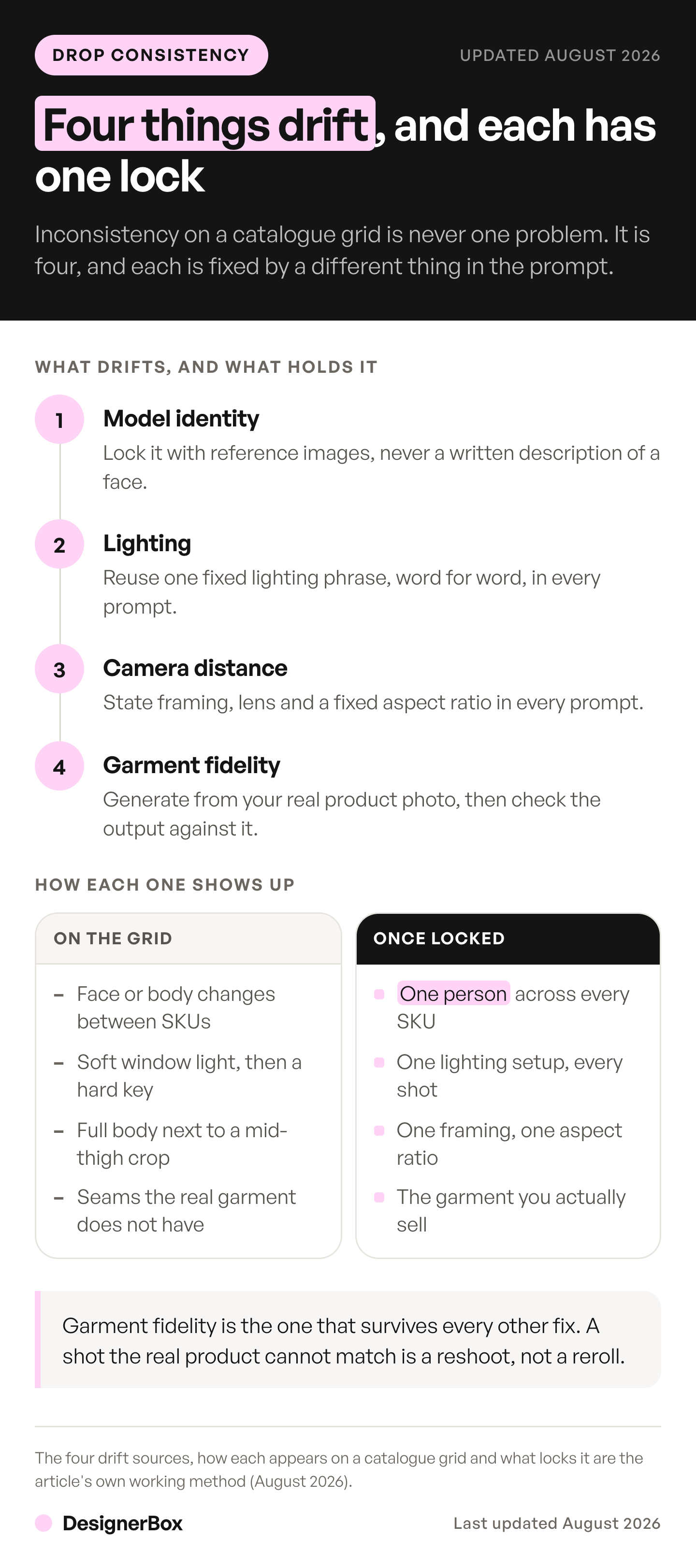
| What drifts | How it shows up on the grid | What locks it |
|---|---|---|
| Model identity | Face, skin tone or body shape changes between SKUs | Reference images, not a written description |
| Lighting | Soft window light on shot 3, hard studio key on shot 9 | A fixed lighting phrase reused verbatim in every prompt |
| Camera distance and angle | Full body next to a mid-thigh crop on the same row | A stated framing and lens in every prompt, plus a fixed aspect ratio |
| Garment fidelity | Seams, prints, hardware or drape that the real product does not have | Generating from your actual product photo, then checking against it |
The first three are consistency problems. The fourth is an accuracy problem, and it carries different consequences. An inconsistent grid looks amateur. An inaccurate garment gets returned.
Two routes to a consistent model, and when to use each
There are two ways to hold one model across a catalogue, and they fail differently. The first re-dresses a model image you already have, so identity is fixed because the person is a real photograph. The second generates a model from a face reference, so identity has to be anchored deliberately. The first is safer for a PDP grid. The second gives you range.
| Re-dress an existing model | Generate from a face reference | |
|---|---|---|
| How identity holds | Fixed. The person is a photo you supply | Anchored. The reference constrains a generated person |
| Pose and scene | Inherited from the base image | Set per generation |
| Strongest use | PDP and catalogue grids where every shot matches | Campaign, lookbook and social that need range |
| Where it breaks | Every SKU inherits the same pose and background | Identity drifts when the reference is weak or tightly cropped |
| Garment source | Your real garment photo | Your real garment photo |
Both routes start from your actual garment photo, which is the part that decides accuracy. The route only decides where the person comes from, and that choice carries its own disclosure consequences. On DesignerBox, the first runs as virtual try-on, and the second through the reference-image models, compared head to head on which model holds a character best.
FASHN builds these as two separate products, virtual try-on for re-dressing and a Face Reference input that anchors a look across generations (fashn.ai, August 2026). That split is the right mental model whichever tool you run.
Most catalogues need both. Use the first route for the PDP grid, where sameness is the point and one locked pose across 40 SKUs reads as a system rather than a limitation. Use the second for the hero shot, the seasonal lookbook and paid social, where the same face has to appear in a different pose, a different setting and a different crop. Which frames the book owes each of its readers is covered in the lookbook shot list. Within a single look, generate the frames as one photo set rather than one at a time, or the same drift you just fixed across drops reappears across the spread. The face carries across both, so the collection page and the campaign look like one shoot.
The choice is not permanent. Generate the model once and save the frame. It works as the base image for the first route and the face reference for the second.
Lock the model identity first
Identity is the axis that breaks most visibly, so it goes first. The rule is simple: a written description of a person produces a different person every time, because the model has enormous freedom inside words like “woman in her twenties with dark hair”. A reference image removes that freedom.
Where that very first reference image comes from, when you have no photograph of anyone you are allowed to use, is a casting decision covered in how to create an AI fashion model. If the same model should recur across drops rather than within one, build the references once as a reusable AI brand character and version the set. What each reference frame should look like, and how many to send, is specced in AI character reference images.
Black Forest Labs states that FLUX.1 Kontext is built to “precisely preserve identity, of e.g. a reference character or object, across multiple scenes and environments” (bfl.ai, August 2026). One detail worth knowing before you build a reference library: BFL positions Kontext as reaching that zero-shot from a single upload, where older fine-tuning workflows needed 10 to 20 reference images (bfl.ai, August 2026). More references is not automatically more consistency.
On DesignerBox this runs as Kontext Multi. Its model page states it takes up to 10 reference images per generation, batched into up to 4 outputs per request (designerbox.ai, August 2026). Treat that as headroom for covering angles, not a target to fill.
Google’s Nano Banana Pro takes a different route. It blends up to 14 images and holds the resemblance of up to five people, with output at 1K, 2K or 4K (blog.google, August 2026). For a fashion catalogue that runs two or three house models, five is more headroom than most brands need. Running that model through the Gemini app rather than a workspace changes what you can ship, which ChatGPT vs Gemini for product images covers on watermarks and quotas.
The practical setup: generate your model once, pick the single best frame, and treat that frame as the reference for every subsequent shot in the drop. Do not regenerate the model per SKU. Feed the same reference in, change only the garment.
Lock the set: lighting, framing, distance
Identity holding while the light moves still produces a broken grid. The set is locked with language, and the language has to be identical every time, not merely similar. Where the set is a real room rather than a plain paper backdrop, language stops being enough on its own and the set needs its own reference image, which is covered in how to keep locations consistent across shots.
Write one prompt block and reuse it verbatim across the drop:
- Lighting: name the source, direction and quality. “Soft diffused key from camera left, low-contrast fill, no visible shadow on the backdrop.” Vague words like “natural” or “studio” are the drift.
- Framing: state the crop as a body landmark. “Full body, feet in frame, subject centred, 15% headroom.” Not “full length shot”, which the model interprets differently each pass.
- Distance and lens: state it. “Shot on 85mm, subject 3 metres from camera, shallow background compression.”
- Backdrop: name the exact colour and finish. “Studio paper roll, warm grey, matte, no visible join.”
- Aspect ratio: fix it once. Kontext Multi supports 1:1, 2:3, 3:2, 3:4, 4:3, 9:16, 16:9, 9:21 and 21:9 (designerbox.ai, August 2026). Pick the one your PDP uses and never change it mid-drop.
Copy that block into a note and paste it unchanged. The moment you retype it from memory, you have introduced a variable. This is the same failure that causes brand drift at the handoffs between tools, scaled down to a single prompt field.
Check garment fidelity before anything ships
Consistency across the grid is a design standard. Garment accuracy is a commercial one, and it is the check people skip.
Returns are the reason. Consumers returned an estimated 19.3% of online sales in 2025. Across all retail sales the rate was 15.8%, worth $849.9 billion (nrf.com, 2025 Retail Returns Landscape). Fashion carries more of that than most categories because fit and appearance are the two things a photograph is meant to answer.
Baymard Institute found that 42% of users try to judge a product’s overall scale and size from its images, and that for products meant to be worn, the human body is the natural basis for reading that scale (baymard.com, August 2026). That is the commercial case for on-model imagery in one line. It is also why an inaccurate on-model shot does more damage than an inaccurate packshot: the shopper is using the model to size the garment. If the image is wrong, the return is already booked. Whether generation will ever answer the fit half of that question is a separate argument, covered in virtual try-on fit accuracy.
Run every output against the real product photo on five points:
- Print and pattern. Does the repeat match, at the same scale, in the same orientation?
- Hardware. Zips, buttons, buckles, eyelets. Count them. AI adds and removes hardware freely.
- Seams and panels. Compare seam lines against the flat. An invented seam changes the garment.
- Drape and weight. Does a heavy knit hang like a heavy knit, or like jersey?
- Colour. Check against the physical sample under neutral light, not against your monitor’s rendering of the flat.
Fail on print, hardware or seams and the shot does not ship, no matter how good the model looks. Fail on drape or colour and it may be fixable with a regeneration rather than a full redo. The full step-by-step for the generation itself is in our guide on how to put clothes on a model with AI.
What a consistent drop actually costs
The credit math is straightforward, and it reframes the consistency question. Holding a look across a drop is not the expensive part. Discovering the drift after launch is.
Per-image credit rates differ by model, so price the drop against the model you plan to run. Kontext Multi is 5 credits per image (designerbox.ai, August 2026). At that rate a 40-SKU drop at three shots per SKU is 120 images, or 600 credits. Budget a 30% regeneration rate on first pass and it lands at roughly 156 images, or 780 credits.
| Plan | Monthly price | Credits | Images at the Kontext Multi rate |
|---|---|---|---|
| Free | $0 | 112 | 22 |
| Basic | $15 | 500 | 100 |
| Pro | $35 | 1,000 | 200 |
| Premium | $75 | 2,500 | 500 |
| Ultra | $200 | 8,000 | 1,600 |
Premium at $75 a month covers that 40-SKU drop three times over. Two gating details matter for fashion specifically: the commercial licence starts at Pro, and try-on clothes starts at Premium. Check current terms on the DesignerBox pricing page before you commit a catalogue to it.
Set against that, what a photoshoot day costs is the comparison most fashion teams are running. The relevant number is not the day rate. It is the second day rate, the one you pay when eight shots come back off-standard.
Save the pass so the next drop matches this one
A consistent drop that lives in one person’s prompt notes is a consistency problem deferred, not solved. The next drop, or the next freelancer, starts from scratch.
Save the working combination as a reusable pipeline: reference images, locked set language, aspect ratio, model choice, and the output count. DesignerBox workflows rerun that pass against a new set of garments, so drop two matches drop one without anyone retyping the lighting phrase. The same mechanic covers the on-model, PDP and lookbook variants in Model Studio from one source photo.
That is the difference between consistency as a result and consistency as a system. The first holds for one drop. The second holds for the season.
If you are still choosing a tool for the on-model step itself, our breakdown of how the on-model generators differ covers what each one is built for. To run the generation directly, Outfit to Image turns a garment into a photoreal on-model shot.
The fashion factory feature holds garment and model across a drop, and the fashion OOTD workflow reruns it for each new piece. Changing clothes in a photo with AI covers the single-image version of the same problem.
One deliberate exception is worth naming. When you are showing the same garment across several body sizes, the body is the variable you want to change while the face, lighting and framing stay pinned. Where a generated size range earns its production cost covers which categories justify it.
FAQ
Can AI keep the same model across a whole collection?
Yes, if you anchor it with reference images rather than a written description. Kontext Multi takes up to 10 reference images per generation on DesignerBox (designerbox.ai, August 2026), and Nano Banana Pro holds the resemblance of up to five people (blog.google, August 2026). Generate the model once, save the best frame, and reuse that exact frame for every SKU in the collection.
Should I use virtual try-on or generate a model from a reference?
Use virtual try-on when the shot list is a PDP grid and every image should match. Identity is fixed because you supply a real photograph, and the garment is transferred onto it. Generate from a face reference when you need range: a different pose, setting or crop for a hero shot, lookbook or paid social. Most catalogues run both from the same saved model frame.
How many reference images do you need for a consistent AI model?
One good frame is the minimum, and Black Forest Labs positions FLUX.1 Kontext as holding character zero-shot from a single upload (bfl.ai, August 2026). Three to six frames covering front and both three-quarter angles still gives better stability across poses. What matters more than the count is that the references agree with each other: same lighting, same resolution, same face coverage in frame. Mixed-quality references produce mixed-quality identity.
Why does the face change between generations?
Because the prompt described a person instead of pointing at one. Words like “woman in her late twenties, dark hair” leave the model an enormous range to sample from, and it samples differently each pass. Switching from description to reference image removes that range. If the face still moves with a reference attached, the reference is likely too low-resolution or too tightly cropped.
Does virtual try-on keep the real fabric texture?
It depends on the source image quality more than the model. A flat garment photo shot sharp, evenly lit and at full resolution carries texture through. A compressed marketplace thumbnail does not, and no model recovers detail that was never in the file. Always check drape and weave on the output against the physical sample before it ships.
What does a consistent 40-SKU drop cost in credits?
Three shots per SKU is 120 images. At the Kontext Multi rate of 5 credits per image that is 600 credits. Add a realistic 30% regeneration rate and budget around 780 credits. That fits inside DesignerBox Premium at $75 a month, which carries 2,500 credits, with room for two more drops of the same size. Rates differ by model, so check the model page for the one you plan to run.
Can I use consistent AI fashion images in paid ads?
The commercial licence on DesignerBox starts at the Pro tier, $35 a month. Try-on clothes requires Premium, $75 a month. Verify the current licence terms on the pricing page before running a catalogue commercially, and check the ad platform’s own AI disclosure policy separately, since those rules are set by the platform and change independently.
What is the fastest way to check a grid for drift?
Put every output for the drop in a single contact sheet at thumbnail size, before anything goes near a PDP. Drift that is invisible at full size is obvious at 200 pixels: the face shifts, the light flips direction, one crop sits higher than the rest. Review the sheet, not the individual shots.
Sources
- Nano Banana Pro blending up to 14 images, holding the resemblance of up to five people, and 1K/2K/4K output: (blog.google, August 2026)
- FLUX.1 Kontext identity preservation across scenes and environments, and zero-shot character consistency from a single upload against the 10 to 20 images older fine-tuning workflows required: (bfl.ai, August 2026)
- Online return rate of 19.3%, all-retail return rate of 15.8%, and $849.9 billion in returned sales: (nrf.com, 2025 Retail Returns Landscape, 2025 data)
- 42% of users judging product scale and size from images, and the human body as the basis for scale on worn products: (baymard.com, August 2026)
- Virtual try-on and Face Reference offered as two separate routes to a consistent model: (fashn.ai, August 2026)
- Kontext Multi reference limit of 10 images per generation, batching to 4 outputs per request, 5 credits per image, and the supported aspect ratios: (designerbox.ai, August 2026)
- DesignerBox pricing, plan allocations and feature gating verified against live product configuration, August 2026
Model capabilities verified from blog.google and bfl.ai as of August 2026. Returns data from the National Retail Federation 2025 Retail Returns Landscape. Product image research from Baymard Institute, accessed August 2026. DesignerBox model specifications, pricing and credit costs verified against designerbox.ai as of August 2026. Per-image credit rates differ by model. Individual results vary.