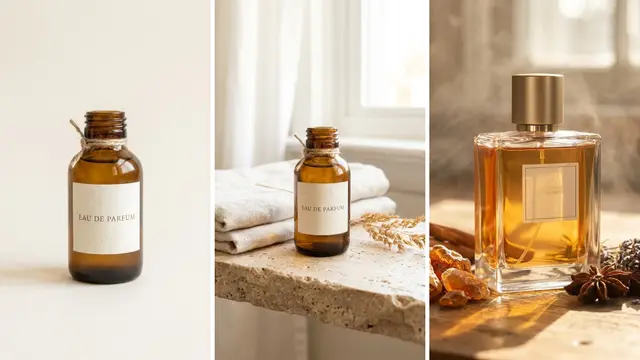
A perfume photoshoot has one job: the picture has to stand in for a smell. The clearest way to plan it is by scent family. Citrus, floral, woody, amber, fresh and gourmand scents each have their own props, surface, light and color. Pick the family first. Then choose one or two cues from it, and keep the bottle true to the product in every frame.
Idea boards are usually sorted by look: water splash, silk, shadows, flowers. A look that fits a rose scent can mislead on a cedar one. This guide sorts the ideas by what the scent is. It covers six families, the shoot order, and which ideas work from a bottle photo you already have.
Key Takeaways
- Sort ideas by scent family. A shopper cannot smell a screen. The props, the surface, the light and the color tell them which kind of scent this is.
- This guide uses six families. Citrus, floral, woody, amber, fresh and gourmand. Five of them map to segments on Michael Edwards’ Fragrance Wheel, which has 14 segments. Gourmand is a trade word, not a segment.
- One or two cues, never a pile. One lemon peel reads as citrus. Ten ingredients read as a grocery photo.
- A prop can be a claim. Under EU cosmetics law a picture can count as a claim. Show a note only if it is in the formula.
- Shoot the true bottle first. The packshot, the label and the details come before any mood frame.
- Some ideas need a real shoot. The spray, the open cap, the engraving close-up and the box contents are not in a front packshot. A model would have to invent them.
What is a perfume photoshoot?
A perfume photoshoot is a planned session that produces the image set for one fragrance or one fragrance line. It has two halves. The first half records the product as it is: the bottle, the cap, the label, the box. The second half builds a world around the bottle, so a shopper can guess the scent before they smell it.
The glass technique, the EU label change of 2026 and the marketplace image rules are covered in the perfume photography guide. This article covers the other half of the job: what to put in the frame, and why.
Why sort perfume photoshoot ideas by scent family?
Scent families are the shared language of the fragrance trade. The best-known map is Michael Edwards’ Fragrance Wheel. It arranges 14 segments under four broad groups: floral, amber, woody and fresh (fragrancesoftheworld.com, October 2026).
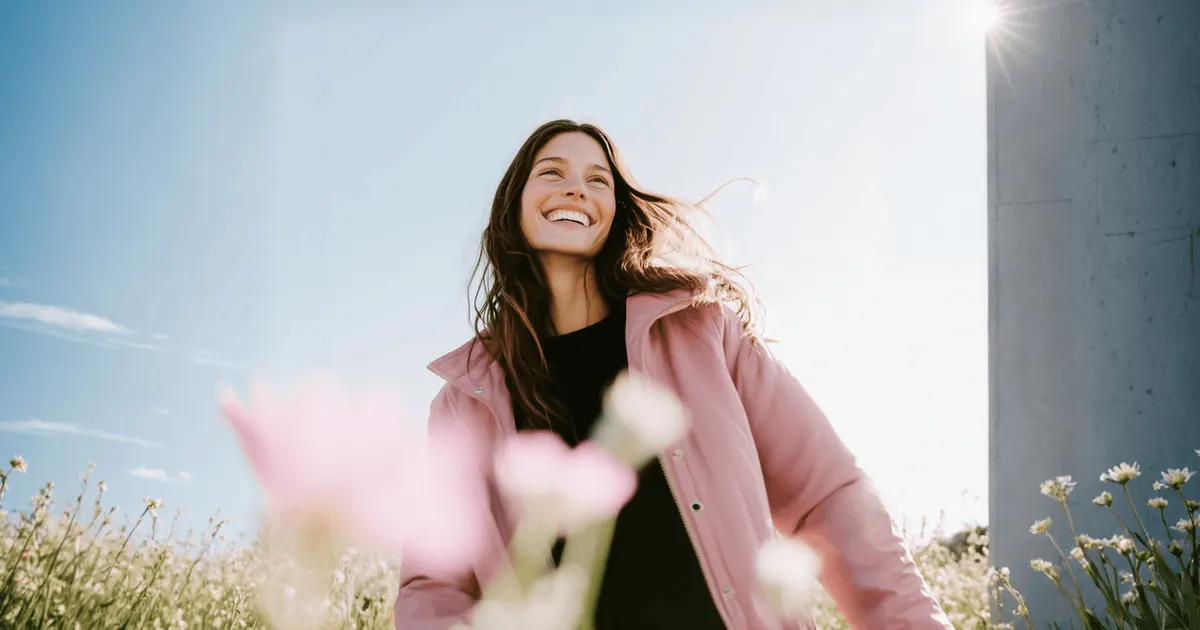
That map is useful for a photoshoot, because the wheel describes each segment by things you can photograph. Citrus is bergamot, lemon and grapefruit. The water segment is sea breeze and wet air after a storm. Dry woods are leather and tobacco. Those are props, surfaces and weather.
This guide uses six family names that are common on fragrance product pages. Citrus, floral, woody and amber have segments on the wheel. Fresh here means the wheel’s water and green segments. Gourmand is a trade word for sweet, food-like scents such as vanilla and caramel. It is not a segment on the wheel, and those notes sit closest to its amber group.
One caution on color. Researchers tested 14 odors with six cultural groups and asked each person to match colors to each odor. They found that culture plays a part in which color fits which smell (PLOS ONE, 2014, read October 2026). So treat the colors below as a starting point, and check them with shoppers in each market you sell in.
Perfume photoshoot ideas for each scent family
The table gives one starting set per family. These are styling suggestions, so change them to fit your brand.
| Scent family | Props (pick one or two) | Surface | Light | Color |
|---|---|---|---|---|
| Citrus | Peel, a cut fruit, a green leaf | White tile, pale stone, glass | Hard morning sun, sharp shadows | Yellow, white, leaf green |
| Floral | One flower type, loose petals, sheer fabric | Linen, pale ceramic, plaster | Soft window light, low contrast | Blush, cream, soft green |
| Woody | Bark, a cedar block, dry moss, leather | Dark wood, raw stone, slate | Low side light, long shadows | Brown, forest green, charcoal |
| Amber | Resin, a spice, brass, velvet | Dark stone, lacquer, heavy cloth | Warm, low, one small source | Gold, deep red, black |
| Fresh | Water, wet stones, ice, a cucumber slice | Wet glass, a mirror, pale sand | Cool, bright, even daylight | Blue, mint, white |
| Gourmand | A vanilla pod, caramel, cocoa, a pastry | Marble, a ceramic plate, baking paper | Warm, soft light from above | Cream, caramel brown, pastel |
Citrus
Citrus is the family of bergamot, lemon, mandarin and grapefruit. The picture should look like morning. Put the bottle on white tile in direct sun, with one curl of peel near the base. The liquid throws a colored shadow, and nothing hides the label.
Floral
Floral runs from one flower to a full bouquet. Pick the one flower the brand leads with, and repeat it. Lay loose petals in a line that leads to the bottle, or stand a single stem in water beside it. A petal pattern from above borrows from flat lay photography.
Woody
Woody scents are built on cedar, sandalwood, vetiver, pine and patchouli. The dry kind adds leather and tobacco. Stand the bottle on a split log or a slate tile, and light it low from the side so the grain shows. Keep one bright card near the label so it stays readable.
Amber
Amber is the warm family: resins, spices, vanilla and incense. Older guides use the word oriental for it. Place one small warm light behind the bottle and a little to one side. The liquid then glows like a lamp. Add one brass object or one piece of resin.
Fresh
Fresh covers water scents and green scents: sea air, rain, cut grass, cucumber. Stand the bottle in a few millimeters of water on a mirror, or on wet stones with a pale blue backdrop. Leave a lot of empty space. Check the label after every spray of mist.
Gourmand
Gourmand scents smell like food: vanilla, caramel, chocolate, coffee. Use warm, soft light from above and a marble or ceramic surface. Keep the food cue small. One vanilla pod works. A full cake does not, because the shopper starts to look at the cake.
Perfume bottle photography ideas that fit any family
Some ideas do not depend on the scent. Use them after the family frames are done.
- The colored shadow. Hard light through the liquid throws a tinted shadow on a pale surface.
- The pair. Two sizes of the same scent side by side, to show scale and the travel size.
- The box and the bottle. The carton stands behind and to one side, so both are readable.
- The hand. A hand holds the bottle near the wrist or the neck. It shows the true size.
- The place. A window, a coast, a garden or a city at night stands for the mood of the scent. It is the still version of the mood film, one of the six perfume ad formats.
More ideas sorted by where the image will run are in product photography ideas by slot. For color and material choices behind the bottle, see the guide to product photography backdrops. The file specs for five sales channels are in our ecommerce product photography guide.
How to plan a perfume photoshoot
Plan the shoot in four blocks, in this order. The order protects the frames a listing cannot go live without.
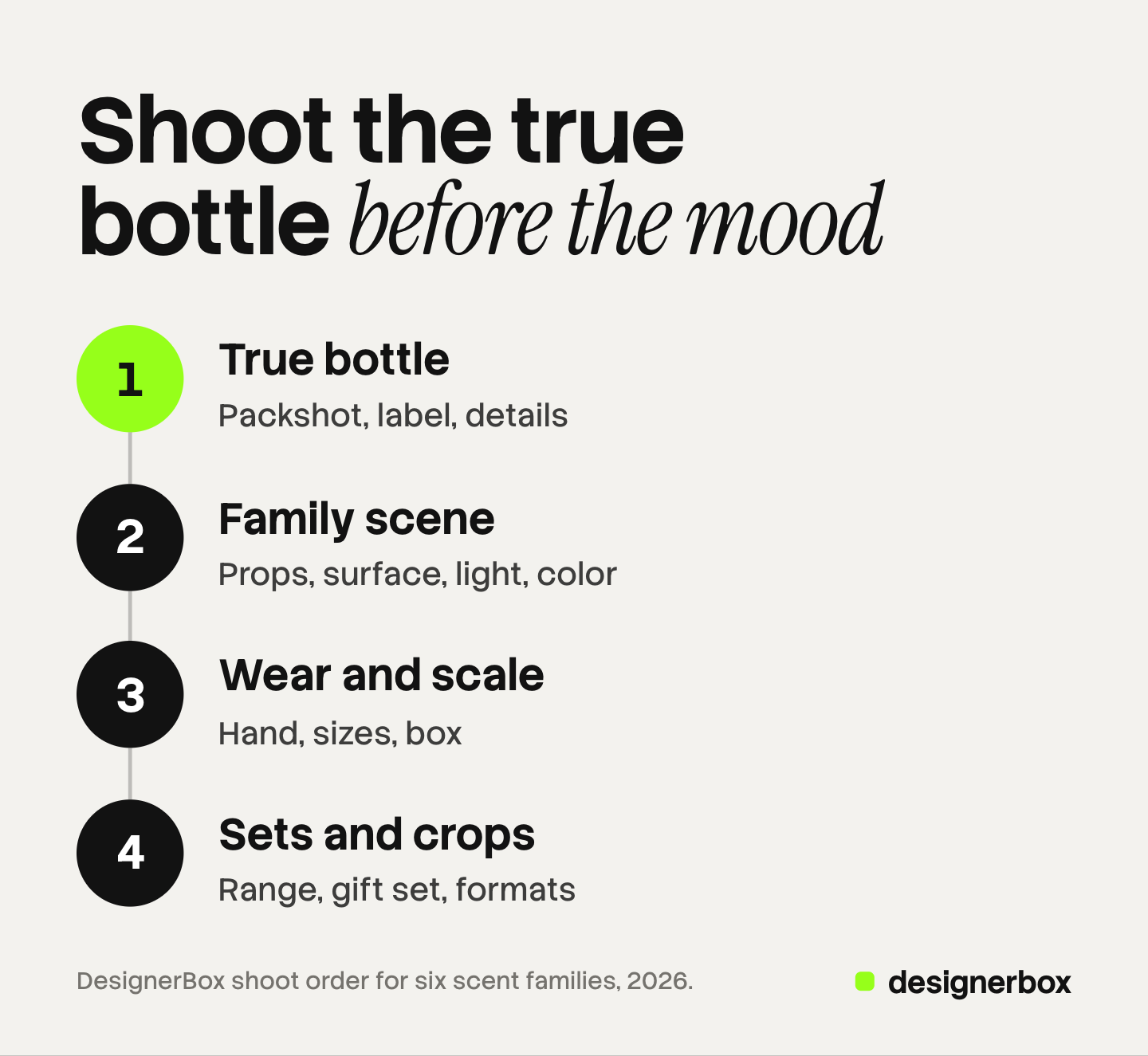
- The true bottle. Shoot the front packshot on white, the label panel and the details: cap, collar, engraving, atomizer. Use clean glass, neutral light and no props.
- The family scene. Build one set from the table above. Shoot the bottle in it from two or three angles. Then change one thing, such as the light or one prop, and shoot again.
- Wear and scale. Shoot the hand frame, the pair of sizes and the box with the bottle. These frames answer how big the bottle is and what arrives.
- Sets and crops. Shoot the range line and any gift set. Then reframe the best scene for each format: square, vertical and wide.
Prepare before the day. A shot list template gives each frame a row.
- Two bottles of each scent. One stays sealed and clean for the packshot. One is for handling, spraying and the open-cap frame.
- The current label. Check that the bottle in front of the camera has the artwork that is on sale today.
- The note list from the brand. Mark which notes the formula really contains, so the props match.
- Props for one family only. Buy fresh props on the day. Citrus dries and petals fade within hours under lights.
- Glass care. Bring gloves, a lint-free cloth, and white and black card to shape the reflections.
Which ideas work from a packshot, and which need a real shoot?
Many brands already have a clean packshot of each bottle. An image model can keep that bottle and build a new scene around it. The test is whether the idea needs a detail the packshot does not contain. A front packshot shows one side of a closed bottle at one fill level. Anything else would have to be invented.
| Idea | From an existing packshot | Why |
|---|---|---|
| New surface, backdrop and color | Yes | The bottle stays the same. Only the world around it changes. |
| Family props near the bottle | Yes | The props sit beside the product and do not touch it. |
| New light mood | Yes, with a check | Warm light can shift the liquid color. Compare it with the real bottle. |
| A place behind the bottle | Yes | A coast or a window is background. |
| Spray in the air | Real shoot | The packshot shows a closed bottle. The true spray pattern is not in it. |
| Open cap and atomizer close-up | Real shoot | The parts under the cap are not in the photo. |
| Engraving or embossing close-up | Real shoot | A close crop needs detail the packshot did not record. |
| Box contents and discovery set | Real shoot | The count and the names must match what the shopper receives. |
| Bottle in a hand | Real shoot | The hand sets the scale. An invented hand can show the wrong size. |
Check four things on every generated frame before it ships: the liquid level, the liquid color, the cap, and every letter on the label. Compare each one with the real bottle. If one is wrong, reject the frame.
One rule applies to people. A generated image must never invent a result on skin. If a frame shows the scent on a wrist or a neck, photograph it. Do not use a picture to imply a result the product has not been tested for, such as how long it lasts.
What a perfume picture may imply
This is general information, not legal advice.
Perfume is a cosmetic product in the EU. Article 20 of Regulation (EC) No 1223/2009 says that text, names, trade marks, pictures and other signs must not imply characteristics a product does not have (legislation.gov.uk, read October 2026). So the rule covers the photo as well as the words.
Commission Regulation (EU) No 655/2013 sets the common criteria for those claims. On truthfulness it says that if a product claims to contain a specific ingredient, the ingredient must be deliberately present (legislation.gov.uk, read October 2026). A frame built around jasmine, on a scent with no jasmine, can read as that kind of claim.
The practical rule for a perfume photoshoot is short. Take props from the real note list. Use mood cues such as light, color and place freely.
Fragrance sets as a repeatable workflow
One bottle is a photoshoot. A line of twelve scents in four formats is a production job.
DesignerBox is AI creative production for brands and agencies. It makes images, ads and video, and a product photo is one of the inputs. You build a set once as a workflow: the scene, the light, the crop. Then you run it again on the next scent. Anyone can make an AI picture. Making hundreds that still look like your brand is the hard part.
Your brand rules hold the colors, the fonts and the reference pictures, and the workflow reads them on every run. Each scent family can have its own saved scene. A batch runs one workflow over a sheet of up to 200 rows, so row one and row two hundred get the same treatment.
Start from your own photo of the real bottle, as described on the AI product photography page. Then check each result against the bottle, as in the list above. The stills, the ad layouts and the short clips come from the same place. The full workflow from the first product photo to the finished ad, in one subscription. The cost is shown before the run.
Some limits are worth knowing. DesignerBox does not send finished work to a store or an ad account. You download the results, or send them with a webhook or an S3 step. Every plan below Ultra is one seat. The frames in the real-shoot rows of the table still need a camera.
Uploading your own photos and the commercial license start on the Pro plan. AI video, virtual try-on, upscaling, the image editor and the video editor start on the Premium plan. Plans and credits are on the pricing page.
There is a free plan, and it runs on sample products. Get started free.
FAQ
What are good perfume photoshoot ideas for a new brand?
Start with the scent family. Choose one or two props from the real note list, one surface and one light mood that fit it. Then add three frames that work for any scent: the colored shadow, the box with the bottle, and the bottle in a hand. Shoot the plain packshot before any of them.
How many photos does a perfume photoshoot need?
Plan four blocks: the true bottle, the family scene, wear and scale, and sets and crops. The count depends on how many sizes, sets and formats the scent has. The packshot, the label panel and the details come first, because the listing needs them.
What props work for perfume photography?
Props that match the scent work best: peel for citrus, one flower type for floral, bark or leather for woody, resin or a spice for amber, water for fresh, a vanilla pod for gourmand. Use one or two. Keep each prop smaller than the bottle and away from the label.
Can AI make perfume photoshoot images?
It can build the scene around a bottle photo you already have: the surface, the props beside the bottle, the light mood and the crops. It cannot know what a front packshot does not show, such as the open cap, the back label or the box contents. Photograph those. Check the liquid level, the liquid color, the cap and the label on every generated frame. In DesignerBox the cost is shown before the run.
Do the props have to match the notes in the perfume?
In the EU, a picture of a cosmetic product can be treated as a claim, and a claim that a product contains an ingredient must be true. So take ingredient props from the real note list. Mood cues such as light, color and place are free. The section on what a picture may imply gives the sources.
Sources
- Michael Edwards, Fragrance Wheel, 14 segments under floral, amber, woody and fresh, with the notes of each segment: fragrancesoftheworld.com (read October 2026).
- Levitan and others, “Cross-Cultural Color-Odor Associations”, PLOS ONE, 2014, 14 odors and six cultural groups: journals.plos.org (read October 2026).
- Regulation (EC) No 1223/2009 on cosmetic products, Article 20 (product claims): legislation.gov.uk (read October 2026).
- Commission Regulation (EU) No 655/2013, Annex, common criteria for cosmetic claims: legislation.gov.uk (read October 2026).
- DesignerBox workflows, brand rules, batch and plans: DesignerBox product pages and pricing page (designerbox.ai), October 2026.
Scent family notes verified on Michael Edwards’ Fragrance Wheel page in October 2026. The props, surfaces, light and colors in the table are styling suggestions, not rules. The EU claim rules were read on legislation.gov.uk, which hosts the text of both regulations. This is general information, not legal advice. Individual results vary.