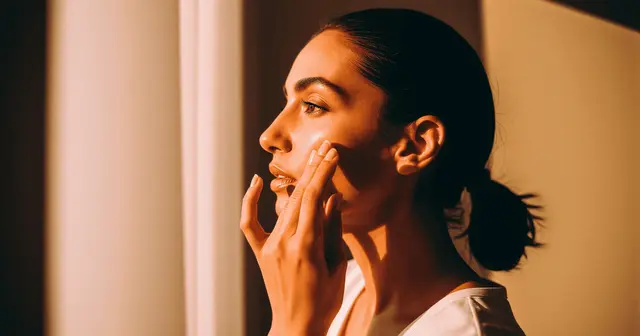

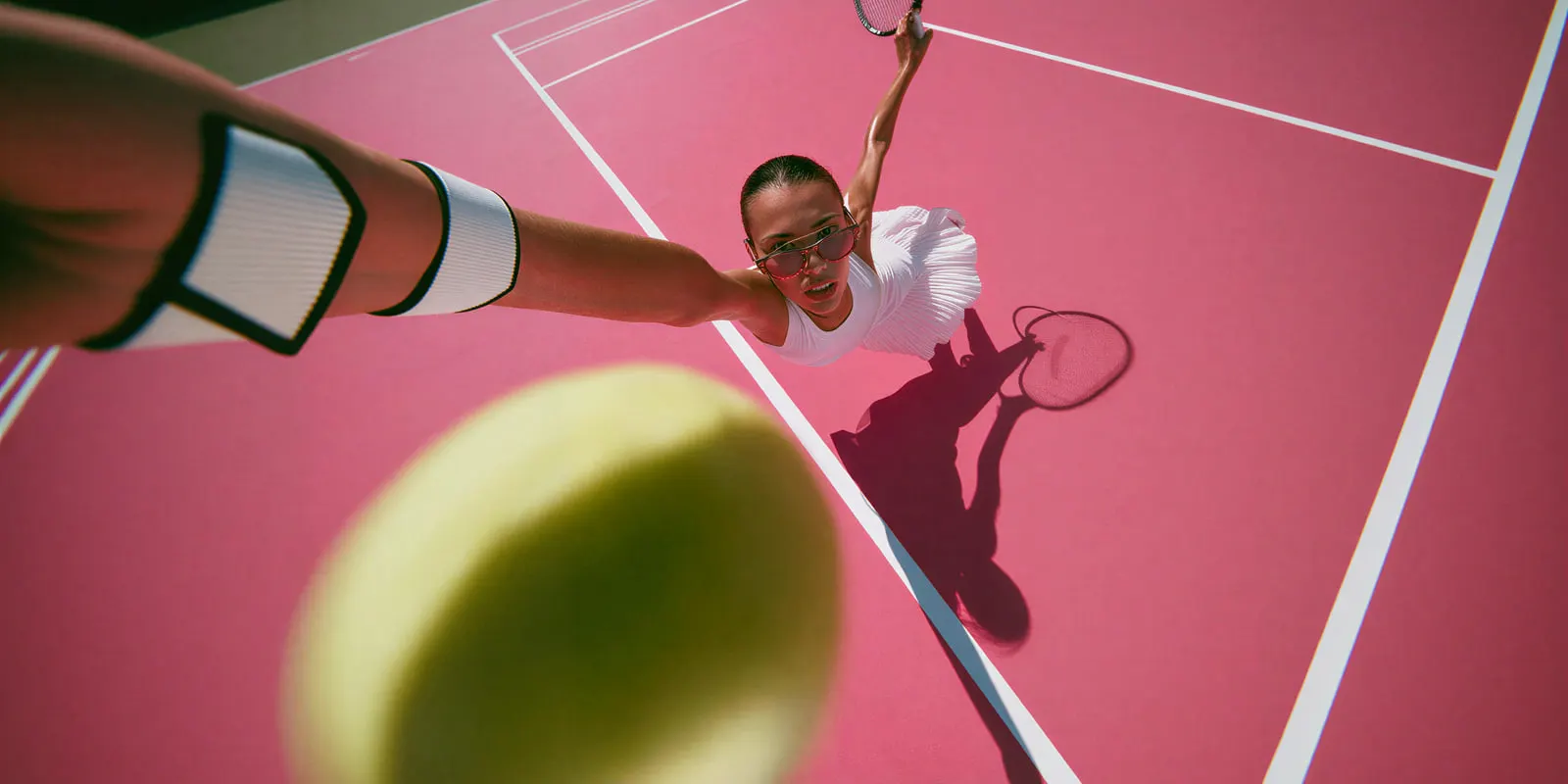
Sports ads sell a product through movement and one clear feeling. The famous ones, from Coca-Cola in 1979 to Under Armour in 2016, also had a star athlete and a large budget. A small brand cannot copy the star, and the law often forbids it. It can copy the craft: motion, the product in use, and one feeling in each ad.
Take a brand that sells 60 products: resistance bands, yoga mats, a running shoe and a protein powder. It has product photos and no athlete contract. Its ad account still needs new video every week.
This guide is for that brand, and for the agency that makes its ads.
Key Takeaways
-
Seven sports ads, three patterns. A star, everyday people or a question carries the ad. Only the first needs a contract.
-
An athlete’s name and face need consent. US state laws protect a person’s name and likeness in advertising. Never make an AI likeness of a real athlete.
-
Olympic words and symbols are reserved. A US federal law gives the US Olympic and Paralympic Committee the exclusive right to the rings and the word Olympic.
-
A performance claim needs proof first. The FTC says an advertiser needs evidence for each objective claim before the ad runs.
What are sports ads?
Sports ads are ads that use sport to sell something. Sports advertising covers two groups. The first is sports products: shoes, clothing, equipment, drinks and food for training. The second is brands from other fields that borrow sport, such as a soft drink.
Seven sports ads and what each one shows
These seven sports commercials appear often on best-of lists. Each was checked against a source read in October 2026.
| Year | Brand and ad | What happens | What carries it |
|---|---|---|---|
| 1979 | Coca-Cola, “Hey Kid, Catch!” | An injured football player accepts a Coke from a boy and throws him his jersey | A star and one small story |
| 1988 | Nike, first “Just Do It” ad | An 80-year-old runner crosses the Golden Gate Bridge | An everyday person |
| 1991 | Gatorade, “Be Like Mike” | Michael Jordan plays basketball with children and adults | A star and a song |
| 2010 | Nike, “Write the Future” | Football stars play a World Cup match | Many stars, film-level production |
| 2012 | Nike, “Find Your Greatness” | Everyday athletes train in places named London | Everyday people |
| 2014 | Always, “Like a Girl” | People are asked to run and throw “like a girl” | A question, no star |
| 2016 | Under Armour, “Rule Yourself” | Michael Phelps trains for the Rio Games | A star and the training itself |
The details behind each row, with the source:
- Coca-Cola, 1979. First aired on 1 October 1979 and won a Clio Award (en.wikipedia.org, October 2026).
- Nike, 1988. The runner was Walt Stack. He ran 17 miles across the bridge, and the ad first aired on 1 July 1988 (mediavillage.com, October 2026). He was 80 years old (en.wikipedia.org, October 2026).
- Gatorade, 1991. First aired on 8 August 1991, set to a song about wishing to play like Jordan (en.wikipedia.org, October 2026).
- Nike, 2010. Runs over three minutes and won the Film Grand Prix at Cannes Lions in 2011 (en.wikipedia.org, October 2026).
- Nike, 2012. First aired on 27 July 2012 in 25 countries. Nike said the idea was “to inspire and energize everyday athletes everywhere” (campaignindia.in, October 2026).
- Always, 2014. A social experiment filmed by director Lauren Greenfield. It aired during the Super Bowl in 2015 (musebyclios.com, October 2026). Always does not make sports products.
- Under Armour, 2016. A 90-second film that won the Film Craft Grand Prix at Cannes (marketingmag.ca, October 2026).
For ads built around a product with no star, see these product ad examples. For commercials made with AI, the best AI commercials checks what each one used AI for.
What a small brand can copy from sports advertising
Three things carry every ad in the table, and none of them needs a star. Two of the seven ads, from 1988 and 2012, show people nobody knew.
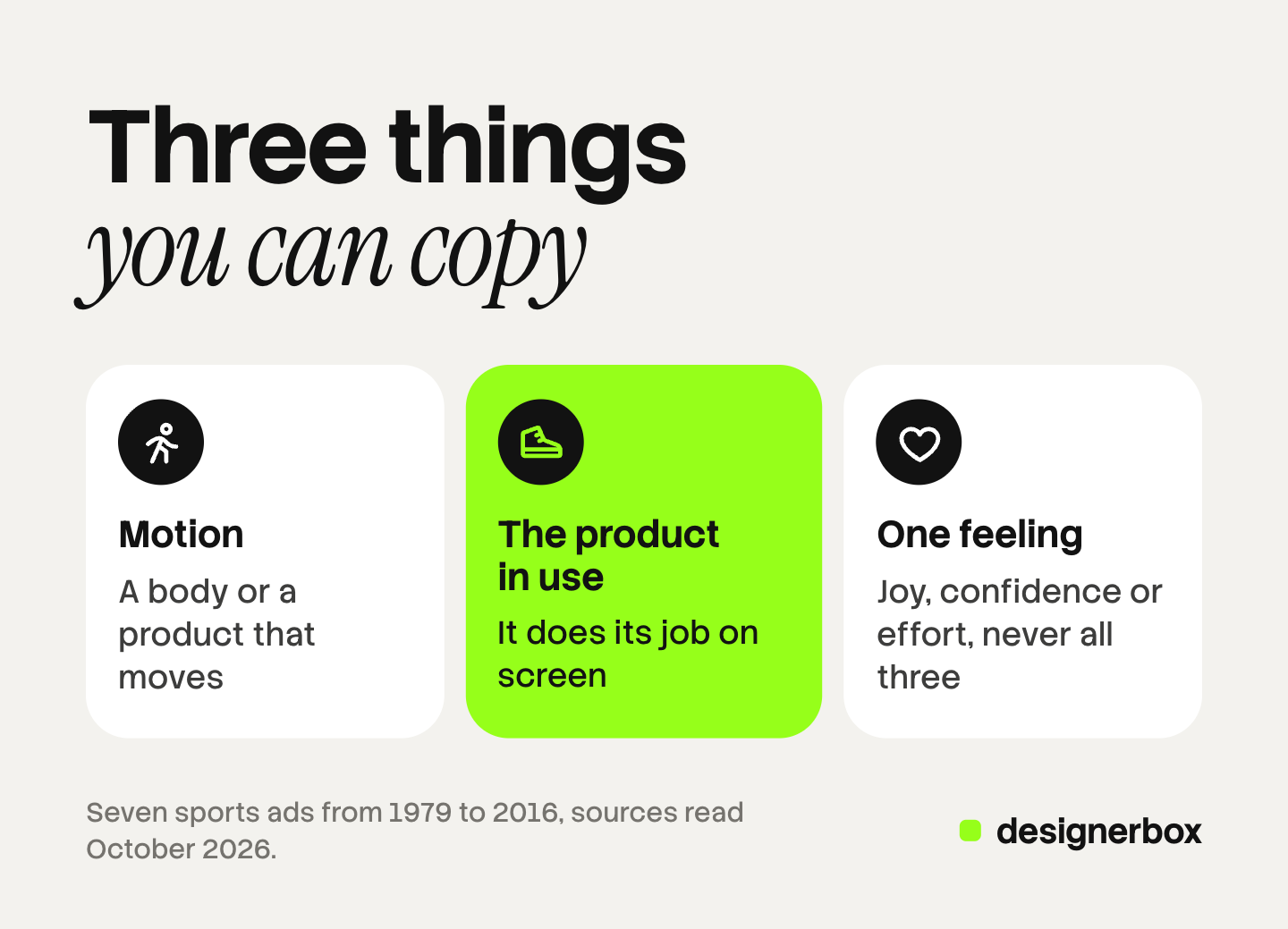
Motion. Every ad shows a body or a product that moves.
The product in use. The Coke is in a hand. The shoes are on feet. In athletic ads, the product does its job on screen.
One feeling in each ad. Joy in 1991, confidence in 2014, effort in 2016. An ad that argues five product features has no room for a feeling.
The opening seconds carry the hook. The video hooks guide lists opening patterns that work for a product in motion.
What a small brand cannot copy
Three parts of the famous ads are protected: the athlete, the event and the claim. This is general information, not legal advice.
| What you want to use | Who controls it | The source |
|---|---|---|
| An athlete’s name, face or voice | The athlete | State right of publicity laws |
| Olympic words, rings and team hashtags | The US Olympic and Paralympic Committee | 36 U.S.C. 220506 |
| A league or team logo | The league or the team | Trademark law |
| ”Improves performance”, “builds muscle” | Nobody. You need evidence | FTC substantiation rules |
The athlete. The right of publicity “prevents the unauthorized commercial use of an individual’s name, likeness, or other recognizable aspects of one’s persona”. In the US it comes mainly from state law (law.cornell.edu, October 2026). California requires prior consent to use a person’s name, voice, photograph or likeness in advertising (leginfo.legislature.ca.gov, October 2026). New York requires written consent (nysenate.gov, October 2026).
AI does not change this. An AI picture or voice that copies a real athlete is still that athlete’s likeness. Do not make one. TikTok’s ad policy also bans the misuse of a public figure’s likeness without permission (ads.tiktok.com, October 2026).
The event. A US federal law gives the US Olympic and Paralympic Committee the exclusive right to use the five rings and the word Olympic (law.cornell.edu, October 2026). The committee’s guidelines say only official licensees may use these marks. Other companies may not use them in advertising or in social media posts (usopc.org, October 2026). Rule 40 of the Olympic Charter also limits ads with athletes who take part in the Games (usopc.org, October 2026).
The claim. The FTC says an advertiser must have adequate evidence for every objective product claim before the ad runs. A customer’s story is never enough to prove what a health product does (ftc.gov, October 2026). “Our band has five resistance levels” is a fact you can show. “Builds muscle faster” needs a study.
How to make a sports product video from photos
To make a sports product video with AI, start from your own product photo and add one movement. The photo fixes how the product looks. The prompt describes what moves.
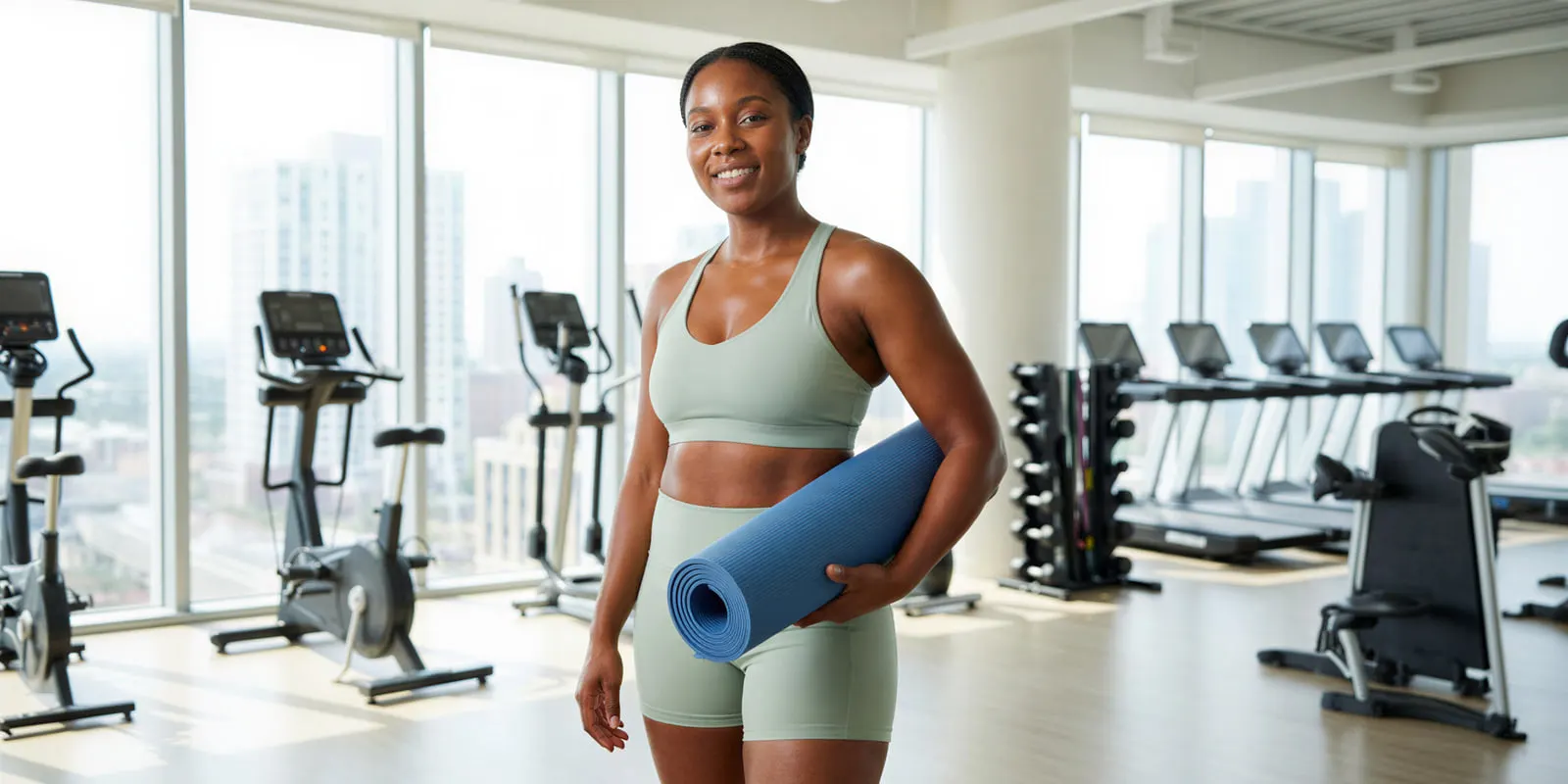
1. Shoot four photos first. Take the product alone on a plain background. Take one close photo of the logo and any text. Take the product in a hand or on a foot. Take one wide photo in the place of use. For clothing, the activewear photography guide gives the full shot list.
2. Choose the people. Use your own team, customers or a paid model, each with written consent. Or use an AI character that is not a real person.
3. Use the photo as the first frame. Google’s Veo 3.1 accepts an image to animate, and lists clip lengths of 4, 6 and 8 seconds (ai.google.dev, October 2026). So plan one action for each clip.
4. Write one movement. Runway’s prompting guide says: “Starting simple lets you add one element at a time and see what each change does” (academy.runwayml.com, October 2026). Write “the shoe lands on wet asphalt, water splashes”.
5. Join the clips and add the text. Put three or four short clips on a timeline. Add the product name and the offer as text in the editor, where the letters stay sharp.
To compare tools for this job, see AI video tools for fitness brands. The six rules for AI product video cover clip length, cost and labels in more detail.
Athletic ads by product type
Each product type has one movement that proves it.
| Product | Opening shot | The movement | Check first |
|---|---|---|---|
| Ball | The ball at rest, logo to camera | A slow turn, or one bounce | Shape and print on every frame |
| Shoe | The shoe from the side | One step, or a heel landing | Sole pattern and laces |
| Apparel | The garment on a person | A stretch or a slow turn | Seams, fit and the logo |
| Equipment | Hands taking hold of it | One full repetition | Fingers on the handle |
| Nutrition | The pack beside a shaker | A scoop, a pour, a shake | The label text |
A shoe is hard to keep exact, because the sole and the stitching carry the design. The AI footwear photography tools guide covers the stills that a shoe video starts from.
Where AI video breaks on sports
AI video has four weak points on sports products: text, hands, fast movement and objects in flight.
-
Text and logos. ByteDance wrote that Seedance 2.0 still has room to improve “text rendering accuracy” and “detail stability” (seed.bytedance.com, October 2026). Pause on the logo in every clip and compare it with your logo photo.
-
Hands and grips. On HanDyVQA, a benchmark for understanding hands and objects in video, the best model scored 73% and people scored 97% (arxiv.org, October 2026). Count the fingers on a bar, a racket or a bottle.
-
Fast movement. Watch a sprint or a swing frame by frame. Look for a leg or an arm that changes shape. A stretch or one step is easier to check.
-
Objects in flight. Watch a ball from the hand to the floor and back. If it changes size or loses its print, cut the clip before the bounce.
Reject any clip where the sole, the logo or the label is wrong.
AI labels on sports ads: Meta, TikTok and Google
-
Meta. Meta adds an “AI info” label when it detects that an ad was made or edited with third-party AI tools. In most cases, the label is in the three-dot menu under “About this ad” (facebook.com/business/help, October 2026).
-
TikTok. An ad with fully AI-made or heavily edited media needs the AIGC label, or your own clear disclaimer, caption, watermark or sticker. TikTok says an undisclosed AI ad “will be rejected or restricted” (ads.tiktok.com, October 2026).
-
Google and YouTube. YouTube video ads run through Google Ads. Since July 2026, Google permits text or visual AI labels inside image and video ads, and it added an AI label setting to Google Ads. Google says the setting does not guarantee compliance with any law (support.google.com, October 2026).
Sports ad production in DesignerBox
Anyone can make an AI picture. Making hundreds that still look like your brand is the hard part.
DesignerBox is AI creative production for brands and agencies. It makes images, ads and video with your brand. You save your brand once: logos, fonts, palette and rules. You build the ad job once as a workflow, and the workflow reads those rules on every run. Batch runs it over a whole sheet, and the standard is the same on row one and row two hundred.
The video editor is a timeline with several tracks, transitions, animated text and audio. The cost is shown before the run. An 8-second clip costs 40 to 560 credits, depending on the model. The AI video ads page shows the formats.
The full workflow from the first product photo to the finished ad, in one subscription.
Here are the limits. DesignerBox does not send the ad to your ad account. You download the results, or send them with a webhook or an S3 step. Virtual try-on works for garments only, so it does not put a shoe on a foot. Every plan below Ultra is one seat. The free plan runs on sample products. Uploading your own photos and the commercial license start on the Pro plan. AI video, virtual try-on, upscaling, the image editor and the video editor start on the Premium plan. Plans and credits are on the pricing page.
FAQ
What are the most famous sports commercials?
Lists often include Coca-Cola’s “Hey Kid, Catch!” from 1979, Gatorade’s “Be Like Mike” from 1991 and Nike’s “Write the Future” from 2010.
Can a small brand use an athlete’s name or photo in an ad?
Only with the athlete’s consent. US state laws protect a person’s name and likeness in advertising, and New York requires the consent in writing. The same applies to an AI picture or voice that copies a real athlete.
Can I mention the Olympics in my ad?
In the US, the word Olympic and the five rings belong to the US Olympic and Paralympic Committee under federal law. Its guidelines reserve them for official licensees.
Can AI make a sports product video from a photo?
Yes. Several video models accept a product photo as the first frame and add movement from a prompt. Clips are short: 4 to 8 seconds on Google’s Veo 3.1. Check the logo, the hands and any fast movement in every clip.
Do AI sports ads need a label?
Each platform sets its own rule. TikTok requires a label or a clear disclaimer on ads with fully AI-made or heavily edited media. Meta adds an “AI info” label itself when it detects third-party AI. Google added an AI label setting to Google Ads in July 2026.
Sources
- Wikipedia, Hey Kid, Catch!: en.wikipedia.org, accessed October 2026
- MediaVillage, HISTORY’s Moment in Media, the rise of Nike’s tagline: mediavillage.com, accessed October 2026
- Wikipedia, Walt Stack: en.wikipedia.org, accessed October 2026
- Wikipedia, Be Like Mike: en.wikipedia.org, accessed October 2026
- Wikipedia, Write the Future: en.wikipedia.org, accessed October 2026
- Campaign India, Nike campaign for everyday athletes, July 2012: campaignindia.in, accessed October 2026
- Muse by Clios, the story of the Always campaign: musebyclios.com, accessed October 2026
- Marketing Magazine, Cannes 2016 Film Craft Grand Prix: marketingmag.ca, accessed October 2026
- Cornell Legal Information Institute, right of publicity: law.cornell.edu, accessed October 2026
- California Civil Code section 3344: leginfo.legislature.ca.gov, accessed October 2026
- New York Civil Rights Law section 50: nysenate.gov, accessed October 2026
- 36 U.S.C. 220506, Ted Stevens Olympic and Amateur Sports Act: law.cornell.edu, accessed October 2026
- US Olympic and Paralympic Committee, commercial and brand usage guidelines: usopc.org, accessed October 2026
- US Olympic and Paralympic Committee, Rule 40 background: usopc.org, accessed October 2026
- FTC, Health Products Compliance Guidance: ftc.gov, accessed October 2026
- Google, Veo in the Gemini API: ai.google.dev, accessed October 2026
- Runway Academy, prompting guide: academy.runwayml.com, accessed October 2026
- ByteDance Seed, official launch of Seedance 2.0: seed.bytedance.com, accessed October 2026
- HanDyVQA, a video benchmark for hand and object interaction: arxiv.org, accessed October 2026
- Meta Business Help Center, AI info labels on ads: facebook.com/business/help, accessed October 2026
- TikTok ads policy, misleading and false content: ads.tiktok.com, accessed October 2026
- Google Ads policy, AI labels in ad creatives: support.google.com, accessed October 2026
- DesignerBox pricing and AI video ads pages (designerbox.ai/pricing and designerbox.ai/ai-video-ads), October 2026: plan gates and video cost range
Ad facts, laws and platform rules verified against the linked sources as of October 2026. Individual results vary.