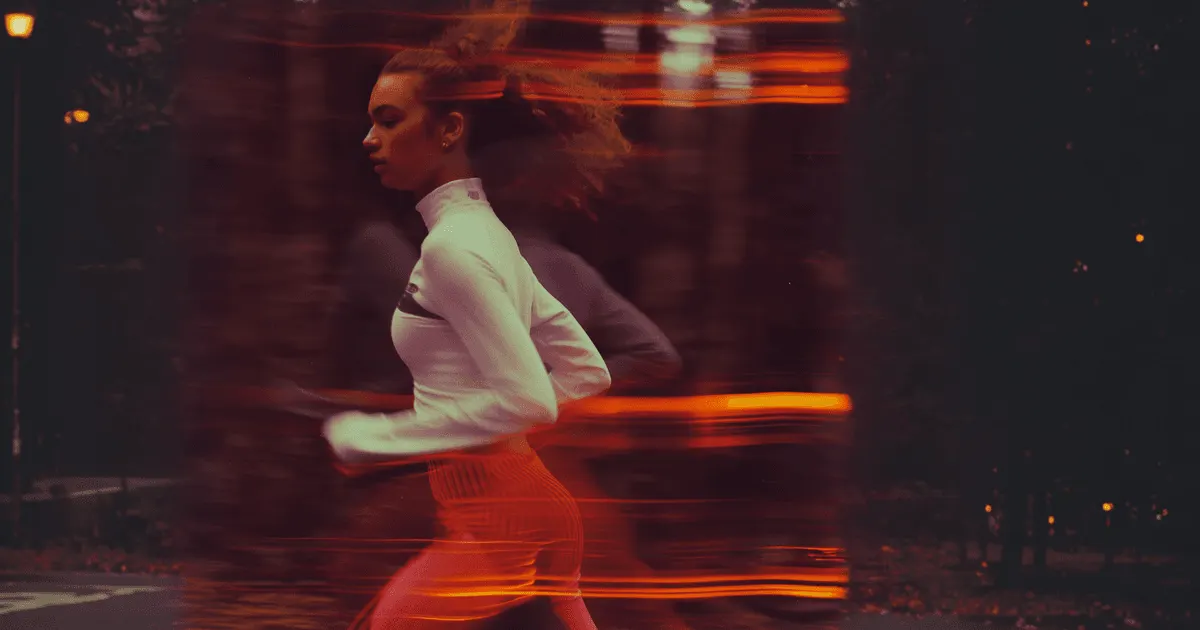
The best AI video tools for fitness and activewear brands in 2026 depend on the job. Synthesia and HeyGen make presenter and testimonial ads. Creatify builds performance ad variants for paid social. Pika turns a product photo into motion. CapCut and VEED edit real footage into clips. DesignerBox runs all of it from one product photo, on one bill, starting at $15 a month.
You have a drop every month, a leggings line to shoot, and six ad placements to fill by Friday. A studio day for the video alone is four figures, and the footage is stale by the next release. That is the squeeze every activewear label, supplement brand, and equipment store is in right now, and it is why AI video moved from novelty to line item.
This guide covers the tools a fitness brand reaches for, what each one costs at list, checked against the vendor’s own pricing page in July 2026, and which job each is built for. Prices in this category are widely misreported, so every number here was read off the source, not a roundup.
Key Takeaways
- There is no single best tool, there are best tools per job. Presenter ads, product-in-motion, and footage editing are three different jobs, and almost nothing is the cheapest at all three.
- Synthesia and HeyGen are avatar-led. They put a synthetic presenter on camera. Synthesia’s Starter and HeyGen’s Creator are both $29 a month, and both have a free tier (synthesia.io, heygen.com, July 2026).
- Creatify is built for paid social. Starter is $39 a month for 100 credits, with an Ad Launcher that pushes creative to Meta and TikTok (creatify.ai, July 2026).
- Pika turns a still into motion. Paid plans start at $8 a month billed annually, and commercial use is on the paid tiers, not the free one (pika.art, July 2026).
- CapCut and VEED are editors, not generators. They cut real footage into clips. CapCut’s Pro price is set in-app and varies by region (capcut.com, July 2026).
- Video burns credits in every tool, because the underlying models charge for it. Budget static and video separately, always.
- DesignerBox is the campaign pipeline, not a single-clip tool. One product photo becomes the stills, the on-model shots, and the video, with thirteen models on one $15 subscription.
Why fitness and activewear brands are moving to AI video
Video is where the ad money is going. U.S. digital video ad spend is projected to pass $80 billion in 2026, growing faster than the wider ad market (iab.com, 2026). For a fitness brand, that means Reels, TikTok, and paid social are the shelf, and static images alone no longer hold it.
The problem is cadence. A running-shoe brand or a whey-protein label ships new SKUs monthly, and each one needs motion: the garment moving on a body, the tub rotating in light, the before-and-after that a still cannot carry. A photoshoot per drop does not scale, and freelance edit turnaround does not fit a Friday deadline.
AI video tools close that gap in one of three ways. Some generate a synthetic presenter to read your script. Some turn a product photo into a moving clip. Some cut footage you already have into platform-ready sizes. Knowing which job you are buying is the whole decision.
The best AI video tools for fitness brands, compared
The table below is the fast version. Every price is the entry paid tier, read from the vendor’s own page in July 2026. Where a vendor defaults to annual billing, the monthly-billed rate is higher, and that is flagged in the tool sections underneath.
| Tool | Best for | Entry price | Free option | Product in frame |
|---|---|---|---|---|
| Synthesia | Branded presenter and explainer video | $29/mo (Starter) | Yes, 1,200 credits/mo | Avatar-led, product optional |
| HeyGen | Testimonial-style avatar ads | $29/mo (Creator) | Yes, 3 videos/mo | Avatar-led, product optional |
| Creatify | Performance ad variants for Meta and TikTok | $39/mo (Starter) | Yes, 10 credits/mo | Yes |
| Pika | Turning a product or apparel photo into motion | $8/mo billed annually (Standard) | Yes, 80 credits/mo | Yes, image-to-video |
| VEED | Editing and repurposing real footage | From $12/user/mo billed annually | Yes, watermarked | Real footage |
| CapCut | Fast, free social edits and captions | Free editor; Pro priced in-app | Yes | Real footage |
| DesignerBox | Campaigns where one product photo feeds every asset | $15/mo (Basic) | Yes, 112 credits | Yes, built from your product |
All figures read from each vendor’s pricing page, July 2026. Entry prices are the lowest paid tier; several vendors default to annual billing, which lowers the per-month figure shown.
What each tool is best for
Synthesia
Synthesia is an avatar and presenter platform built for branded and training video. You write a script, pick from its avatar library, and it renders a person delivering it, with one-click translation into dozens of languages. For a fitness brand, that fits program explainers, coach-led education, and app walkthroughs more than product hero shots.
The free Basic plan gives 1,200 credits a month, enough for roughly 10 minutes of video. Starter is $19 a month billed monthly, or $14 a month billed annually. Creator is $49 a month, or $39 billed annually (synthesia.io/pricing, July 2026). The page opens on the monthly view and carries a Monthly and Yearly toggle, so check which one is selected before you quote a figure.
Scope note: the product appears as an inserted image or not at all. Synthesia is built around the presenter, not your SKU.
HeyGen
HeyGen is the other established avatar platform, and the one with a genuinely usable free tier: 3 videos a month at no cost. It leans toward testimonial-style and UGC-shaped presenter ads, which is a common format for supplements and fitness gear.
Creator is $29 a month for 600 credits, or $24 billed annually. Pro is $49 a month for 1,000 credits and adds 4K export. Business is $149 a month plus $20 per seat (heygen.com, July 2026). If a synthetic presenter reading a script is the whole ad, HeyGen and Creatify are the tools to price first. Our guide to making a photo talk with AI covers that presenter format.
Creatify
Creatify is built for performance marketers, and the feature set shows it: a competitor ad tracker and an Ad Launcher that pushes creative straight to Meta, TikTok, and AppLovin from inside the tool. For a brand running paid social at volume, that is the pitch.
The free plan includes 10 credits a month, enough for 2 video ads or 20 image ads, with a watermark. Starter is $39 a month for 100 credits. Pro is $99 a month, with credits scaling from 300 to 5,000 (creatify.ai, July 2026). The page advertises up to 50% off annual, so confirm which billing period your quote assumes. If Creatify is already your tool, the Creatify alternatives comparison covers what else fits the same job.
Pika
Pika is a text and image-to-video generator, and for a fitness brand its most useful trick is motion from a still. Feed it a flat product photo of a shaker bottle or a pair of leggings and it animates the shot, which is the fastest path from a catalog image to a scrollable clip.
The free tier gives 80 credits a month at 480p with a watermark and no commercial use. Standard is $8 a month billed annually for 700 credits, Pro is $28 for 2,300, and Fancy is $76 for 6,000 (pika.art, July 2026). Commercial use starts on the paid plans, which matters the moment the clip becomes an ad. For the broader ecommerce version of this job, see AI image to video for ecommerce.
VEED
VEED is an editor and repurposing tool with AI features layered on top. Its job is the footage you already have: a gym shoot, a coach’s phone clip, a product demo, cut into captioned, correctly-sized versions for each platform.
VEED defaults to annual billing. Creator is $12 per user a month billed annually for 6,000 credits, Pro is $22 for 30,000, and Studio is $39 for 180,000 (veed.io, July 2026). It is per seat, and the monthly-billed rate runs higher than the annual figure shown. VEED does not generate your product from scratch. It edits what you shot.
CapCut
CapCut is the free editor most social teams already have open. It handles captions, trims, trending audio, and quick vertical cuts, which covers a large share of a fitness brand’s day-to-day social output at no cost.
It also sells a Pro tier. CapCut’s own help page states that Pro pricing varies by region, device, and current promotion, so there is no single published USD figure to quote (capcut.com, July 2026). Treat CapCut as a free editor with an optional paid upgrade you price in your own account, not a video generator.
What a fitness brand video costs
Plan price is the wrong unit. The number that decides your budget is cost per finished clip, and video is the expensive operation in every tool here. That is not a markup choice, it reflects what the underlying models charge, so it shows up everywhere.
DesignerBox prices the same way, and the numbers are worth stating plainly. An image is 5 credits. A set of nine avatar images is 25. Video is charged per second of output: a 5-second clip on a fast model at 720p runs about 150 credits, while 8 seconds of Google’s Veo 3 with native audio is 6,400 credits (deepmind.google, July 2026, on native audio).
Plans run from a free tier with 112 credits, through Basic at $15 a month for 500, Pro at $35 for 1,000, Premium at $75 for 2,500, and Ultra at $200 for 8,000, listed on the DesignerBox pricing page.
Sit with that 6,400 figure. Eight seconds of the most expensive model costs more than the entire monthly allocation on the $75 Premium plan. Premium is also the first tier that includes AI video, so a video-first brand starts at $75, not $15. Our breakdown of how many clips your plan buys does this math across models and durations.
The baseline worth beating is not another app’s plan price. It is what a shoot costs you now, per drop, times twelve drops a year.
How to pick the right tool for the job
Four questions, in the order that matters.
- Is the ad a person talking, or your product moving? A presenter reading a script points to Synthesia or HeyGen. Your leggings or tub in motion points to a generator like Pika, or to a campaign tool.
- Does your actual product need to be in frame? If yes, an avatar platform is the wrong shape at any price, because the product is optional in those tools by design.
- What does one finished clip cost? Divide plan credits by the cost of the asset you ship. Never compare plan prices directly, and confirm whether the number you were quoted is monthly or annual.
- What happens after the clip renders? The video is one asset. The campaign still needs the stills, the sizes, and the next variant, all on brand.
That last question is where single-clip tools stop and a pipeline starts.
Where DesignerBox fits, and where it does not
DesignerBox is a campaign tool, not a single-clip generator, and the honest version of that distinction matters. If your job this month is 20 talking-head ads with a synthetic presenter and no product in frame, a purpose-built avatar tool will cost less per clip. Say so plainly.
The better fit is when the video is one output of a campaign rather than the whole thing. You start from one product photo, and that same photo produces the product stills, the on-model activewear shots, the styled scenes, and the video, in one workspace, all built from your real SKU rather than a lookalike. Thirteen image and video models across six providers sit on one subscription, so a shot that needs a different model does not need a different bill. The model catalogue lists what is included.
Two entry points fit a fitness brand directly. The Fashion Video Creator turns an apparel photo into on-model video, which is the exact job an activewear label has every drop. The Product Ad Generator turns a product photo into a finished ad. Save the campaign that worked as a workflow, and the team reruns it for the next release. For the apparel side of this, our guide to AI tools for fashion brands and putting activewear on a model go deeper. The stills that sit alongside the video have their own rules, and activewear photography covers the Amazon crops for leggings and sports bras plus the shot list that proves fit.
The honest limitations, stated once. AI video needs Premium at $75 a month, not the $15 Basic tier. The commercial licence starts at Pro, $35. Team collaboration, shared brand kits, and API access are Ultra at $200. And video burns credits fast, as the numbers above show.
The real cost was never the subscriptions. It is the seams: the brand drift every time you paste between six tools, the assets nobody can find, and the prompt box you relearn for each one. That is what to price. See it working on the Ad Studio page.
A fitness creator persona keeps the same face across a training series, and the fitness coach weekly workflow reruns the batch each week.
FAQ
What are the best AI video tools for fitness brands in 2026?
It depends on the job. For a synthetic presenter, Synthesia and HeyGen both start at $29 a month, each with a free tier. For paid-social ad variants, Creatify starts at $39. For turning a product photo into motion, Pika starts at $8 a month billed annually. For editing real footage, CapCut is free and VEED starts at $12 a user. For campaigns where one photo feeds every asset, DesignerBox starts at $15. All prices verified July 2026.
Can AI make a video from an activewear product photo?
Yes. Image-to-video tools like Pika animate a still directly, and campaign tools build motion from your product photo as one step in a wider set of assets. In DesignerBox, the Fashion Video Creator app turns an apparel photo into on-model video without a shoot. The output is your actual garment, not a generic lookalike.
How much do AI video tools cost for a fitness brand?
Entry paid tiers run from $8 a month (Pika, billed annually) to $39 (Creatify), with free tiers on most tools. The number that matters more is cost per finished clip, because video draws far more credits than static. Divide a plan’s credits by the cost of the asset you ship, and confirm whether the price you were quoted is monthly or annual.
What is the best AI tool for on-model activewear video?
For putting a garment on a body in motion, you want either an image-to-video generator or a campaign tool built for apparel. DesignerBox’s Fashion Video Creator is built for exactly this, starting from your flat product photo. Avatar tools like Synthesia and HeyGen are the wrong shape here, because they center a presenter rather than your product.
Can you run AI-generated video ads for a supplement or fitness product?
Yes, with two rules. The commercial licence must cover paid use, which on DesignerBox starts at the Pro tier. And platforms increasingly label or require disclosure of AI-generated ads. Our guide to the best AI UGC ad tools covers the FTC and platform-disclosure picture in detail. The tool you pick matters less here than the claim your ad makes.
Can AI video replace a fitness photoshoot?
For catalog motion, product-in-frame clips, and ad variants, it removes most of the need for a shoot per drop. For a signature brand film or a hero campaign, a real shoot still earns its place. The practical model most fitness brands land on is AI for volume and cadence, a shoot for the moments that define the brand.
Sources
- Synthesia plan pricing, free-tier credits and the monthly/yearly toggle: (synthesia.io/pricing, July 2026)
- HeyGen plan pricing, credit allocations, free videos and 4K export tier: (heygen.com, July 2026)
- Creatify plan pricing, credit steps, free-tier watermark and Ad Launcher: (creatify.ai, July 2026)
- Pika plan pricing, free-tier limits and commercial use on paid tiers: (pika.art, July 2026)
- VEED per-seat pricing and annual-billing default: (veed.io, July 2026)
- CapCut’s statement that Pro pricing varies by region, device and promotion: (capcut.com, July 2026)
- Veo 3 native audio: (deepmind.google, July 2026)
- U.S. digital video ad spend projection: (iab.com, 2026)
- DesignerBox pricing, credit costs, plan allocations and feature gating verified against live product configuration, July 2026
Competitor pricing read from each vendor’s own pricing page in July 2026: synthesia.io, heygen.com, creatify.ai, pika.art, veed.io, and capcut.com. Several vendors default to annual billing, so monthly-billed rates are higher and are flagged above. Model facts verified against deepmind.google. Industry figure from iab.com, 2026. DesignerBox credit costs and plan allocations are current as of July 2026. Individual results vary.