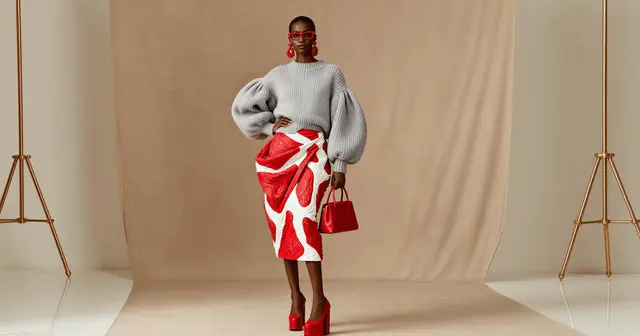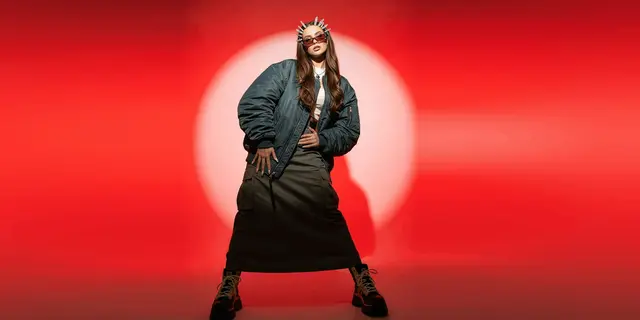

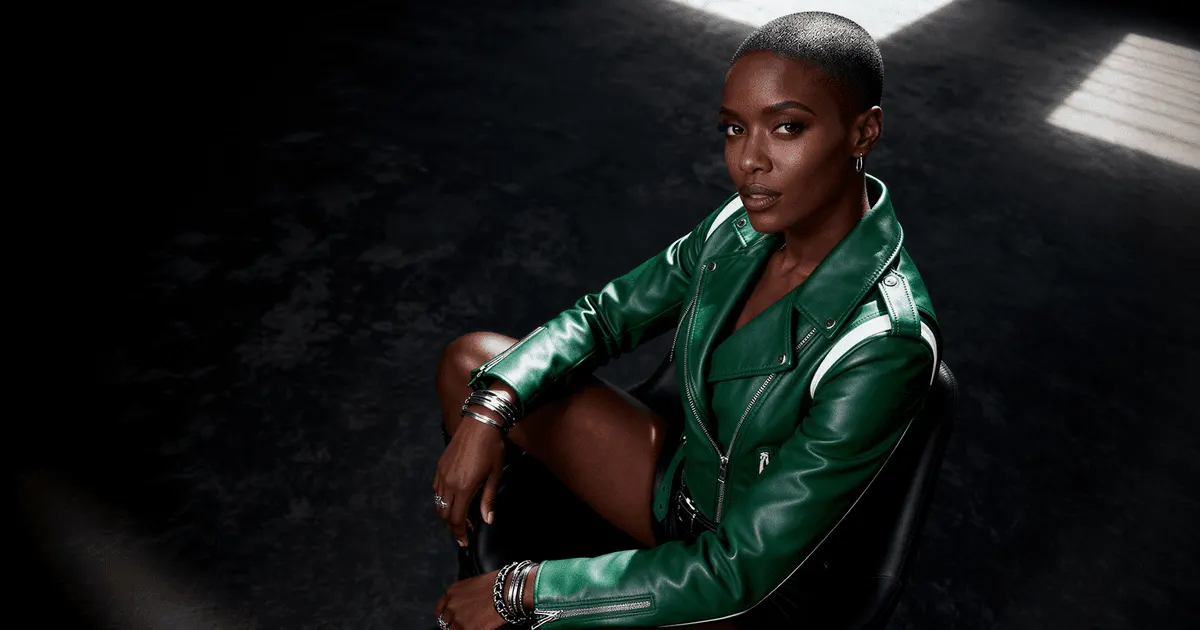
Most AI fashion models are not real people. An AI fashion model comes from one of three sources: a fully synthetic person built from nothing, a digital twin of a real model who signed a consent agreement, or a face produced by a general-purpose image model. The source is not a detail. It decides whether you owe a consent form, a disclosure label, or both.
Every vendor in this category answers the provenance question the same way. No real people, no stock faces, nothing scraped. It reads as reassurance, and it is usually true. It is also answering a question you were not asking.
The question that matters to a brand shipping a catalog is narrower. Two disclosure rules started applying in 2026, one in the EU and one in New York, and both can reach a model who never existed, by different routes. This guide maps the three sources onto what each one obligates you to do, and what to ask a vendor before you commit a season to their output.
Key Takeaways
- Three sources, not two. Fully synthetic, digital twin of a consenting model, or a face from a general-purpose model. The third has no provenance record, so you cannot audit it.
- The EU rule can cover a person who never existed. A realistic person who never existed can still count as a deep fake under Article 50(4) of the AI Act. The Commission says it is enough that the person could plausibly exist (Commission guidelines, C(2026) 5054, accessed September 2026).
- The New York rule covers it directly. Its synthetic performer disclosure applies because the figure is not recognizable as any identifiable real performer (nysenate.gov, in effect since 9 June 2026).
- Consent and disclosure are separate duties. Clearing one does not clear the other. Synthetic provenance removes the consent problem and leaves the disclosure problem.
- Digital twins carry a paperwork load. New York’s Fashion Workers Act requires separate written consent naming scope, purpose, pay rate and duration (dol.ny.gov, in effect since 19 June 2025).
- Ask for the record, not the claim. A provenance claim you cannot document is worth nothing at the point somebody asks you to prove it.
Where AI fashion models come from
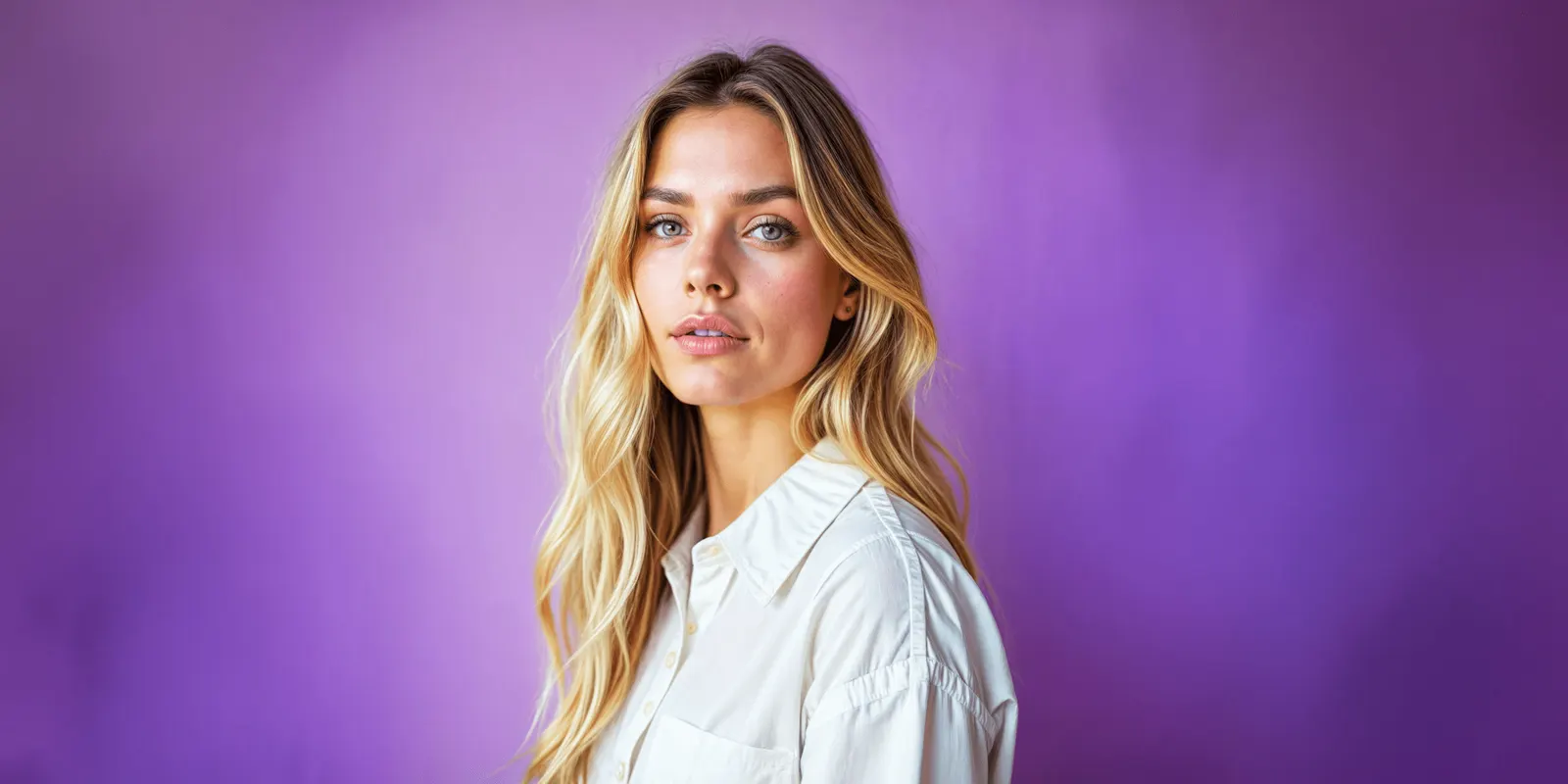
An AI fashion model is a photographic human figure produced by a generative model rather than a camera. Three production routes exist, and they differ in what sits behind the face. One starts from nothing, one starts from a real person under contract, and one starts from whatever a general-purpose image model learned. The output can look identical in all three cases.
Route one: fully synthetic
The model is built from nothing by a system trained for the job. No individual is being represented, and no likeness is being reused. Vendors built around apparel take this route and say so plainly. Botika, for example, states that its models are built by its own system, are not based on any real person and are not modified stock images, and that no model release forms are needed (botika.com/resources, September 2026).
That claim is doing real work. In the US, the right of publicity protects identifiable people and comes mainly from state law (law.cornell.edu, accessed September 2026). A figure that corresponds to no living person gives that right no one to protect, and there is no talent agreement to negotiate or renew. The practical side of this route, meaning how the first frame of a person who does not exist gets made, is covered in how to create an AI fashion model.
Route two: a digital twin of a real model
A real model is photographed from multiple angles under varied lighting, and a system learns to reproduce them. H&M ran the best-known version of this, creating digital twins of 30 models who retain rights over their replica and are paid for its use in the same way they would be paid for image licensing (inc.com, 2025). Companies now license such twins to other brands, and our guide to the AI model agency compares the routes.
The twin keeps something synthetic models throw away: an actual person with a following, a booking history and brand equity. It also keeps every obligation that person’s likeness carries.
Route three: a face from a general-purpose model
The quiet third option. A team generates a model with a general image model and ships it. There is no vendor making a provenance claim, because there is no vendor in the loop beyond the model provider. Whether the face resembles a specific individual is unknown to everyone involved, including the person who generated it.
This is the route with no paper trail. It is also, in our experience, the most common one at brands that have not yet been asked the question.
Why “no real people” is a compliance position
The phrase reads like marketing. Treat it as a compliance statement instead, because that is what it does. It resolves exactly one of three obligations a brand carries when it publishes a generated human figure.
The three obligations are consent, disclosure and substantiation. Consent asks whether the person depicted agreed. Disclosure asks whether your audience is told the figure is generated. Substantiation asks whether the image misrepresents the product. Fully synthetic provenance answers the first one cleanly and says nothing about the other two.
Both public failures in this category were disclosure failures, not consent failures. Guess ran an AI model in the August 2025 issue of Vogue with a small line reading “Produced by Seraphinne Vallora on AI”, and the backlash was about how easy the line was to miss (forbes.com, July 2025). Levi’s took criticism in 2023 for framing AI-generated models as a diversity measure (nbcnews.com, 2023). In neither case was a real person’s likeness taken.
The two 2026 rules and how they differ
Article 50 of the EU AI Act has applied since 2 August 2026. Its deployer disclosure duty covers deep fakes: AI-made or AI-edited images, audio or video that look like real people, objects, places or events and could make people think they are real (Commission FAQ, accessed September 2026). The Commission’s guidelines, published 20 July 2026, say “it is sufficient for simulated persons … to resemble someone or something that exists, can plausibly exist or could have plausibly existed in reality to be considered a deep fake”. They also treat “realistic AI-generated human avatars or personas” as persons. So a realistic person who never existed can still count as a deep fake. A clearly unrealistic figure falls outside. Photorealism alone does not decide it: the content must also be able to mislead people about whether it is real (Commission guidelines, C(2026) 5054, accessed September 2026). The guidelines are not binding.
A separate provider duty under Article 50(2) also applies. The tool that generated the image has to mark its output in a machine-readable way so it is detectable as AI-generated. Tool makers whose systems were on the market before 2 August 2026 have until 2 December 2026 to add those marks. That grace period covers only the marking duty, and it does not delay a brand’s duty to label deep fakes. A hidden machine-readable mark also does not count as your label.
New York takes a different route to the same figure. General Business Law section 396-b, added by bill S8420-A, took effect on 9 June 2026. If you make an ad and you know it contains a synthetic performer, the ad must say so in a way people will notice. New York defines a synthetic performer as a digital asset, made with generative AI or software, that looks like a human performing, where the person is not recognizable as any real, identifiable performer. The civil penalty is $1,000 for a first violation and $5,000 for each later violation. The law does not apply to audio-only ads (nysenate.gov, accessed September 2026).
Read those two together. A fully synthetic model can fall inside both. The EU guidelines reach it because it looks like a person who could plausibly exist. The New York law reaches it because it resembles no real performer. The EU rule covers any realistic deep fake a deployer publishes, while the New York rule covers ads. There is no provenance choice that clears disclosure by default. This is general information, not legal advice.
What each source obligates you to do
| Source | Consent duty | EU deepfake disclosure | NY synthetic performer disclosure | What you keep |
|---|---|---|---|---|
| Fully synthetic | None. No individual is depicted | Likely in scope if realistic. The person only has to be plausible | Applies in ads. Not recognizable as a real performer | Full control, no renewals |
| Digital twin of a real model | Separate written consent naming scope, purpose, rate and duration | In scope if realistic. Resembles an existing person | Turns on recognizability, so take advice | A real identity with existing equity |
| Face from a general-purpose model | Unknown, which is the problem | Likely in scope if realistic | Applies in ads if it resembles no real performer, which you cannot evidence | Nothing you can document |
The consent cell for the third route says “unknown” on purpose. A face you generated without a provenance record cannot be placed on either side of the resemblance test, and an obligation you cannot rule out is an obligation you carry.
The Fashion Workers Act sets the consent standard for route two. Since 19 June 2025 it has required separate, explicit written consent for a model’s digital replica, specifying scope, purpose, pay rate and how long the replica will be used (dol.ny.gov, accessed September 2026). Routine edits like color correction and minor retouching are not digital replicas (dol.ny.gov, accessed September 2026). Model management companies must also register with the New York State Department of Labor.
The question to ask a vendor
Not “are your models real people”. Every vendor answers that the same way, and the answer is generally honest. Ask for the record instead. The record belongs on your AI model cast sheet, next to the face files.
- Can you state in writing that outputs are not derived from an identifiable individual? A sentence in a blog post is a position. A line in your contract is a record.
- Do outputs carry machine-readable AI marking? Article 50(2) puts this on the tool, not on you, and the December 2026 date applies to systems already on the market. The mark does not replace your own label where one is needed.
- Who holds commercial rights to the output, and from which plan? Read the license terms and the plan they start on before you build a season on it.
- Can I hold one model across a catalog? This is a production question, not a legal one, and it is where most evaluations fail. Our guide to consistent on-model product images covers the four things you have to lock.
- Does the garment stay anchored to my real photo? A model generated from a description is a different product from a garment rendered onto a person. The AI fashion model generator comparison splits the category on exactly that line.
Worth knowing before you choose a route: the retailers running the highest volumes mostly did not pick the fully synthetic one. What fashion brands using AI models shipped, verified from filings and press releases, shows the pattern reversing the way vendors describe it.
Where DesignerBox sits
DesignerBox starts from your garment. You add the flat lay or packshot you already own, and the on-model image is made around that real photo rather than from a description of it. That is the point of virtual try-on: the garment in the result is your garment, with the same model, light and framing on every product.
On the model itself, a model you save once from a model creator template is an identity you define and hold across a range, which is route one with a record you control. An avatar run returns nine fixed poses for 25 credits. The cost of a run depends on the model you pick, and you see what a run costs before you run it.
The garment photo, the try-on step, the edits, the brand rules and the finished files sit in one place, in one subscription. The provenance record stays next to the images it produced. Uploading your own photos and the commercial license start on the Pro plan. Virtual try-on starts on the Premium plan. The workflow reads your brand record on every run. Every model in the set then carries the same light and framing.
Whichever of the three sources you pick, the work is worth doing once. Settle the model, the light, the pose and the crop on the first garment, save that as a workflow, then run it again for the next garment and the one after. A saved workflow runs the same way on the next product, because the decisions live in the workflow instead of being remade per shot.
None of that decides your disclosure position for you. Whatever tool you use, the label is a decision your team makes per placement and per market, and it belongs in the brief rather than at the end of the process. Which assets in a drop need a label works through that call asset by asset, and how to put clothes on a model with AI walks the production steps.
Once that is settled, start from a model pose set template, add your garment, and run it.
FAQ
Are AI fashion models real people?
Usually not. Fully synthetic models correspond to no living individual. Digital twins do correspond to a real model, who has signed a consent agreement and is paid for the replica’s use. A third group, faces generated with general-purpose image models, has no provenance record either way, which means nobody involved can answer the question with evidence.
Do I have to disclose that a model in my ad is AI-generated?
In New York, yes, if you make an ad and know it contains a synthetic performer, since 9 June 2026. The civil penalty is $1,000 for a first violation and $5,000 for each later one (nysenate.gov, September 2026). In the EU, a realistic AI model can count as a deep fake even if the person never existed, because the Commission says it is enough that the person could plausibly exist. The generating tool must also mark its output as AI-generated. Ask a lawyer about your own markets and placements.
What is the difference between a synthetic model and a digital twin?
A synthetic model is built from nothing and depicts nobody. A digital twin is trained on photographs of a specific real model and depicts that person. The twin requires consent, compensation and renewal. The synthetic model requires none of those and instead carries the New York synthetic performer disclosure the twin may not. Both can fall under the EU deep fake rule if they look real.
Do I need a model release for an AI fashion model?
For a fully synthetic model, generally no, because no individual is depicted. For a digital twin, yes, and New York’s Fashion Workers Act sets a high bar: separate written consent naming the scope, purpose, pay rate and duration of use (dol.ny.gov, September 2026). Routine retouching does not count as a digital replica.
Can I use AI fashion models in paid ads?
Yes, subject to disclosure rules in the markets you run in and to each platform’s own policy on labeling synthetic people. Commercial rights come from your tool’s license terms, so confirm which plan grants them. In DesignerBox the commercial license starts on the Pro plan.
Do real brands use AI fashion models?
Yes, and some did it in public. H&M created digital twins of 30 models, who keep rights over their replica and are paid for its use. Guess ran an AI model in the August 2025 issue of Vogue with a small disclosure line. Levi’s took criticism in 2023 for presenting AI-generated models as a diversity measure. Both public failures were about disclosure, not consent.
Will an AI fashion model look like a specific real person by accident?
It can happen with general-purpose image models, and you have no way to check at scale. Tools built for apparel generate the figure through their own system rather than by describing a person, which narrows the risk. The practical control is the same either way: keep the record of where the face came from.
Sources
- EU AI Act Article 50 transparency duties, the deep fake definition, the 2 August 2026 application date and the 2 December 2026 marking grace period: digital-strategy.ec.europa.eu, accessed September 2026
- Commission guidelines on Article 50, C(2026) 5054, published 20 July 2026, on simulated persons who “can plausibly exist” and “realistic AI-generated human avatars or personas”: ec.europa.eu, accessed September 2026
- New York General Business Law section 396-b, the synthetic performer definition, penalties and exemptions: nysenate.gov, and bill S8420-A, signed 11 December 2025, effective 9 June 2026: nysenate.gov
- New York Fashion Workers Act digital replica consent requirements and registration: dol.ny.gov FAQ
- The routine-retouching exclusion from the digital replica definition: dol.ny.gov definitions
- Right of publicity as mainly state law in the US: law.cornell.edu
- H&M digital twins of 30 models, rights retention and compensation: inc.com, 2025
- Guess campaign in Vogue and the disclosure line: forbes.com, July 2025
- Levi’s AI model announcement and response: nbcnews.com, 2023
- Botika’s stated model provenance, taken from its own resources page on how it builds its AI fashion models: botika.com/resources, September 2026
- DesignerBox plans and feature gating: DesignerBox pricing page (designerbox.ai/pricing), September 2026
Regulatory positions verified from the European Commission, the New York State Senate and the New York Department of Labor as of September 2026. This is general information, not legal advice. Confirm your obligations for your own markets and placements. Individual results vary.