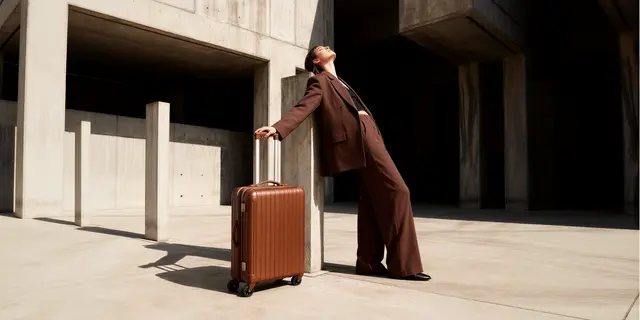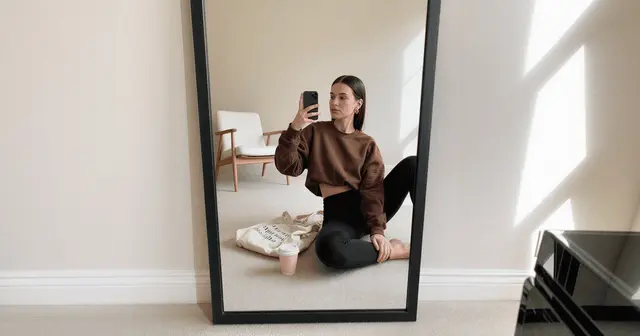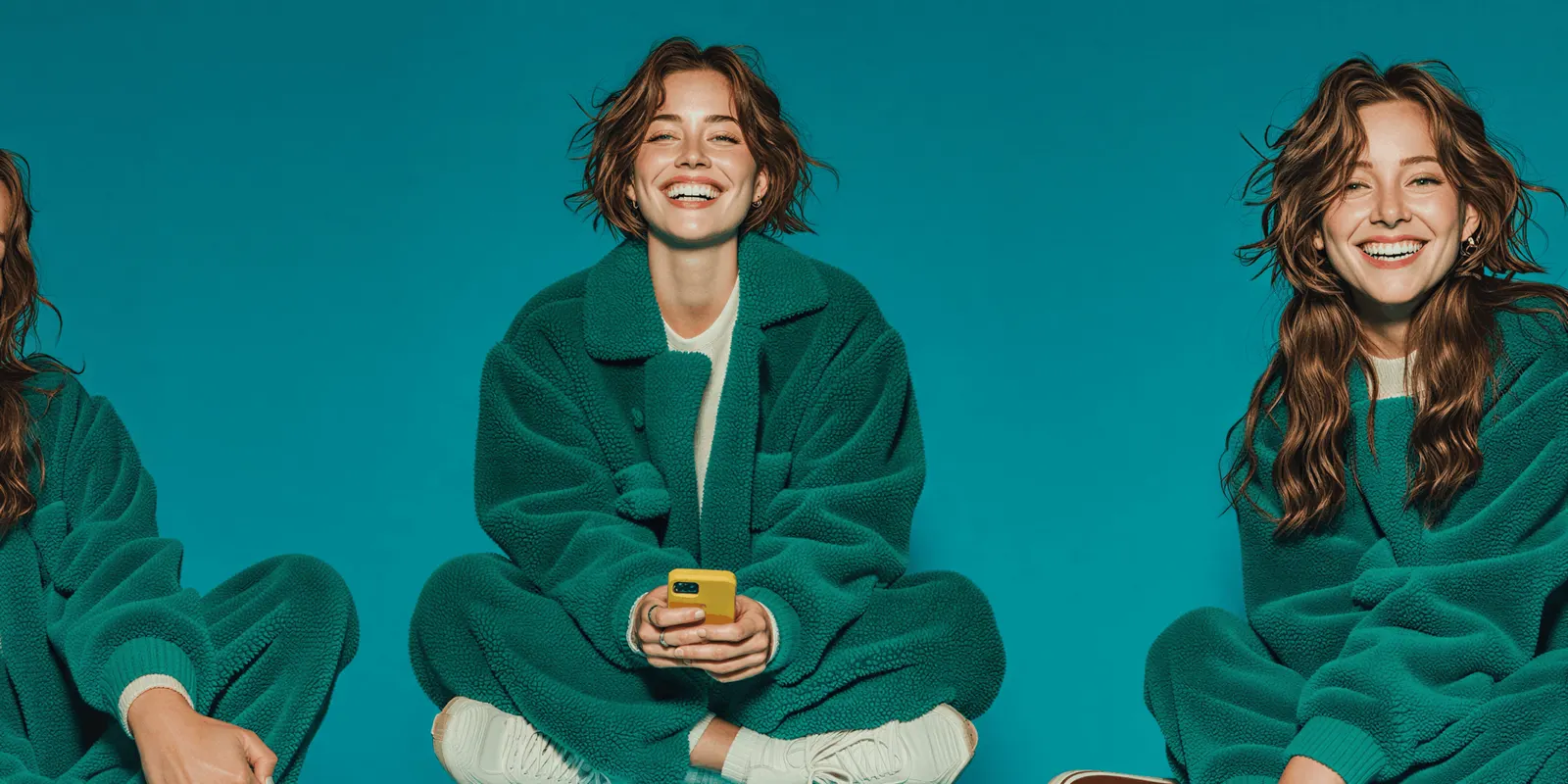
An AI fashion model generator renders a person wearing your garment from a flat product photo. There is no genuinely free tier in this category, so an AI fashion model generator free of charge means a trial allocation, and the size of it decides how much you can test. The tools split on three things: whether the garment stays anchored to your real photo or gets reinvented from a description, whether one model can be held consistent across a collection, and whether the output ships to a PDP or needs a retoucher first.
Those three questions decide everything, and almost no comparison asks them. They also come after a prior one, which is whether a given shot wants a generated model or a photographed one.
Here is the version of this you already know. A drop lands in six weeks. You have flat lays for every SKU and nothing on a body. Casting takes a week, the shoot is a day rate, and the studio calendar has one slot that works. Then marketing asks for the black colourway too, and the black colourway was not on the call sheet, so it goes to the next shoot, which is in eight weeks.
The generators exist to break that loop. What they do not do is break it in the same way, and the differences are not the ones the feature grids advertise.
This compares four tools on the axes that govern whether the output ships. It is written for fashion and apparel brands running a drop calendar, not for anyone making one image for fun.
Key Takeaways
- “Anchored to your photo” is the axis that matters most. A generator that starts from your real garment photo returns your garment. One that starts from a text description returns a garment like yours, and on a PDP that difference is a return. Returns are the term that decides whether an imagery change pays, which we break down in how to increase ROAS for fashion ecommerce.
- Model consistency across a collection is a separate feature, not a byproduct of good output. Ask how it is held before you commit a catalogue to a tool.
- FASHN publishes a clear credit ladder starting at $19/month for 200 credits (fashn.ai/pricing, July 2026), and covers try-on, product-to-model, editing, upscaling and video in one credit currency.
- Botika converts flat lays to on-model photos and prices photos at 1 credit and videos at 5 (botika.com, July 2026).
- Looklet runs on a library of 30+ AI-created models with styling from ghost or mannequin shots, and quotes pricing on request rather than publishing it (looklet.com, July 2026).
- DesignerBox gates try-on and AI video at Premium, $75 a month. That is a real constraint for this buyer and it is stated up front, not in a footnote.
- HuHu.ai is discontinued as of July 2026 (huhu.ai). If it is on a comparison list you are reading, that list is stale.
| Tool | Anchored to your photo? | Model consistency | Best for |
|---|---|---|---|
| FASHN | Yes. Try-on and product-to-model both take your garment image | Model creation plus reuse across generations | Brands who want one published credit ladder covering try-on, edits and video |
| Botika | Yes. Built around flat lay to on-model conversion | Customisable AI models across demographics | Ecommerce teams who want flat lays turned into on-model shots as the core job |
| Looklet | Yes. Styles from ghost or mannequin product shots | A fixed library of 30+ AI-created models | Enterprise catalogues who want a stable, repeatable model roster at volume |
| DesignerBox | Yes. Every asset builds from your actual product photo | Kontext Multi combines references to hold character and style | Fashion teams who need on-model, stills and video from one photo on one bill |
What an AI fashion model generator does
An AI fashion model generator takes a garment image and produces a photograph of a person wearing it. The input is usually a flat lay, a shot made with ghost mannequin photography, or a packshot. The output is on-model imagery for a PDP, a lookbook, a marketplace listing, or a paid ad. If the on-model shot already exists and only the garment is wrong, that is a different job, and swapping the garment in a photo you have already approved edits the clothing while the person, the pose and the background stay put.
The category name is doing some work it should not. “Model generator” implies the model is the product. For a brand, the model is the container, and the garment is the product. A tool that produces a beautiful person wearing an approximation of your jacket has produced nothing you can sell.
That is the anchoring question, and it is worth pressing on. Two workflows look identical in a demo:
- Garment-anchored. Your photo is the source. The system dresses a generated person in the garment from your image, preserving the print, the seam lines, the hardware, and the drape.
- Description-anchored. Your photo informs a description, and the system generates a garment matching that description. Fast, flexible, and structurally incapable of guaranteeing the button placket matches.
Every tool below is garment-anchored, which is why they are in this comparison and why most general image models are not. Anchoring is the price of entry for commerce.
Model consistency is the second axis, and it is undersold
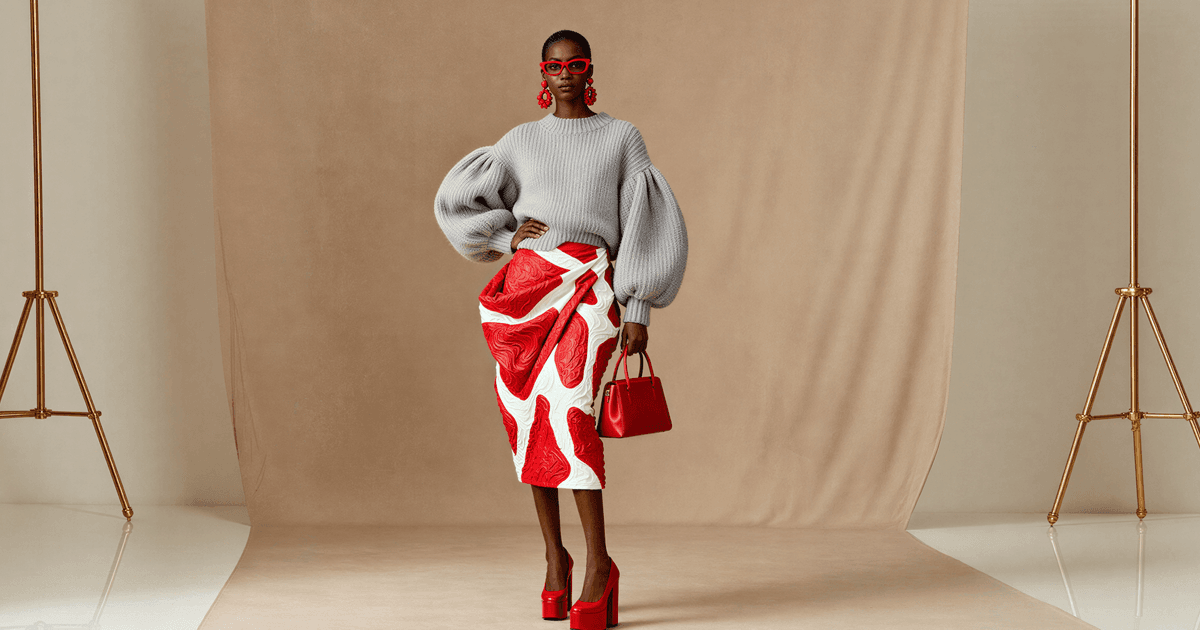
One shot is a demo. A collection is a business.
If your spring range is forty pieces and each piece is shot on a different generated face, you have not produced a lookbook, you have produced forty unrelated images. Customers read that as inconsistency, and merchandisers read it as unusable. The whole point of casting a model is that she appears across the range.
So the real question is: how does the tool hold one identity across forty generations? There are three answers in the market.
- A fixed roster. The tool ships a library of pre-built models. Pick one, use her everywhere. Predictable, and bounded by the roster.
- Model creation plus reuse. Build a model once, then call her on subsequent generations.
- Reference-conditioned generation. Feed the system reference images and it conditions the output on them, holding character and style across shots.
None is better in the abstract. A fixed roster is the most predictable and the least yours. Reference conditioning is the most flexible and asks more of you. Pick against your catalogue size and how much the model’s identity is part of your brand.
FASHN
FASHN is built specifically for fashion, and the scope is coherent. Try-on, product-to-model, editing, upscaling and video generation all sit behind one credit currency, so you are not learning a second pricing model when the job changes shape (fashn.ai/pricing, July 2026).
The credit ladder is published plainly, which is more than most of this category manages:
| Plan | Monthly price | Credits |
|---|---|---|
| Basic | $19/month | 200/month |
| Pro | $49/month | 750/month plus 50/day |
| Agency | $99/month | 1,500/month plus 100/day |
Verified at fashn.ai/pricing, July 2026. Yearly billing is offered and advertised as saving two months, though the page shows the monthly rates rather than the annual figures, so confirm the annual number at checkout rather than trusting any blog that quotes one.
The daily credit allowance on Pro and Agency is an unusual and genuinely useful mechanic. It suits a team generating steadily through a week rather than burning a month’s allocation on one Tuesday.
Best for fashion brands and agencies who want try-on, on-model and video under one published credit ladder, with a low entry price to test the output on their own garments before committing.
Outside scope: FASHN is a fashion studio. If you also need general campaign creative beyond the garment, that is a different tool’s job. If FASHN is already on your shortlist and the question is what else to weigh it against, five FASHN AI alternatives priced side by side covers both its app and its separately billed API.
Botika
Botika leads with the exact job this article is about. “Turn Flat Lays into On-Model Photos” is the headline claim, and the product is organised around it: on-model photos, flat lay photos, mannequin photography, and AI fashion video (botika.com, July 2026).
Starting from existing product photography is a requirement, not an option, which is the correct constraint for commerce. The platform does not generate clothing from text descriptions. It needs your garment shot, and it returns your garment on a body.
Credit mechanics are clean and easy to plan against: each photo costs 1 credit and each video costs 5 (botika.com/pricing, July 2026). Model options span demographics, and the site’s framing is “giving teams creative freedom, consistency and full control”.
On pricing, I am not going to quote you a number. Botika’s pricing page uses a monthly and yearly toggle with a discount presentation, and the figures I could read did not reconcile cleanly across two reads in July 2026. Rather than interpolate a tier or quote an annual rate as if it were monthly, check botika.com/pricing directly. A wrong price in a comparison table is worse than no price.
Best for ecommerce and apparel teams whose core recurring job is flat lay to on-model conversion, and who want the credit maths to be a single division.
Looklet
Looklet is the enterprise answer, and it is honest about being one. The Virtual Studio proposition is “Upload once, style endlessly”: you upload ghost or mannequin product images and style them on AI-created models in a cloud tool (looklet.com/virtual-studio, July 2026).
The model roster is the differentiator. Looklet offers 30+ high-quality AI-created models, available around the clock, with different looks and facial expressions. For the consistency problem described above, a fixed vetted roster is a real answer: you pick your model, and she is the same model in March and in September.
The company also runs a physical studio operation alongside the software, shooting up to 120 products per day with one or two operators. That is a different shape of business from a self-serve subscription, and it is aimed at retailers with catalogue volume to match.
Pricing is not published. The site’s own line is “Contact us below to understand more about our pricing packages” (looklet.com, July 2026). That is a normal enterprise motion and it tells you who the product is for.
Best for fashion retailers with large catalogues who want a stable model roster and an operating partner, and who are comfortable with a sales conversation instead of a checkout.
Outside scope: self-serve sign-up and a published rate card. If you want to try it tonight on one garment, this is not that tool.
DesignerBox
DesignerBox is not a fashion-only studio, and that is the whole argument. It is a campaign pipeline: one product photo in, the full campaign out, with every top image and video model behind one subscription.
For a fashion brand, that resolves a specific problem. On-model imagery is never the only deliverable. The same garment needs a PDP set, a lookbook, a paid social cut, and a video for Reels, each at its own ratio and pixel floor. Producing on-model shots in one tool and then rebuilding the campaign elsewhere is where brand drift enters, because the seams between tools are where consistency dies. The real cost isn’t the subscriptions. It’s the seams.
The relevant surfaces are Outfit to Image for on-model shots, Fashion Video Creator for turning a garment photo into paid-social video, and virtual try-on. None of these tools reports a size to a shopper, and no shipping try-on product does.
On the consistency axis, the mechanic is Kontext Multi, which combines multiple references to hold character and style across generations. Feed it your model references and your garment, and the same person carries the collection. It is one of 13 models built in, and you can see the full catalogue on the models page.
Every asset builds from your actual product photo. That is why nothing comes out looking generic AI, and it is a claim worth testing rather than believing, which is what the gallery is for. If the worry is output that reads as synthetic, the causes are specific and fixable.
The honest part about pricing and gating
This matters for a fashion buyer more than for any other reader, so it goes in the body, not the FAQ.
Try-on clothes requires the Premium plan, at $75 a month. AI video requires Premium too. Basic at $15 and Pro at $35 do not include either. If try-on is the reason you are reading this article, Premium is your entry price, and you should compare it against a $19 or $49 fashion-specific tool on that basis rather than against DesignerBox’s headline $15.
The rest of the ladder, from the pricing page:
| Plan | Price | Credits/month |
|---|---|---|
| Free | $0 | 112 |
| Basic | $15/month | 500 |
| Pro | $35/month | 1,000 |
| Premium | $75/month | 2,500 |
| Ultra | $200/month | 8,000 |
An image costs 5 credits. Premium’s 2,500 credits is 500 images a month. The free plan’s 112 credits is 22 images, enough to test whether the tool holds your fabric before you pay anything.
One more gate worth knowing: the commercial licence starts at Pro. If you are running output as paid ads or on a live PDP, Pro is the floor regardless of what else you need.
Best for fashion and apparel teams who need on-model shots, product stills and video from one garment photo on one bill, and who are already tired of paying for and reconciling four tools.
How to choose without a two-month evaluation
Run this in order. It collapses most of the decision, and the first three steps run on trial credits.
On the AI fashion model generator free question, DesignerBox starts at 112 credits with no card. An image generation or edit costs 5 credits, so that is roughly twenty-two images: enough to test anchoring on a hard garment and consistency across two sessions before any money moves. Output on the free plan carries a watermark, and the commercial license starts at the Pro tier.
- Test anchoring on your hardest garment. Not the plain tee. The one with a print that has to line up, or hardware, or a pattern that repeats. Every tool here is garment-anchored, and they still differ in how well they hold a difficult one. This is a twenty-minute test and it eliminates candidates faster than any feature grid.
- Ask the consistency question explicitly. Generate the same model twice, a week apart, on two different garments. If she comes back as a different person, you do not have a lookbook tool.
- Price the job, not the plan. Count garments per drop, images per garment, and drops per year. Multiply. Then check that number against each tool’s credit ladder. The cheapest headline plan is frequently not the cheapest job, and the maths takes five minutes.
- Check the licence before the output. Commercial use terms vary, and a beautiful image you cannot run as an ad is a hobby.
- Count the downstream tools. If on-model is one of five deliverables per garment, a fashion-only tool solves a fifth of your problem well. That is a legitimate answer, and it is a different answer from a pipeline.
Cost per garment per drop is the honest planning unit here, in the same way cost per SKU per year is the honest unit for a photoshoot budget. And whatever you generate, the imagery still has to do a job on the page.
On-model is one stage of four, so if you are still assembling the rest, our guide to the AI tools fashion and beauty brands run per drop maps the video, presenter and versioning stages onto verified pricing.
A fashion model persona holds one model identity across a drop, and best AI image model for fashion editorial runs the same garment through each model.
If you are still deciding whether to generate a model at all rather than which vendor to use, the record of what fashion brands using AI models put into market is the better starting point, because the high-volume retailers and the campaign-led brands chose different routes for different reasons.
FAQ
What is an AI fashion model generator?
An AI fashion model generator produces a photograph of a person wearing your garment, using your flat lay, ghost mannequin, or packshot as the source. It replaces or supplements an on-model photoshoot for PDP images, lookbooks, marketplace listings, and paid social creative. The garment comes from your photo rather than from a text description.
Can AI fashion models keep the same face across a whole collection?
Yes, but it is a specific feature rather than a default. Tools solve it three ways: a fixed roster of pre-built models, model creation with reuse across generations, or reference-conditioned generation such as DesignerBox’s Kontext Multi, which combines multiple references to hold character and style. Looklet offers 30+ AI-created models as a library (looklet.com, July 2026). Test it by generating the same model a week apart before you commit a catalogue.
Does an AI fashion model generator keep my garment’s fabric and print accurate?
It depends entirely on whether the tool is anchored to your photo. Garment-anchored tools take your product image as the source and preserve print, seams, hardware, and drape. Tools that generate from a text description return a garment resembling yours, which is a problem on a PDP where the customer is buying the specific item. Test with your hardest garment, not your simplest one.
How much does an AI fashion model generator cost?
It varies by tool and by credit consumption. FASHN publishes Basic at $19/month for 200 credits, Pro at $49/month, and Agency at $99/month (fashn.ai/pricing, July 2026). Botika prices photos at 1 credit and videos at 5 (botika.com, July 2026). Looklet quotes on request. DesignerBox is $75/month on Premium for try-on, with 2,500 credits and images at 5 credits each.
Which plan do I need for virtual try-on in DesignerBox?
Try-on clothes requires Premium, at $75 a month with 2,500 credits. AI video requires Premium as well. Basic at $15 and Pro at $35 do not include either feature. The commercial licence, which you need to run output as paid ads or on a live PDP, starts at Pro.
Can I use AI-generated on-model images in paid ads?
Check the licence on whichever tool you pick, because terms vary and they change. In DesignerBox the commercial licence starts at the Pro tier and up. Platform-level AI disclosure rules are separate from your tool’s licence and depend on the ad platform, so verify both against current policy before a campaign ships. Disclosure law moved in 2026 as well, and it turns on where your AI fashion model came from.
Is HuHu.ai still available?
No. HuHu.ai has been discontinued and is no longer available as of July 2026 (huhu.ai). Comparison articles still listing it as an active option have not been updated.
Sources
All accessed July 2026.
- FASHN plan prices, monthly and daily credit allowances, and the try-on, product-to-model, editing, upscaling and video scope: fashn.ai/pricing (July 2026)
- Botika’s flat-lay-to-on-model positioning, product surfaces and per-asset credit costs of 1 per photo and 5 per video: (botika.com and botika.com/pricing, July 2026)
- Looklet’s Virtual Studio proposition, the 30+ AI-created model roster, the physical studio throughput and the quote-on-request pricing motion: (looklet.com and looklet.com/virtual-studio, July 2026)
- HuHu.ai discontinued: (huhu.ai, July 2026)
- DesignerBox pricing, credit costs, plan allocations and feature gating for try-on, AI video and the commercial licence verified against live product configuration, July 2026
Competitor pricing and features verified from fashn.ai, botika.com, looklet.com and huhu.ai as of July 2026. Botika’s plan prices are omitted because the published figures did not reconcile across reads; check botika.com/pricing for current rates. DesignerBox credits, pricing, and feature gating verified against live product configuration, July 2026. Individual results vary.