
Fashion brands using AI models fall into two groups with opposite economics. High-volume retailers mostly work from replicas or AI edits of real models, then run them at catalog scale and report the numbers publicly. Brands chasing a campaign moment generate a fully synthetic face instead. The first group produced measurable production gains. The second produced headlines.
This guide checks which brand did what. It works from company filings, corporate press releases, court reporting and Tier-1 news coverage, each with a date. Where we found no source for a claim, the guide says so.
Key Takeaways
-
The volume operators did not buy synthetic models. Zalando, H&M and Zara built their programs on replicas or AI edits of real models, and H&M and Zara say, or models report, that those models are paid. ASOS has not said how its model imagery is made.
-
The best-evidenced number comes from a public filing. ASOS reported that AI Studios delivered more than 1,600 additional assets for one April campaign, work that would have needed around nine extra shoot days (asosplc.com, H1 FY26 interim results, 23 April 2026).
-
Fully synthetic models carry the reputational cost. Mango, Guess, Gucci and Valentino each ran fully AI-generated people, and each drew public criticism. One brand, Aerie, now bans AI-generated bodies from its marketing and advertises the ban.
-
Disclosure did not prevent backlash in any documented case. Guess and Gucci both labeled their AI imagery and were criticized anyway.
-
AI production is not automatically cheaper. The chief executive of the production company behind McDonald’s Netherlands’ pulled AI Christmas advert described weeks of work and “thousands of takes” shaped in the edit (thedrum.com, 11 December 2025).
-
Two rules changed in 2026. Since 9 June 2026, New York requires a conspicuous disclosure in an ad with a synthetic performer. Since 2 August 2026, Article 50 of the EU AI Act requires deployers to disclose deep fakes.
-
The live legal risk is contract scope. One active US case turns on a retailer generating new images from a shoot whose contract permitted only minor edits.
What fashion brands using AI models shipped
The table below includes only cases with a primary or Tier-1 source, and separates what the brand did from what gets said about it.
| Brand | What they did | Real model paid? | Source |
|---|---|---|---|
| ASOS | ”AI Studios” producing model imagery at scale, to be rolled out more broadly across Own Brand | Not stated | asosplc.com interim results, 23 April 2026 |
| Zalando | 3D digital twins of real models with a photo studio partner. Around 70% of Q4 2024 editorial campaign assets AI-produced | Real models; pay terms not published. A model agency calls it an “additional and fair” income stream | corporate.zalando.com, 7 May 2025 |
| H&M | Digital twins of 30 real models, made with the Swedish firm Uncut. The first campaign, a denim edit, ran on 2 July 2025 | Yes, per H&M’s statements: models own the rights to their twin and are paid when it is used. AI content is watermarked | cnn.com, 28 March 2025; hmgroup.com, July 2025 |
| Zara | AI editing of existing photographs of real models to show different garments and locations | Yes, two models told City AM they get the same fee as a standard shoot | cityam.com, December 2025 |
| Mango | Fully synthetic model wearing real, separately photographed garments | No model depicted | mangofashiongroup.com, July 2024 |
| Guess | Two fully synthetic models in a paid print advertisement in US Vogue, reported in late July 2025 | A real model was photographed over a week to inform poses | cnn.com, 31 July 2025; forbes.com, 29 July 2025 |
| Gucci | AI-generated promotional images for its Milan Fashion Week show, labeled “created with AI” | No model depicted | bbc.com, February 2026 |
| Valentino | A labeled AI-generated video for its DeVain bag, made with digital artists, showing bodies morphing into the logo | No model depicted | glossy.co, December 2025 |
| Revolve | ”Best Trip”, billboards made with the AI studio Maison Meta for its 20th anniversary, on the road to Palm Springs from 3 April 2023 | No model depicted | investors.revolve.com, April 2023 |
| Balmain | Three CGI “digital models”, Shudu, Margot and Zhi, in its pre-fall 2018 campaign. Built in 3D by a photographer, before today’s image models | No model depicted | forbes.com, 31 August 2018 |
| Levi’s | Announced a pilot, then formally corrected the announcement six days later | N/A | levistrauss.com, March 2023 |
Three brand names need a note. Adidas never ran the AI campaign attributed to it, which was a speculative piece by an independent filmmaker who said adidas never responded (ibm.com, 2025). We found no primary source showing Shein using AI-generated models in its own imagery. And we found no source in either direction on whether Levi’s ever deployed its pilot.
The table also runs in the other direction. In October 2025 Aerie, the American Eagle brand, pledged to keep AI-generated people out of all its marketing. In March 2026 it launched a campaign on that pledge with Pamela Anderson, which ends on the line “You can’t prompt this” (marketingdive.com, March 2026). A brand can now use the absence of AI models as its message.
The split between real and synthetic faces
Sort the table by what sits behind the face, and a pattern appears.
The four volume retailers in the table did not put an invented person in their catalogs, on the record. Zalando and H&M work from replicas of real models. Zara edits photographs of models it has already shot, and two models told City AM they would be paid the same fee as a standard shoot. Whatever ASOS is doing internally, it described the output as model imagery produced alongside its own styling expertise rather than as synthetic people.
The brands that put a fully synthetic human in market used it for a campaign, and none of them was solving a catalog problem. Gucci’s images promoted its Milan Fashion Week show. Guess bought an advertisement in Vogue. Mango made a campaign for its teen line. Valentino promoted one bag, and Revolve marked an anniversary. Balmain did it earliest of the brands here, in 2018, with 3D models built by hand.
So the fully synthetic person is the form the volume operators mostly did not buy. That is the single most useful fact in this category, and it follows from a straightforward constraint: at catalog scale you need the same face to be reliable, repeatable and defensible across thousands of SKUs and several years. A contracted human with a signed agreement is all three. A face regenerated from a prompt is none of them until you build the machinery to make it so.
What the volume operators bought
The clearest number in this category comes from a public company’s interim results rather than a vendor case study, which matters because filings carry a different standard of care.
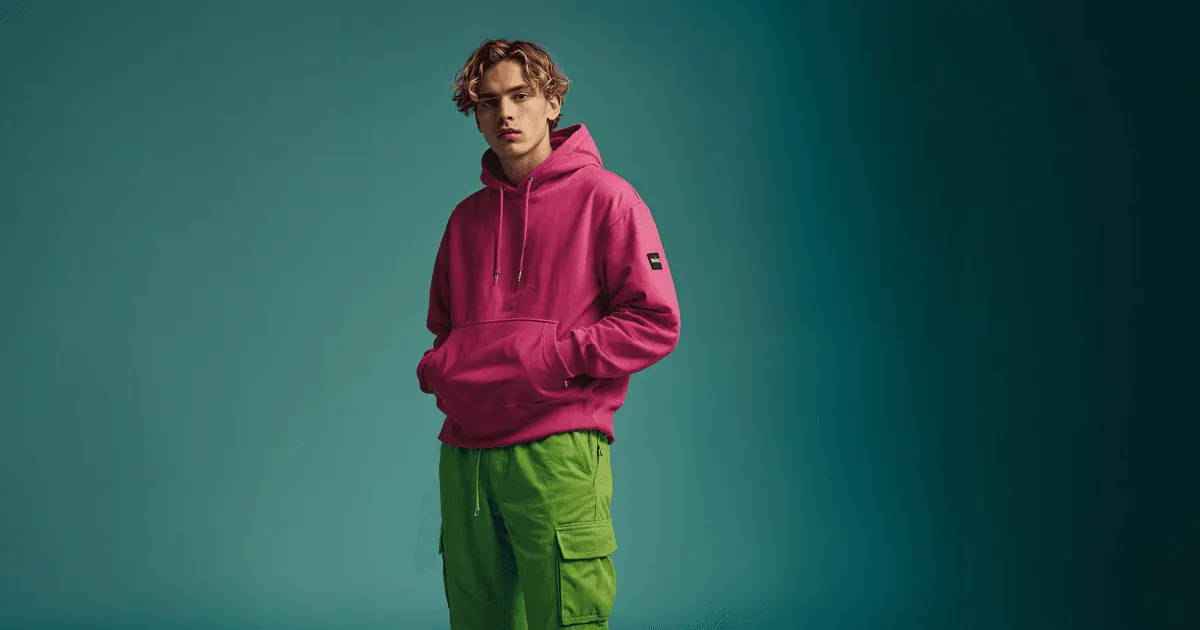
ASOS reported that AI Studios uses generative AI alongside its styling expertise to create product imagery and content at scale, including model imagery, styled looks and video. For April’s campaign it “enabled the creation of more than 1,600 additional assets that would have required c.9 extra shoot days using traditional methods”, and it delivered 95% of SKUs for that campaign, which is why ASOS said it would roll the approach out more broadly across Own Brand products (asosplc.com, 23 April 2026).
Read what that sentence measures. It counts additional assets. It does not report a smaller invoice, so the gain ASOS published is volume.
Zalando’s disclosure has the same shape. Around 70% of its editorial campaign assets in Q4 2024 came from AI-driven content production, and its VP of content solutions, Matthias Haase, described moving from spotting a trend to producing tailored content in under 24 hours (corporate.zalando.com, 7 May 2025). Haase separately told Reuters the approach cut production time from six to eight weeks down to three or four days, with roughly a 90% cost reduction (reuters.com, May 2025). Note the attribution difference: the 70% is in Zalando’s own release, the 90% is an executive speaking to a reporter.
This is the same conclusion our own breakdown of what generative AI in fashion pays for reaches from the production side. The saving shows up as throughput, and throughput is what compounds. For the wider record, what works in production with AI in fashion sorts the use cases by evidence.
One caution against assuming AI production is inherently cheap. When McDonald’s Netherlands pulled an AI-generated Christmas advert in December 2025, the chief executive of The Sweetshop, the production company behind it, described weeks of work and “thousands of takes” shaped in the edit “just as we would on any high-craft production” (thedrum.com, 11 December 2025). Reports at the time gave different figures for team size and weeks, so we do not repeat them. Generative tools move the labor rather than deleting it, and a campaign-grade result still costs campaign-grade effort.
Why fully synthetic is the expensive route
The subscription is the smallest line in this decision.
Almost every brand in the table that shipped a fully synthetic figure drew public criticism. The exception on the record is Revolve: we found no report of a reaction against its 2023 billboards. Mango’s teen campaign drew consumer complaints, including charges of false advertising (yahoo.com, July 2024). Guess and Vogue drew reader backlash after the advertisement, and we found no retraction by either. Vogue’s clarification was that the advertisement was paid, and that AI models had not appeared in its editorial pages (cnn.com, 31 July 2025). Gucci’s images drew public criticism as “AI slop” even though they were labeled (bbc.com, February 2026). Valentino’s labeled DeVain video drew hundreds of comments calling it “cheap” and “lazy” (glossy.co, December 2025). Balmain was criticized in 2018 for presenting CGI models of color as diversity (qz.com, August 2018).
We found no brand in this set that withdrew AI-generated model imagery after backlash. Levi’s is the only formal correction, and it retracted the framing of its announcement rather than any image. Its editor’s note said the pilot was not “a means to advance diversity or as a substitute for the real action that must be taken”, and confirmed the company was “not scaling back our plans for live photo shoots, the use of live models, or our commitment to working with diverse models” (levistrauss.com, March 2023).
One active US case shows a different legal exposure. It does not concern synthetic faces at all. A model sued a clothing retailer in New York on 22 May 2026, withdrew the case a week later and refiled it on 15 June, alleging the brand photographed her and then generated entirely new images in poses she never took. Her complaint states her contract permitted minor edits but “does not in any way authorize the creation of entirely new images, scenes, poses, or compositions” (petapixel.com and wwd.com, June 2026).
That is a contract-scope problem, and it is the one most likely to reach an ordinary brand. A release covering a shoot is not a release covering generation from that shoot. If you are editing or extending imagery of real people, the wording of your model release is the control that matters, and our guide to swapping the model in a product photo covers the consent question in more depth.
The limits of a label
This is the finding that most changes how a brand should plan, and it is consistent across every case.
Guess disclosed, in fine print reading “Produced by Seraphinne Vallora on AI”. Gucci labeled its images “created with AI”, and Valentino labeled its video as AI-generated. All three were criticized anyway, and the criticism was rarely about concealment. It was about the decision itself, about beauty standards, and about work moving away from photographers, stylists and models. Mango’s own announcement said nothing about labeling either way, and the claims we found that it labeled the campaign come from secondary sources.
Treat disclosure as a compliance obligation you have to meet. Plan for reputation as a separate problem. A label satisfies the law. Only the choice of what you generate, and who you still pay, changes how the work is received. That is why the volume operators’ route reads better in public than the synthetic route does.
What you owe your audience as of September 2026
Two disclosure rules took effect in 2026, one in the EU and one in New York.
This is general information, not legal advice. Article 50 of the EU AI Act has applied since 2 August 2026. Article 50(4) requires deployers to disclose deep fakes: realistic AI images, audio or video that could pass as real. Providers of the AI tools carry a separate machine-readable marking duty under Article 50(2) (European Commission FAQ, accessed September 2026). The Commission published guidelines on Article 50 on 20 July 2026, and they are not binding. The AI Omnibus, Regulation (EU) 2026/1744, in force since 27 July 2026, did not move the Article 50 date. It gave tool makers until 2 December 2026 to add machine-readable marks to systems already on the market (European Commission, July 2026).
Separately, New York’s synthetic performer disclosure law took effect on 9 June 2026. It is General Business Law section 396-b. If you make an ad and you know it contains a synthetic performer, the ad must say so in a way people will notice. New York defines a synthetic performer as a digital asset, made with generative AI or software, that looks like a human performing, where the person is not recognizable as any real, identifiable performer. The civil penalty is $1,000 for a first violation and $5,000 for each later violation (nysenate.gov, accessed September 2026). The definition covers an “audiovisual and/or visual performance”. We found no published enforcement decision on how it applies to a still product photo.
Notice that both rules can reach an invented person. New York’s applies precisely because the person is invented. The Commission’s guidelines treat realistic AI-generated human avatars or personas as persons, and say it is enough that the person could plausibly exist. So a realistic synthetic model can count as a deep fake under the EU rule too. Usually the brand that uses the AI tool is the deployer. Do not treat “she is not a real person” as an exemption.
A third rule sits underneath both and does not depend on either. Since 19 June 2025, New York’s Fashion Workers Act has required separate written consent before a model’s digital replica is made or used. The consent must state the scope, purpose, pay and how long it will be used (New York State Department of Labor FAQ, accessed October 2026). Routine edits such as color correction and minor retouching are not digital replicas (New York State Department of Labor, definitions, accessed October 2026).
Which specific assets in a drop need a label, and which do not, is its own question with its own answer. Our guide to labeling AI-generated fashion images works through it asset by asset.
The routes are not equivalent under these rules, and the differences are set out in full in our guide to where AI fashion models come from. Platform policy adds a third layer. TikTok requires creators to label AI-generated or heavily edited content that shows realistic people or scenes (TikTok Community Guidelines, accessed September 2026). In ads, TikTok asks for disclosure when images, video or audio are fully AI-generated or heavily AI-edited (TikTok Ads policy, accessed September 2026).
One counterweight. We found no regulator action against a brand for using AI-generated fashion models, as of September 2026. The UK advertising codes contain no AI-specific rules, and the ASA says its existing rules on misleading ads apply however an advert was made (ASA, accessed September 2026).
How to pick the form your brand needs
Work from the constraint rather than the tooling.

If the job is catalog volume, you want the pattern the volume operators used. Keep real, contracted people in the imagery, get consent that names AI generation with scope and duration, and put the gain into shot count per SKU rather than into a smaller production budget. This is the best-evidenced route and the least exposed. Our guide to the AI model agency lists eight questions to ask before you sign with one.
If the job is a campaign moment, a fully synthetic model is viable, and several well-known brands have shown it ships. Budget for the reaction rather than assuming a label prevents it, and check the New York disclosure rule before the media plan is signed. The tools for campaign frames are sorted in AI fashion editorial tools compared by frame.
If the job is more angles, scenes and formats from shoots you already own, this is the cheapest route and the one with the live litigation. Read the release from the original shoot before generating anything new from it.
Before you commit to a route, put real numbers against your current baseline. Our breakdown of what a product photoshoot costs gives the comparison, the tool comparison covers what each category of vendor is built for, and if the open question is whether generated imagery converts as well as a booked shoot, that evidence is weighed in AI models against real models.
Catalog volume on DesignerBox
The brands above are named from their own disclosures and from press reports. None of them is presented here as a DesignerBox user, and none endorses it.
DesignerBox is AI creative production for brands and agencies. Scale your images, ads and video with AI and keep your brand on every piece: build the workflow once with your brand rules, run it on every product, see the cost before each run, and keep everything from the first product photo to the finished ad in one place. It fits the first and third jobs above. Every result starts from your real product photo, so you check it against the garment you shot. You pick the model for each step when you build the workflow, and every run after that uses it. A template comes with its model already picked.
The volume operators’ lesson applies to how you set this up. Build the shot once for one garment and save it as a workflow. The model, the light, the framing and your brand rules stay fixed, so nobody decides the look again for the next garment. Three critic steps score the results, and best-of-N keeps the best one. Batch runs one workflow over a whole sheet of products.
For teams producing a drop at a time, Dress my model puts a garment on a model, a model template lets you cast one face and reuse it, and DesignerBox for fashion brands shows the full production path. If you still work from real models, your release has to name AI generation before you use their photos.
Uploading your own photos and the commercial license start on the Pro plan. AI video, virtual try-on, upscaling, the image editor and the video editor start on the Premium plan. Team features, shared brand kits and white label are on the Ultra plan, and every plan below Ultra is one seat. Plans and credits are on the pricing page.
Start from a template, add your brand and your garments, and run it.
FAQ
Which fashion brands use AI models?
ASOS, Zalando, H&M, Zara, Mango, Guess, Gucci, Valentino, Revolve and Balmain all have documented programs, but they differ fundamentally. Zalando, H&M and Zara built theirs on digital replicas or AI edits of real models, and ASOS has not said how its model imagery is made. Mango, Guess, Gucci, Valentino and Revolve published fully AI-generated imagery, and Balmain used CGI models in 2018. We found no primary source for claims that Adidas, Nike or Shein use AI fashion models.
Do AI fashion models save money?
Sometimes, but the reported gain usually arrives as extra output rather than a smaller bill. ASOS counted more than 1,600 additional assets that would have needed around nine extra shoot days. It did not report a smaller bill. The production company behind one pulled AI advert described weeks of work and thousands of takes. Treat the saving as capacity, and do not plan on a discount.
Do I have to disclose that a model is AI-generated?
In the EU, likely, when the model is realistic. Article 50 of the AI Act has applied since 2 August 2026, and the Commission’s guidelines say an invented person can count as a deep fake when the person could plausibly exist. In New York, since 9 June 2026, an ad that you know contains a synthetic performer must say so in a way people will notice. The UK advertising codes have no AI-specific rule, and the ASA says its existing rules on misleading ads still apply. TikTok requires creators to label realistic AI-generated content. Verify the current text before writing your own policy.
Is it legal to generate new images from an old photoshoot?
Only within the scope of your model release. One active New York case alleges a retailer generated entirely new images from a shoot whose contract permitted only minor edits. A release covering photography does not automatically cover generation. Get AI generation named explicitly, with scope and duration.
Are AI fashion models real people?
It depends on the route. A digital twin is a licensed replica of a real, contracted model. A fully synthetic model represents nobody. A third route uses a general-purpose image model with no provenance record at all. The route decides what consent and disclosure you owe.
Did any brand pull its AI model campaign after backlash?
We found no brand in the documented set that withdrew AI-generated model imagery. Levi’s issued a formal correction in 2023, but it retracted the diversity framing of its announcement rather than any image. We found no primary source for claims that other fashion brands pulled AI campaigns. The narrower production claim Levi’s kept, more body types shown more quickly, is the one the size-range research supports.
Does labeling protect a brand from criticism?
Not on the available evidence. Guess and Gucci both disclosed and were criticized anyway. Disclosure satisfies a legal obligation. It does not address objections to the decision itself, which is a separate problem solved by what you choose to generate and who you continue to pay.
Sources
- ASOS plc, interim results for the 26 weeks to 1 March 2026 (asosplc.com, 23 April 2026)
- Zalando, “Zalando explores digital twins: high-fidelity replicas of real models” (corporate.zalando.com, 7 May 2025)
- CNN, H&M plans to use AI clones of its models (cnn.com, 28 March 2025)
- The Drum, McDonald’s Netherlands pulls AI ad (thedrum.com, 11 December 2025)
- Reuters, Zalando AI content production (reuters.com, May 2025)
- Mango, first AI-generated campaign for its teen line (mangofashiongroup.com, July 2024), and consumer criticism coverage (yahoo.com, July 2024)
- Levi Strauss & Co., Lalaland.ai partnership post and editor’s note (levistrauss.com, March 2023)
- CNN and Forbes, Guess AI models in Vogue (cnn.com, 31 July 2025; forbes.com, 29 July 2025)
- BBC, Gucci AI-generated images (bbc.com, February 2026)
- City AM, Zara AI-edited model imagery (cityam.com, December 2025)
- PetaPixel and WWD, New York model lawsuit over AI-generated images, filed 22 May 2026 and refiled 15 June 2026 (petapixel.com, wwd.com, June 2026)
- European Commission, transparency obligations under Article 50 of the AI Act and AI Omnibus enters into force, accessed September 2026
- New York State Senate, General Business Law 396-b, synthetic performer disclosure, accessed September 2026
- New York State Department of Labor, Fashion Workers Act FAQs and Fashion Workers Act definitions, accessed October 2026
- Advertising Standards Authority, disclosure of AI in advertising, accessed September 2026
- TikTok, Community Guidelines on AI-generated content and ads policy on misleading and false content, accessed September 2026
- DesignerBox pricing page (designerbox.ai/pricing), September 2026
- IBM Think, on the speculative adidas AI advertisement (ibm.com, 2025)
- H&M Group, H&M continues its exploration of creativity with AI (hmgroup.com, July 2025)
- Glossy, luxury fashion’s AI marketing experiments, on Valentino’s DeVain video (glossy.co, December 2025)
- Revolve, first AI-generated billboard campaign (investors.revolve.com, April 2023)
- Forbes, Balmain campaign with digital supermodels (forbes.com, 31 August 2018), and Quartz on the diversity criticism (qz.com, August 2018)
- Marketing Dive, Aerie and Pamela Anderson against AI content (marketingdive.com, March 2026)
Brand programs verified from company filings, corporate press releases and Tier-1 reporting as of August 2026, and re-checked 24 September 2026. Regulatory positions verified from statute text and official guidance as of September 2026. The Fashion Workers Act consent rule and definitions were re-checked on 2 October 2026. This is general information, not legal advice. Verify current requirements before setting policy. Individual results vary.