Diverse AI fashion models work through a narrower mechanism than the marketing suggests. The one peer-reviewed test found that thin models deter larger-size shoppers by raising perceived fit risk, and that a model near the shopper’s own size removes that deterrent. The gain is fit-risk reduction, concentrated in the sizes furthest from a straight-size model.
That distinction decides what you generate. Read it as a trust effect and you produce a wider casting for the campaign hero, where almost nobody is evaluating fit. Read it as a fit effect and you produce the same garment on several body sizes, on the product page, where the shopper is deciding whether it will fit them.
This covers what the research measured, why your returns policy probably hides the effect from your own tests, why image models push against the range you asked for, and where the widely quoted trust statistic comes from.
Key Takeaways
-
The effect is about fit risk, not affinity. Zhang, Ikonen, Eelen and Sotgiu name it the Dissimilarity-Risk Deterrence Effect: thin models raise perceived fit risk for shoppers in larger sizes, which suppresses purchase (Journal of the Academy of Marketing Science, vol. 53, 2025).
-
It was measured on stated decisions, not on till receipts. Three studies and eight experiments, using purchase decisions and fit-risk perception. The University of Bath’s own record states the research relied on stated intentions rather than actual returns data.
-
Free returns and size charts conceal it. The paper reports the effect is masked by retailers’ risk-reducing strategies. If you already offer generous returns, an A/B test will likely show you nothing while the cost lands in your returns line.
-
Fit drives the returns bill. US online apparel returns hit 23.4% in 2025, and nearly 70% of shoppers returning clothing bought online cited size and fit (Coresight Research, May 2026).
-
Image models default thin. Peer-reviewed audits of DALL-E 3, Midjourney and Stable Diffusion find a consistent pull toward a narrow body ideal, so a prompt asking for range does not reliably produce range.
-
The 52% trust figure is a vendor number. It traces to Kantar (kantar.com, August 2022), which publishes no study name, sample size, fieldwork year or country scope behind it.
-
A photorealistic invented person can still need an EU label. The Commission’s Article 50 guidelines, published 20 July 2026, treat realistic AI-generated human avatars or personas as persons, and say it is enough that the person could plausibly exist. The guidelines are not binding.
What do diverse AI fashion models change?
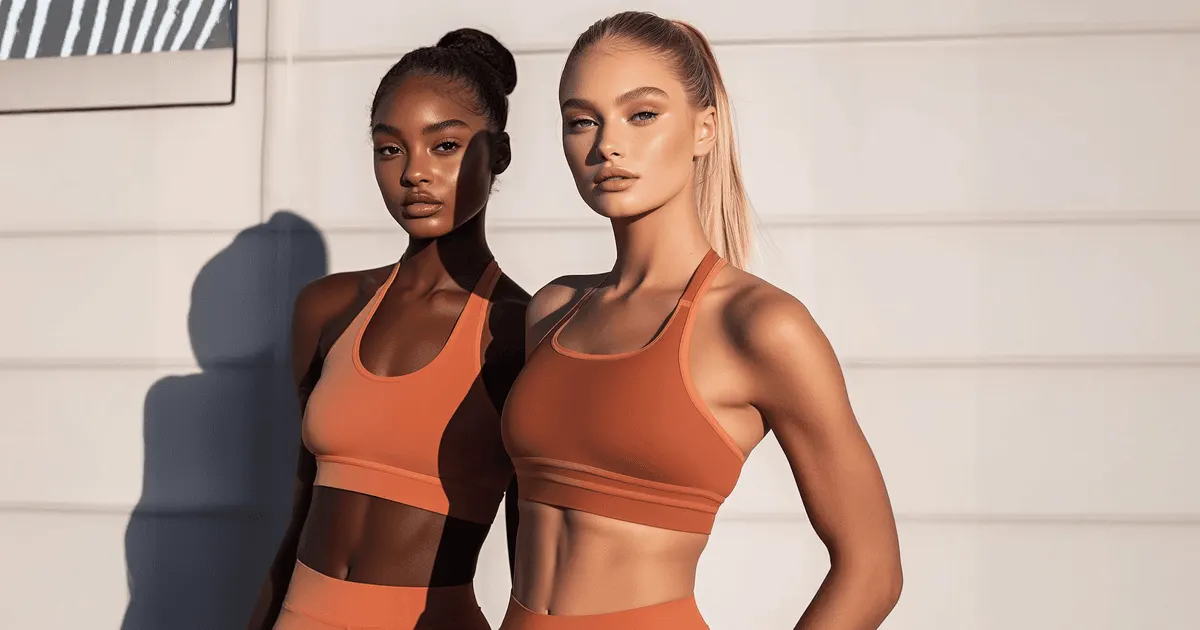
They change the cost of showing one garment on more than one body. A studio shoot prices each additional model as a fresh booking, so most catalogs settle on one fit model and a size chart. Generation removes that per-body cost, which makes a size range affordable for the first time.
What generation does not do is decide whether the range earns anything. That question has one serious answer in the literature, and it is more specific than the category’s marketing.
The mechanism: fit risk, not affinity
The strongest evidence is “One size does not fit all: Optimizing size-inclusive model photography mitigates fit risk in online fashion retailing” (Journal of the Academy of Marketing Science, vol. 53, pp. 643 to 672, 2025).
The authors identify what they call the Dissimilarity-Risk Deterrence Effect. Shoppers wearing larger clothing sizes perceive a body-size dissimilarity when the model is thin. That dissimilarity raises perceived fit risk, and the heightened risk deters the purchase. Showing a model close to the shopper’s own size mitigates it.
The paper controls for the explanations the category usually reaches for. Positive affect, authenticity and social identification were all held constant, and the effect survived. So the working driver is a risk calculation about whether the garment will fit, rather than a shopper feeling represented.
Two boundaries matter for how you use it. The effect extends across clothing types but attenuates when body size matters less to fit evaluation. And the authors report it is concealed by retailers’ own risk-reducing strategies.
Be precise about what was measured. Eight experiments recorded purchase decisions and fit-risk perception. Bath’s research portal states plainly that the work relied on stated intentions rather than actual returns data. Treat it as a well-identified mechanism, not as a conversion number you can forecast against.
Why free returns hide the effect in your data
This is the finding most likely to change what you do, and the easiest to miss.
The paper reports the deterrence effect is concealed by risk-reducing strategies such as detailed measurement information and free product return policies. Both work by lowering the perceived cost of guessing wrong.
Follow that through. A brand with free returns and a good size chart has already suppressed the fit-risk signal at the checkout. Run a photography A/B test on that store and the size-range variant can look flat, because the shopper who would have hesitated now orders two sizes and sends one back instead.
The demand did not disappear. It moved into the returns line, where apparel already runs 23.4% online and nearly 70% of those returns are attributed to size and fit (Coresight Research, May 2026).
So a flat conversion test is not evidence the range failed. If you are going to test this, instrument the return rate on the tested SKUs across a full return window, and read the two numbers together. The session counts an image test needs will tell you whether your traffic can resolve the conversion half at all.
Why image models default thin
Asking a model for a size range is not the same as receiving one, and this is where the vendor slider oversells.
“Decoding Fatphobia: Examining Anti-Fat and Pro-Thin Bias in AI-Generated Images” (Warren, Weiss, Martinez, Guo and Zhao, Findings of the ACL: NAACL 2025) generated 4,000 images with DALL-E 3 across twenty paired prompts, hand-labeled them for weight, and reports anti-fat and pro-thin bias in the output.
A second study reaches the same place from a different angle. Thibodeau and colleagues analyzed 300 images from Midjourney, DALL-E and Stable Diffusion (Psychology of Popular Media, 25 November 2025). They found minimal racial and age diversity, no images depicting visible disabilities, and that an unspecified prompt for “an athlete” returned a male body 90% of the time.
Neither audit tested the models in the DesignerBox catalog, so read them as a property of current diffusion image models rather than a measurement of any one product. The operational conclusion holds either way: the default pulls toward a narrow body ideal, which is precisely the body the fit-risk research says you already have too much of.
That has a practical consequence. A generated size range has to be verified against something real, garment by garment, rather than trusted because the prompt asked for it. Bind each generated body to a fit sample you have put on a person, and check the render against it. Where you have measured fit data, fit-aware try-on research is the direction that makes the larger sizes credible rather than decorative.
Where the 52% trust figure comes from
The statistic is this: 52% of consumers say they trust a brand more if its ads reflect their culture.
The number is real and it is attributable. It originates with Kantar, in an article by Deepak Varma, Head of Neuroscience Insights for North America, published 11 August 2022 (kantar.com, accessed August 2026).
What the page does not carry is a study name, a sample size, a fieldwork year or a country scope. Three neighboring statistics on the same page are presented the same way. That does not make the figure wrong. It does mean it cannot be checked, and a number you cannot check is a weak foundation for a six-figure production decision.
Kantar publishes a methodologically documented alternative. Its Brand Inclusion Index found 75% of consumers say a brand’s diversity and inclusion reputation influences their purchase decisions, from a survey of more than 23,000 people across 18 countries (kantar.com, 15 July 2024). If you need a representation statistic in a deck, cite that one.
Two other figures circulate in this category and should be dropped. A claimed 28% conversion lift for plus-size shoppers encountering representation, attributed to Coresight, appears only on vendor marketing pages with no matching Coresight publication. And the RecSys 2024 result showing roughly 15% click-through improvement from generated imagery used generated backgrounds only (Czapp, Jani, Domián and Hidasi, Taboola, arxiv.org). No human models were produced in that work, so it says nothing about representation.
What to generate, and which slot to put it in
The mechanism tells you where the range pays. Fit risk is evaluated on the product page, in the sizes furthest from your fit model, in categories where body size drives fit. To set how many bodies to cast from your own sales by size, see how to choose an AI virtual model.
| Category | How much fit depends on body size | Size range worth generating |
|---|---|---|
| Tailored outerwear, denim, swimwear | High | Yes, prioritize it |
| Fitted dresses, activewear | High | Yes |
| Knitwear, jersey tops | Moderate | Worth testing |
| Oversized and relaxed silhouettes | Low | Low priority |
| Scarves, bags, jewelry | None | No |
That last row is the paper’s own boundary condition doing useful work. The effect attenuates when body size matters less to fit evaluation, so a size range on an accessory buys nothing. Swimwear sits in the top row, and the swimwear and lingerie tools guide covers the tools and marketplace slots for that category.
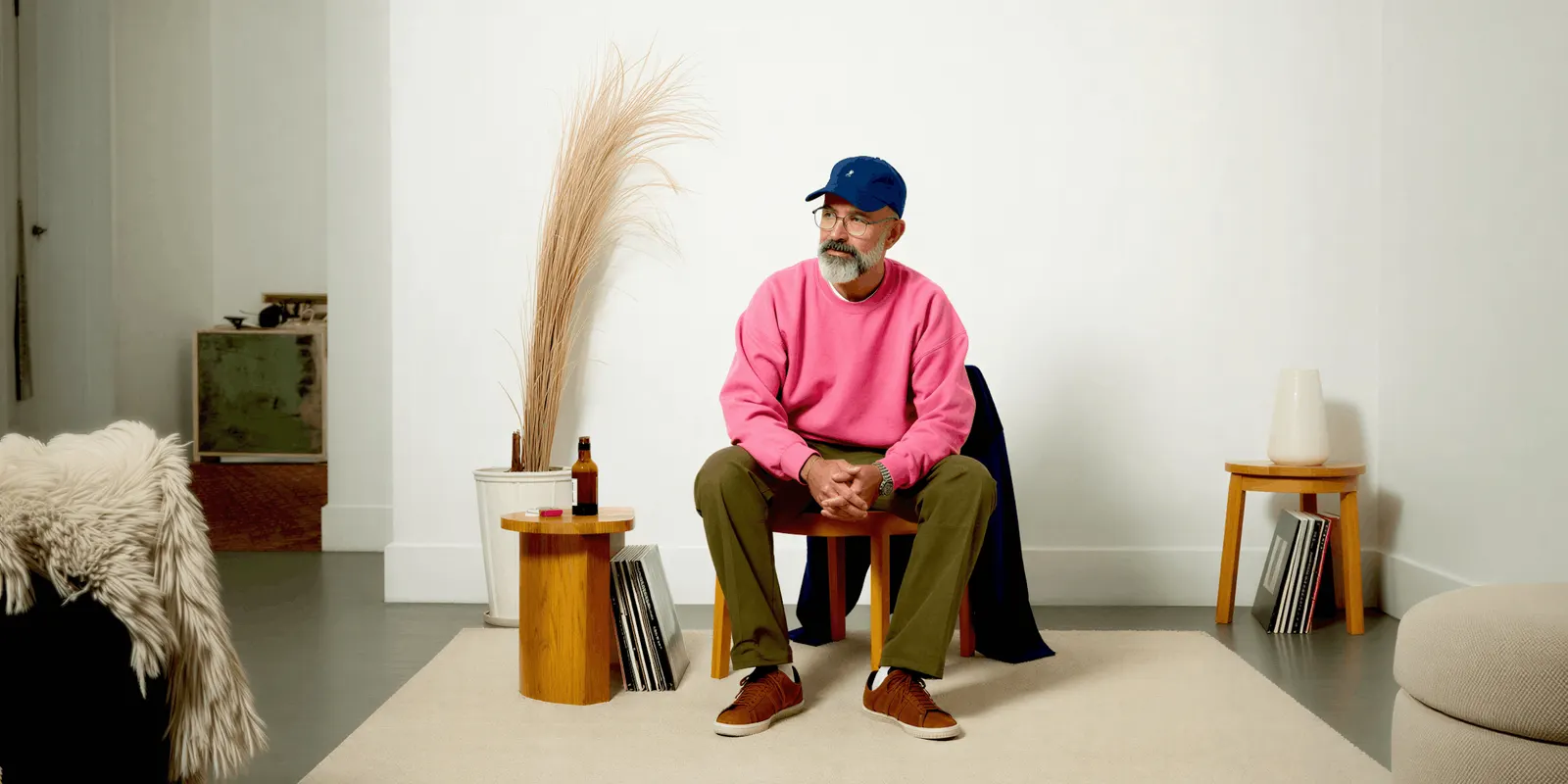
Two more placement rules follow from the same logic. Put the range where fit is being decided, which is the product gallery, not the campaign hero. And extend the range in the direction your fit model is not, since the deterrence runs from thin models toward larger-size shoppers rather than symmetrically in both directions.
DesignerBox is AI creative production for brands and agencies. In DesignerBox, the route starts from your real garment photo. Virtual try-on places that garment on a model. A model template lets you cast one face and reuse it across a drop, so your size range reads as one range. An avatar run returns nine fixed poses for 25 credits. Dress my model puts a garment on the model you cast, and a model pose set covers the casting step. The image model you pick changes the cost, and the cost is shown before the run. Uploading your own photos and the commercial license start on the Pro plan. Virtual try-on and AI video start on the Premium plan.
The garment photo, the try-on step, the size ladder, the brand rules and the finished files sit in one place. The full workflow from the first product photo to the finished ad, in one subscription. The ladder stays next to the drop it belongs to. Your brand rules sit in one record, and the workflow reads them on every run. Every body in the ladder then gets the same light, framing and grade.
Build the size ladder once, then reuse it. Fix the bodies, the face, the light, the framing and the crop on your best-selling style, and save that as a workflow. A saved workflow runs the same way on the next style and the next drop, so style fifty gets the same ladder as style one, and nobody decides it again. That is the difference between a size range and a pile of one-off images. Batch runs one workflow over a whole sheet of styles.
Holding one identity steady across sizes is its own problem. The four locks that keep on-model images consistent drop to drop apply here with one addition: the body changes on purpose while the face, lighting and framing must not.
What you owe the viewer as of September 2026
A generated size range is a photorealistic image of a person who does not exist, which puts it squarely inside the EU transparency rules.
This is general information, not legal advice. Article 50 of the EU AI Act has applied since 2 August 2026 (European Commission FAQ, accessed September 2026). The Commission published guidelines on Article 50 on 20 July 2026 (C(2026) 5054). The guidelines are not binding.
A deep fake is an AI-made or AI-edited image, audio or video that looks like real people, objects, places or events and could make people think it is real. The Commission’s guidelines treat realistic AI-generated human avatars or personas as persons, and say it is enough that the person could plausibly exist. So a realistic generated model can count as a deep fake even when no real person is copied. Photorealism alone does not decide it: the image must also be able to mislead people about whether it is real. Say “likely in scope”, not “always”. You do not have to label deep fakes made before 2 August 2026.
Two duties sit in different places. Article 50(2) puts the machine-readable marking duty on the provider of the AI tool. Article 50(4) puts the disclosure duty for a deep fake on the deployer. Usually the deployer is the brand that uses the AI tool and publishes the image. If a brand only hires an agency and does not control how the agency uses AI, the guidelines treat the agency as the deployer.
Older body-image rules cover a different act and probably do not reach you here. France’s décret n° 2017-738, in force 1 October 2017, requires the mention “Photographie retouchée” where software has thinned or thickened a model’s silhouette. Norway’s Marketing Control Act rules, in force 1 July 2022, require a standardized mark covering 7% of the image where a body’s shape, size or skin has been altered. Both are written around modifying a photograph of a real person, and neither source addresses a wholly synthetic model. That gap is unresolved, so take local advice rather than assuming either way.
Two adjacent points worth knowing. Since 19 June 2025, New York’s Fashion Workers Act requires separate written consent before a model’s digital replica is made or used. The consent must state the scope, purpose, pay and duration (New York State Department of Labor, accessed September 2026). The rule is about replicas of real models. And California’s AI Transparency Act has applied since 2 August 2026. Since 30 September 2026 it covers any company that makes a generative AI system available in California, with no user threshold. Large platforms follow from 1 January 2027 and capture device makers from 1 January 2028. It does not put a labeling duty on a brand that publishes AI images (California SB 1000, accessed October 2026).
The fuller decision tree for which assets in a drop need a label sits in the guide to labeling AI-generated fashion images.
The reputational risk the compliance table misses
We found no record of a brand being fined or sanctioned for generating a diverse cast rather than hiring one, as of September 2026. Every consequence we found has been reputational, and there are enough cases to read a pattern.
Levi Strauss announced a Lalaland.ai partnership on 22 March 2023, framed around increasing the diversity of body types, ages, sizes and skin tones on its site. Six days later the company appended an editor’s note to its own release: “We do not see this pilot as a means to advance diversity or as a substitute for the real action that must be taken to deliver on our diversity, equity and inclusion goals and it should not have been portrayed as such” (levistrauss.com, 22 March 2023). The Associated Press reported in April 2024 that Levi’s had announced no plans to scale the program. Levi’s sits beside Mango, Guess and H&M in the verified record of fashion brands using AI models. For the wider picture, AI in fashion separates what is proven in production from what is a vendor claim.
The criticism was specific. Sara Ziff of the Model Alliance told the AP that using AI “to distort racial representation and marginalize actual models of color reveals this troubling gap between the industry’s declared intentions and their real actions” (techxplore.com, 15 April 2024). A Guess advertisement in a 2025 print issue of US Vogue drew the same charge, with model and founder Sinead Bovell calling it “robot cultural appropriation” (techcrunch.com, 3 August 2025).
The through line is the claim, not the technology. Levi’s ran into trouble presenting generation as diversity progress, then kept the narrower and defensible version: the technology may allow more images of products on a range of body types, more quickly. That is a production claim, and it survives scrutiny. Sell a generated size range as a fit aid and you are on solid ground. Sell it as your inclusion record and you are inviting someone to check.
FAQ
Do diverse AI fashion models increase conversion?
No published study measures that on live retail traffic. The strongest research, in the Journal of the Academy of Marketing Science in 2025, found that models near a shopper’s own size improve purchase decisions in experiments by reducing perceived fit risk. That is a mechanism established on stated intentions, not a conversion lift you can forecast.
Why does my A/B test show no difference?
Free returns and detailed measurement information both suppress the fit-risk signal the effect runs on, and the paper reports the effect is concealed by exactly those strategies. Check your return rate on the tested SKUs over a full return window before concluding the range did nothing.
Can I just prompt for a range of body sizes?
Prompt for it, then verify it. Peer-reviewed audits of DALL-E 3, Midjourney and Stable Diffusion all find a pull toward a narrow body ideal, so requested range and delivered range differ. Bind each generated size to a real fit sample and check the render against the garment on a person.
Which product categories justify the extra images?
The ones where body size drives fit: tailored outerwear, denim, swimwear, fitted dresses and activewear. The effect attenuates where body size matters less to fit evaluation, so oversized silhouettes and accessories are low priority.
Do I have to disclose AI-generated models in the EU?
Likely, if the image is realistic. The Commission’s Article 50 guidelines, published 20 July 2026, say an invented person can count as a deep fake when the person could plausibly exist. Article 50 has applied since 2 August 2026. The deployer holds the disclosure duty, and that is usually the brand that uses the AI tool. A packshot or flat lay with no person and no misleading change to the product is usually not a deep fake.
Is the 52% trust statistic reliable?
It comes from Kantar in August 2022 and carries no published study name, sample size or country scope. Use Kantar’s Brand Inclusion Index instead, which reports 75% from more than 23,000 respondents across 18 countries and documents its method.
What does a size range cost to produce in DesignerBox?
The image model you pick changes the cost of a run, and the cost is shown before the run. An avatar run returns nine fixed poses for 25 credits. Plans and credits are on the pricing page. Uploading your own photos and the commercial license start on the Pro plan, and virtual try-on starts on the Premium plan. Every image starts from your real garment photo.
Sources
Accessed August 2026, unless a line gives another date.
- The Dissimilarity-Risk Deterrence Effect, the eight experiments, the attenuation boundary and the concealment by returns policies: Zhang, Ikonen, Eelen and Sotgiu, “One size does not fit all: Optimizing size-inclusive model photography mitigates fit risk in online fashion retailing”, Journal of the Academy of Marketing Science, vol. 53, pp. 643 to 672, 2025 (doi 10.1007/s11747-024-01034-9)
- Confirmation that the study relied on stated intentions rather than actual returns data (researchportal.bath.ac.uk) and the accompanying release (bath.ac.uk, 31 July 2024)
- US online apparel return rate of 23.4% in 2025 and the near-70% size and fit share: Coresight Research with Alvanon, “Shifting the Size and Fit Paradigm”, 19 May 2026, reported via fashionunited.com. The report is paywalled and its sample size and question wording are not published
- Pro-thin bias in generated images: Warren, Weiss, Martinez, Guo and Zhao, “Decoding Fatphobia: Examining Anti-Fat and Pro-Thin Bias in AI-Generated Images”, Findings of the ACL: NAACL 2025 (aclanthology.org)
- Diversity gaps across Midjourney, DALL-E and Stable Diffusion: Thibodeau, Gollish, Bijvoet, Sabiston and Boyes, Psychology of Popular Media, 25 November 2025 (utoronto.ca)
- The 52% trust figure and its missing methodology: Kantar North America, Deepak Varma, 11 August 2022 (kantar.com). The documented alternative, 75% from more than 23,000 respondents across 18 countries: Kantar Brand Inclusion Index, 15 July 2024 (kantar.com)
- Generated backgrounds delivering roughly 15% click-through improvement, with no human models generated: Czapp, Jani, Domián and Hidasi, Taboola, RecSys ‘24 (arxiv.org/html/2408.12392)
- EU AI Act Article 50 transparency obligations, the 2 August 2026 application date, the non-binding guidelines published 20 July 2026 (C(2026) 5054), the plausible-person reading, the deployer definition and the non-retroactivity of pre-August content: European Commission FAQ and guidelines library page, accessed September 2026
- France décret n° 2017-738 of 4 May 2017, in force 1 October 2017 (legifrance.gouv.fr). Norway Marketing Control Act labeling rules in force 1 July 2022 (advokats.no)
- New York Fashion Workers Act digital replica consent requirements, effective 19 June 2025 (dol.ny.gov, accessed September 2026). California AI Transparency Act, its 2 August 2026 operative date and the later platform and device dates (AB 853 on leginfo.legislature.ca.gov, accessed September 2026). Its scope since 30 September 2026, with no user threshold (SB 1000 on leginfo.legislature.ca.gov, accessed October 2026)
- Levi Strauss Lalaland.ai announcement and the 28 March 2023 editor’s note (levistrauss.com). Model Alliance and industry criticism (techxplore.com, 15 April 2024). Guess advertisement in Vogue and named critics (techcrunch.com, 3 August 2025)
- DesignerBox plan gates and the avatar price: DesignerBox pricing page (designerbox.ai/pricing), September 2026
Research claims verified against the Journal of the Academy of Marketing Science, NAACL 2025 Findings, Psychology of Popular Media, Coresight Research reporting, Kantar publications and European Commission AI Act transparency guidance as of August 2026; EU, New York and California rules re-checked September 2026. California SB 1000 was read on 2 October 2026. The size and fit return share is a Coresight survey finding with no published methodology. Regulatory position varies by market. This is general information, not legal advice. Individual results vary.