

Bracelet photography is the image set that sells a bracelet online: a packshot, a clasp macro, an on-wrist frame for fit, and a shot that shows how the piece moves. Three questions decide whether the set works. Can the buyer see how it closes, how it sits on a wrist, and how it drapes? A packshot answers none of them.
Lighting is the usual starting point for a bracelet. Diffuse the light, remove the reflections, shoot macro. That advice is correct and it stops early, because the reflections are the part a retoucher can fix. The three things that drive a bracelet return are structural, and no amount of light fixes them.
A ring buyer knows their ring size. A bracelet buyer usually does not know their wrist measurement, cannot tell a 7 inch chain from an 8 inch one on a white background, and has no idea whether the clasp needs two hands. The National Retail Federation estimated that 19.3% of online sales would be returned in 2025 (nrf.com, accessed September 2026). For a category sold on fit and finish, the photo set is the only place to answer those questions before the box ships.
This covers the shot list, how to shoot a clasp and a wrist so they read, why chains, bangles and cuffs need different frames, the marketplace specs, and when a bracelet image becomes a regulated claim.
Key Takeaways
- Three failures, not one. Clasp, fit and drape are what a packshot cannot show. Build the shot list around them, then worry about lighting.
- The on-wrist frame is the size chart. A measurement in millimeters does not translate. A wrist does.
- Shoot the clasp open and closed. Buyers often ask how a bracelet closes, and a photo answers it cheaply.
- A chain, a bangle and a cuff are three different photographic problems. One shot template across all three loses the material.
- A depiction is a claim. The FTC Jewelry Guides cover illustrations and depictions as well as words. A generated or retouched image of a plated or vermeil piece can mislead in the same way as a written claim.
- AI covers angles, scenes and formats. It does not get to invent the finish, the stone or the hallmark.
What is bracelet photography?
Bracelet photography is the production of listing and campaign images for a wrist-worn piece: a clean packshot on white, a macro of the clasp and hallmark, a scale or on-wrist frame, and lifestyle or stacking shots for ads and social. It differs from ring or necklace work because a bracelet is judged on closure and fit before it is judged on looks.
The category covers chains, bangles, cuffs, tennis bracelets, beaded and cord styles, and charm bracelets. Each needs the same four answers and a different way of getting them.
Why a bracelet is harder than a ring or a necklace
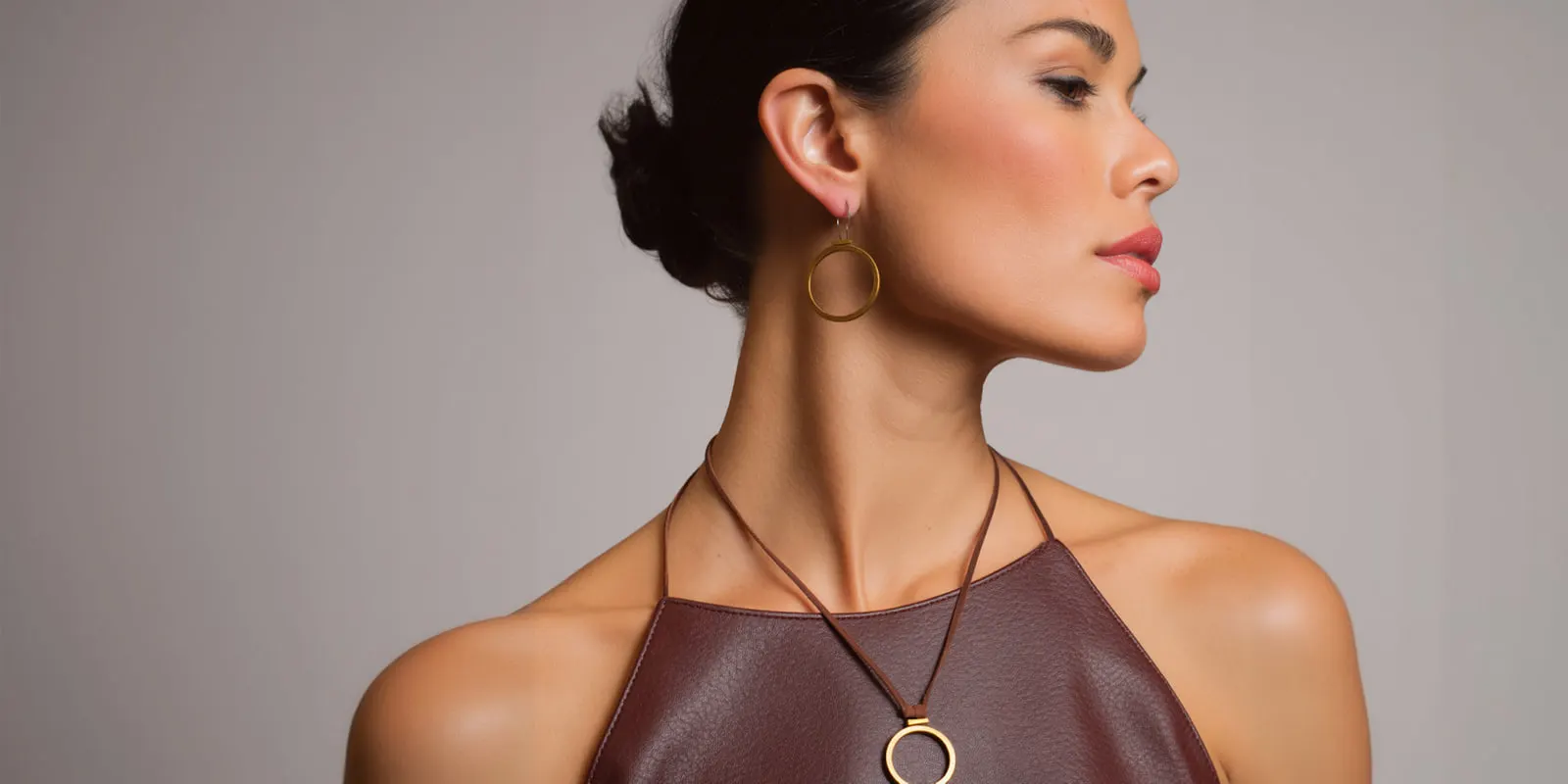
A ring photographs its whole self in one frame. A necklace has a natural hero shot, because it lies flat and its shape reads instantly from above. Even earrings, which are smaller still, have a fixed reference point in the ear. A bracelet does neither. Laid flat it becomes an oval that says nothing about diameter. Shot on a stand it hides the clasp. Shot on a wrist it can flatter a fit that will not happen.
Three specific failures follow, and they map directly onto the shot list.
Closure. Lobster, spring ring, box with a safety catch, toggle, magnetic, slide. A buyer with limited dexterity, or anyone fastening a bracelet one-handed, treats this as a functional spec. Many listings show it out of focus at the edge of the frame.
Fit. Bracelet sizing follows wrist circumference, plus a little room. Buyers rarely know their number. A 16mm bangle and a 22mm cuff photograph identically against plain white.
Drape. A fine chain pools. A heavy curb link hangs with weight. A rigid bangle does not move at all. Drape is a strong signal of material quality in the frame, and a flat lay removes it.
The bracelet shot list
Five frames cover a listing. The first three are mandatory. The last two are worth adding on higher-priced pieces.
| Shot | What it answers | Frame notes |
|---|---|---|
| Packshot on white | What am I buying | Whole piece in frame, no crop, pure white background, product filling most of the frame |
| Clasp macro | How does it close | Open and closed, hallmark and stamp legible, shallow depth but the catch fully sharp |
| On-wrist | Will it fit me | Real wrist, natural bend, gap at the clasp side visible, no pulling or pinning |
| Drape or motion | What is it made of | Hand-held or draped over an edge so the links carry weight |
| Stack or styled | What does it go with | Two or three pieces, brand’s own range, for ads and social rather than the PDP |
Shoot the packshot and the clasp first. They are the two that platform rules constrain, so they set the technical baseline for the rest of the set.
How to photograph a clasp so it answers the question
Shoot the clasp twice: once open, once closed, both at macro distance with the catch mechanism fully in focus. Keep the hallmark or metal stamp legible in the same frame if the stamp sits near the clasp. Buyers use this pair to judge dexterity, security and metal quality at once, and many listings skip it or put it last.
The practical setup is a small aperture for depth across the mechanism, a diffused key light at roughly 45 degrees, and a black card on the opposite side to give the metal an edge to reflect. Polished metal photographs whatever surrounds it, so a white tent produces a clasp with no definition at all. The dark card is what draws the shape. A polished watch case has the same problem, and watch photoshoot ideas sorted by reflection plans each scene around what the metal reflects.
For a toggle or a magnetic closure, add a third frame mid-fasten. The half-closed state is the one that shows how much force the mechanism needs, which is the actual question behind “is this easy to put on”.
Put the clasp macro in the first three images on the listing, not at the end. That ordering decision matters more than the lighting.
How to show wrist fit without a size chart
Photograph the bracelet on a real wrist, unpinned, with the clasp side visible and the natural gap between the piece and the skin left alone. That gap is the information. A bracelet pinned tight to a stand or pulled taut by a stylist reads as a fit the buyer will not get. It converts a size question into a return.
Two supporting frames make the on-wrist shot readable:
- A scale reference. The piece next to a coin, a ruler edge, or laid along a measuring tape with the inch marks legible. Unglamorous, and it removes an entire class of complaint.
- A second wrist. If the range covers more than one size, shoot the same style on a noticeably different wrist. One model wrist across a whole collection tells a buyer nothing about their own.
State the internal circumference in the copy and show it in the frame. The two together do a job neither does alone. Our guide to jewelry product photography covers the scale problem across rings, necklaces and earrings, where the same principle applies at different crops.
Chain, bangle and cuff need different frames
A single shot template applied across the range flattens the thing a buyer is paying for. Each construction reads through a different frame.
Chains need drape and motion. Hold the bracelet at one end so it falls, or lay it over a rounded edge so the links articulate. Flat on paper, a fine chain and a hollow one look the same.
Bangles need a profile and a true circle. Shoot the inner diameter square-on so the opening is readable, then a three-quarter view for the section thickness. A bangle’s whole fit story is diameter and whether it is hinged or slip-on.
Cuffs need the opening. The gap at the back is a sizing feature and an adjustability feature, and it must appear in at least one frame. A cuff shot only from the front is a bangle as far as the buyer can tell.
Tennis and beaded styles need a continuity macro. Buyers check whether the stones or beads are consistent all the way round, so a run of the piece at close crop is worth more than another full view.
Angle coverage is the part that scales badly by hand and cheaply by machine. Shooting one product from every angle is where a generated set helps most on a large range.
Marketplace specs for bracelet listings
The main image rules are set by the platform, not by taste, and they are the constraint the packshot has to clear before anything else. Amazon asks for a realistic, professional-quality main image that shows the real scale, amount and color of the product, on a pure white background at RGB 255, 255, 255. The product should be 85% of the image, with the whole piece in frame and no props that do not come with it. Images need at least 500 pixels on the longest side, and 1,000 pixels or more turns on listing zoom (sellercentral.amazon.com, accessed September 2026).
Amazon’s jewelry style guide sets its own numbers for the category. The piece fills at least 80% of the image, the main image shows no model or mannequin, and the longest side is between 500 and 2,100 pixels (Amazon jewelry style guide, accessed October 2026). The two pages differ on fill and size, so check both before a large upload.
| Platform | Main image rule | Practical spec |
|---|---|---|
| Amazon | Pure white, product at 85% of the image (80% on the jewelry page), no props, no model | At least 500px on the longest side, 1,000px or more to turn on zoom. The jewelry page caps the longest side at 2,100px |
| Shopify | No fixed background rule, merchant’s choice | Up to 5,000 x 5,000px or 25MP, under 20MB, 2,048 x 2,048px usually displays best for square (help.shopify.com, accessed September 2026) |
| Etsy | No fixed background rule | Up to 20 photos and 2 videos per listing (help.etsy.com, accessed September 2026), photos at least 2,000px wide and tall recommended (help.etsy.com, accessed September 2026) |
The on-wrist frame is an additional image on Amazon, never the main one. Plan the set so the packshot satisfies the strictest platform and the rest of the images do the selling. The wider marketplace image rules differ enough by channel that a single export rarely clears all three. The image specs for five channels are in our guide to ecommerce product photography.
When a bracelet photo becomes a claim
The FTC Jewelry Guides apply to representations made “through words, symbols, emblems, logos, illustrations, depictions, product brand names, or through any other means” (ecfr.gov, 16 CFR 23.0(c), accessed September 2026). An image is inside that list. A photograph that makes a plated piece read as solid metal, or a simulant read as a natural stone, can mislead in the same way as writing it in the description. This section is general information, not legal advice.
Bracelets sit close to this line because the category is dense with finish claims. Three sections do most of the work:
- Vermeil has a definition. The guides describe a sterling silver base, plated on all significant surfaces with gold or gold alloy of at least 10 karat fineness, at a minimum thickness of 2.5 microns of fine gold (16 CFR 23.4). Photograph vermeil so it reads as solid gold, and the image can misrepresent it.
- Sterling means at least 925 parts per thousand pure silver (16 CFR 23.5(b)(2)). The guides say calling anything below that sterling may mislead, and a hallmark visible in a macro is a representation.
- “Real”, “genuine”, “natural” and “precious”: the guides say it is deceptive to use these words for anything produced artificially (16 CFR 23.27). Pearl terms are stricter again: for a cultured or imitation pearl, the word “pearl” needs a qualifying word such as “cultured” or “imitation” in front of it, with equal conspicuousness (16 CFR 23.20).
The working rule for any edited or generated frame: color, background, angle and scene are production decisions. Finish, karat, stone type, stone size and hallmark are claims. Change the first group freely. Never touch the second. That line is also the one to write into a retouching brief, because it is where an outsourced editor is most likely to “improve” a piece into a claim nobody approved.
Where AI fits in a bracelet drop
Generated imagery covers the volume half of the set: angle coverage, background and scene variants, seasonal restyling, and the crops each channel wants. It does not cover the evidence half. The clasp macro, the hallmark and the fit frame have to come from the physical piece, because they are the frames a buyer uses to verify what they are being sold.
That split is what makes a bracelet range workable without a studio day per drop. One accurate photograph of the real piece becomes the source for the rest, and every derived frame stays anchored to the object rather than to a prompt.
DesignerBox works from that source photo. The AI product photography page shows how one bracelet shot becomes listing frames, new angles and styled scenes. You set the brand once, and the workflow reads it on every run. Bracelet forty then carries the same light and grade as bracelet one. A multi-angle template makes the multi-view set. A hero product shot template makes a hero frame from the same photo. For a range that ships a new colorway, a colorway app shows the approved frame in the new color, so you do not reshoot. The finish you show must be the finish you sell. The jewelry page covers the wider category, and the pricing page lists the plans.
You set the brief once and save it as a workflow. A saved workflow runs the same way on the next piece, with the same crop, background and light. What a run costs depends on the model behind the step, and the cost is shown before you start it. There is a free plan, and it runs on sample products. Uploading your own photos and the commercial license start on the Pro plan. AI video, virtual try-on, upscaling, the image editor and the video editor start on the Premium plan. Team features, shared brand kits and white label are on the Ultra plan, and every plan below Ultra is one seat.
The rest of the drop stays in the same place. The image editor, the video editor, your brand rules and your Assets are one subscription, so the packshot, the derived angles and the stacking clip never leave the workspace. Start from a template, add your bracelet photo and run it.
Keeping a generated frame honest to the physical object is its own discipline. We covered the checks in AI product photo accuracy, and the same rules apply here with the hallmark added to the list. For a shortlist of tools that make the white main image or the on-wrist frame, see AI jewelry product photography tools.
FAQ
How many photos does a bracelet listing need?
Five covers it: packshot on white, clasp open, clasp closed, on-wrist, and a drape or stack frame. Etsy allows up to 20 photos and 2 videos per listing, so a range with variants can add colorway and scale frames without padding. Three is the floor, and the clasp cannot be the one you drop.
What is the best background for bracelet photography?
Pure white for the main image, because Amazon requires RGB 255, 255, 255 and every other channel accepts it. For additional frames, a mid-gray or a textured surface such as stone or linen gives polished metal something to reflect that is not a blown-out tent. Pure white comes from a platform rule.
How do you photograph a bracelet clasp?
Shoot it at macro distance, twice, open and closed, with the catch mechanism fully sharp. Use a diffused key at about 45 degrees and a black card opposite so the metal has a dark edge to reflect. Add a mid-fasten frame for toggle and magnetic closures. Place these images in the first three positions.
Do I need a hand model for bracelet photos?
An ordinary wrist works. The frame’s job is to show fit, so an unpinned bracelet with the natural gap visible tells the buyer more than a styled shot that pulls the piece tight. If the range spans sizes, shoot more than one wrist.
Can I use AI-generated images for bracelet listings?
Yes for angles, backgrounds, scenes and format crops derived from a real photo of the piece. No for the frames that carry evidence: clasp macros, hallmarks and fit. The FTC Jewelry Guides cover depictions as well as words, so a generated image must not misrepresent the finish, the karat, the stone type or the stone size.
What does a bracelet photoshoot cost?
It varies by market and by whether the piece needs a hand model. The honest way to budget is per usable frame rather than per day, then compare that against generated angle coverage from one accurate source shot. Our product photoshoot cost breakdown runs the math across product categories.
How do you show bracelet size in a photo?
Put the piece on a wrist and let the clasp-side gap show. Support it with a scale frame against a coin or a ruler with legible markings. State the internal circumference in the copy as well. Neither the image nor the number does the job alone, and together they answer the size question.
Sources
- National Retail Federation, 2025 Retail Returns Landscape: nrf.com, accessed September 2026
- FTC Guides for the Jewelry, Precious Metals, and Pewter Industries, 16 CFR Part 23: ecfr.gov, accessed September 2026
- Amazon Seller Central, product image requirements: sellercentral.amazon.com, accessed September 2026
- Amazon Seller Central, jewelry style guide, 80% fill, no model or mannequin, 500 to 2,100 pixels: sellercentral.amazon.com, accessed 2 October 2026
- Shopify, product media types and file limits: help.shopify.com, accessed September 2026
- Etsy Help, photos and videos per listing: help.etsy.com, accessed September 2026
- Etsy Help, recommended photo size: help.etsy.com, accessed September 2026
- DesignerBox plans and credit allocations (designerbox.ai/pricing), September 2026
Marketplace specifications and FTC Jewelry Guides text were read from the source pages in September 2026. Platform rules change, so check the current policy page before a launch. This is general information, not legal advice. Individual results vary.