AI product photo accuracy is whether the generated image still shows your actual product: the real colour, the real logo, the real proportions, the real material, the real packaging text. Image models are ranked on how good their pictures look, not on how faithfully they hold to a source photo. Those are two different tests, and only one of them decides whether your customer opens the box happy.
You can see the gap in your own returns data. A shopper who orders a sage-green ceramic mug and unboxes a mint-green one does not care that the image scored well on an arena leaderboard. They care that the picture was wrong. That is a refund, a support ticket, and on some marketplaces a policy problem.
This guide covers the five checks that tell you whether a model holds your product, which product to run them on, what each check costs, and the point where you should still book a photographer.
Key Takeaways
-
Accuracy and quality are different tests. Leaderboards score how appealing an image looks to a stranger. Nobody on that panel has seen your product, so no ranking can tell you whether the output is faithful to it.
-
Run your hardest product first. Reflective surfaces, transparent packaging, fine patterns, and branded text break models. Your easiest SKU will pass every model and teach you nothing.
-
Five checks cover it: fidelity, consistency, editability, text survival, and spec fit. Run them in that order and stop at the first hard fail.
-
The whole check costs about 100 credits. An image is 5 credits, so a full pass across four models sits inside the 112 credits on the DesignerBox free plan.
-
Set the bar with one question. Would a shopper who received the real product feel misled by this image? If yes, the model failed, whatever the picture looks like.
-
Some shots still need a camera. First photography of a product that does not exist yet, fine jewellery, and anything where a regulator or a marketplace requires an unretouched original.
What is AI product photo accuracy?
AI product photo accuracy is the degree to which a generated image preserves the verifiable attributes of a real product: colour values, logo placement and shape, proportions, material and finish, and any text printed on the item or its packaging.
It is measured against your source photo and your physical product, not against an aesthetic standard. An image can be accurate and unremarkable, or beautiful and wrong. Whether an image reads as real is a separate problem with its own causes, covered in how to make AI images that don’t look AI-generated.
That definition matters because it is checkable. Colour has a hex value. A logo has a shape. Packaging text has a spelling. You can hold the output next to the product and get a yes or a no. “Does this look good” gives you an argument; “is the cap the right shade of green” gives you an answer.
Why model leaderboards do not answer this
Read the methodology and the problem is obvious. The Artificial Analysis Image Arena derives its rankings from blind user votes, where people compare paired images without knowing which model made them (artificialanalysis.ai, July 2026). That is a good measure of general appeal. Nobody in that voting pool has seen your product, and none of the prompts were your packshot, so the ranking cannot speak to fidelity even in principle.
The spread is thinner than the ordering suggests. As of July 2026, GPT Image 2 leads that arena at an Elo of 1,336, then Reve 2.0 at 1,265, MAI-Image-2.5 at 1,265, HiDream-O1-Image-1.5 at 1,262, and Nano Banana 2 Lite at 1,256 (artificialanalysis.ai, July 2026). Second through fifth sit inside nine Elo points. Calling one of them the runner-up is reading noise as a result, and three of those five are models most brand teams have never evaluated.
Version churn does the rest. Midjourney shipped V7 in April 2025, V8 in March 2026, and made V8.1 the default in June 2026 (midjourney.com, July 2026). Any article handing you a ranked list is decaying from the day it publishes. A procedure you run yourself does not decay, because your product is the benchmark and your product does not get a version bump.
This is why the useful question is not which model is best. It is which model holds your product. Once you know that, which model fits which job becomes a shortlist to pull from rather than a verdict to accept.
Start with your hardest product, not your easiest
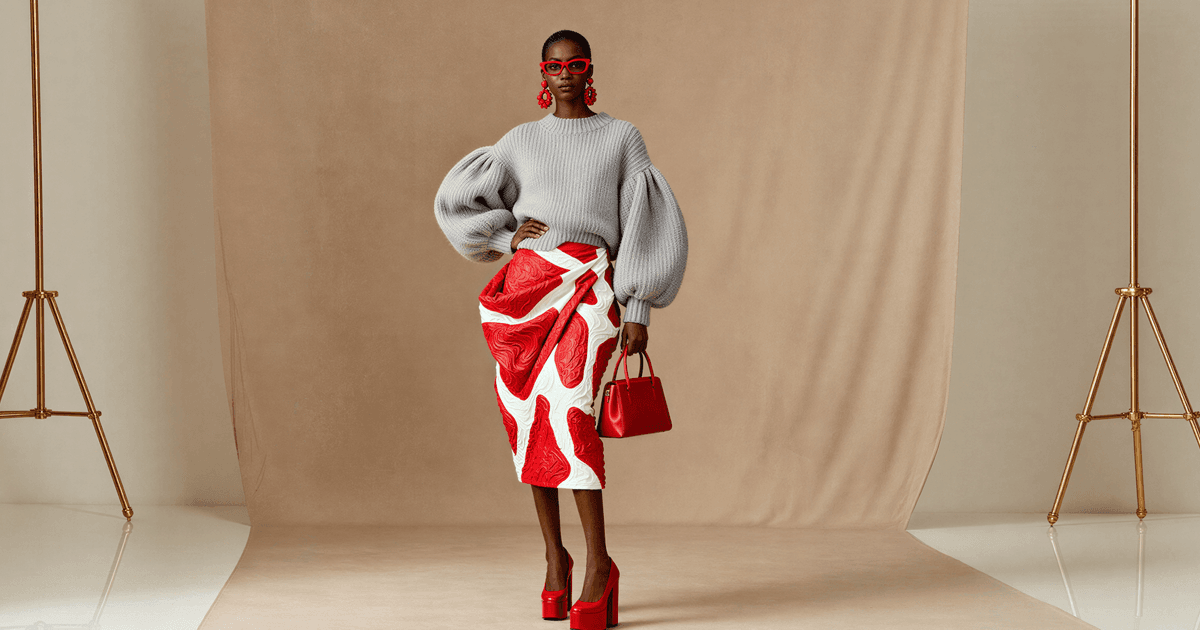
Pick the SKU most likely to break. A matte cotton tee on a white sweep will pass every model on the market and tell you nothing you can use. The signal lives in the difficult cases.
Glass with printed lettering on it is the worst case in most catalogues, because the model has to hold a transparent form, a liquid colour and a block of small type at the same time. Perfume photography works through that three-surface problem in detail.
Rank your catalogue by these, hardest first:
- Reflective and metallic: chrome, foil stamping, mirrored finishes, jewellery. Reflections have to be internally consistent with the scene, which is where models improvise.
- Transparent and translucent: glass, clear PET bottles, cellophane, anything where you see the background through the product and refraction has to hold.
- Fine repeating pattern: houndstooth, pinstripe, knit texture, weave. Patterns drift, warp, and resample.
- Printed text: ingredient panels, dosage text, care labels, your own wordmark on the packaging.
- Exact brand colour: anything where the shade is the product, like a cosmetics range or a paint chip.
- Grain and surface finish: leather, suede, embossing, edge paint. Models synthesise plausible grain at any magnification, and on small leather goods that grain is a regulated claim.
If a model holds your worst SKU, the rest of the catalogue is safe. If you validate on your best SKU and roll out, the failures surface later, in public, at scale. The same ranking answers a broader question, which is which materials generate cleanly and which still need a camera.
The five accuracy checks
Run these in order. Stop at the first hard fail and move to the next model, since a model that cannot hold the product will not be rescued by better prompting.
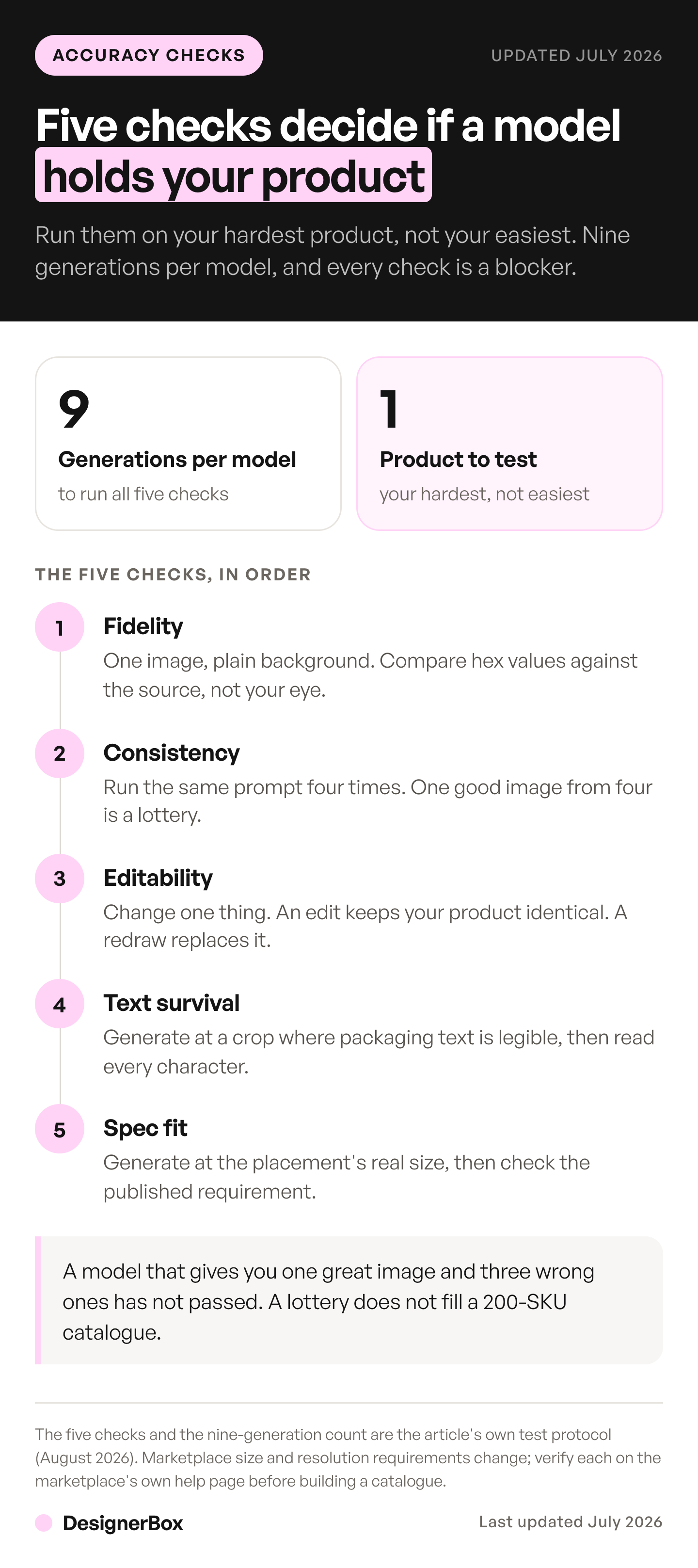
Check 1: Fidelity
Generate one image of your hardest product against a plain background, changing nothing but the framing. Put it next to the source photo and ask whether this is your product or a convincing relative of it.
Look at the logo shape and its position, the proportions between components such as cap to body, the material read, and the colour. For colour, pull the hex from the output and from the source and compare the values rather than trusting your eye, because monitors lie and your memory of the shade is worse than you think.
Hard fail: an invented detail. A seam that does not exist, a vent that is not on the product, a second logo. Invention means the model is drawing from its training data instead of your photo, and that never gets better downstream.
Check 2: Consistency
Run the same prompt four times. You are looking for whether the product survives the reroll, not whether you like one of the four.
A model that produces one great image and three wrong ones has not passed. It has given you a lottery, and a lottery does not fill a 200-SKU catalogue. Accuracy is a check you run before publishing, not something a conversion test will surface for you, and the sample sizes an image test really needs explain why that test will stay silent on it.
Consistency is what makes the difference between a tool you can schedule work around and a tool you have to babysit. Run this same reroll test on any tool you are evaluating, including the ones in our comparison of Photoroom alternatives, because published pricing tells you nothing about whether a model holds your product.
Then run the same prompt on a second SKU from the same range. Products from one family should come back looking like a family. If the lighting and framing drift between two variants of the same bottle, your product listing page will look assembled from different shoots.
Check 3: Editability
Change one thing. Move the product to a different surface, or swap the background from white to a styled scene, and keep everything else fixed. Restaging a real product is its own job with its own failure mode, which is worth separating from the other two mockup jobs before you evaluate a tool for it.
The question is whether the model edits or redraws. An edit changes the background and leaves your product identical. A redraw hands you a new product in a new scene, and you will not notice at thumbnail size, which is exactly why it is dangerous. Cutting the product out first removes the ambiguity, and what happens to that cutout next decides which platforms will take it.
Compare the product pixels before and after. If they shifted, you cannot build a campaign on this model, because every downstream variant will drift a little further from the original. Models built around reference-holding are the ones to try here; Kontext Multi is in the DesignerBox catalogue for this reason.
Check 4: Text survival
If your product or its packaging carries text, generate it at a crop where the text is legible and read every character.
Model text rendering improved sharply through 2025 and 2026, and it has not been solved. Wordmarks come back subtly wrong: a letter dropped, a kerning pair fused, an ingredient list rendered as convincing gibberish. At thumbnail size it reads fine, which is how it ships.
This check is a straight yes or no. Either the text is your text or the image is unusable for that SKU. There is no partial credit on a dosage panel.
Check 5: Spec fit
Generate at the size and aspect the placement needs, then check it against the requirement rather than against your monitor.
Marketplaces publish real constraints on longest edge, minimum resolution, and how much of the frame the product must fill, and those specs change. Verify the current requirement on the marketplace’s own help page before you build a catalogue against a number you remember. An image that fails at upload is not an accuracy problem, but it wastes the same afternoon. The current published minimums are collected in our guide to low resolution product images.
What each check costs to run
In DesignerBox an image generation or edit is 5 credits. That prices the whole procedure:
| Check | Generations | Credits |
|---|---|---|
| Fidelity | 1 | 5 |
| Consistency | 4 rerolls + 1 second SKU | 25 |
| Editability | 1 edit | 5 |
| Text survival | 1 crop | 5 |
| Spec fit | 1 at target size | 5 |
| Per model | 9 | 45 |
Two models is 90 credits. The DesignerBox free plan includes 112 credits and no credit card, so a two-model pass fits inside it. Four models is 180 credits, which sits inside Basic at $15 a month for 500 credits a month. Full credit costs per plan are on the pricing page.
Compare that against the alternative. A styled product image from a studio runs $100 to $500, and a full shoot day runs $1,000 to $5,000, which is the real backdrop to this decision and the subject of what a product photoshoot costs. Spending 45 credits to learn a model cannot hold your bottle is the cheapest hour in the process.
One honest note on the math: this prices the check, not the catalogue. Video is priced per second and lands in a different bracket entirely, so do not budget a video campaign from an image number.
Will AI change your product’s real colours?
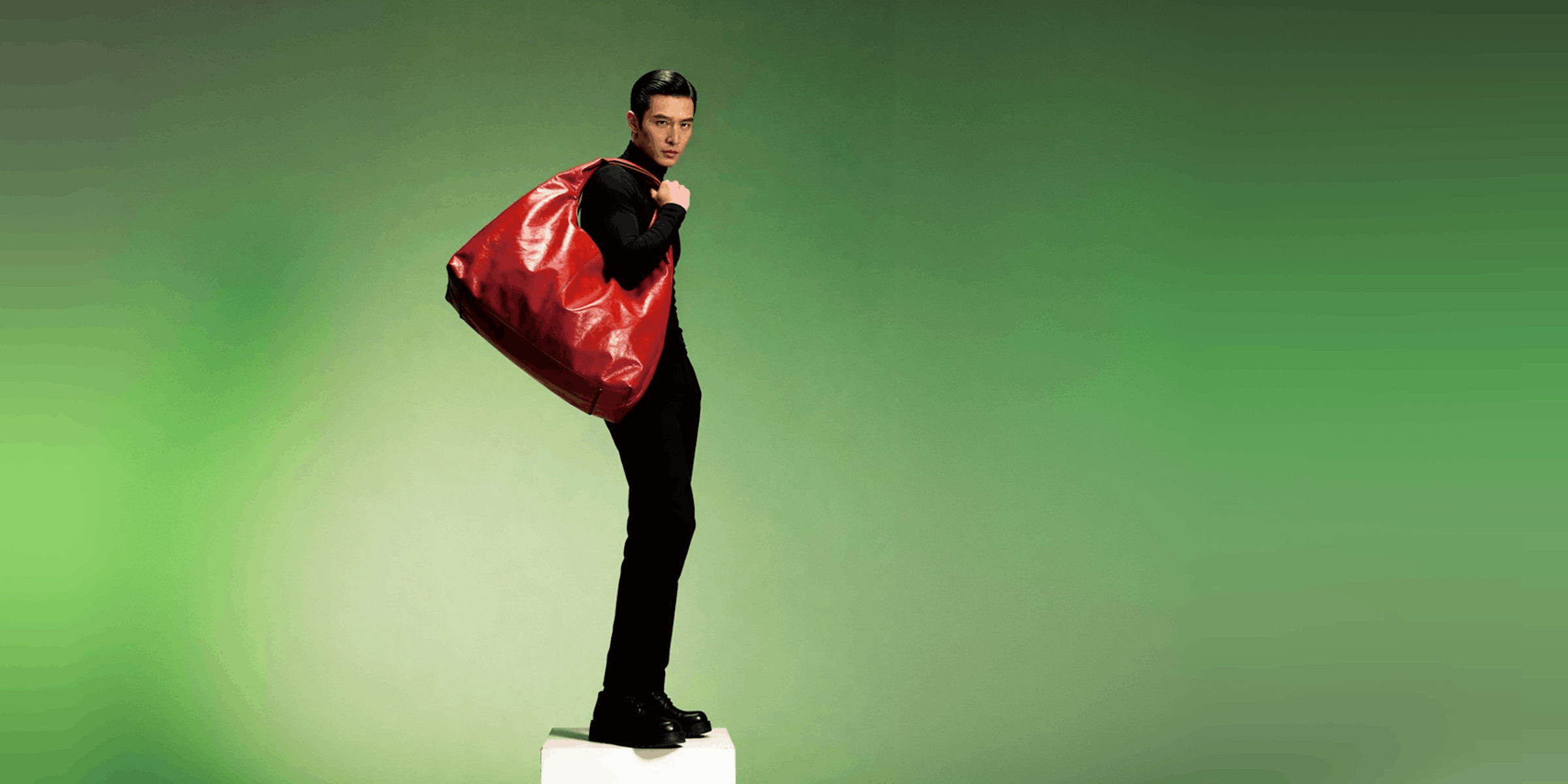
Yes, routinely, and it is the most common accuracy failure that reaches customers. Colour drifts for two reasons. The model resamples the product rather than copying it, so the shade lands near your source instead of on it. And relighting a scene changes how the colour reads, which is a physically correct behaviour that still produces a wrong answer for a listing image.
Do not eyeball this. Pull the hex from the output and from your source photo. Decide a tolerance before you look, because a tolerance chosen after you see the result is not a tolerance. If the brand colour is the product, as with cosmetics or paint, the tolerance is close to zero and most models will fail.
The check that matters: would a shopper holding the real product feel misled by this image? That is the standard the returns queue applies, so it is the one worth applying first. For apparel specifically, the drape half of that question is where fit-aware try-on research is heading.
When the output is accurate enough to ship
Accurate enough is not a score, it is a threshold you set per SKU and per placement, and the placement moves it.
A styled lifestyle image at the top of a category page carries a low accuracy burden, because nobody buys from it. The main listing image carries a high one, because it is the thing a shopper claims they were shown. A swatch carries an absolute one.
Some categories start at the strict end. Gemstone size is governed by federal guidance rather than taste, which is why jewelry product photography treats the scale shot as required. Cosmetics sit there too, because EU guidance on cosmetic claims treats a prominently pictured ingredient the same way it treats a written one, so skincare product photography constrains the props as tightly as the pack.
A workable rule: the closer the image sits to the buy button, the tighter the tolerance. Run the five checks against the strictest placement the image will ever appear in, not the one you are making it for today, since assets get reused and nobody re-checks them when they are. What that threshold looks like applied shot by shot is set out in our AI product photography examples.
Write the threshold down before you generate. A tolerance invented after the fact is a rationalisation.
Accuracy is also where the compliance question lands. Google Merchant Center and consumer law both police the gap between the picture and the parcel rather than how the picture was made, which is why the rules that apply to AI photos on a store read as accuracy rules rather than AI rules.
When to still book a photographer
Some work stays with a camera, and pretending otherwise costs more than the shoot.
- A product that does not exist yet. Every check here starts from a source photo. No photo, no baseline, no accuracy claim.
- Fine jewellery and high-value goods. Tolerance is near zero and the return cost is high.
- Anything requiring an unretouched original. Some regulators and some marketplace categories require it. Verify the rule for your category rather than assuming.
- Regulated label text. A supplement panel runs at 6 to 8 point and is a legal document, so it gets photographed rather than generated. Supplement product photography sets out which frames have to be real captures.
- The hero shot of a launch. One image seen a million times justifies a day rate.
The realistic split: photograph the product once, properly, then derive the catalogue from that source. That is the model this whole procedure assumes, and it is why the source photo’s quality sets the ceiling on everything after it. If the source needs cleanup before you build on it, which retouching tool fits which job sorts the options by portrait work, file enhancement, and campaign edits.
If you run this check regularly, it is worth automating. The DesignerBox MCP server lets you run the same check from your assistant rather than clicking through it each time.
Accuracy matters more once the still starts moving, because a video model regenerates every frame and inherits each flaw in the source. Animating a product photo into an ecommerce clip covers which models hold a product together and which drift.
Accuracy is also the enforceable standard, not a quality preference. Walmart, eBay and TikTok Shop all require listing content to match the product delivered, and none of them needs to mention AI to apply that rule. What each marketplace requires for AI product images quotes the policies. Checking that standard across hundreds of files at once is its own problem, and where bulk product image runs break covers how to review a catalogue without reviewing every file.
Nano Banana 2 is the other Google model in the catalog worth testing on colour-critical work, alongside Nano Banana Pro. Prompt starting points for that model sit in the Nano Banana prompts library.
Reaching the same models through the Gemini or ChatGPT apps instead comes with its own constraints on watermarks and quotas, covered in ChatGPT vs Gemini for product images.
FAQ
Will an AI image model change my product’s real colours?
Often, yes. Colour drift is the most common accuracy failure. Models resample the product rather than copying it, and relighting shifts how a colour reads. Pull the hex from the output and compare it against your source photo instead of judging by eye. If the exact shade is the product, as with cosmetics or paint, set a near-zero tolerance and expect most models to fail.
How many images should I generate before I trust a model?
Nine covers the five checks: one for fidelity, four rerolls plus one second SKU for consistency, and one each for editability, text, and spec fit. That is 45 credits in DesignerBox. One good image proves nothing, because a single output tells you the model can hit your product, not that it will do so reliably.
Which products should I run through an AI model first?
Your hardest one. Reflective metal, transparent glass, fine repeating patterns, printed text, and exact brand colours are where models break. An easy SKU passes everything and teaches you nothing. If a model holds your worst product, the rest of the catalogue is safe.
Does AI keep texture on fabric and reflective products?
It varies by model and it is exactly what the fidelity and consistency checks are for. Fine repeating weaves tend to drift or resample, and reflections have to stay consistent with a scene the model is inventing. Generate at a close crop where the texture is legible, then compare against the real garment rather than against your memory of it.
Can I use AI product photos on Amazon, Etsy or Shopify?
Marketplace rules on image content, resolution, and AI disclosure differ by platform and by category, and they change. Check the current policy on the marketplace’s own help pages before building a catalogue against it. Treat this as a compliance question for your category, not a general one, and verify it in the month you ship.
How do I stop a model inventing details my product does not have?
You mostly cannot prompt it away. Invented detail means the model is drawing on training data instead of your source photo, which is a property of the model rather than the instruction. Switch to a model built to hold a reference, and treat invention as a hard fail rather than a prompting problem.
When should I still hire a product photographer?
When the product does not exist yet and there is no source photo, when tolerance is near zero as with fine jewellery, when your category requires an unretouched original, and for a launch hero shot that will be seen a million times. The workable split is to photograph the product once, properly, then derive the catalogue from that source.
Sources
All accessed July 2026.
- Image Arena methodology (blind paired user votes) and the Elo standings for GPT Image 2, Reve 2.0, MAI-Image-2.5, HiDream-O1-Image-1.5 and Nano Banana 2 Lite: (artificialanalysis.ai, July 2026)
- Midjourney V7, V8 and V8.1 release and default dates: (midjourney.com, July 2026)
- Studio image and shoot-day rate ranges, carried from our own breakdown of what a product photoshoot costs, which sources them to published studio rate cards
- DesignerBox credit costs, plan allocations and free-plan limits verified against live product configuration, July 2026
DesignerBox credit costs and plan allocations verified against live product configuration, July 2026. Image model leaderboard standings and arena methodology verified at artificialanalysis.ai, and Midjourney version dates at midjourney.com, July 2026; rankings change frequently and should be re-checked before use. Photography rate ranges are carried from our own breakdown of product photoshoot cost, which sources them to published studio rate cards. Marketplace image and AI disclosure policies change by platform and category and are not reproduced here; verify on the platform’s own documentation before publishing. Individual results vary.