
An AI ad generator turns a product photo, a URL, or a short brief into finished ad creative: images, video, headlines, and the aspect ratios each placement needs. You supply the product and the offer. The tool handles backgrounds, motion, resizing, and copy. Most run on the same underlying image and video models, and differ mainly in how much of the campaign they cover.
That definition is the easy part, and it is where almost every page on this topic stops. It is also not the part that decides whether your ad runs.
In July 2026, Google began rolling out AI labeling settings across five of its advertising products. TikTok already rejects or restricts ads with undisclosed AI content. The IAB published the first industry-wide disclosure framework in January. The generator makes the file. Policy decides whether the file is allowed to become an ad.
This guide covers what these tools are, the four types worth knowing apart, how the pricing works, and the disclosure rules almost nobody writing about this category mentions.
Key Takeaways
- An AI ad generator produces ad creative from a small input, usually a product photo, a product URL, or a brief. The output is images, video, copy, and correctly sized placements.
- There are four types worth separating: static image, video, UGC and avatar, and URL-to-ad. Most tools claim several and do one well.
- Video is the expensive operation everywhere, by a wide margin. In DesignerBox, a static image is 5 credits and an 8 second Veo 3 clip with audio is 6,400.
- The ad platforms already ship their own generators free. Meta Advantage+, Google Asset Studio, and TikTok Symphony cost nothing beyond ad spend, and each works only inside its own platform.
- Disclosure is the part that gets skipped. Google’s AI labeling rollout began in July 2026, and TikTok can reject an undisclosed AI ad outright.
- The consumer trust gap is widening, not closing. IAB found 82% of ad executives think Gen Z and Millennials feel positive about AI ads, against 45% of those consumers who do.
- What matters is where the pixels came from. An ad built from your real product photo sits in a different risk category than a synthetic person who never existed.
How an AI ad generator works
Every tool in this category runs the same four stages, whatever the marketing says.
First, input. You give it a product photo, a product URL it scrapes, or a text brief. Second, understanding. It reads the product, the background, and often your site’s colours and fonts. Third, generation. An image or video model produces the creative. Fourth, formatting. It cuts the result into the placements each channel wants, and writes headlines to match.
The stage that varies most is the first one. A generator that starts from your actual product photo produces your actual product. A generator that starts from a text prompt produces something that resembles your product. For a brand running paid social against a real SKU, that difference is the whole game, and it is worth checking before anything else.
The stage that varies least is the third. Most tools in this category do not train their own models. They call the same providers everyone else calls: Google, OpenAI, ByteDance, Black Forest Labs, Kuaishou, Runway. TikTok’s own Symphony Video Studio runs on Seedance 2.0 (ads.tiktok.com, July 2026), a model you can also pick directly in tools that expose a catalogue. When two products give you different output from the same model, the difference is the pipeline around it, not the model.
The four types of AI ad generator
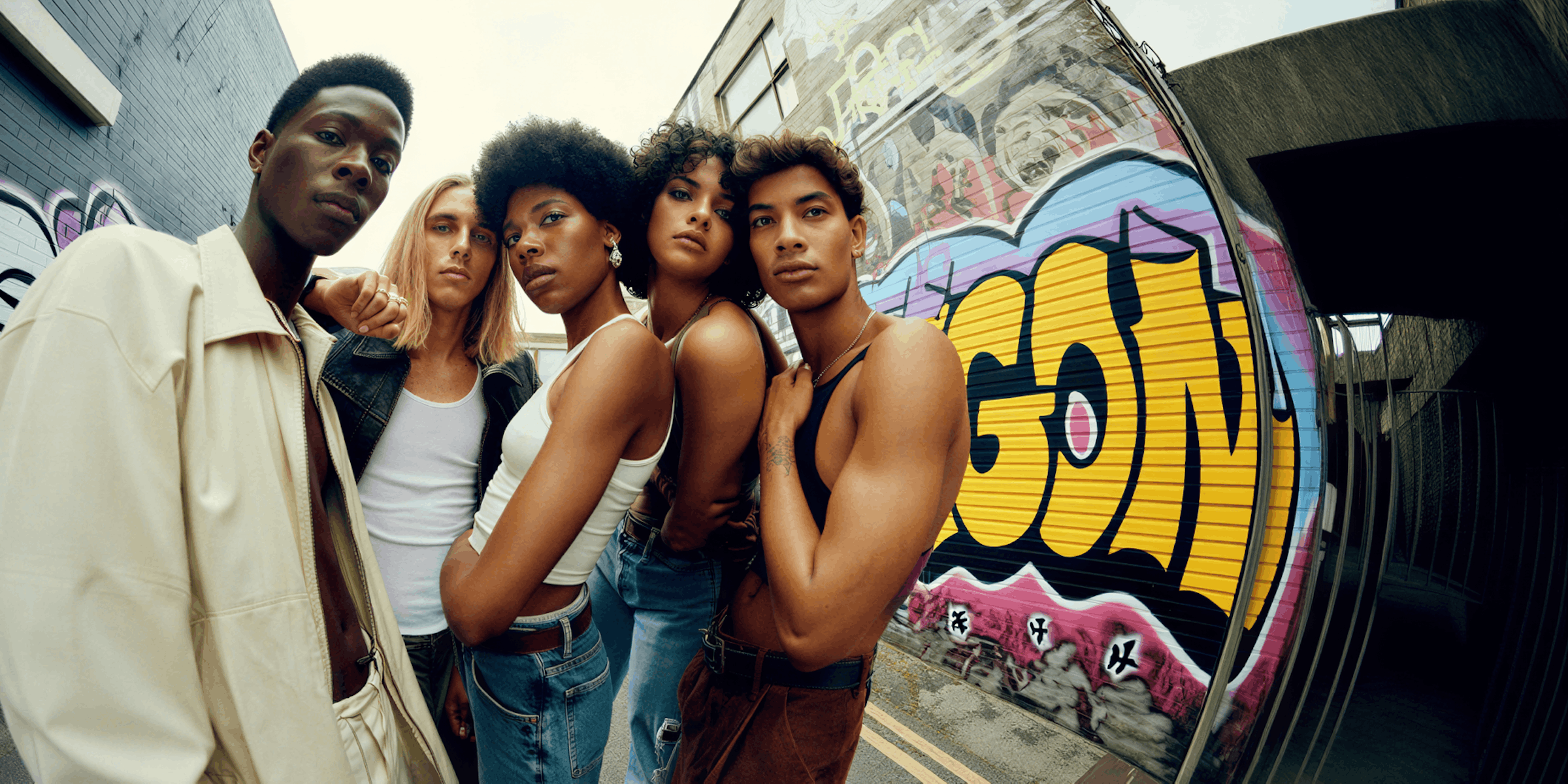
The category name covers four fairly different products. Knowing which one you are buying prevents most of the disappointment.
| Type | Input | Output | Best for |
|---|---|---|---|
| Static image ad generator | Product photo | Feed, story, carousel images | Catalogue and PDP-driven paid social |
| Video ad generator | Product photo or brief | Short vertical or square video | Reels, TikTok, Shorts, YouTube |
| UGC and avatar generator | Script or brief | AI presenter reading a script | Testimonial and spokesperson formats |
| URL-to-ad generator | A product page URL | A full ad set, scraped and assembled | Fast tests, dropshipping, long catalogues |
Static image generators are the most mature and the cheapest to run. Video generators cost the most and vary the most in quality. UGC and avatar generators are the ones with the sharpest disclosure exposure, because they depict a person who does not exist saying something they never said.
If the presenter starts from a single portrait, making a photo talk with AI covers which models accept a face and the consent it needs. Our comparison of the best AI UGC ad tools prices that sub-category against each vendor’s own page. URL-to-ad generators are the fastest way to produce volume and the easiest way to produce volume that is off-brand.
Most tools advertise three or four of these. Very few are equally good at all of them.
What does an AI ad generator cost?
Pricing in this category is genuinely unstable, and third-party comparison pages contradict each other and the vendors constantly. Anyone quoting you a competitor’s exact price from memory is guessing. Check the vendor’s live pricing page on the day you buy.
What is stable is the shape of the pricing, and the shape tells you more than the number.
Nearly every tool prices on credits or generations rather than seats, because their own cost is per generation. Static images are cheap. Video is not, and the gap is not small. That is not a pricing decision any vendor made freely. It reflects what the underlying models charge, so it shows up everywhere.
DesignerBox prices the same way. Generating or editing an image costs 5 credits, and 8 seconds of Veo 3.1 with audio costs 6,400, which is more than the entire monthly allocation on the $75 Premium plan. Plans run from a free tier with 112 credits through to Ultra at $200 a month for 8,000. Current tiers are on the DesignerBox pricing page.
The practical read: budget static and video separately. A plan that comfortably covers a month of image ads can be emptied by a handful of premium video clips.
For the full picture, including verified 2026 tiers from Runway, HeyGen and Creatify and a method for working out your cost per ad before you buy, see our breakdown of AI ad generator pricing. Watch the unit as well as the number: the AdCreative.ai alternatives comparison shows one vendor billing per download rather than per generation, which makes its credit count incomparable to the rest. The number worth comparing against is not another tool’s plan price. It is what you spend now, and a studio day plus the reshoot cycle it triggers is covered in what a product photoshoot costs.
The ad platforms already have their own
Before buying a generator, know what you already get free with ad spend. All three major platforms ship creative AI natively.
Meta’s Advantage+ creative generates and enhances ad variations across image, video, and carousel, and selects combinations per impression by placement and device (facebook.com/business, July 2026). Google’s Demand Gen builds video ads from image assets and product feeds through Asset Studio, and can infer brand colours, fonts, and messaging from your existing assets or site (support.google.com/google-ads, July 2026). TikTok’s Symphony bundles a scripting assistant, AI dubbing across 10+ languages with lip sync, a browser video editor, and AI avatars (ads.tiktok.com, July 2026).
None of these charge beyond ad spend. That is a real argument for using them, and it should be the first thing you try.
The honest scope difference is portability. Each native tool works inside its own platform and optimises for its own inventory. An asset made in Symphony is a TikTok asset. If your campaign runs across Meta, TikTok, and YouTube from one product, you either produce it three times in three tools or produce it once somewhere that exports everywhere. That is a workflow question, not a quality one, and for single-channel advertisers the natives are often enough.
Do you have to label an AI ad?
This is the section the rest of the internet skips, and it is the one that determines whether your creative survives review.
Start with the widely repeated claim that Meta requires disclosure on every ad containing AI-generated content. That is not what Meta’s published policies describe. What Meta documents is narrower and worth getting right: it applies an “AI info” label to ads created or significantly edited with its own generative tools, and it requires advertisers to disclose AI use on ads about social issues, elections, or politics (transparency.meta.com, July 2026).
Meta also began using automated detection in June 2026 to identify media made with third-party generative tools and label it itself. The labeling is largely something the platform does, not a form you fill in, outside the political category.
Google is the clearest of the three and the most current. Its AI labeling requirements update published in July 2026 rolls the setting out across Google Ads, Display & Video 360, Campaign Manager 360, Merchant Center, and Google Ads Editor (support.google.com/adspolicy, July 2026). The driver is regulation, not policy preference: rules in the EU, India, and New York require disclosure for ads containing certain AI-generated or edited assets.
Google auto-declares when its own tools made the asset. For creative made elsewhere, which includes anything from a third-party generator, you self-declare. Google’s own caveat is the important line, and it is worth quoting: using the AI label setting “doesn’t guarantee your compliance” with specific regulations.
TikTok places the heaviest duty on the advertiser. Realistic AI-generated image, audio, or video content requires the AIGC label or a clear disclaimer, and undisclosed AI content can get an ad rejected or restricted (ads.tiktok.com, July 2026).
The IAB’s AI Transparency and Disclosure Framework, published 15 January 2026, is the first industry-wide attempt at a standard, and it is deliberately not blanket labeling (iab.com, July 2026). It is risk-based. Routine production work, background AI tooling, and clearly stylised creative do not trigger disclosure. What triggers it is AI that materially affects authenticity, identity, or representation: synthesised depictions of real events, synthetic voices of real people, digital twins in situations that never happened, and avatars simulating human interaction.
Read that trigger list against the four types above and the pattern is hard to miss. Every trigger is about misrepresenting a person or an event. Generating a studio background behind a product you sell is not on the list. Generating an AI presenter who claims to have used your product is much closer to it. The cleanest worked example is Virgin Voyages, which licensed its celebrity likeness and built a visible tell into every AI-spoken line, one of seven landmark campaigns grouped by the AI mechanic each one ran. The framework is voluntary, and platform rules and EU, India, and New York law are not, so treat this as orientation and check the primary policy pages before a launch.
What these tools are good at, and where they stop
They are good at volume, at format coverage, and at the unglamorous work: resizing, background swaps, relighting, producing the twelfth variant of a concept that already works. They are good at removing the two week gap between “we need creative” and “we have creative.” The seven formats that cover most ecommerce placements are a reasonable coverage test to hold a generator to.
They stop at judgement. They do not know which offer to lead with, which objection your buyer has, or why last quarter’s winner won. Forrester found that nine in ten US marketing agencies use AI to cut costs at the expense of creativity (forrester.com, July 2026). That is a finding about how the tools get used, not what they can do, and it should inform how you use them.
The audience data points the same way. IAB’s research, fielded from October 2025 to January 2026 across 505 US Gen Z and Millennial consumers and 104 ad executives at companies spending $1M to $1B+ annually, found 82% of executives believe those consumers feel positive about AI-generated ads, against 45% who do.
The gap widened from 32 points in 2024 to 37 points in 2026. Consumers calling a brand innovative for using AI fell from 30% to 23%, while advertiser belief that AI signals innovation rose from 40% to 49% (iab.com, July 2026).
Two independent organisations, pointing the same direction. The efficiency is real and the audience is not impressed by it. Use these tools to make more of what works, not to announce that you used them.
Making more of what works is a loop with a specific shape, and most of the rules published about it are not sourced. How to scale AI ad campaigns separates what the ad platforms publish on creative fatigue and volume from what the category repeats, and ad creative testing covers why the standard nine-asset batch reports delivery rather than performance.
How to choose an AI ad generator

Five questions, in order of how much they matter.
- Does it start from my real product photo? If the output is a lookalike rather than your SKU, nothing else matters.
- Which models does it run, and can I pick? A tool locked to one model has one aesthetic. Ask what happens when a shot needs a different one. DesignerBox’s model catalogue covers 13 image and video models across six providers on one subscription, which is the alternative to a per-model bill.
- What does video cost me? Get the per-second or per-clip number, not the headline plan price. This is where budgets die. Working the numbers on a real ladder makes the point faster than any explanation: the Shhots.ai alternatives compared show what one plan buys in images against what the same plan buys in video.
- Where do the assets live afterwards? Scattered downloads across drives and DMs are a real recurring cost, and one nobody quotes for.
- Can I rerun the campaign that worked? The second product, the next drop, the next client. A tool that cannot repeat a winner makes you rebuild it.
The cost of a six-tool stack is rarely the six subscriptions. It is the brand drift every time you paste between them, the assets nobody can find, and the prompt box you relearn for each one. That is what to price.
If you want to see output before committing, the DesignerBox gallery shows real generations. For teams driving this from an assistant rather than a browser, DesignerBox MCP exposes the same models to Claude, Cursor, and ChatGPT.
The free AI ad generator is the fastest way to see one work end to end without a plan. The best AI ad generator compares the tools once you know what the category does.
FAQ
What is an AI ad generator?
An AI ad generator is a tool that turns a product photo, a URL, or a brief into finished ad creative: images, video, headlines, and correctly sized placements for each channel. It automates background generation, motion, resizing, and copy, so one input produces a set of ads rather than a single asset.
Are AI-generated ads allowed on Facebook, Google, and TikTok?
Yes, on all three, subject to disclosure rules. Meta labels ads made with its own generative tools and requires advertiser disclosure for social issue, election, and political ads. Google rolled out AI labeling settings across its ad products in July 2026, driven by EU, India, and New York regulation. TikTok requires an AIGC label or clear disclaimer on realistic AI content and can reject ads without one.
Do you have to disclose AI-generated ads?
It depends on what the AI did and where you run it. Platform rules apply first, and TikTok’s are the strictest for advertisers. The IAB’s January 2026 framework is risk-based rather than blanket: routine production and stylised creative do not trigger disclosure, while synthetic depictions of real people or events do. Check the platform’s current policy page before launch, because this area is moving fast.
How much does an AI ad generator cost?
Most price on credits or generations rather than seats, and the split between static and video matters more than the plan price. In DesignerBox, an image is 5 credits and 8 seconds of Veo 3 with audio is 6,400, on plans running from free with 112 credits to $200 a month for 8,000. Verify any competitor’s pricing on their live page, as this category changes tiers frequently.
What is the difference between an AI ad generator and an AI image generator?
An AI image generator makes an image. An AI ad generator makes an ad: the image or video, plus the copy, plus the placement sizes each channel requires, usually starting from your product rather than a text prompt. The generator is one stage inside the ad tool. The stage after it, laying out the type, marks and export sizes a finished asset needs, is the one teams most often discover late.
Can I use AI-generated ads commercially?
Usually yes, though the licence comes from the tool, not from copyright ownership. Most vendors grant a licence to use rather than transferring copyright, and works with no significant human authorship generally cannot be registered. Your licence also does not protect you if a model outputs someone else’s trademark or likeness. Read the specific terms of the tool you use. DesignerBox includes a commercial licence from the Pro tier upward.
Do AI ad generators replace a creative team?
No. They replace the production bottleneck, not the judgement. They are strong at variants, resizing, and turning one concept into twelve. They do not know which offer leads, which objection matters, or why a winner won. Forrester’s finding that nine in ten US agencies use AI to cut costs at creativity’s expense (forrester.com, July 2026) is a warning about how they get used, not a limit on what they do.
Sources
All accessed July 2026.
- Google’s AI labeling rollout across Google Ads, Display & Video 360, Campaign Manager 360, Merchant Center and Ads Editor, the EU, India and New York regulatory driver, and the caveat that the setting does not guarantee compliance: (support.google.com/adspolicy, July 2026)
- TikTok’s AIGC label requirement, the rejection or restriction of undisclosed AI content, Symphony’s feature set, and Symphony Video Studio running on Seedance 2.0: (ads.tiktok.com, July 2026)
- Meta’s AI info label on ads made with its own generative tools, the disclosure requirement for social issue, election and political ads, and automated detection of third-party generative media: (transparency.meta.com, July 2026)
- The IAB AI Transparency and Disclosure Framework published 15 January 2026 and its risk-based trigger list, plus the 82% against 45% executive-consumer sentiment gap and the widening from 32 to 37 points: (iab.com, July 2026)
- Meta Advantage+ creative generating and selecting ad variations per impression by placement and device: (facebook.com/business, July 2026)
- Google Demand Gen building video ads from image assets and product feeds through Asset Studio: (support.google.com/google-ads, July 2026)
- The finding that nine in ten US marketing agencies use AI to cut costs at the expense of creativity: (forrester.com, July 2026)
- DesignerBox pricing, credit costs, plan allocations and feature gating verified against live product configuration, July 2026
Platform policy claims verified against Google Ads policy, Meta transparency, TikTok Ads policy, and the IAB AI Transparency and Disclosure Framework as of July 2026. Competitor pricing is deliberately not quoted: tiers in this category change frequently and third-party trackers conflict. Verify on the vendor’s live pricing page. DesignerBox credit costs and plan allocations are current as of July 2026. Individual results vary.