Hat photoshoot ideas divide on two physical facts: what holds the crown up, and where the brim shadow falls. A cap has no rest shape, so every idea needs a head, a hidden support, or a flat laydown. And the brim throws a hard shadow straight across the eyes. Sort your ideas by those two and the shot list plans itself.
Every headwear mood board is a list of vibes. Bucket Sky. Shadow Brim. Court Crouch. Read one and you still cannot tell which frames you can shoot with the samples you already have. You also cannot tell which ones need a location, a model and a permit.
The names hide the two questions that decide whether a shot is possible at all. This guide sorts eighteen ideas by those questions, says which marketplace slot each one can fill, and compares the cost of each group against a camera. For construction specs and the full listing rules, the companion piece is hat product photography.
Key Takeaways
- The crown is the whole problem. Lay a six-panel cap on a table and the crown folds into a disc, taking the profile and the brim curve with it. Those three things are what the buyer is paying for.
- Structured or unstructured decides your options before you pick a look. SanMar’s glossary defines structured as “a buckram lining used to control the slope of the cap”. An unstructured cap has no buckram in the crown, so on a table it holds only the shape of whatever you put inside it.
- Keep the brim shadow. It is the one compositional feature headwear has and knitwear does not. Four of the eighteen ideas below are built on it.
- Marketplaces file hats as accessories, not as clothing. Amazon’s current product image guide says to show clothing accessories flat, without a model, in the main image (Amazon product image guide, as of September 2026). Its 2021 clothing guide lists hats in the accessories lay-down group. On Amazon, the worn hero shot you plan the shoot around cannot hold the main slot.
- We found no published optimal image count. Amazon recommends a main image plus at least six more images and one video (Amazon product image guide, as of September 2026). Plan seven frames, not twenty.
- Cost splits by group, not by idea. Shopify puts product photography at $500 to $3,000 per day and $50 to $350 per image (shopify.com, January 2026, accessed September 2026). Group A needs no person, so it is the cheapest to produce either way.
- Logos break before faces do. Google states its image model “can still struggle with small faces, accurate spelling, and fine details in images” (deepmind.google, as of September 2026). On a merch cap the embroidered wordmark is the product.
The two variables that decide every hat shot
Ask two questions of any hat idea before you cost it.
What is holding the crown up? Three answers exist. A person’s head. A hidden support inside the hat, meaning stuffing, a pinned liner or an off-camera stand. Or nothing, in which case the hat lies flat and you are shooting a disc.
SanMar is a distributor that sells Richardson, Port Authority and New Era caps. It defines structured as “a buckram lining used to control the slope of the cap” and unstructured as a cap where “no buckram has been added to the crown for structure” (SanMar Glossary of Terms, September 2025). A structured crown holds its slope off a head. An unstructured one takes its shape from whatever is inside it, which on a table is nothing. A beanie has no structure anywhere and needs a form in every frame, including the flat ones.
One warning if you plan from spec sheets. Crown height numbers online do not all use the same method. SanMar’s spec sheets measure over the crown, from the button to the brim seam at the center front. They list the structured mid-profile Richardson 112 at 6.75 inches in its one-size version (SanMar spec sheet, September 2026). A straight vertical measure of the same cap gives a much smaller number. Check which method produced a number before you compare two. SanMar’s glossary describes low, mid and high profile in words, with no inch values.
Where does the brim shadow land? A brim is a horizontal plane above the eyes. Under any light higher than the brim it cuts a hard line across the upper face, and overhead sun puts the eyes in full darkness. It is a frequent reason a hat portrait fails, and a compositional tool headwear owns outright.
Every idea below is filed by those two answers. Nothing is filed by mood.
Hat photoshoot ideas that need no person in frame
Group A is every frame where a hidden support or a flat surface holds the shape. No casting, no call sheet, no release form. These carry the listing.
- The stuffed laydown. Crown packed from the inside with tissue or a fitted form, shot square from above. This is the frame the marketplace main slot wants.
- Three-quarter hero on an invisible stand. The angle that shows crown height, brim curve and one side panel at once. The stand comes out in post.
- The brim-line profile. Pure side elevation, nothing else in frame. It is the one shot that proves the brim curve, and it is the shot most brands skip.
- Interior detail. Sweatband, taping, size label, closure. On a premium cap, this is the image that shows build quality.
- The colorway stack. The full run in one frame, stacked or fanned. One image that replaces six.
- The floating hat. Suspended on wire or line, shutter fast enough to freeze it, support removed afterward. It reads as motion without a model.
- Flat lay with the rest of the drop. Cap, tee, tote, arranged on one surface. Sells the collection, not the unit.
- Macro on the embroidery. Stitch direction, 3D puff height, thread sheen. On merch this is the proof shot.
Ideas 1 to 5 can be generated from a single well-lit source photo of the sample. Idea 8 is the embroidery itself, so keep it a real capture, for the reason in the logo section below. Ideas 6 and 7 need either a capture or careful scene work, because you are inventing physical relationships that were never photographed. A multi-angle template makes the multi-view set in ideas 2 and 3 from one photo, and a flat lay template covers 5 and 7. More on the technique in flat lay photography and product photography angles.
Hat photoshoot ideas that need a head
Group B is every frame where a person is holding the shape. These sell fit and scale, which no laydown can do. They also cost the most in a traditional shoot, because they are the ones that need a model.
- The chin-lifted portrait. Chin raised a few degrees so the eyes clear the brim edge. The default fix for the shadow problem.
- Back of head. Closure, rear panel, adjuster. It answers the snapback or strapback question without a word of copy.
- Three-quarter walking frame. The hat in motion, brim leading. Sells attitude rather than spec.
- Hand on the brim. The universal adjust gesture. It also gives the hand something to do, which is the usual failure in a headwear portrait.
- Carried, not worn. Hat in hand at the side or against the chest. Reads as lifestyle and fits slots that do not take worn imagery.
- The group frame. Three people, three colorways, one location. It is often the most expensive frame on a headwear call sheet, and one that gets reused widely.
Idea 14 is where the ceiling sits. Google’s API docs say Nano Banana Pro takes up to 14 reference images in total. That includes up to 5 character images to maintain character consistency and up to 6 high-fidelity object images (ai.google.dev, as of October 2026). Three people in three caps sits inside that. A twelve-person team photo does not.
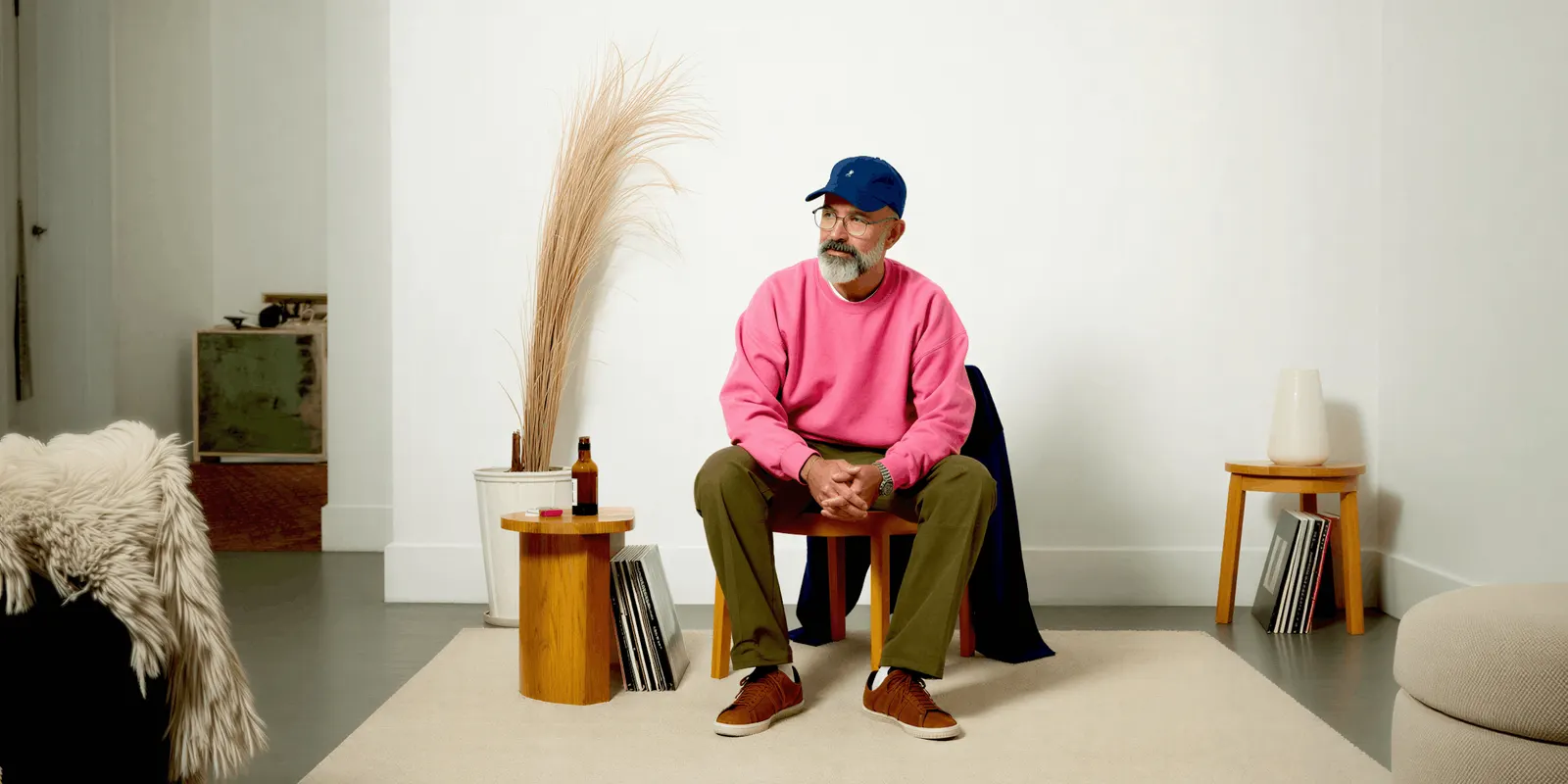
Ideas 9 through 13 are single-character frames, which is the easiest case for a generated on-model set. Virtual try-on is built for garments and starts on the Premium plan. For a cap, build the worn frame as a scene from your product photo. On-model photography with AI walks the process.
Hat photoshoot ideas built on the brim shadow
Group C treats the shadow as the point rather than the problem. These are the frames that make a headwear campaign look like a campaign, and they are cheap because the light is doing the work.
- Hard noon shadow. Sun directly overhead, eyes in full shadow, mouth and jaw lit. It looks harsh in a portrait and strong in a campaign.
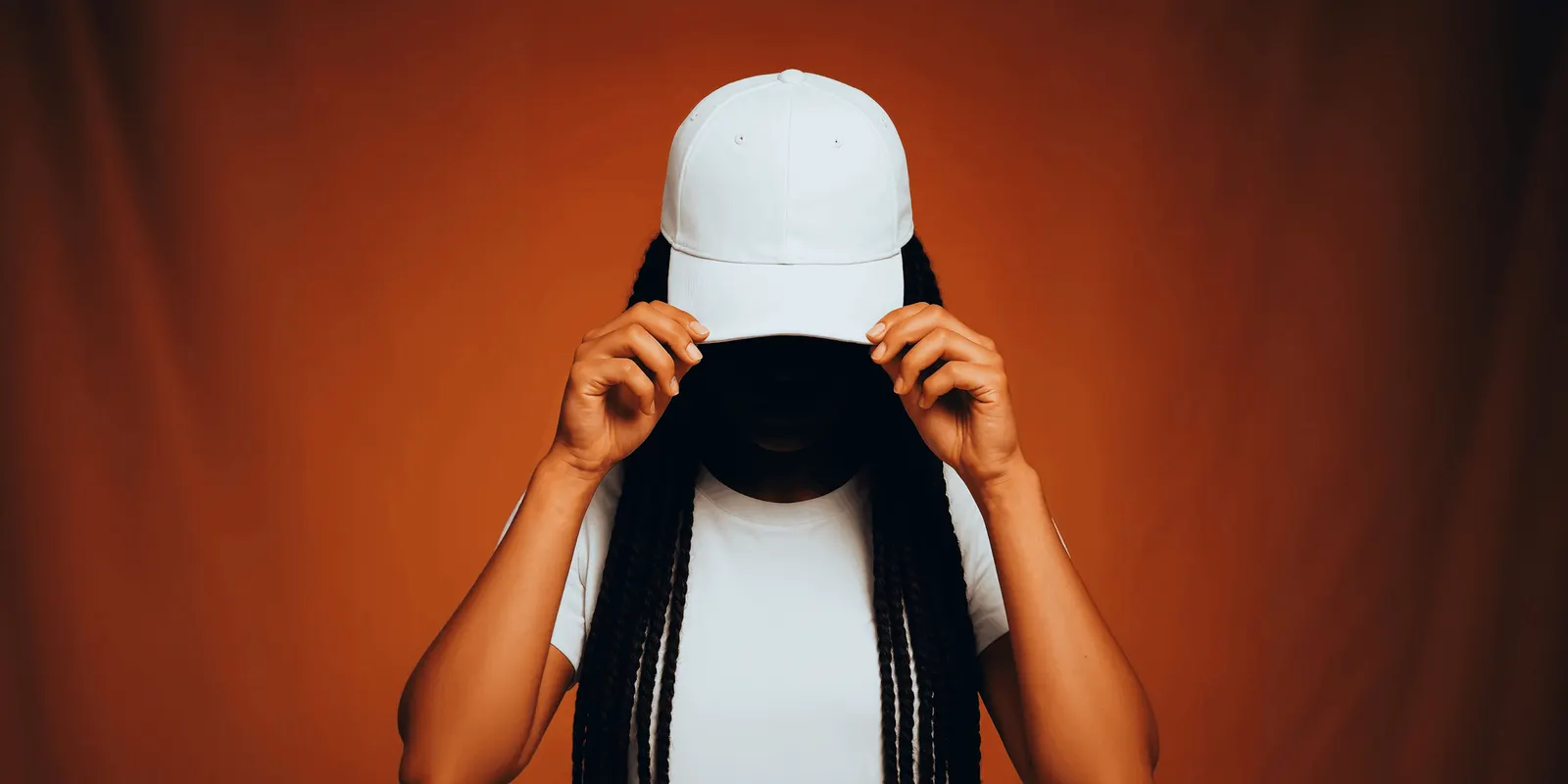
- The faceless crop. Brim tilted low enough to hide everything above the mouth. It works across sizes and demographics because the face is hidden. A real model in the frame still needs a signed release.
- Backlit brim halo. Light behind the head, brim reading as a dark silhouette with a rim of light along the edge.
- Cast shadow on a wall. The hat’s shadow as the subject, the hat itself partly or entirely out of frame.
Idea 16 is the most reusable creative frame headwear has. In DesignerBox you build it once as a workflow from your product photo, and each new cap gets the same frame. The cap and hat photography page shows the three-quarter hero, the profile, the back and a model view.
Group C carries one honest caveat. For Nano Banana Pro, Google states that “major lighting changes (like day to night), or blending multiple images may sometimes produce unnatural results, visual artifacts, or disjointed scenes” (deepmind.google, as of September 2026). A hard directional shadow invented on top of a flat studio capture is exactly that operation. Shoot or generate these as their own lighting scenario, not as a filter applied to Group A.
Which of these your marketplace will accept
On Amazon, only idea 1, the stuffed laydown, fits the main image of a hat listing. That rule reorders the shot list, and it is why leading with the worn hero is a planning error. Our guide to ecommerce product photography lists the specs for five channels.
Amazon treats hats as accessories, not as clothing in adult sizes. Amazon’s current product image guide says to “Show clothing accessories or multipacks flat, without a model” in the main image, and not to show any part of a mannequin there. The product should fill 85 percent of the image (Amazon product image guide, as of September 2026). Amazon’s 2021 clothing guide, which it marks as informational, lists “Accessories, Including Scarves, Belts, Hats, Ties, & Cold-weather Accessories” under lay-down. It lists both “Visible mannequins” and “Ghost mannequins” among its main image DON’Ts (Amazon Fashion imaging guidelines, Spring 2021 edition, accessed September 2026).
| Slot | What it takes | Ideas that fit |
|---|---|---|
| Amazon main image | Flat, no model, no mannequin, product as 85% of the image | 1 |
| Marketplace secondary images | Detail, scale, alternate angles | 2, 3, 4, 5, 8, 10 |
| Own-store PDP | No platform restriction | Any |
| Paid social and ads | Motion, face, attitude | 9, 11, 12, 14, 15, 16 |
| Lookbook and email | Collection context | 5, 7, 14, 17, 18 |
Read the table backwards and the build order changes. Only Group A has a frame for the Amazon main slot, the slot that takes the sale. Build it first and earn the rest after.
A second rule applies the moment a generated person wears the hat. In July 2026, Amazon asked sellers to tag images that show a photorealistic person made fully by AI with the keyword “contains-synthetic-performer” in the image XMP dc:subject field (Amazon product image guide, as of September 2026). The tag is not needed for real people edited with AI, or for images with no photorealistic people. Group B and the faceless crops in Group C are the frames this covers, so check the current wording in Seller Central before a listing goes up.
Note that ghost mannequin, the standard apparel workaround, does not rescue you here. Ghost mannequin is an off-figure technique for garments with a body-shaped void, and it is not the route into a hat main image. The full explanation sits in ghost mannequin photography.
What each idea costs
Shopify puts product photographer day rates at $500 to $3,000 and per-image pricing at $50 to $350 (shopify.com, January 2026, accessed September 2026). Those are the photographer alone. A Group B frame adds a model, and a Group C outdoor frame adds a location and a weather window.
| Group | Traditional shoot | Generated from one sample photo |
|---|---|---|
| A. No person in frame | Photographer day rate, or $50 to $350 an image | The cost of each run, shown before the run |
| B. Head in frame | The above, plus a model and styling for the day | The same, from the same source photo |
| C. Brim shadow | The above, plus location and light timing | The same |
There is no single price for a generated image. The cost depends on the model you pick, and it is shown before the run. The commercial license starts on the Pro plan, so check the pricing page before you put generated frames into paid media or on a listing. For the wider comparison, see what a product photoshoot costs.
The difference is not the same for every group. Group B changes the most, because a generated frame needs no model or styling day. Group C changes the least. A real brim shadow at the right hour costs a photographer little, and major lighting changes are an operation Google flags as less reliable.
How to plan a drop’s shot list in an afternoon
Work the groups in the order the platform enforces, not the order the mood board suggests.
- Sort the samples by construction. Structured, unstructured, beanie. Structured caps hold their own crown, so they are the fastest through Group A. Everything else needs a form.
- Lock Group A for every SKU. Six frames per colorway covers main, three-quarter, profile, interior, stack and detail. This is the listing, so do not skip it.
- Pick two Group B frames per colorway. One chin-lifted, one back of head. Keep this group small, because it is the expensive group and extra frames add less each time.
- Pick two Group C frames per drop, not per SKU. These are campaign assets. One faceless crop and one backlit brim will carry a season of email and paid social. The three-week streetwear drop campaign plan sets out which campaign assets run before a drop.
- Shoot the hero sample once, properly. Every generated variant inherits the quality of the source. A cap photographed on a creased bedsheet produces creased-bedsheet output at every downstream step.
- Save the sequence as a workflow. The next drop is the same eighteen decisions with different samples. Today you run the saved workflow once per sample. Batch runs one workflow over a whole sheet of products.
For an eight-SKU drop in three colorways that is 144 Group A frames, 48 Group B frames and 2 Group C frames, 194 in total. You see the cost of each run before you start it, so you can price the drop before you commit. At Shopify’s $50 to $350 per image, the same 194 frames cost $9,700 to $67,900 before a model or a location.
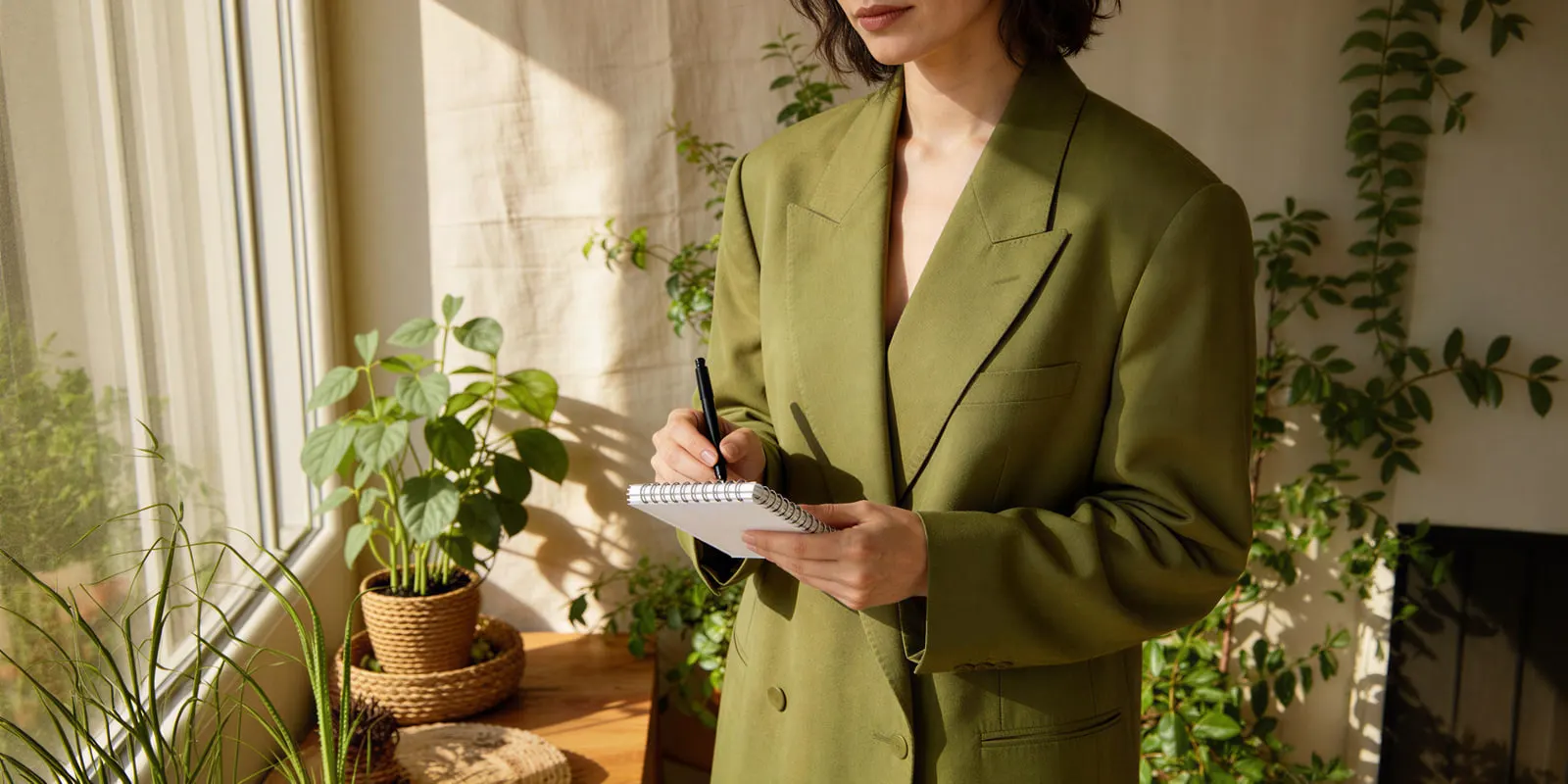
The sample photo, the laydown set, the worn frames, the brand rules and the finished files sit in one place, in one subscription. Next season’s drop starts from this season’s approved set. Your brand rules sit in one record, and the workflow reads them on every run. Next season’s hats then look like this season’s.
That is also the point of step 6. You make the eighteen decisions once on the first drop. The next drop runs the same saved workflow on different samples, with the crown support, the brim angle and the light you approved on the first one. Agencies running several headwear labels build one workflow per label. To begin, start from a template and run it on one cap photo.
A camera still wins on three things: the texture and drape of a premium wool felt, a real customer in a real place, and any claim your marketing makes about a named person. Generated frames answer shape, colorway and scene. They do not answer authenticity, and no shot list should ask them to.
FAQ
What are the best hat photoshoot ideas for a brand with no budget?
Start with Group A, the frames that need no person. A stuffed laydown, a three-quarter hero, a brim-line profile, an interior detail and a colorway stack cover the core listing set on one sample, one light source and one surface. The stuffed laydown is the frame for Amazon’s main image slot, which makes Group A the highest-value set on the list at any budget.
How do you photograph a hat without hiding the eyes in shadow?
Lift the chin a few degrees so the eyes clear the brim edge, or move the light below brim height so it fills upward. Overhead light plus a horizontal brim always darkens the eyes. If the shadow will not move, use it on purpose: the faceless crop and the hard noon shadow both beat a compromised portrait.
Do you need a model for a hat photoshoot?
Not for the Amazon main image. Amazon’s 2021 clothing guide lists hats as accessories, and Amazon’s current guide asks for clothing accessories flat, without a model, in the main image. So the first image on the platform has nobody in it. A model earns their place in ads, lookbooks and your own product page, where fit and scale carry the sale.
How many photos does a hat listing need?
No published research establishes an optimal number, and we found no study behind the counts that circulate. What is published is Amazon’s recommendation: a main image plus at least six more images and one video (Amazon product image guide, as of September 2026). A practical set is the main laydown plus three-quarter, brim profile, interior, detail, colorway stack and one scale reference. Extra frames past that serve your own product page more than the listing.
Can AI generate hat photos that keep the embroidered logo accurate?
Treat the logo as the exception. Google documents that its image model “can still struggle with small faces, accurate spelling, and fine details in images” (deepmind.google, as of September 2026). Scene, colorway and angle usually generate well from a source photo. A wordmark stitched across the front panel is the fine detail that drifts, so check it at full resolution before every frame ships.
What does a hat photoshoot cost?
Shopify puts product photographer day rates at $500 to $3,000 and per-image pricing at $50 to $350 (shopify.com, January 2026, accessed September 2026), before a model, stylist or location. Generated from one sample photo, the cost depends on the model, and the cost is shown before the run.
Should beanies be shot the same way as caps?
No. A beanie has no brim, so the entire Group C shadow category disappears, and it has no structure, so every frame including the laydown needs an internal form. The trade is that beanies photograph well folded and stacked, which makes the colorway stack a stronger frame for knit headwear than it is for caps.
Sources
- Clothing accessories and multipacks flat without a model in the main image, no part of a mannequin in the main image, 85 percent frame fill, a main image plus at least six more images and one video, and the “contains-synthetic-performer” XMP keyword: Amazon product image guide, accessed September 2026.
- Hats in the accessories lay-down group, and ghost mannequins and visible mannequins prohibited in the main image: Amazon Fashion imaging guidelines, Spring 2021 edition, accessed September 2026. Amazon stamps this guide “for informational purposes only”.
- Structured and unstructured cap definitions, and profile described without inch values: SanMar Glossary of Terms, September 2025, accessed September 2026.
- Richardson 112 crown height and the over-crown measuring method: SanMar spec sheet for the Richardson 112 (sanmar.com), accessed September 2026.
- Product photographer day rates of $500 to $3,000 and per-image pricing of $50 to $350: shopify.com, January 2026, accessed September 2026.
- Up to 14 reference images, including up to 5 character images and up to 6 high-fidelity object images, for Nano Banana Pro: ai.google.dev, accessed October 2026.
- The stated limitations on small faces, accurate spelling, fine details, major lighting changes and multi-image blending: deepmind.google, accessed September 2026.
- DesignerBox plan gates and the Pro-plan commercial license: DesignerBox pricing page (designerbox.ai/pricing), September 2026.
Marketplace image rules, photography rates and model capabilities verified as of September 2026. Platform policies and model specs change; re-check before a launch. Individual results vary.