Shopify product images are the media files attached to a product, and the first one does most of the work. Shopify’s own documentation states that the first media item becomes the featured image, and that it appears on collection pages, the cart page, the checkout page and your home page. Every other image in the gallery is seen only by shoppers who reach the product page and swipe.
Most guides on this topic hand you a shot list and an upload spec. Six to eight images, 2048 by 2048, main image first. A merchant follows it exactly, then opens the store and finds the collection grid ragged, the checkout thumbnail cropping the label off, and the product link they pasted into Slack previewing as a letterboxed square.
Every one of those is a distribution problem wearing a shot-list costume. One upload gets reused across five surfaces inside Shopify and two outside it, and each surface applies its own crop at its own size. This guide names every surface, gives the spec each one enforces, and puts the shot order in the sequence that survives all of them.
Key Takeaways
Image one is really five images. Shopify’s first media item becomes the featured image and renders on collection pages, the cart page, the checkout page and the home page, not only on the product page (help.shopify.com, August 2026).
The share card is the crop nothing square survives. Open Graph wants 1.91:1 at 1200 x 630 px (developers.facebook.com, August 2026). A 2048 x 2048 packshot either letterboxes or loses its top and bottom.
Google’s floor moves on 31 January 2027. Every product image needs 500 x 500 px minimum from that date, and Merchant Center has issued warnings since 14 April 2026 (support.google.com, August 2026).
250 media files per product is the ceiling, and 3D models and videos cannot be assigned as variant media (help.shopify.com, August 2026).
Six images per product is the working number. Not because a study says so. Because that is what the seven surfaces between them ask for.
The cost gap is wide. An average Shopify product photoshoot runs about $750 (soona.co, August 2026), and per-image studio work starts at $40 with an eight business day turnaround (squareshot.com, August 2026). DesignerBox generates or edits an image for 5 credits, so Basic at $15 a month covers around 16 products at six images each.
Where does each Shopify product image end up?
A single upload ends up on seven surfaces. The product page gallery shows every image in order. The featured image, meaning the first media item, is reused on collection pages, the cart page, the checkout page and the home page. Two more surfaces sit outside the store: the link preview card when someone shares the URL, and the product listing if you sync a feed to Google Shopping.
That reuse is the fact the shot list has to be built around.
| Surface | Which image it uses | What the image has to survive |
|---|---|---|
| Product page gallery | Every image, in upload order | The theme crops all of them to one ratio |
| Collection page card | Featured image | Grid crop, small render, sits beside other products |
| Cart line item | Featured image | Small square thumbnail |
| Checkout line item | Featured image | Smaller square thumbnail, high stakes |
| Home page featured product | Featured image | Whatever card ratio the theme section uses |
| Link share card | Page featured image on Shopify’s free themes, store social sharing image as fallback | 1.91:1 landscape, 1200 x 630 px |
| Google Shopping listing | The image_link in your feed, normally the featured image | 500 x 500 px floor from 31 January 2027 |
Five of those seven render the same file. That is why a product whose first image is a tight crop looks fine on the product page and wrong everywhere else. The crop that reads as confident at 1400 px reads as an accident at 64 px in checkout.
Why the first media item carries the most weight
Shopify is explicit about this. The first media item added to a product is the featured, or main, media item, and it appears on collection pages, the cart page, the checkout page and your home page (help.shopify.com, August 2026). You can change which media holds that slot by dragging it to position one.
Three consequences follow, and none of them appear in a standard shot list.
The featured image is the only image most shoppers ever see. A visitor who scrolls a collection page, adds to cart and checks out has looked at that one file four times and at nothing else. Shot two through shot eight only exist for people who open the product page.
The featured image is judged against its neighbours, not on its own. On a collection grid it sits next to eleven other products. Consistent framing, consistent product scale within the frame and consistent background matter more there than in any single shot. Shopify advises keeping one aspect ratio across featured images, and a mixed grid is the single most common thing that makes a catalogue look assembled rather than shot.
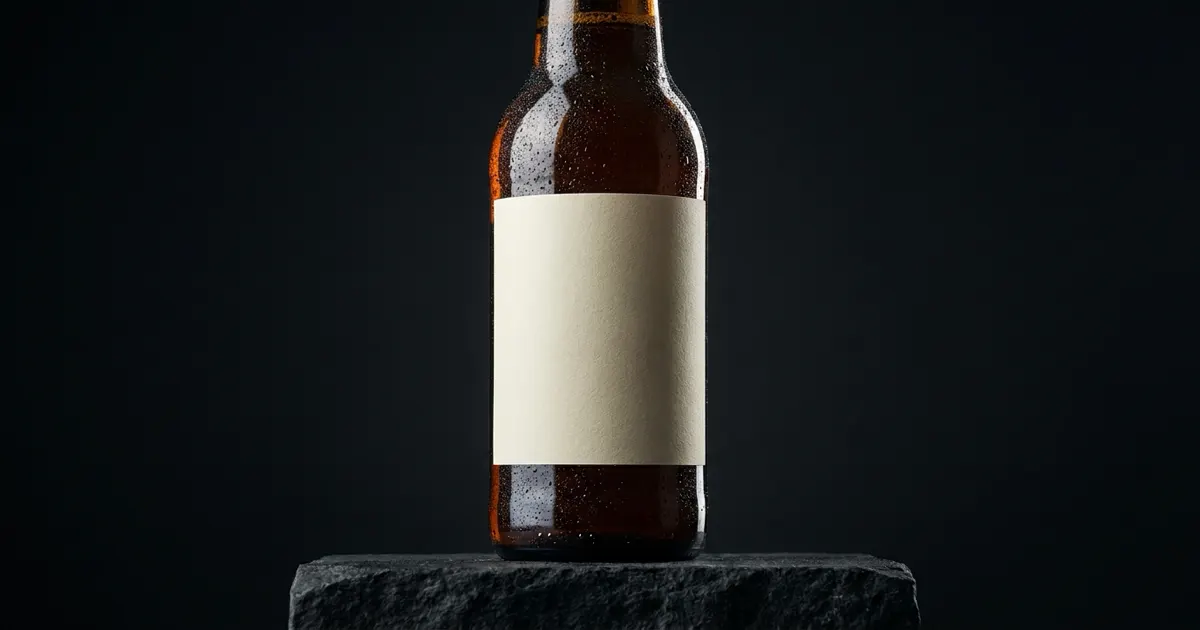
The featured image has to hold up small. Not at gallery size, at thumbnail size. A bottle photographed with 8% of the frame as product will disappear in a cart row. Frame the featured shot so the product fills roughly 80 to 85% of the canvas and the crop still reads at a quarter of an inch.
The share card is the one crop a square photo cannot fill
Every other surface in that table is square or close to it. The link preview card is not. Open Graph, which is what Facebook, LinkedIn, X, Slack, WhatsApp and iMessage all read, recommends at least 1200 x 630 px and asks you to stay as close to 1.91:1 as possible so the image shows in full without cropping. The minimum allowed dimension is 200 x 200 px and the file must stay under 8 MB (developers.facebook.com, August 2026).
On Shopify’s free themes, a shared product URL uses that page’s featured image, with the store-level social sharing image in Settings as the fallback (help.shopify.com, August 2026).
So the square you standardised on gets handed to a 1.91:1 slot. Two outcomes, both bad by default. Either the platform letterboxes it and your product sits in a small centred box with bars either side, or it centre-crops it and takes the top and bottom off, which is exactly where a bottle’s cap and a shoe’s sole live.
The fix is a second render, not a resize. Generate a 1200 x 630 landscape version of the same shot with the product placed left or centre and negative space carried on the wide axis. It is one extra frame per product, and it is the only frame that ever gets seen by someone who has not visited your store yet.
How many images does a Shopify product page need?
Six is the working number for most products. Not four, which leaves objections unanswered, and not twelve, which nobody swipes through. Six covers the featured shot, the surfaces that reuse it, and the four questions a shopper asks before they add to cart.
The list is short because each slot has a job:
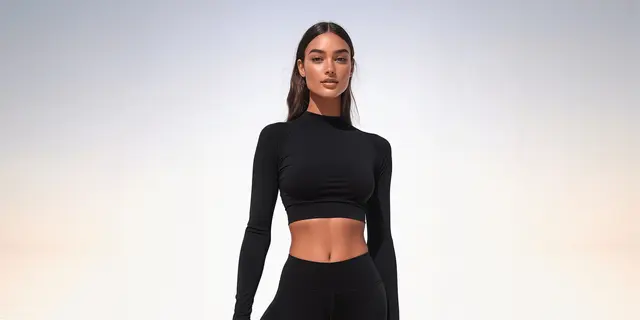
- Featured shot on a clean background. Product at 80 to 85% of frame, one aspect ratio across the whole catalogue. This is the file five surfaces share.
- Scale reference. The product next to something whose size everyone knows, or held. Missing scale is the most common reason a return gets filed.
- Detail crop. The material, the stitch, the closure, the finish. Whatever the product description claims, this frame proves.
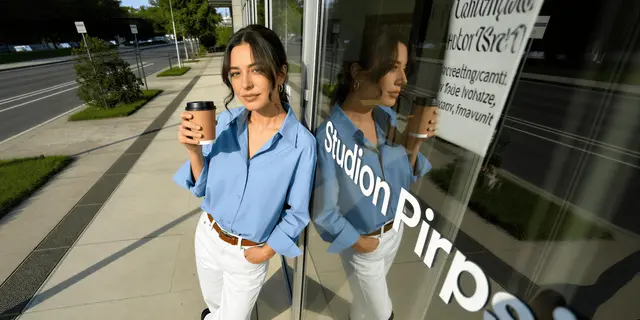
- In use or on model. Context. For apparel this is the shot that carries the most weight, and on-model imagery has its own production rules.
- Variant frame. One per colourway a shopper can select on the page. This is where the count explodes and where the media cap starts to bite.
- Share card at 1200 x 630. Landscape, built for the surface nothing else fits.
The count is per product, but Shopify sells in variants, and the two numbers are not the same. A store with 40 products, six colours and five sizes is a 1,200-variant catalogue sitting behind a 250-media-per-product cap. Doing that variant math before you price the job changes the shape of the brief entirely.
The ordering question is separate from the count. Which shot goes in which position decides how far down the gallery a shopper gets before they stop learning anything new.
What Shopify accepts, and what it serves
Shopify accepts images up to 5000 x 5000 px or 25 megapixels, under 20 MB per file, and recommends 2048 x 2048 px for square shots. PNG is listed first, then JPEG, with PSD, TIFF, BMP, GIF, SVG, HEIC and WebP also accepted. Video runs up to 10 minutes, 1 GB and 4K at 4096 x 2160 px in .mp4, .mov or .webm. 3D models take GLB or USDZ up to 500 MB (help.shopify.com, August 2026).
Two limits inside that spec change how you plan a catalogue. The cap is 250 media files per product across images, videos and 3D models combined. And 3D models and videos cannot be assigned as variant media, so a colourway that needs its own motion asset has nowhere to put it.
The upload spec is only half the answer, because Shopify re-encodes every file on its own CDN and the theme picks the delivered width. What the CDN serves after you upload covers that half, including why a correct square still arrives cropped and why a PNG export can arrive as WebP.
The shot order that survives every crop
Produce the featured shot first, at the highest resolution you will ever need, then derive everything else from it. That order matters because the featured file is the one five surfaces share, and a set built outward from one master stays consistent in a way a set shot slot by slot does not.
A working sequence for one product:
- Master frame. 2048 x 2048 square, clean background, product filling 80 to 85%. Check it at 64 px before you accept it. If the product is unreadable at thumbnail size, reframe now rather than after 200 SKUs.
- Angle set. The same product, same lighting, rotated. Turning one photo into every angle is the step that used to need a turntable and a shoot day.
- Detail crop. Pulled from the master or generated at close range, whichever holds the texture.
- Scene frame. The product placed in context. The Styled Scene Generator builds these from the same source file so the product stays the product.
- Variant renders. One per colourway a shopper can select, generated from the master so the framing does not drift between colours.
- Landscape share card. 1200 x 630, rebuilt rather than cropped.
At catalogue scale the sequence is the same and the execution is not. Running it 200 times by hand is where consistency dies, which is what the bulk catalog processor workflow exists for: one saved recipe, rerun per SKU, same framing and same background every time.
Everything derives from your actual product photo. That is the difference between a set that looks shot and a set that looks generated, and it is why nothing comes out looking generic AI.
Where a Shopify gallery goes wrong
Five failures account for most of it, and four of them are invisible on the product page.
Mixed aspect ratios across featured images. The grid goes ragged and no focal point setting fixes it. Pick one ratio, usually square, and hold it for the whole catalogue.
A featured image cropped tight. It looks decisive at gallery size and turns into an unidentifiable colour block in a cart row. Test at 64 px, not at 100%.
No landscape version anywhere. Every shared link previews letterboxed or beheaded. One extra frame per product fixes it permanently.
Variant images below the Google floor. Swatch and thumbnail assets living in the 200 to 400 px range clear today’s Merchant Center minimum and fail the 500 x 500 requirement from 31 January 2027. Warnings have been showing in Merchant Center since 14 April 2026, and Google recommends 1500 x 1500 px or above for best performance across listing formats (support.google.com, August 2026).
Generated images with no disclosure where a channel asks for one. Shopify itself publishes no policy restricting AI product images. The rules that bind a store come from the channels it feeds and the law it sells under, and two of the four changed in 2026.
What a Shopify image set costs
Three routes, three shapes of bill.
| Route | What it costs | What you get |
|---|---|---|
| Studio shoot | About $750 for an average Shopify shoot, often including a model, props, backdrops and editing (soona.co, August 2026) | A day’s output, one brief, reshoot means rebook |
| Per-image studio service | From $40 per image, eight business days or less (squareshot.com, August 2026) | Priced by frame, so a six-image product runs about $240 |
| Generate from one photo | 5 credits per image generated or edited. DesignerBox Basic is $15 a month for 500 credits | 100 images a month, about 16 products at six frames each |
The tiers scale from there. Pro at $35 a month carries 1,000 credits, which is 200 images or roughly 33 products. Premium at $75 carries 2,500, and Ultra at $200 carries 8,000, which covers around 266 products at six frames each. The free plan starts at 112 credits, enough for 22 images, with no card required.
Two honest limits. The commercial license starts at Pro, so a store publishing generated images to a live product page should be on that tier or higher, not on Basic. And video is priced per second of output rather than per file, which makes it the most expensive operation on the platform by a wide margin. Budget it separately from stills.
For a store weighing the three routes against its own drop cadence, the pricing page has the current numbers, and Photo Studio is where the master frame gets made.
FAQ
What size should Shopify product images be?
2048 x 2048 px for square shots. Shopify accepts up to 5000 x 5000 px or 25 megapixels under 20 MB, and recommends 2048 as the working size (help.shopify.com, August 2026). A 2048 square also clears Google’s 500 x 500 minimum that starts on 31 January 2027 with room to spare.
Which Shopify product image is the featured image?
The first media item on the product. Shopify uses it as the featured image and shows it on collection pages, the cart page, the checkout page and the home page (help.shopify.com, August 2026). You change it by dragging a different file into position one.
How many images should a Shopify product have?
Six covers most products: featured shot, scale reference, detail crop, in-use frame, variant frame and a landscape share card. Shopify allows up to 250 media files per product, but a shopper stops swiping long before that. Add frames only when a specific objection needs answering.
Do Shopify product images have to be square?
No, but every featured image should share one aspect ratio. Themes crop to fit their layout, so a mix of square and portrait sources produces an uneven collection grid. Square is the common choice because it survives cropping in both directions with the least loss.
Why does my Shopify product link preview badly when shared?
Because the share card is 1.91:1 and your product image is square. Open Graph recommends 1200 x 630 px (developers.facebook.com, August 2026), and a square handed to that slot either letterboxes or gets its top and bottom cropped. Build a separate landscape frame instead of resizing the square one.
Can Shopify product images be reused in ads?
Yes, with two checks. Ad platforms crop to their own placements, so a square built for a product page needs a landscape and a vertical sibling before it runs. And the commercial license on generated imagery starts at the Pro tier, so confirm your plan covers publication before the campaign goes live.
Can videos and 3D models be assigned to a Shopify variant?
No. Shopify allows up to 250 media files per product across images, videos and 3D models, but 3D models and videos cannot be used as variant media (help.shopify.com, August 2026). Only images can be attached to a specific variant.
Does Shopify have a policy against AI-generated product images?
Shopify publishes no policy restricting them, and its Acceptable Use Policy contains no AI clause. The constraints arrive from the channels a store feeds and the jurisdiction it sells into rather than from Shopify itself, and the disclosure rules that apply moved twice during 2026.
Sources
Shopify media types, upload limits, featured media behaviour, variant media restrictions and social sharing image priority verified from the Shopify Help Center as of August 2026. Open Graph image dimensions verified from Meta’s sharing documentation as of August 2026. Google Merchant Center image minimums and the 31 January 2027 enforcement date verified from Merchant Center Help as of August 2026. Third-party photography pricing verified from soona.co and squareshot.com as of August 2026. DesignerBox pricing and credit costs from the product brief. Individual results vary.