

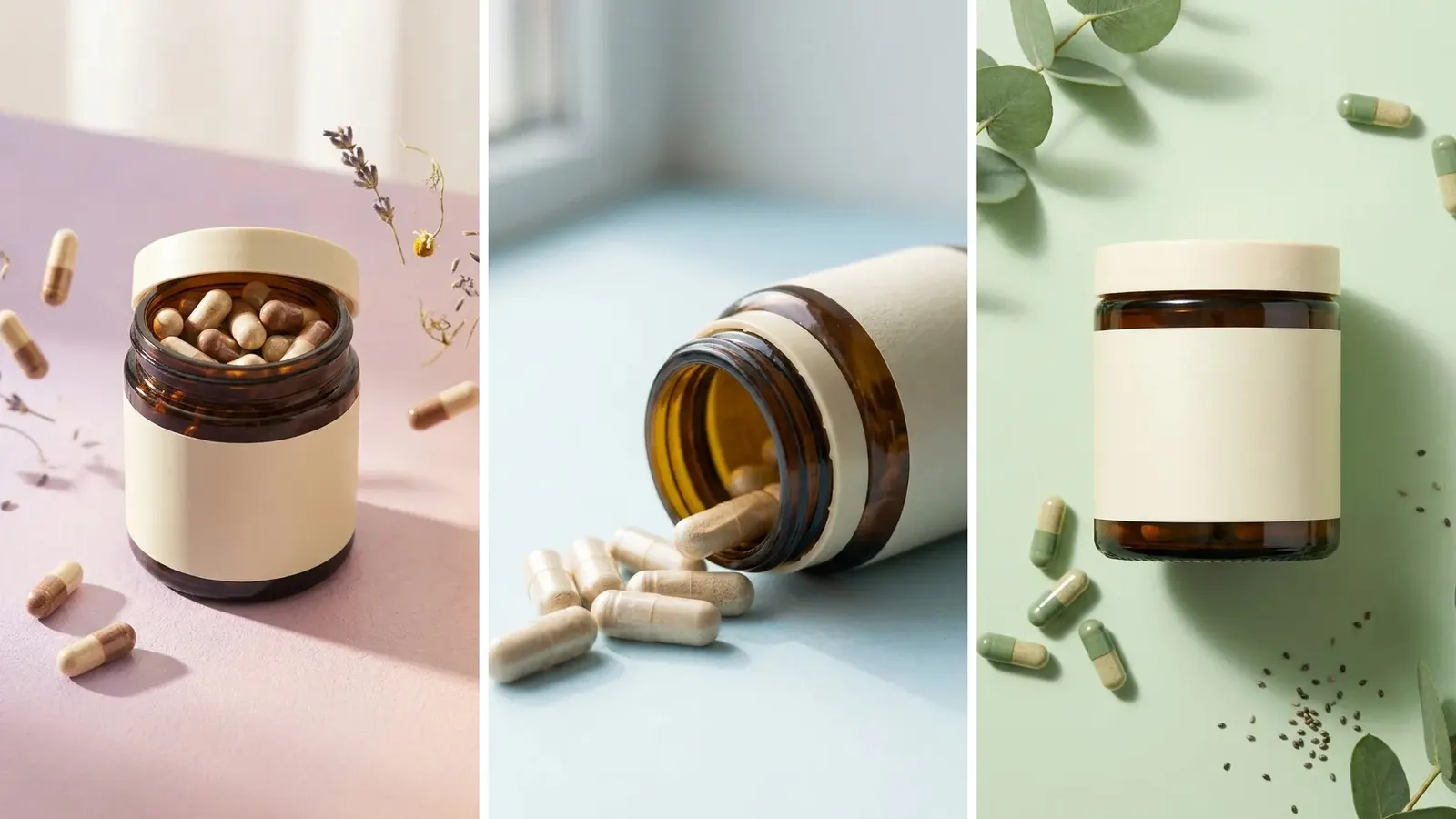
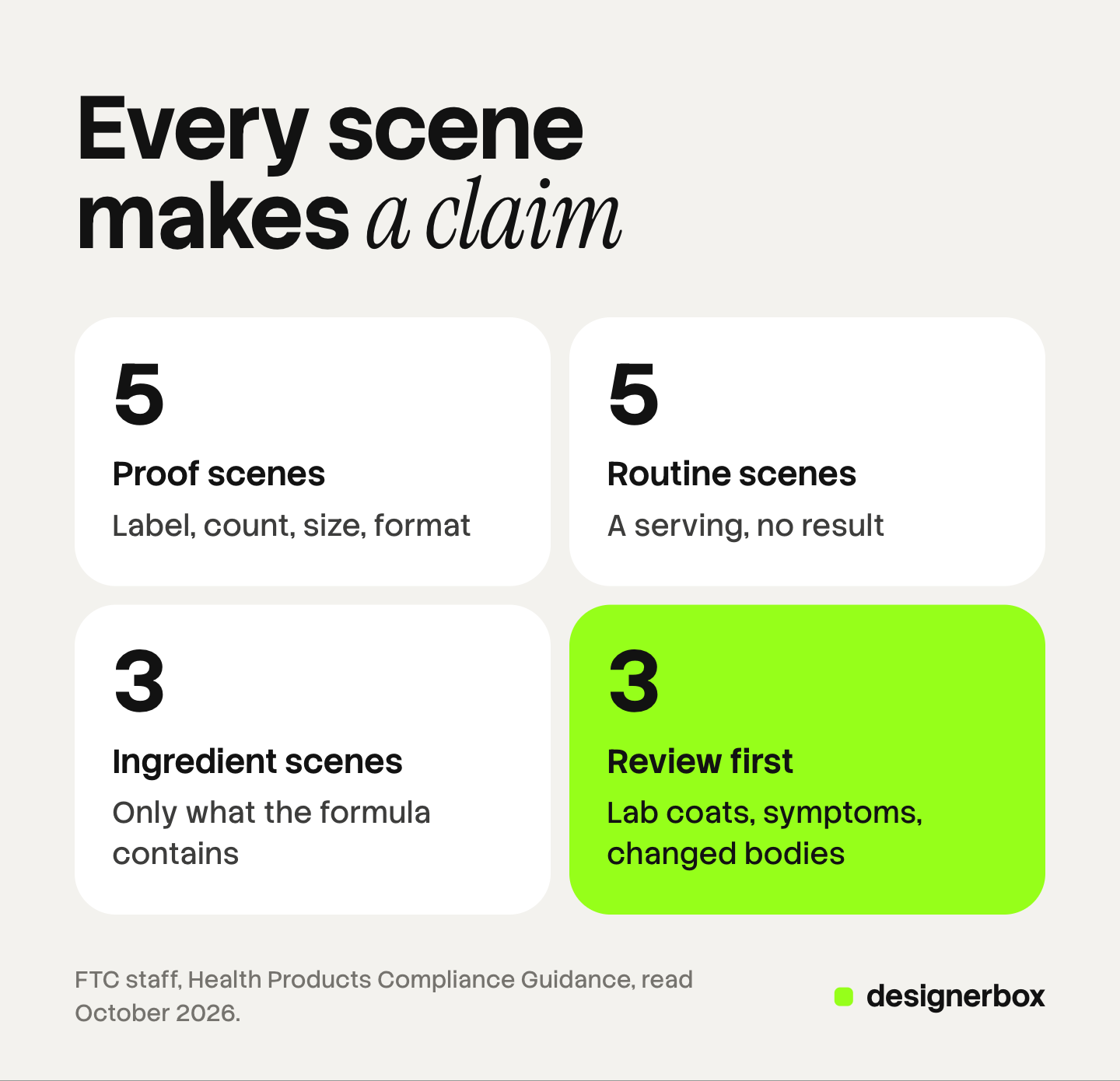
A supplement photoshoot needs four kinds of scene, sorted by what each picture claims. Proof scenes show the format, the count, the label and the size. Routine scenes show a serving in a normal day. Ingredient scenes show what the formula contains. The last group shows doctors, symptoms or changed bodies, and it goes to review before anyone shoots it. This guide lists 16 scenes.
A picture can make a health claim with no words in it. A white coat suggests clinical proof. US regulators read that message the same way they read a headline.
This guide covers capsules, softgels, gummies, powders, sachets and drops. The label rules, the full shot list and the costs are in our guide to supplement product photography. This is general information, not legal advice.
Key Takeaways
- Every scene makes a claim. Sort ideas by what the picture implies, then by how it looks.
- Five proof scenes carry the listing. The label pair, the count, the size in a hand, the format close-up and the pack lineup.
- An ingredient prop is a statement about the formula. Use a lemon only when the product contains lemon or lemon flavor.
- Three scenes go to review first. Medical authority, a symptom and a before-and-after pair.
- A generated scene may change the setting. It must not change the label, the panel, the count, or the size and color of the capsule.
Why a supplement photoshoot starts with the claim
The Federal Trade Commission (FTC) judges a health ad as a whole. Its staff guidance tells marketers to assess the “net impression” of all elements of an ad, “including the text, product name, and any charts, graphs, and other images” (FTC Health Products Compliance Guidance, October 2026). The guidance says it “doesn’t have the force or effect of law”. It explains how FTC staff apply the law.
The same document defines advertising widely. It includes “statements or depictions on packaging and labeling”, digital content and social media. A product page image and a paid social image both count.
The guidance gives picture examples. In one, a brochure for a weight-loss product shows doctors in white lab coats, microscopes, molecular structures and medical journals. The FTC says those images likely convey a claim that the product is clinically proven. No sentence in the brochure says so.
Food and Drug Administration (FDA) rules point the same way for labels. A statement can become a disease claim through “pictures, vignettes, symbols, or other means” (21 CFR 101.93, October 2026).
So each scene below sits in one of four groups, and the group sets how much review the scene needs.
Supplement photoshoot ideas that only prove the product
These five scenes state facts a shopper can check when the parcel arrives. They carry the least risk.
1. The label pair. The front of the pack and the Supplement Facts panel, side by side at the same size. It proves what is inside and how much. It fails when the small type is soft, so photograph the panel with a camera.
2. The count layout. One serving, or the full contents, in neat rows beside the pack. It proves how many capsules or gummies the shopper receives. It fails when the count in the frame differs from the count on the label. Our guide to knolling photography covers the layout rules and the part-count check.
3. The serving in a hand. One serving on an open palm, with the pack behind it. It proves the true size of a capsule. It fails when a tight crop removes the hand.
4. The format close-up. A softgel with light behind it, a gummy with its surface texture, or a level scoop of dry powder. It proves the format and the real color. For pill photography, soft light from one side keeps the shape visible on a pale surface. It fails when retouching changes the color.
5. The pack lineup. Every flavor or every size in one row, at one scale, on one surface. It proves the range and helps a shopper choose. It fails when the frame shows packs that the offer does not include.
Amber glass and dropper bottles need their own lighting. Our guide to bottle product photography covers it.
Supplement photography ideas for the routine and the serving
Routine scenes show where and how a person takes the product. They show context and no result.
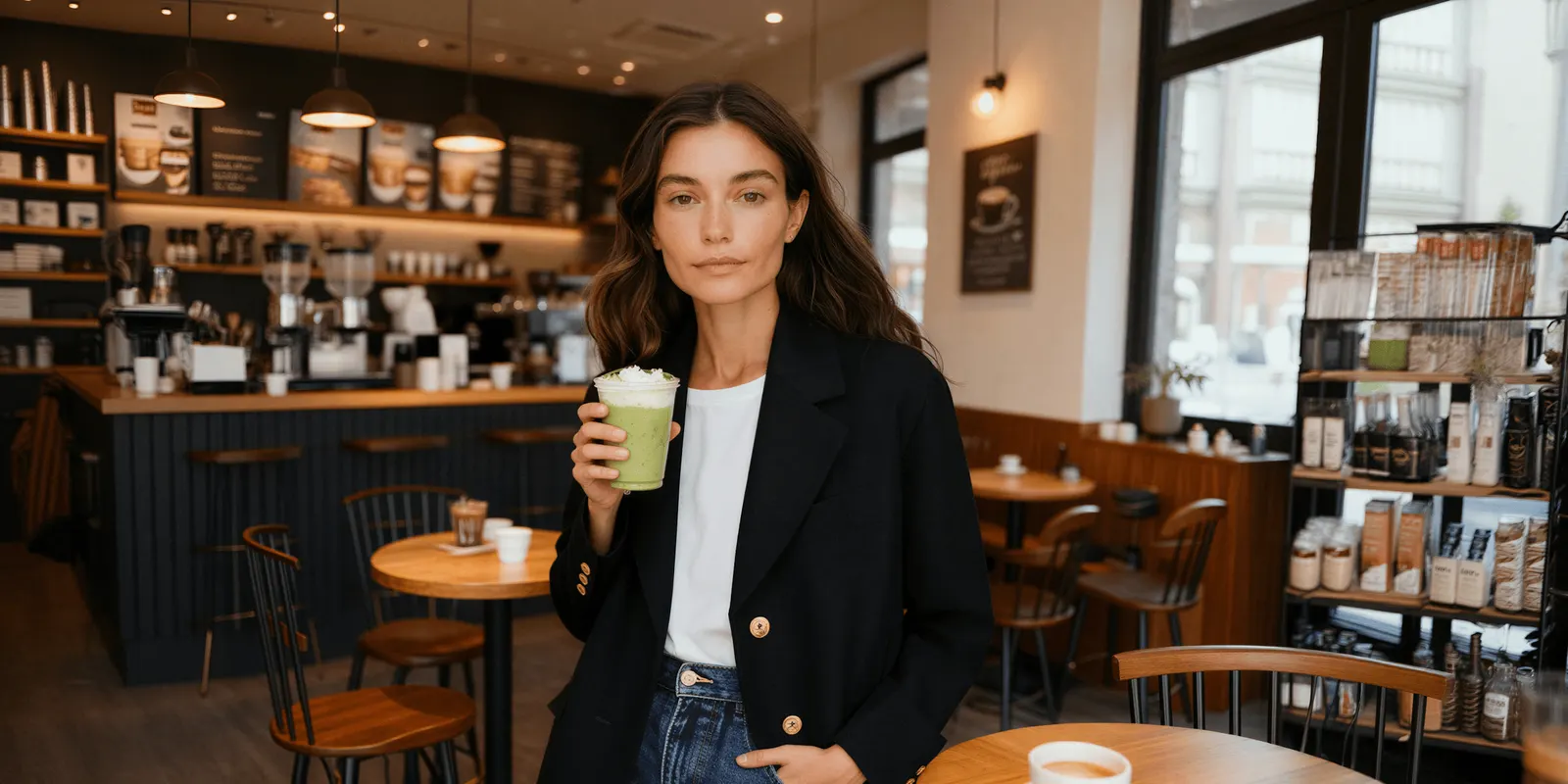
6. The glass of water. The pack, one serving and a glass of water on a kitchen counter in morning light. It proves how the product is taken. It fails when the pack turns away and the label is lost.
7. The scoop and the shaker. A tub, a level scoop and an empty shaker for a protein or greens powder. It proves the serving size and the method. It fails when the scoop is heaped above the labeled serving.
8. The mixed drink. The powder stirred into water or milk, in a clear glass, beside the tub. It proves the true color and how the drink looks after mixing. It fails when the drink looks smoother or richer than the real preparation. Our guide to food product photography covers the rules for showing food honestly. Bars and bags have their own list of snack photoshoot ideas.
9. The sachet in a bag. Three or four stick packs in a work bag or a travel pouch. It proves the format is portable and shows how many fit. It fails when the outer box is absent, because the shopper cannot see how many sachets one box holds.
10. The dropper over a glass. A tincture bottle, with the dropper held above a glass of water. It proves the dose method for drops. It fails when the dropper shows more liquid than one labeled serving.
Ideas that carry an ingredient or flavor cue
An ingredient beside the pack tells the shopper that the ingredient is in the product. That is a statement about the formula, so it has to be true.
11. The flavor fruit. Gummies or a drink mix beside the fruit that the flavor is named after. It proves the flavor at a glance. It fails when the fruit suggests real fruit content that the ingredient list does not show.
12. The raw ingredient still life. The capsule beside the root, the leaf or the seed it is made from. It proves the source of the main ingredient. It fails when the prop is an ingredient the formula does not contain.
13. The color system. Each flavor on a surface in its own label color, with one cue per flavor. It proves the range and makes each flavor easy to find. It fails when two flavors share a cue.
Amounts need the same care. Amazon says listing attributes and product images must not contain ingredient weight claims that differ from the amounts on the Supplement Facts panel (Amazon dietary supplements policy, October 2026). A pile of raw herb beside a small extract capsule can suggest a larger amount than the panel states.
Scenes to skip or send to review first
These three scenes imply an outcome or medical proof. Send each one to the person who approves your claims before you plan the shoot.
14. The medical authority scene. Lab coats, microscopes, molecular structures, medical journals or the caduceus symbol. The FTC’s examples say these images likely imply that science has proven the product. Fine print cannot correct that message. Use the scene only when a clinical study of this product exists.
15. The before-and-after pair. Two pictures of one body, or of one person’s ability. In an FTC example, the “before” picture shows an elderly woman with a walker, and the “after” picture shows her dancing. The FTC says the pair likely claims a dramatic effect on arthritis symptoms. A before-and-after pair is a result claim, and the advertiser needs evidence for that result.
16. The symptom scene. A person who sneezes, coughs, or holds a painful joint or stomach. In another FTC example, pictures of people sneezing and coughing help turn an immune product into a cold prevention claim.
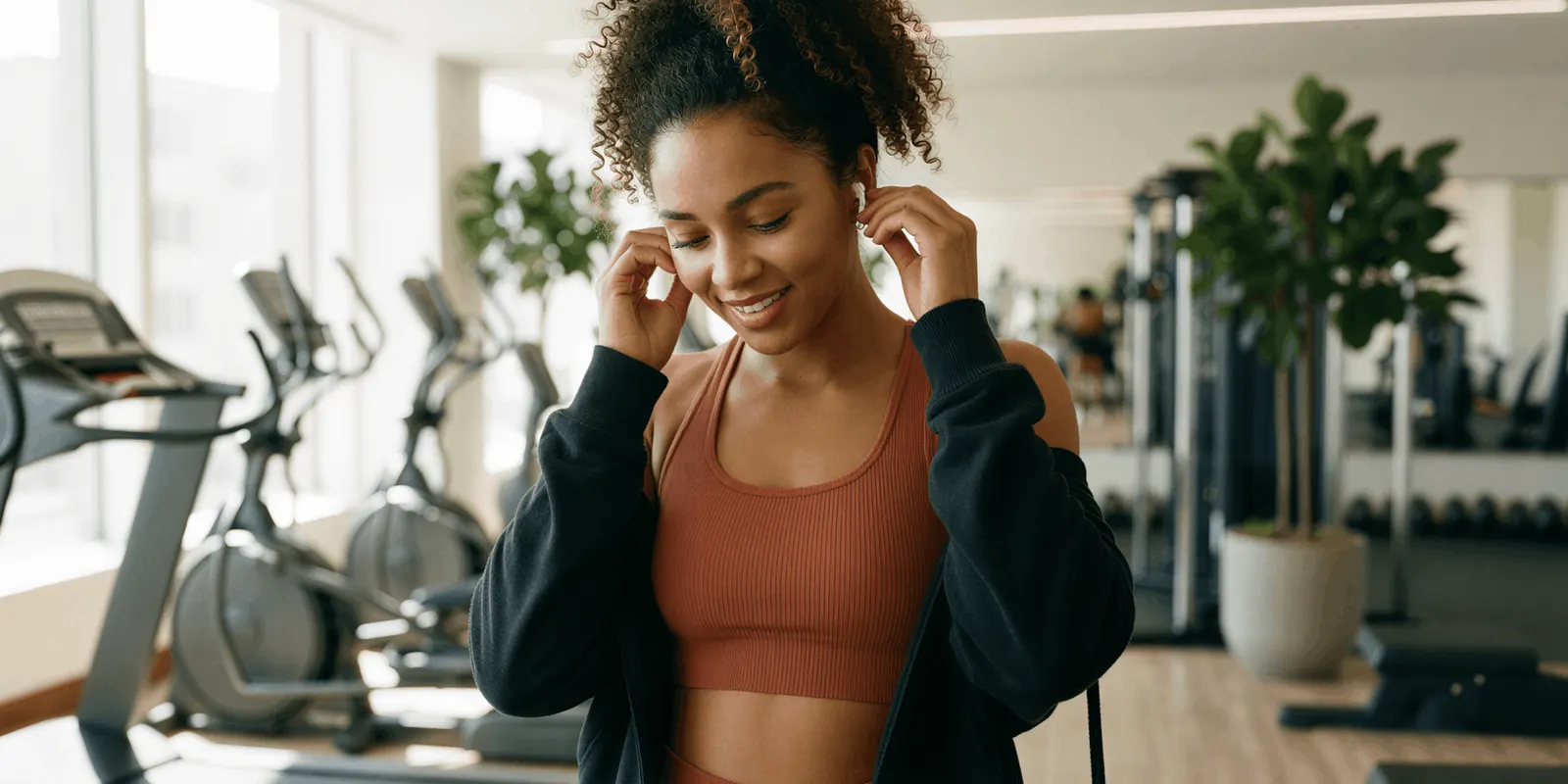
A gym is a borderline case. A tub in a gym bag shows where the product is used. A close crop of a lean, muscular body beside the tub suggests a result. Apply the FTC’s test and ask what a reasonable viewer believes after seeing the picture. Our guide to supplement advertising covers the claim rules for ads, testimonials and each ad platform.
Which scenes each channel takes
The numbers refer to the 16 scenes above.
| Channel | Scenes that fit | The rule that decides |
|---|---|---|
| Amazon main image | The pack alone, front view | Pure white background, the product as 85% of the image, one unit, and no props that are not included |
| Amazon gallery | 1 to 13 | Images must show the full product label, and must not make disease claims or implied disease claims |
| Your own product page | 1 to 13 | Your claims review. FTC guidance covers depictions in digital content |
| Paid social on Meta | 6 to 13 | Ads for dietary products must target people 18 or older. No close-up of a body area with pinched fat |
| Subscription or bundle | 2, 5 and 9 | Show the exact packs in the offer |
Amazon’s image page also says the main image should “accurately represent the real scale, quantity, and color of the product” (Amazon product image requirements, October 2026). Scenes 2 and 3 exist to answer those three questions, so they belong high in the gallery. Our guide to Amazon image requirements covers every slot.
Meta’s rules are in its Health and Wellness ad standard (October 2026). The same page bars statements of inferiority about physical appearance.
A row of three tubs in a subscription image tells the shopper that three tubs arrive. For more scenes that are not specific to supplements, see our product photography ideas sorted by slot. Other channels have their own image specs, which ecommerce product photography across five channels lists.
What a generated scene may change
An AI image model can build most routine and ingredient scenes around a real photo of the pack. It can also change the product by mistake.
A generated scene may change four things. The surface, the light, the setting and the props.
A generated scene must not change five things. The label, the Supplement Facts panel, the count, the capsule size and the capsule color. Each one is a fact about the product.
Three scenes need a camera. Photograph the label pair, because the panel is regulated text. Photograph the format close-up and the mixed drink, because the real color and texture are the proof. Amazon also says the images you submit for a compliance review must be authentic and “not computer or AI-generated”.
Check every generated result against the source photo at full size. Read the label word by word, count the capsules, and compare the color. Our guide to AI product photo accuracy gives the full review list.
One scene set for every product in the range
DesignerBox is AI creative production for brands and agencies. Anyone can make an AI picture. Making hundreds that still look like your brand is the hard part.
Each new flavor in a range needs the same scenes. In DesignerBox you save those scenes once as a workflow. A batch runs the workflow over a sheet, one product per row. The cost is shown before the run.
Your rules live in one brand record. You write one sentence per line, such as “No lab coats.” The workflow reads the lines before every prompt. The lines guide the prompt and do not approve a claim, so a person still reviews every picture and every claim. The AI product photography page describes the product side. The full workflow from the first product photo to the finished ad, in one subscription.
DesignerBox does not publish to a store or an ad account. You download the results, or send them with a webhook or an S3 step. Uploading your own photos and the commercial license start on the Pro plan. Plans and credits are on the pricing page.
A free plan for your first run
There is a free plan, and it runs on sample products. Start from a template and see how a scene set works. Get started free
FAQ
How many scenes does a supplement photoshoot need?
Eight to ten cover one product. Take the five proof scenes, two or three routine scenes that match how the product is taken, and one or two ingredient scenes that the formula supports.
Can a supplement photo make a health claim?
Yes. FTC staff guidance says to assess the net impression of all elements of an ad, including images. Its examples include lab coats that imply clinical proof and a before-and-after pair that implies an effect on arthritis symptoms. A marketer needs evidence for a claim that a picture implies.
Can I put fruit or herbs beside a supplement bottle?
Yes, when the product contains that ingredient or that flavor. The prop tells the shopper what is in the formula. Remove any prop that the ingredient list does not support, and keep amounts in line with the Supplement Facts panel.
Can AI make supplement lifestyle photos?
AI can change the surface, the light, the setting and the props around a real photo of the pack. Photograph the label pair and the format close-up with a camera. Then compare every result with the source photo, because a model can change small label text. In DesignerBox, the cost is shown before the run.
What is the hardest shot in pill photography?
The format close-up of a pale capsule on a pale surface. Flat light from the front removes the shape. Soft light from one side adds a shadow edge, and light from behind shows the fill of a softgel.
Sources
- The net impression test, the definition of advertising, and the picture examples (lab coats and microscopes, the before-and-after pair, people sneezing and coughing, the caduceus symbol): FTC staff, Health Products Compliance Guidance, December 2022, accessed October 2026
- Disease claims made through “pictures, vignettes, symbols, or other means”: 21 CFR 101.93, via Cornell LII, accessed October 2026
- Amazon main image rules (pure white background, 85% of the image, one unit, props) and the line on real scale, quantity and color: Amazon Seller Central, product image requirements, accessed October 2026
- Amazon rules for supplement images (the full label, implied disease claims, ingredient weight claims, and compliance images that are not AI-generated): Amazon Seller Central, dietary supplements policy, accessed October 2026
- Meta rules for dietary product ads (people 18 or older, pinched fat close-ups, statements of inferiority): Meta Advertising Standards, Health and Wellness, accessed October 2026
- DesignerBox batch rows, brand rules and the cost shown before the run: DesignerBox batch and brand pages (designerbox.ai/product/batch, designerbox.ai/product/brand) and the DesignerBox app, read October 2026
- DesignerBox plan gates: DesignerBox pricing page (designerbox.ai/pricing), October 2026
FTC, FDA, Amazon and Meta rules verified on the pages above in October 2026. Platform rules change, so check each page before a large upload. Individual results vary.