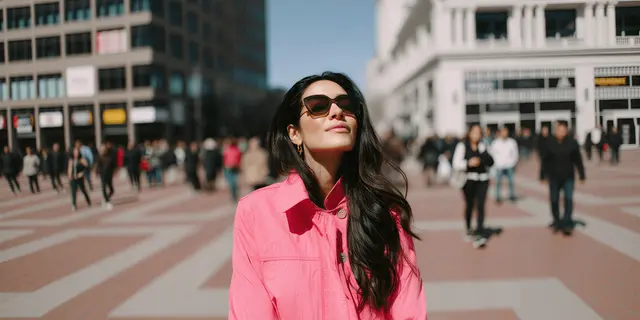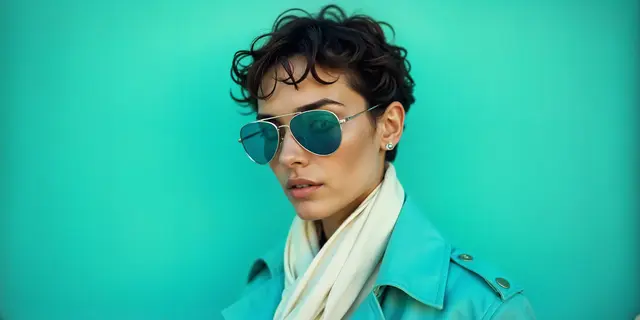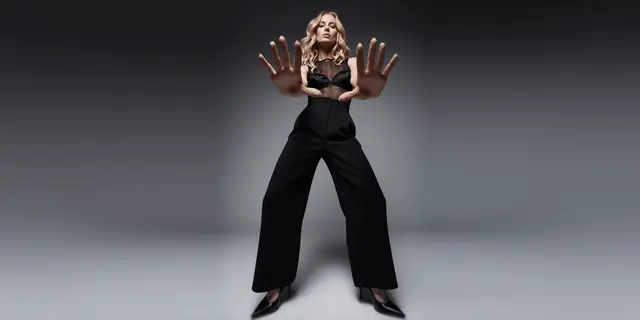
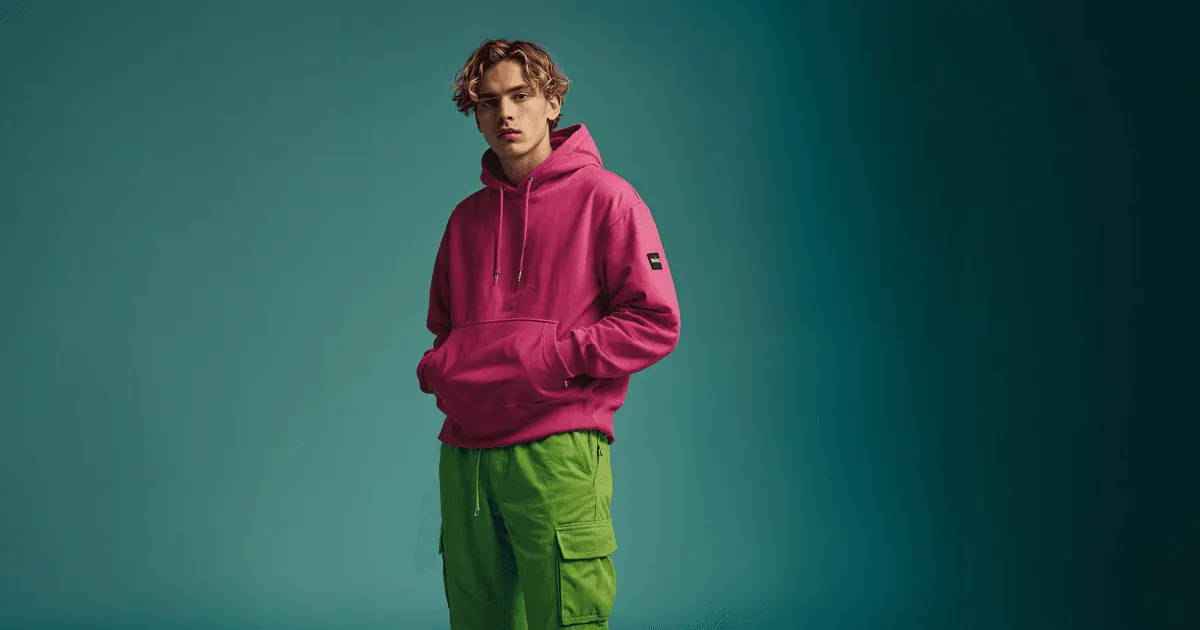
AI fashion video turns a garment photo or an on-model still into short video: fit and drape clips for a product page, and motion creative for paid social. A production crew of 3 to 5 people runs $2,500 to $8,000 a day in a published 2026 rate guide, so the cost case is real. The measured evidence supports it as a click-through play. It does not yet support it as a returns fix.
That distinction decides which budget line pays for it. The usual pitch is returns: shoppers see the fabric move, they order the right thing, fewer parcels come back. It is a clean story. The numbers underneath it are a vendor survey and a content aggregator, and the return data points somewhere else entirely.
This covers what the format is, what the controlled research measured, what a clip costs against a shoot, the two jobs it does well, and where it still breaks. Written for fashion and apparel brands deciding whether to fund it this quarter.
Key Takeaways
- No controlled study shows generated fashion video cutting returns. The repeated figures trace to a video agency’s 266-person survey and to aggregator blog posts, not to experiments.
- Sizing and fit drive apparel returns, and video does not resolve either. A clip shows one model at one size. It does not tell a shopper theirs.
- The one significance-tested result in this category is about stills. Generated product images lifted click-through around 15% at p<0.05, mostly on apparel, in a 2024 RecSys paper.
- The cost case stands on its own. A production crew of 3 to 5 people runs $2,500 to $8,000 a day in Vidico’s 2026 rate guide.
- Budget it as creative volume, not as a returns program. It fills the feed and the product page with motion. Fit tooling is a separate purchase.
What is AI fashion video?
AI fashion video is short-form video generated from a garment photo, an on-model still, or a text brief, without filming. Typical outputs are 5 to 15 seconds: a model turning so a dress moves, a close pass on fabric texture, a walk cycle for a Reel, or a product spin for a listing. The source image carries the garment, and the model animates it.
Three input modes cover most of it. Image-to-video animates a still you already own, which keeps the actual garment on screen. Text-to-video builds a scene from a prompt, which is faster but has no anchor to your product. Reference-driven generation holds a character or location steady across several clips so a set reads as one shoot.
For apparel the first mode is the one that matters, because it is the only one where the thing moving is the thing you sell. Everything downstream, from consistent on-model images drop to drop to the ad set, depends on that source still being right. If you are choosing a tool rather than a budget, the clothing brand video maker comparison sorts eight tools by the job.
Does AI fashion video reduce return rates?
No controlled study shows AI fashion video reducing returns. The figures used to claim it come from a video agency’s survey and from ecommerce blogs. Neither comes from an experiment. The return data points elsewhere: sizing and fit drive apparel returns, and a clip of one model in one size does not tell a shopper their size. Video sets expectations on drape, movement and color. It does not answer the fit question.
Here are the two figures, traced to their sources.
The first is that video makes roughly 80% of people more confident buying. The nearest real source is Wyzowl’s annual video marketing survey, which reports that 85% of people have been convinced to buy something by watching a video, and that 80% have bought or downloaded an app after seeing a demo video (wyzowl.com, accessed October 2026). Wyzowl surveyed 266 respondents in late 2025, mixing marketers and consumers. Wyzowl publishes no statistic on returns and none on garments. It is a self-reported survey by a video production company. The app-demo figure is about buying or downloading an app.
The second is that product video cuts returns by up to 35%. That figure circulates through ecommerce blogs citing SellersCommerce, and we found no published experiment behind it, as of September 2026. A number with no method behind it cannot carry a budget decision.
Now the return data itself. The National Retail Federation puts the 2025 US return rate at 15.8% of sales, or $849.9 billion, with ecommerce returns running higher at 19.3% of online sales (NRF, 2025 Retail Returns Landscape, accessed September 2026). Apparel and footwear sit at the top of that distribution, and the reason given consistently is sizing and fit. Compiled 2025 to 2026 benchmarks put apparel returns at 20% to 40%, and put fit and sizing at about half of them (richpanel.com/learn/ecommerce-return-rates, accessed October 2026). Other estimates of the size-driven share differ, because self-report surveys, retailer reason codes and category studies measure different things. The estimates we found put fit first, and bracketing, where a shopper orders two or three sizes intending to send back the rest, is a deliberate behavior rather than a misunderstanding.
None of that is a content problem. A shopper who orders a size 8 and a size 10 has not been misled by your photography. They have been failed by a size chart that cannot predict their body, and a 6-second clip of a different body does not fix it. What answers a fit question is measurement, size recommendation, and on-model imagery across a size range, which is a different capability with its own accuracy limits.
Video does move one slice of the problem. Some returns happen because the item did not match its description, and drape, weight, sheen and true color are exactly what a still under-communicates. Expect video to work on that slice. Do not expect it to touch the size half.
What the controlled evidence measures
The strongest experimental result in AI-generated commerce creative is about images, not video. A 2024 paper presented at ACM RecSys, run on Taboola’s recommendation platform, tested generated product imagery against original product photos on catalogs of a few thousand to tens of thousands of items, mostly clothing, footwear and accessories.
Attention to product positioning and scaling alone produced about a 5% click-through gain. Generated backgrounds produced about 15%. A later phase saw relative CTR gains ranging from roughly 4% to 40% depending on the segment, and personalization added about 5% more. All gains were reported as statistically significant at p<0.05 (arxiv.org/abs/2408.12392, accessed September 2026).
That is the claim the evidence supports in this category as of September 2026. Generated creative earns attention, and attention is measurable. The paper tested images and it measured clicks. It did not test video and it did not measure returns.
Treat any video-and-returns number you see as unmeasured until someone publishes a method. Treat the click-through case as supported, and reason by analogy from stills to motion with your eyes open about the fact that you are extrapolating.
What AI fashion video costs against a shoot
The cost argument does not need borrowed statistics. It holds on published rates.
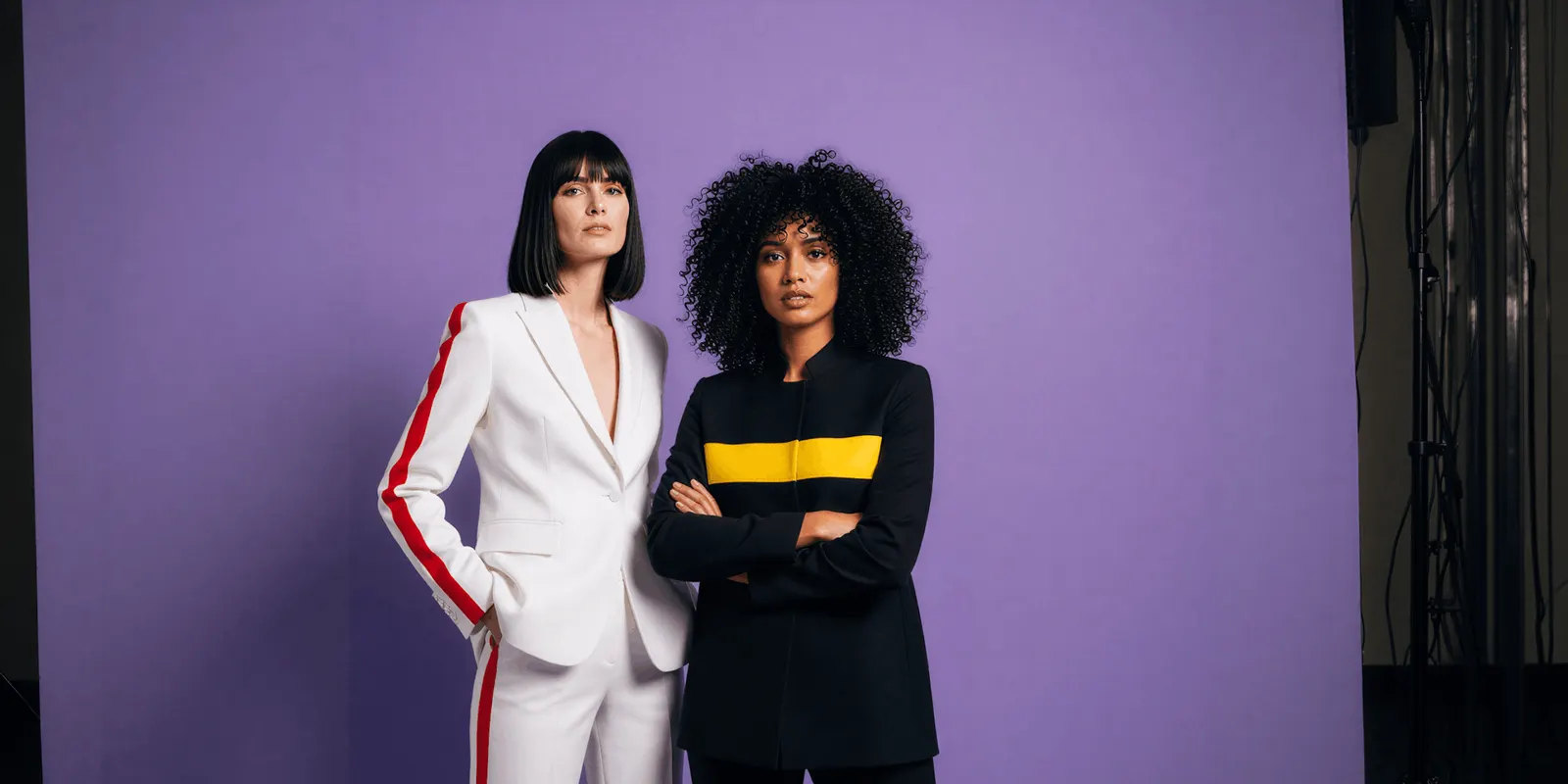
A produced fashion video means a crew, a studio, models, styling and post. A published 2026 rate guide puts a solo videographer at $600 to $1,200 a day for filming, and a full production crew of 3 to 5 people at $2,500 to $8,000 a day. The same guide puts an agency’s typical project minimum at $5,000 to $15,000 (vidico.com/news/video-production-cost, accessed October 2026). Add studio rental, talent, hair and makeup, and edit time on top.
Those are guide rates, not a survey, and they vary widely by market. The order of magnitude is what matters: a drop-cadence brand shooting monthly is carrying a large line item per drop, per format.
DesignerBox prices video in credits, which makes the model the cost lever and the length a secondary one. An 8-second clip costs 40 to 560 credits, depending on the model. You see the cost of each run before you press Run.
Two things decide most fashion video budgets. The first is the plan gate. The free plan and the two tiers under Premium make stills only. The second is the model you pick, which sets how many clips a month of credits covers far more than the plan does. The guide to what AI video costs covers the rest.
Read that as a routing rule rather than a limit. Lower-cost models are what a product page and a feed need at volume, because those slots want many short pieces rather than one perfect one. The premium models are a hero-shot purchase, worth it on the frame that carries the campaign.
The two jobs generated fashion video does well
Feed volume. Paid social eats video faster than any brand can shoot it. A single drop needs vertical cuts per placement, per audience, and per angle, and the winning variant is unknowable in advance. Generated clips make the variant count a budget question instead of a production question, which is the entire reason creative testing works at small brands now. Each country a drop sells in adds its own captions, supers and voice, and localizing fashion video ads for each market covers which of those to change first.
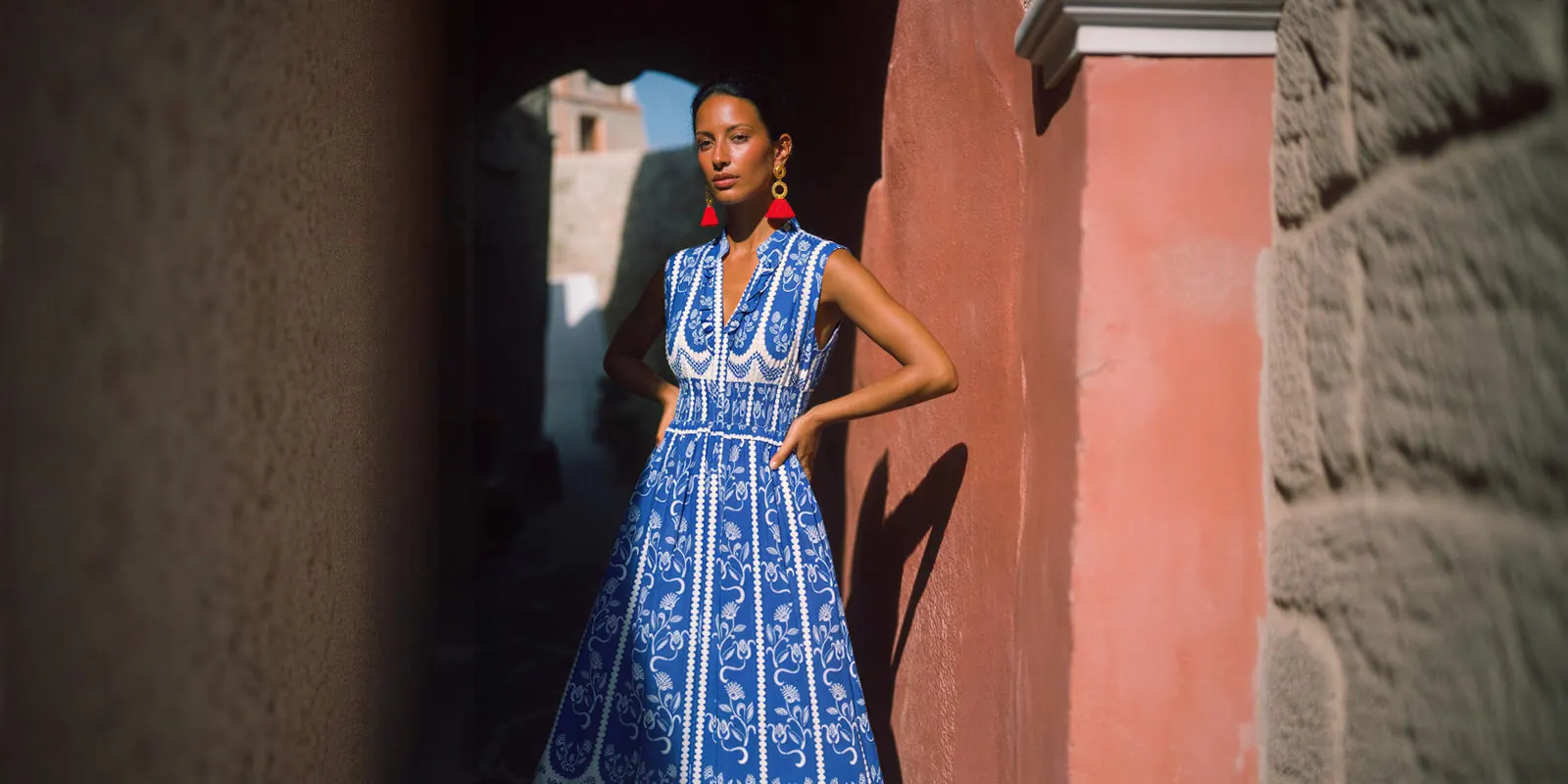
Product page motion. A garment on a still is a shape. The same garment moving communicates weight, drape and how a hem behaves when a body turns. Five to ten seconds is the working length for a product page, and 10 to 15 for social. That maps directly onto the description-mismatch slice of returns, which is the slice video can claim.
Both jobs are creative-volume jobs. Fund them from the creative line, measure them on click-through, add-to-cart and cost per acquisition, and let the returns line be answered by size tooling. A brand that books generated video against a returns target will likely call it a failure at the review. It was measured against a number it was never going to move.
In DesignerBox, a fashion video template animates an approved still. The model is one step in the workflow, so you choose it per shot. DesignerBox for fashion brands shows the on-model, scene and video results from one garment photo.
Build the stills first
The pipeline that produces usable fashion video is a shot list of stills, each one approved, then animated.
- Fix the source image. Garment true to color, clean edges, correct silhouette. Every frame downstream inherits its faults.
- Derive three to five stills. Front, close on fabric, movement pose, detail. A still costs less to run than a clip, so iterating here is the cheap part.
- Approve the stills, not the clips. A still reviews at a glance. A clip takes time to generate and time to watch.
- Animate the approved frames. Pick the model per shot. Lower-cost models for most of them, the premium model for the hero.
- Assemble and cut. Decide the length before you generate. A shorter clip costs less.
The full process for one garment, from the photos to the export and the AI label, is in how to make AI video for a clothing brand.
When the stills are try-on results, each motion needs its own garment photos. The table and the six checks are in virtual try-on video.
The stills for an ad cost less to run than the clip they feed. The step that decides whether the ad works costs a fraction of the step that animates it. That is a strong argument for spending your iterations there. The three numbers that decide AI fashion photography ROI show when the stills pay back. The full version of this sequence, including the disclosure rules, is in the guide to deriving a shot list before you animate anything.
At catalog scale the number to watch is how many results clear review the first time, covered in fashion photography at scale. At 300 SKUs, a set where half the results come back for a redo is a review queue rather than a saving. Build the sequence once, get it through review, then save it. A saved workflow runs the approved sequence again on the next drop instead of rebuilding it. You set the brand once, and the workflow reads it on every run.
Where generated fashion video still breaks
Garment fidelity under motion. Prints, logos and structured seams drift when a model turns. Small repeating patterns and text on fabric are the common failures. Check the frame where the garment moves most, not the opening frame. Anchor every shot to the same source photo, as the six rules for AI product video set out, rather than describing the garment again in words. Fabric close-ups and print details are the shots to film with a camera instead.
Fit representation. The model in the clip is one body at one size. Showing a garment on a size range needs generated on-model imagery per size, not a longer video, and even then it approximates. A virtual try-on template is the closer fit for that question.
Hands, faces and fine motion. Still the weakest area across every model in the category. Frame around it rather than fighting it.
Disclosure. Rules on labeling synthetic people differ by market and by ad platform. In New York, an ad that you know contains a synthetic performer must say so, since 9 June 2026 (nysenate.gov, accessed September 2026). In the EU, Article 50 of the AI Act has required deployers to label deep fakes since 2 August 2026, and a realistic AI model who never existed can count as one (European Commission FAQ, accessed September 2026). Check the policy for each surface before the campaign runs. Do not treat a US answer as a European one. This is general information, not legal advice.
Commercial rights. In DesignerBox, uploading your own photos and the commercial license start on the Pro plan. AI video, virtual try-on, upscaling, the image editor and the video editor start on the Premium plan. Team features, shared brand kits and white label are on the Ultra plan, and every plan below Ultra is one seat. Plans and credits are on the pricing page. Confirm licensing on whatever tool you use before an asset goes into paid media.
How to budget generated fashion video
Split it into three lines and hold each to its own metric.
| Line | What it funds | Measure it on |
|---|---|---|
| Creative volume | Ad variants per drop, per placement | Click-through, CPA, variant win rate |
| Product page motion | 5 to 10 second clips on PDPs | Add-to-cart rate, time on page |
| Fit and sizing | Size charts, recommendation, per-size imagery | Return rate, size-driven return share |
The third line is the returns line, and generated video does not sit on it. Keeping them separate is what stops a good creative investment from being reviewed against a number it cannot move.
Start small enough to measure. One drop, one format, cheap-model clips, held against your existing creative for four weeks. If click-through and cost per acquisition move, scale the variant count. If they do not, the source stills are usually the reason, not the video model. The break-even math for that test is in how to improve ROAS with product video.
A product video template runs the mechanic on one product, and the same brand rules carry across the stills, the on-model poses and the clips.
Anyone can make an AI picture. Making hundreds that still look like your brand is the hard part. Build the stills and the clip once as a workflow, and run it again for the next drop. The stills, the on-model poses, the clips and the cut all sit in one place. The full workflow from the first product photo to the finished ad, in one subscription. Start from the templates.
FAQ
Does AI fashion video reduce return rates?
There is no published controlled study showing that it does. Sizing and fit are the largest driver of apparel returns in the published estimates we found, and video cannot tell a shopper their size. Video can address the slice of returns caused by items not matching their description, because drape, weight and true color are what stills under-communicate.
What does an AI fashion video cost?
The model sets the price. In DesignerBox an 8-second clip costs 40 to 560 credits, depending on the model, and you see the cost before the run. AI video starts on the Premium plan. For comparison, a published 2026 rate guide puts a production crew of 3 to 5 people at $2,500 to $8,000 a day.
Can a generated video show how a garment fits?
Not reliably. The clip shows one model at one size, so it communicates drape and movement rather than fit on a specific body. Per-size on-model imagery and size recommendation answer fit questions. Treat video as expectation-setting on how a garment behaves, not as a fit prediction.
How long should a fashion video be?
Five to ten seconds works for a product page, where the job is showing movement and fabric. Ten to fifteen seconds works for TikTok and Reels, where the clip needs a hook and a beat. Our Instagram Reels guide for clothing brands covers the Reels frame and safe zones. Longer clips cost more to run.
Do I need to label AI-generated fashion video?
Often yes, and the rules differ by market and ad platform. As of September 2026, New York requires ads to disclose synthetic performers, and the EU requires labels on deep fakes, which can include a realistic AI model. Check the disclosure policy of every surface the asset will run on before the campaign launches, and do not assume one market’s answer applies elsewhere.
How do you make AI videos of clothes?
Start with one good source image of the garment, ideally on-model, correct in color and silhouette. From there you derive three to five stills, approve them, then animate the approved frames with image-to-video. The source image quality sets the ceiling for everything generated from it.
Is generated fashion video better than AI product photography?
They do different jobs. The controlled evidence for click-through lift is on generated stills, and a still costs less to run than a clip. Video adds movement information that stills cannot carry. Most apparel brands get more for their money from stills first, and from video on the shots that need motion.
Sources
- Return rates: National Retail Federation, 2025 Retail Returns Landscape, accessed September 2026
- Click-through research: ACM RecSys 2024 industry paper, arxiv.org/abs/2408.12392, accessed September 2026
- Video survey methodology: wyzowl.com/video-marketing-statistics, accessed 2 October 2026
- Production day rates and the agency project minimum: vidico.com/news/video-production-cost, accessed 2 October 2026
- Compiled 2025 to 2026 returns benchmarks, the 20% to 40% apparel range and fit and sizing at about half of apparel returns: richpanel.com/learn/ecommerce-return-rates, accessed 2 October 2026
- New York synthetic performer law, General Business Law 396-b: nysenate.gov, accessed September 2026
- EU AI Act Article 50: European Commission FAQ, accessed September 2026
- DesignerBox plans, credits, the video credit range and feature gating: DesignerBox pricing page (designerbox.ai/pricing), September 2026
Individual results vary.