For creative leaders staffing teams

The AI creative team org chart of 2026

How creative team roles are actually changing. Built from observing how teams have restructured over two years. What grew, what shrank, what is new, and what the typical org chart looks like in 2026.

An AI-augmented creative team structureFor creative leaders staffing teams
The problem

The creative team changed shape, not size

Two years into AI production, most creative leaders are still working from an org chart that no longer matches the work. The execution jobs that once justified a bench of junior designers now run through a handful of AI workflows. The strategy, direction, and governance work has grown. Same headcount, different shape, and a reporting structure nobody formally redrew.

This guide maps the working org chart of 2026: which roles grew, which shrank, which are genuinely new, and how the reporting lines connect. It is built from how real teams restructured over two years, not from prediction. Use it to staff, reskill, or restructure without guessing which seats still matter.

What grew in 2026 creative teams

Five role categories that expanded as AI production economics shifted bottlenecks upstream from execution to strategy and operations.

Senior creative leadership

Concept development, brand direction, editorial judgment, taste-setting. AI accelerates execution but does not replace concept-level thinking. As production economics improve, the bottleneck moves upstream. Creative Directors, ECDs, Brand Creative Leads have grown in importance and often in headcount.
Creative operations and workflow

Workflow design, brand-lock governance, tool-stack management, production efficiency. A back-office role in 2022, a strategic function in 2026. Creative Ops Director, Brand Operations Lead, Creative Tech Lead, Production Workflow Architect are now central rather than peripheral.

Performance creative producers

Hybrid role: creative craft plus performance metrics. Runs variant production with both creative and performance lenses. Works closely with paid media. Two years ago this work was split awkwardly across creative and performance teams; integration emerged because the work needed integrated thinking.

AI creative specialists / prompt artists

A specifically AI-fluent creative role. Deeply skilled in prompt construction, model selection, workflow design, and output curation. Not traditional designers or art directors; a new role. Most successful creative teams have at least one of these specialists by 2026.

Brand and creative governance

Governs brand consistency at AI-scale volume. Previously distributed across senior creatives doing review; increasingly consolidated into dedicated governance roles or expanded responsibilities of brand operations leads. The risk function for creative output.

What shrank or transformed

Five role categories that contracted or fundamentally changed shape. Composition shifted; total headcount in well-run teams is roughly stable.

01

Junior production roles in some categories

Variant production, layout iteration, asset versioning, batch image work. Work that used to require many junior designers is now done by AI workflows operated by smaller teams. Junior roles still exist but they are fewer and the work is different (curation, prompt iteration) rather than mechanical execution.

02

Stock and library asset curation

Roles that managed stock photo libraries, asset purchasing, and rights tracking have shrunk because generated assets often replace stock. The compliance work has moved to AI-asset traceability rather than library management.

03

Production assistance (specific subtypes)

Production assistant roles around photo-shoot logistics, location scouting for stock-style work, and studio shoot coordination have contracted in teams that have moved most of their imagery to AI-augmented production.

04

Traditional art director (transformed)

The role still exists but the work has changed. Less directing individual junior executors; more directing AI workflows and curating outputs. The strongest art directors have absorbed AI fluency without losing the directorial skill.

05

Pre-press and production coordination (transformed)

Less mechanical asset prep; more spec-compliance workflow oversight. The work has not disappeared but it has consolidated into smaller teams with broader scope.

Hiring signals for AI-fluent creative roles

Six concrete signals that separate AI-fluent candidates from AI-curious ones during hiring.

Portfolio depth, not breadth

Multiple finished projects shipped using AI tools, not a gallery of one-off generations. The candidate has worked through production failures, not just demos.

Specific tool fluency

Names specific models, specific workflows, specific failure modes by name. Candidates who only know one tool or speak in generalities are early in the learning curve.

Prompt iteration practice

Can articulate iteration ratio for their typical work, has a personal library of prompt formulas, can adapt prompt language to different models. This is the daily craft of the role.

Character and consistency competence

Has trained LoRAs, knows the failure modes of consistency, has handled character drift in production. The hardest problem in AI creative work; competent candidates have hit it and solved it.

Direction skills, not just operation

Can direct AI workflows toward a creative target, not just execute prompts. This separates an AI prompt operator from an AI creative specialist. The directorial taste is the value, not the tool fluency alone.

Honest about limitations

Talks accurately about where AI tools fail. Candidates who only describe wins are either inexperienced or marketing themselves. Production-experienced candidates have failure stories and the lessons from them.

Who this is for

Who should read this org chart guide

Written for the people who decide how a creative team is shaped, staffed, and wired together.

Creative directors

You set concept and taste but keep getting pulled into production triage. This shows which of that work should move to workflows and specialists so your time stays upstream.

Creative ops leads

The function that barely existed in 2022 now owns the tool stack, brand-lock, and production efficiency. See where creative ops sits in the reporting structure and what it should actually own.

Hiring and talent managers

You are staffing roles that have no settled job title yet. The guide names the roles that grew, the ones that shrank, and the signals that separate AI-fluent hires from AI-curious ones.

Engineering and tech leads

Someone has to automate the pipeline the creative team runs on. This covers where the technical creative role reports and how it connects generation to the rest of your production systems.

How DesignerBox solves it

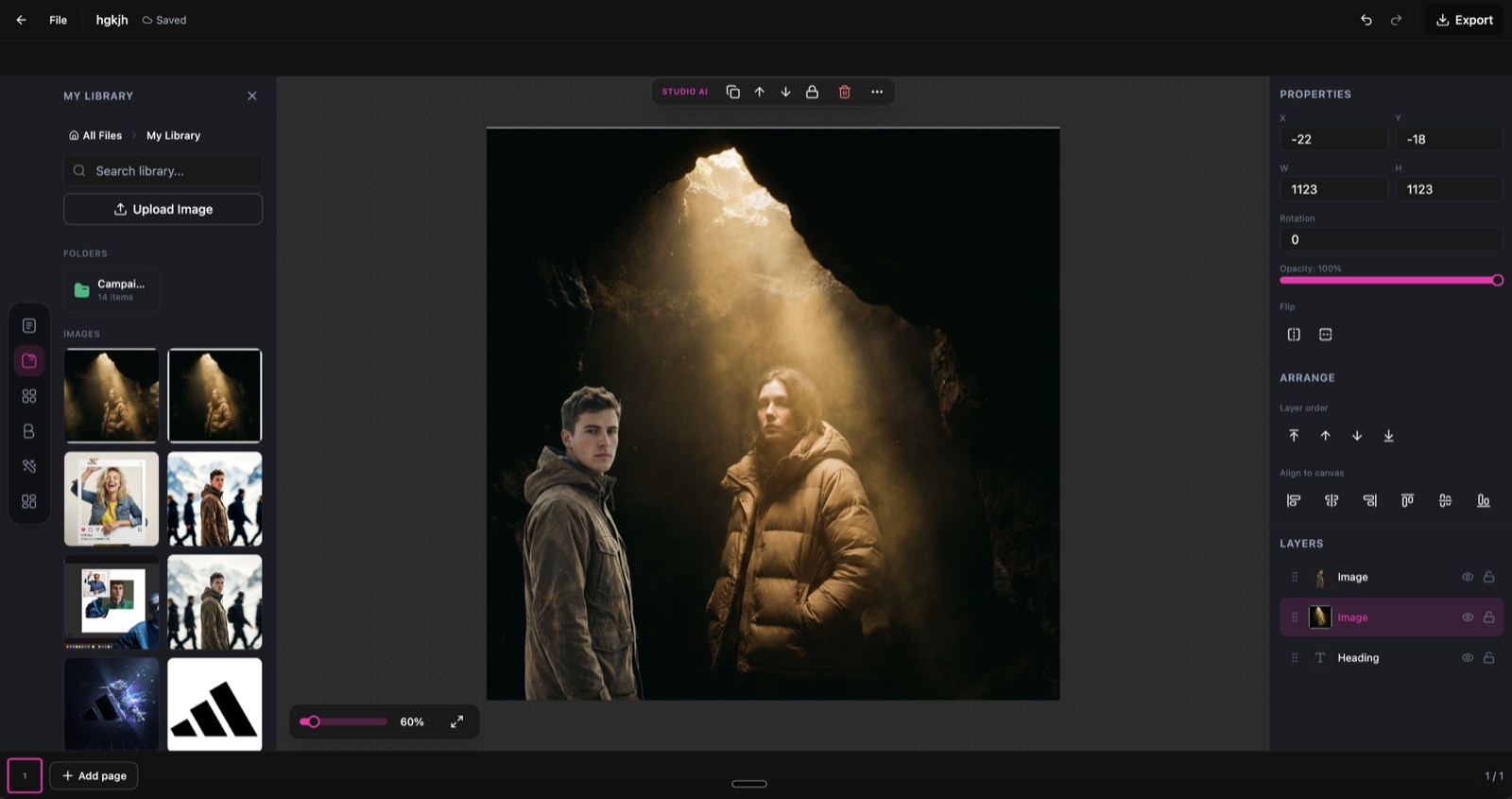
One shared workspace for the team you just reshaped

An org chart only holds if the tools underneath it match. DesignerBox gives the reshaped team one workspace: a shared asset library so the juniors curating and the seniors directing pull from the same on-brand source, per-seat plans so creative ops can add or remove people as the structure changes, and an MCP server so the engineers automating pipelines connect generation straight into production systems. It does not replace the org chart. It gives the redrawn roles a surface to operate on.

  • Shared asset library keeps directors, AI specialists, and juniors working from one on-brand source
  • Per-seat plans from FREE to ULTRA scale with the team as roles are added or reshaped
  • MCP server lets engineering leads wire generation into automated production pipelines
  • Every top AI image and video model in one subscription, so specialists direct instead of stitching tools together
A shared creative workspace on DesignerBox

Frequently asked questions

What hiring managers and creative leaders ask while restructuring teams.

Are AI tools replacing creatives?
No, but they are changing role composition. Hands-on execution work has shrunk; strategic and operational work has expanded. Headcount in well-run teams is roughly stable. The narrative of replacement does not match what we observe in production teams.
What is the right ratio of senior to junior creatives in 2026?
Most successful teams have shifted toward higher senior-to-junior ratios than 2022. The execution work that required many juniors is now done by smaller teams with stronger tools. Senior concept and direction work has grown.
Do we need a dedicated prompt artist or AI specialist?
Most teams of 10+ benefit from at least one. The specialist role can sit inside creative ops or alongside senior creative direction. The work is real and consolidates fluency that would otherwise be diffuse and uneven across the team.
How do we restructure without breaking morale?
Reskilling beats replacement. Most existing creatives can learn AI workflows; the ones who do become more valuable, not less. Communicate the role evolution clearly. Provide structured training time. Reserve restructuring for genuine misfits, not as a default.
What is creative operations actually responsible for?
Workflow design and governance. Brand-lock infrastructure. Tool-stack management. Production efficiency measurement. The function that ensures the AI workflows the team uses actually produce on-brand, on-spec output without senior bottlenecks.
Are agencies dying or evolving?
Evolving. Agencies that built their value around junior production headcount are under pressure. Agencies that built around senior creative direction, performance creative, and AI-augmented production economics are growing. The agency model is not gone; it is restructuring.
What about brand consistency at AI volume?
It is the governance function. Brand-lock workflows, brand kit infrastructure, governance review at scale. Manual review does not scale to 50x variant volume. Workflow constraints replace manual review as the consistency mechanism.
Where do hires actually come from?
Reskilled internal candidates, working creatives with portfolios of finished AI-produced work, and a small but growing cohort of creative-leaning technical talent. Pure tech-side prompt engineers without creative taste rarely succeed in these roles.

Build the team structure for AI-augmented production

DesignerBox is the platform layer that supports the org chart above: workflow design tooling, brand-lock infrastructure, character consistency, governance, and the bundled model library that senior creatives can direct with confidence. Start free or talk to enterprise sales for team rollout.