
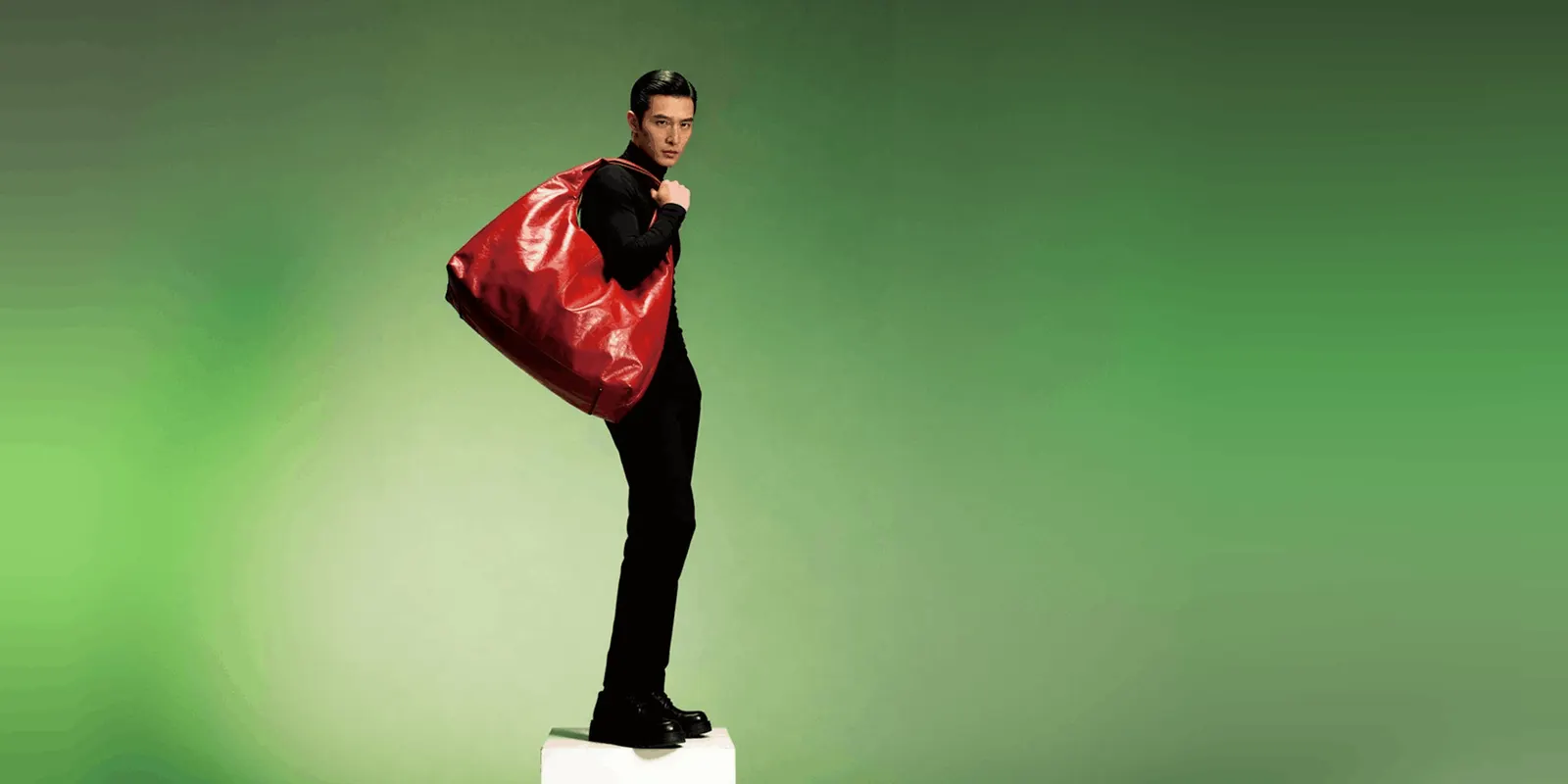
Editorial bag photography is the campaign half of a bag shoot: carried frames, motion frames, and styled stills that sell the object rather than document it. It lives everywhere except the main product slot, because marketplaces reserve that for the bag alone. The frames fail for one reason more than any other. The bag looks placed on a person instead of carried by one.
Scene choice is the cheap part: an alpine road, a retro car, a sunwashed café table. You can move a bag to a new city in one line of a prompt and the frame will still read wrong, because a bag has to look like it is taking weight.
This guide is for a bag or accessories brand building a campaign set from one sample. It covers the four load tells that give a frame away, the shot list a campaign needs, what the shoot really bills you for, and which line AI removes and which line it moves somewhere else. Packs run on a different question, and shooting a backpack for what it holds starts from capacity rather than carry.
Key Takeaways
- A bag has to look carried, not worn. Strap tension, body counterweight, internal fill and hardware specularity are the four tells that separate a campaign frame from a render.
- Editorial frames do not qualify as your Amazon main image. Amazon asks for a pure white background, and it asks for clothing accessories flat, with no model. The on-body work you are building lives on your PDP gallery, your ads and your site.
- Shoppers still need the body. In Baymard’s 2017 research, 42% of users tried to judge product size from images, and 28% of the 60 large sites it benchmarked gave them no in-scale image at all (baymard.com, accessed September 2026).
- The day rate was never the expensive line. One UK model agency says a model’s usage fee is quoted on top of the day rate and is often two to ten times bigger (thediversity.agency, accessed September 2026). Generation removes the shoot, and it can add a disclosure duty.
- One capture carries the whole campaign. Seven frames of the real sample, shot once in open shade, set the ceiling for every generated frame after it.
- Making the product look better than it is has a rule now. Under the Commission’s Article 50 guidelines, a product image that can mislead a buyer about how the real thing looks can count as a deep fake, and a deep fake needs a visible label.
What is editorial bag photography?
Editorial bag photography is campaign imagery built around a bag rather than a catalog record of it. It covers carried and on-body frames, motion frames, close crops on grain and hardware, and styled stills where the bag is the subject of a scene. Its job is desire and scale, not compliance. The white-background packshot sits in a different workflow with different rules.
The split matters because the two halves answer to different masters. Your packshot answers to a marketplace spec. Your editorial set answers to a shopper deciding whether the bag is the right size, the right finish, and the right object for their life. If you need the packshot half, the PDP shot list and marketplace specs covers it separately.
Why generated bag frames look wrong
Generated bag frames look wrong because the bag carries no weight. A garment drapes. A shoe sits on a floor. A bag hangs off a body and pulls on it, and every frame that ignores that pull reads as staged even to someone who cannot say why.
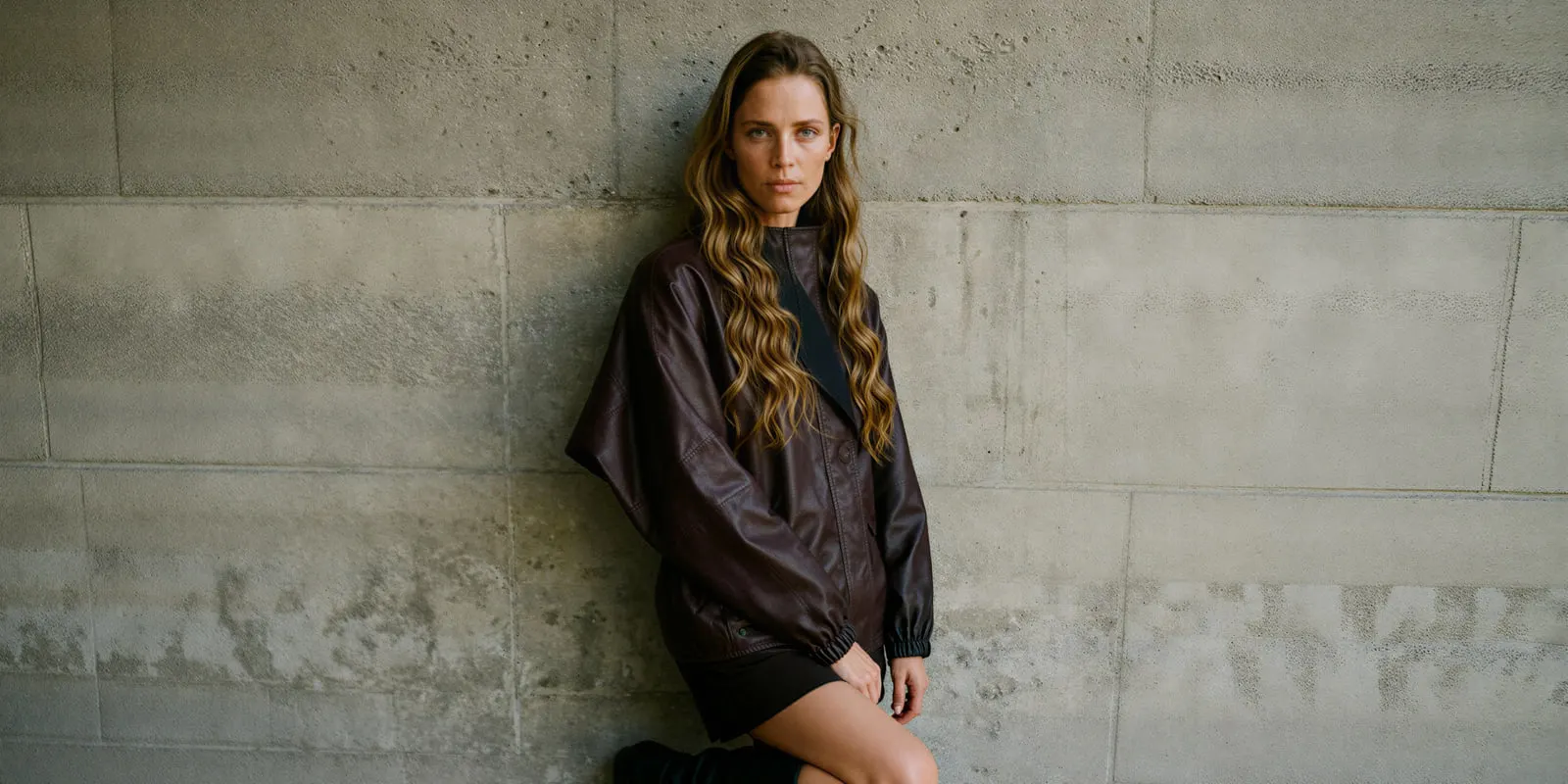
Most generation failures here get diagnosed as lighting or styling. They are almost never lighting. Four things go wrong, in roughly this order of how badly they hurt.
1. The strap carries no tension
A loaded shoulder strap compresses whatever is under it. The coat dents. The webbing goes taut on the load side and slack on the return. A hand-carried top handle pulls the fingers into a specific curl and tips the bag mouth toward the body.
Generated frames tend to lay the strap on the shoulder like a decorative band, perfectly flat, with the fabric underneath undisturbed. Look at the shoulder before you look at the bag. That one detail settles most approvals.
2. The body has no counterweight
Carrying two kilograms on one side changes a stance. The loaded shoulder drops, the opposite one rises, the spine takes a small lateral lean, and the free arm swings wider to balance it.
Generation defaults to a symmetrical standing pose with a bag added. The pose is the tell, not the bag. Ask for the weight in the prompt, not the accessory.
3. The bag has no fill
An empty bag collapses along its own seams and its base goes concave. A styled bag is stuffed to a shape its panels cannot hold alone. Neither of those is what generation produces by default, which is a showroom volume with no cause.
This is the fastest fix in the list, and it starts at capture. Stuff the real sample to the shape you want the campaign to show, then photograph that.
4. The hardware lies about the light
Buckles, chain links, feet and zip pulls are usually the only specular surfaces in frame. They should hold a hard, small reflection of the actual light source and a dark reflection of everything else, which is what makes brass read as brass.
Generated hardware often glows evenly across the whole face, or reflects a window that appears nowhere in the scene. On a close crop it is the first thing a buyer notices, and on a chain strap it compounds, because repeating links drift.
The frame set a bag campaign needs
A campaign is not a hero shot plus filler. Each frame answers a different question a buyer has, and dropping one leaves that question open. This is the working set for a single style.
| Frame | What it proves | Count |
|---|---|---|
| Carried, full length | Scale against a body, where it sits at rest | 3 to 4 |
| Carried, in motion | Strap behavior under load, how it swings | 2 to 3 |
| Handover or close crop | Grain, stitch density, hardware finish | 2 |
| Interior, open | Capacity, lining, pocket layout | 1 to 2 |
| Editorial still, no body | The silhouette as an object, the campaign hero | 2 to 3 |
| Colorway or family grid | Range, finish comparison across the line | 1 |
Twelve to sixteen frames per style is a full set. Below eight you are publishing a teaser, not a campaign.
The carried frames are the ones doing measurable work. Baymard’s 2017 testing found that 42% of users try to grasp product size from images, and 28% of the 60 large sites it benchmarked offered no in-scale image at all. Its 2020 accessories research goes further. Products designed to be worn, bags included, need a human model to give shoppers the truest sense of the product (baymard.com, accessed September 2026).
There is measured evidence that the image moves behavior rather than decorating the page. A RecSys ‘24 industry paper ran live A/B tests on retargeting campaigns across merchant catalogs of a few thousand to several tens of thousands of items, mostly apparel such as clothing, footwear and accessories. Product images with generated backgrounds gained roughly 15% in click-through rate, significant at p<0.05 (arxiv.org, RecSys ‘24, October 2024). Across later experiments the gain ran from about 4% to 40%. The authors tie the spread to the merchant’s catalog, the ad placements and the quality of the original product images. Treat it as direction, not a forecast.
Editorial frames and the Amazon main image
Amazon’s main-image rules change what you are building.
Amazon’s product image guide puts adult clothing on a standing model in the main image. Clothing accessories and multipacks are shown flat, with no model. Children’s and baby underwear, leotards, swimwear and similar tight-fitting items are shown flat in every image. The main slot also rules out any visible part of a mannequin, props not included with the purchase and more than one view of the product. It asks for a pure white background, with the product filling 85% of the frame, and allows a lifestyle main image for only a limited number of product types (sellercentral.amazon.com, as of September 2026).
So a bag brand runs two image programs at once, permanently. The packshot fills the slot the platform controls. The editorial set fills your PDP gallery, your category pages, your paid social, your email and your site. Building the second one is not optional polish, because under the platform’s rules the first one is the least persuasive image you own.
What a bag campaign costs, and which line AI removes
The number that gets quoted in AI pitches is the photographer’s day rate, because it is the easiest line to delete. It is rarely the biggest one.
The line that matters sits above the day rate. One UK model agency, TDA London, says a usage fee “is quoted on top of the day rate and is often two to ten times bigger”. Usage scales with where the picture runs, in which media and for how long (thediversity.agency, published May 2026, accessed September 2026).
That is the shape of the bill. You are not buying a day of someone’s time. You are buying the right to run their face in specific places for a specific period, and that right expires.
| Line item | Traditional campaign | Generated campaign |
|---|---|---|
| Photographer day rate | Paid | Removed |
| Studio or location | Paid | Removed |
| Model day rate | Paid by tier | Removed |
| Model usage license | Often 2 to 10x the day rate | Moved, not removed |
| Styling, hair, makeup, assistants | Paid | Removed |
| Sample handling and one real capture | Paid | Still paid |
| Retouch and color matching | Paid | Reduced |
| Art direction and selects | Paid | Still yours |
| Disclosure and legal review | Rarely budgeted | New line |
“Moved, not removed” is the accurate entry. Generating a person means no usage license and no expiry date on the frames. It can also bring the transparency duty below, and you own the question of whether the face you generated resembles someone real. If you shoot a real model once and generate variants from that capture, the license is still live and it still covers the variants. For the wider version of this arithmetic, what the 90% cost claim measures works through the lines AI never touches.
The one capture the whole campaign depends on
Generated frames inherit their ceiling from the source photo. Seven frames of the real sample, shot once, will carry a season.
- Stuff the bag to its carried shape. Not its showroom shape. Tissue or a form block, filled until the base is flat and the panels are under light tension.
- Shoot in daylight open shade. North-facing window or the shadow side of a building. No direct sun, no mixed color temperature.
- Use a plain mid-gray surface. Gray holds the true color of leather better than white, which throws a cast into the shadows.
- Capture seven angles. Front, three-quarter, back, side, base, interior open, and one macro on the primary hardware.
- Put a gray card in one frame. This is your color reference for every generated frame afterwards, and the thing you argue from when a buyer says the tan looks orange.
- Keep every file at full resolution. Downscaling at capture caps your output size forever.
That set is also your reference pack. A multi-angle template turns the front frame into the remaining views when a sample has already shipped back, and a scene placement template puts the captured bag into campaign environments. Check the grain and color of every result against the gray card frame.
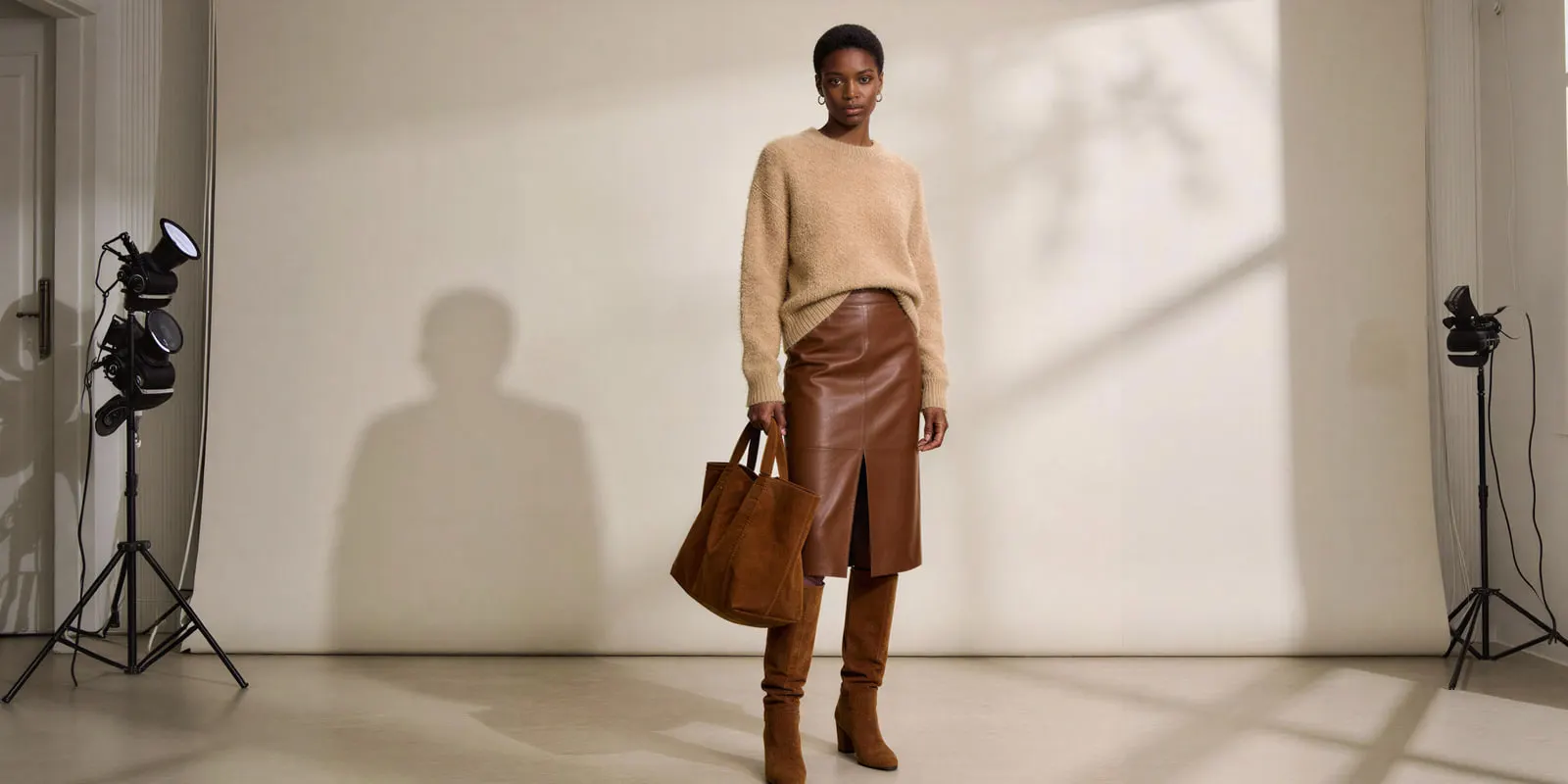
Where generated bag frames still break
Say this part out loud to your team before you plan the budget around it.
- Embossed and debossed logotype on curved leather. Text on a compound curve is still the weakest surface in image generation. Plan to composite the logo or shoot those crops.
- Chain straps. Repeating links drift in length, gauge and spacing across a strap run. Short crops survive, full-length chain frames often do not.
- Exact metal finish. Brushed, polished and antique brass separate by a shade a customer will notice on delivery and you will not notice on a screen.
- A material the model has not seen. Novel treatments, unusual weaves and coated canvas come out generic.
- Anything a customer will hold next to the photo. The closer the crop, the higher the return risk if the render flatters.
Keeping one bag consistent across a twelve-frame set is its own problem, and it is the reason to generate the set together rather than one frame at a time. Editing models built for reference consistency help here: Black Forest Labs says FLUX.1 Kontext “excels at character consistency, even after multiple edits” (docs.bfl.ai, as of September 2026). BFL now calls Kontext [pro] a legacy editing model and points new work to FLUX.2 [pro]. The DesignerBox model list shows which models run as steps in a workflow, and generating a set instead of a frame at a time covers what to lock and what to let vary. The bag and handbag photography page shows the three-quarter hero, the open interior, the hardware macro and a carried shot.
Do you have to label an AI bag campaign image?
Two rules apply and they point in different directions, so read both.
Article 50 of the EU AI Act has applied since 2 August 2026. Tool makers whose systems were on the market before 2 August 2026 have until 2 December 2026 to add machine-readable marks (digital-strategy.ec.europa.eu, as of September 2026). That grace period covers the marking duty only. Visible disclosure of a deep fake is yours as the deployer, it started on 2 August 2026, and you cannot meet it by pointing at the tool’s hidden watermark.
The Commission’s Article 50 guidelines, published on 20 July 2026, cover two cases that are directly about bags. An AI product image can be a deep fake if it can mislead people about how the real product looks. The Commission’s example is an image that makes the product look “more appealing or with improved quality than in real life”. A real product shown against an AI background is not a deep fake, as long as the ad does not mislead about the product, and a background change for clearly aesthetic reasons is treated as minor. The guidelines are not binding.
So the boundary runs through your grain, not your location. Moving your bag to an alpine road is on the safe side. Rendering the leather richer, the stitching tighter or the hardware cleaner than the sample is on the other side.
An invented model is likely in scope. The Commission lists “realistic AI-generated human avatars or personas” as persons, and says it is enough that the person can plausibly exist. Photorealism alone does not settle it, because the content must also be able to mislead people about whether it is real. Treat a visible label as the safer position. Labeling AI-generated fashion images covers the wording and placement.
One more regime pulls the opposite way on the same pixel. Under the AI Act’s guidelines, a generated forest or waterfall behind the bag usually counts as a minor, aesthetic change. Under EU consumer law, the Commission says images of trees, water or animals can be an implicit environmental claim, depending on the case. Words such as “eco-friendly” next to that imagery can form a generic environmental claim. The amended Unfair Commercial Practices Directive has applied since 27 September 2026, and it prohibits those unless the brand can show recognized excellent environmental performance (commission.europa.eu, Commission Q&A, June 2026). Sustainable fashion photography covers what that rule means for a green backdrop.
This is general information, not legal advice.
A bag campaign in DesignerBox
You build the frame plan once, with your bag, your reference pack and your brand rules. A saved workflow then runs the same plan on the next colorway and the next style. That is the part worth setting up carefully. The first bag takes the most time. The twentieth takes the same brief and one more run. The cost of each run is on screen before you start it.
- Upload the seven-frame capture as your reference pack, with the gray card frame included.
- Build the carried frames with a plain image template, naming the load and the stance rather than the accessory. Weight on the left shoulder, coat compressed under the strap, free arm swinging wider.
- Run the styled stills with the same scene-placement template, holding one light direction across the whole set.
- Save the set as a workflow. The saved workflow runs the same frame plan on the next colorway or the next drop, without rebuilding the brief.
- Make ad versions of the frame that works. A template that makes variations of a winning ad gives you more versions of it for paid social.
Plans and credits are on the pricing page. The commercial license starts on the Pro plan, which is the plan a brand publishing campaign frames needs. Team features, shared brand kits and white label are on the Ultra plan, and every plan below Ultra is one seat. If your set includes on-model try-on work, that starts on the Premium plan, and so does AI video.
The full workflow from the first product photo to the finished ad, in one subscription. The templates, the image editor, the video editor and your brand rules are in the same place. You set the brand once. Every run after that reads the same record. The editorial set then holds one look across the whole season.
If you are moving an existing catalog rather than launching a line, matching on-model shots to an existing catalog is the sequencing problem to solve first.
Start from a template, add your bag and your brand, and run it.
FAQ
How many images does a bag campaign need?
Twelve to sixteen frames per style. Three to four carried full-length, two to three in motion, two close crops on grain and hardware, one or two interiors, two to three editorial stills with no body, and one colorway grid. Below eight frames a buyer still has open questions about size, capacity and finish.
Can you generate editorial bag photos from one product shot?
Yes, and the quality of that one shot sets the ceiling for everything after it. Shoot the real sample stuffed to its carried shape, in daylight open shade, on a mid-gray surface, across seven angles with a gray card in one frame. Generated frames inherit color, grain and hardware detail from that capture.
Why do AI handbag images look like the strap is floating?
Because the model renders the strap as a surface rather than a loaded structure. A carried strap compresses the fabric under it, goes taut on the load side and slack on the return, and pulls the shoulder down. Prompt for the weight and the stance, not for the bag.
Do editorial bag images need a white background?
No. White backgrounds belong to the packshot, which is a separate image with marketplace rules attached. Editorial frames are free to use location, color and atmosphere, because they run in your PDP gallery, ads, email and site rather than in the platform-controlled main slot.
How much does an editorial bag shoot cost?
The visible lines are the photographer, studio or location, styling and crew. The line that often dominates is the model usage license. One UK model agency says it is quoted on top of the day rate and is often two to ten times bigger, scaling with territory, media and duration (thediversity.agency, accessed September 2026). It also expires, so the frames stop being usable on a date.
Do I have to disclose AI-generated bag campaign images in the EU?
Article 50 has applied since 2 August 2026 and puts visible disclosure of a deep fake on you as the deployer. The Commission’s guidelines say an image that can mislead people about how the real product looks counts, and that a real product against an AI background does not. An invented model is likely in scope.
Can generated editorial frames be used on Amazon?
Rarely in the main image slot. Amazon asks for a pure white background, with the product filling 85% of the frame, and for clothing accessories flat, with no model. Only a limited number of product types may use a lifestyle main image. Generated editorial frames can sit in the secondary gallery positions, subject to the same accuracy rules that apply to any image: the product shown has to be the product shipped.
Sources
- Baymard Institute, “Product Page UX: All Products Need at Least One ‘In Scale’ Image”, published 30 May 2017: baymard.com, accessed September 2026
- Baymard Institute, “Provide Images of Accessory, Apparel, and Cosmetic Products on a Human Model”, published 1 December 2020: baymard.com, accessed September 2026
- TDA London, “How Much Do UK Models Earn in 2026? Real Day Rates”, published May 2026: thediversity.agency, accessed September 2026
- Amazon product image guide, main image rules, the 85% fill, the pure white background, the limited lifestyle main image, the standing-model rule for adult clothing and the flat rule for clothing accessories, multipacks and tight-fitting children’s items: sellercentral.amazon.com, September 2026
- European Commission, “Transparency obligations under Article 50 of the AI Act” FAQ: digital-strategy.ec.europa.eu, accessed September 2026
- European Commission, guidelines on the transparency obligations in Article 50, C(2026) 5054, published 20 July 2026: digital-strategy.ec.europa.eu, accessed September 2026
- European Commission, Questions and Answers on Directive (EU) 2024/825, June 2026: commission.europa.eu, accessed September 2026
- Black Forest Labs, FLUX.1 Kontext image editing docs and the Kontext [pro] API reference: docs.bfl.ai, docs.bfl.ai, accessed September 2026
- Czapp, Jani, Domián, Hidasi, “Dynamic Product Image Generation and Recommendation at Scale for Personalized E-commerce”, industry track, 18th ACM Conference on Recommender Systems (RecSys ‘24): arxiv.org, October 2024
- DesignerBox feature gating, seats and the cost shown before each run: DesignerBox pricing page, designerbox.ai/pricing, September 2026
Research figures and regulatory dates verified from the sources listed above as of September 2026. The usage fee ratio comes from one UK model agency and does not transfer directly to other markets. Marketplace image rules change; check the current guide for every channel you list on. The RecSys figures cover retargeting audiences and still images only. Individual results vary.