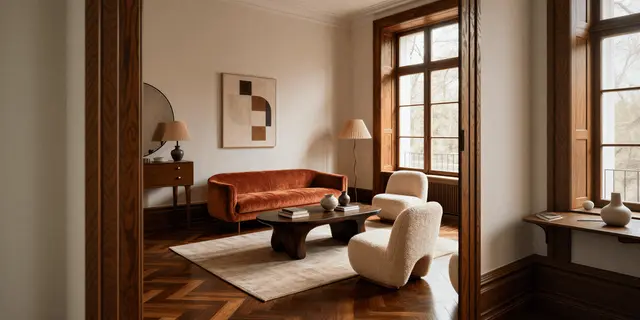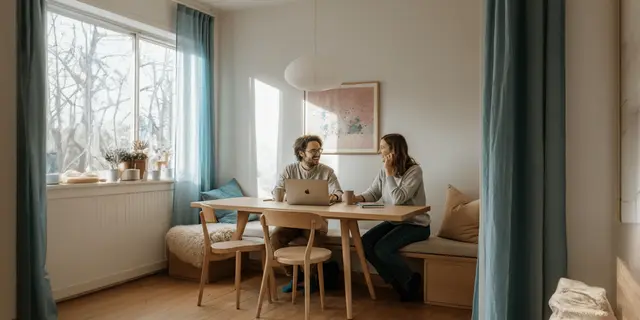

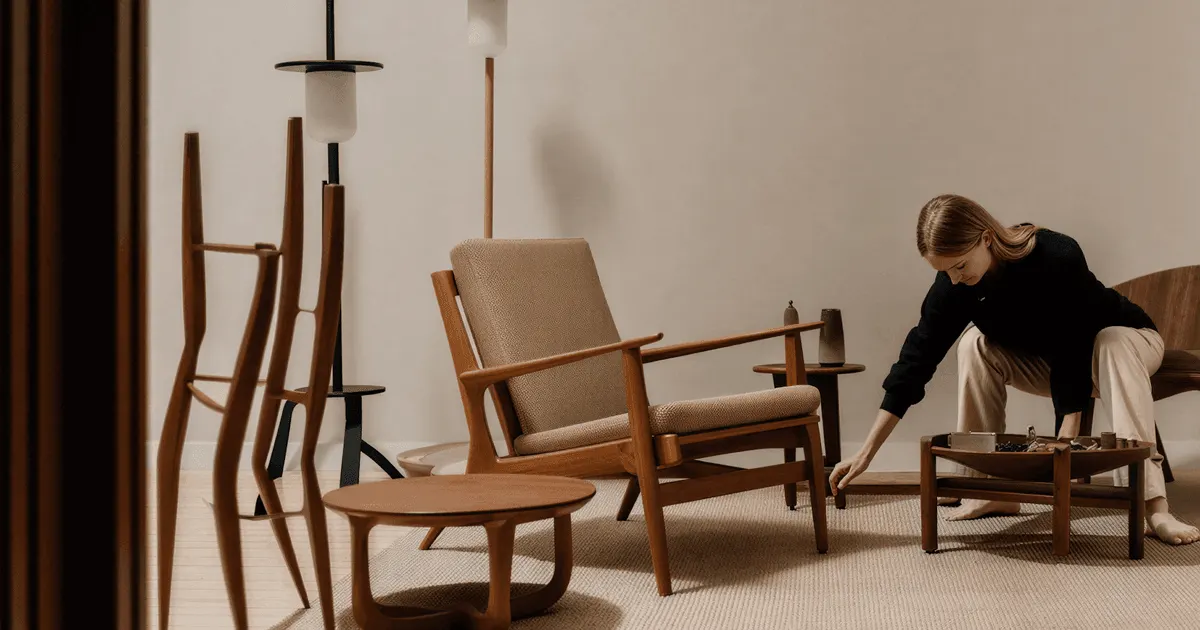
Furniture product photography has to answer a question a packshot cannot: will this fit my room, and what will it look like in it. Wayfair’s seller guide lists five common types of imagery, and two of them are room scenes. That is the whole difficulty of the category. A sofa cannot be shipped to a studio, restyled, and shipped back for every colorway, so the room scenes are where the budget goes and where most catalogs run thin.
You have 60 SKUs, each in four fabrics. That is 240 combinations. A single room set costs a location, a stylist, a delivery crew, and a day. Nobody shoots 240 room scenes, so most brands shoot eight and reuse them, and the listing for fabric eleven shows fabric three in the room.
In furniture, the gap between what the category needs and what you can physically shoot is wide.
This covers the five shot types with what each one answers, the dimensional shot almost everyone skips, why color and material fidelity is the binding constraint on generated room scenes, and how to build one scene set that every SKU can run through.
Key Takeaways
- Wayfair’s Imagery 101 page lists five common types of imagery: single-product silhouette, zoomed-in environmental, zoomed-out environmental, functional and dimensional (sell.wayfair.com, September 2026). Two of the five are room scenes, and room scenes are the expensive part of a furniture shoot.
- Wayfair says images need at least 1,000 x 1,000 pixels to be featured, and that 2,000 x 2,000 shows every detail. One Wayfair page recommends at least two images to start, and another says at least three (sell.wayfair.com, September 2026).
- The dimensional shot is the one that gets skipped and the one that prevents returns. Furniture comes back because it did not fit the room or the doorway, and a measurement in a spec table is read by fewer people than a diagram on an image.
- Amazon’s main image rule still applies: pure white at RGB 255, 255, 255, with the product as 85% of the image (sellercentral.amazon.com, September 2026). That is the silhouette shot, and it is the least useful image in the set for selling furniture.
- Color and material fidelity is the constraint on generated scenes, not realism. A room that looks convincing but renders oak as walnut has produced a return, not a sale.
- Build the scene once, then run each new SKU through it. In furniture photography, the room is the asset you reuse.
Why furniture product photography is the hardest shoot
Three things stack up. The products are physically large, so a studio day means freight, a crew, and space most photographers do not have. The buying decision depends on scale and context, so a product on white answers almost nothing. And the range multiplies, because furniture sells in fabrics, finishes and configurations, so one design becomes a dozen listings.
Apparel has the same multiplication problem and solves it with a flat lay or a mannequin. A sofa has no equivalent shortcut. It needs a room.
That is the structural reason furniture catalogs are inconsistent. The cause is arithmetic.
Wayfair’s five shot types, and what each answers
Wayfair’s Imagery 101 page lists five common types of imagery. It advises sellers to vary shot types and angles, and to show off size and features (sell.wayfair.com, September 2026). These are recommendations. The page does not call them requirements.
| Shot type | What it answers | Difficulty |
|---|---|---|
| Single-product silhouette | What is it, exactly | Low, a studio or cutout job |
| Zoomed-in environmental | What does the material and construction look like in a real space | Medium |
| Zoomed-out environmental | How does it sit in a room, and at what scale | High, needs a full set |
| Functional | What does it do, and how does it work | Medium, reclines, extends, folds, stores |
| Dimensional | How big is it, precisely | Low, and usually missing |
Read that table as a cost curve. The two environmental shots carry most of the persuasion and most of the expense. The functional shot matters enormously on anything with a mechanism and not at all on a side table. The dimensional shot is cheap and routinely absent.
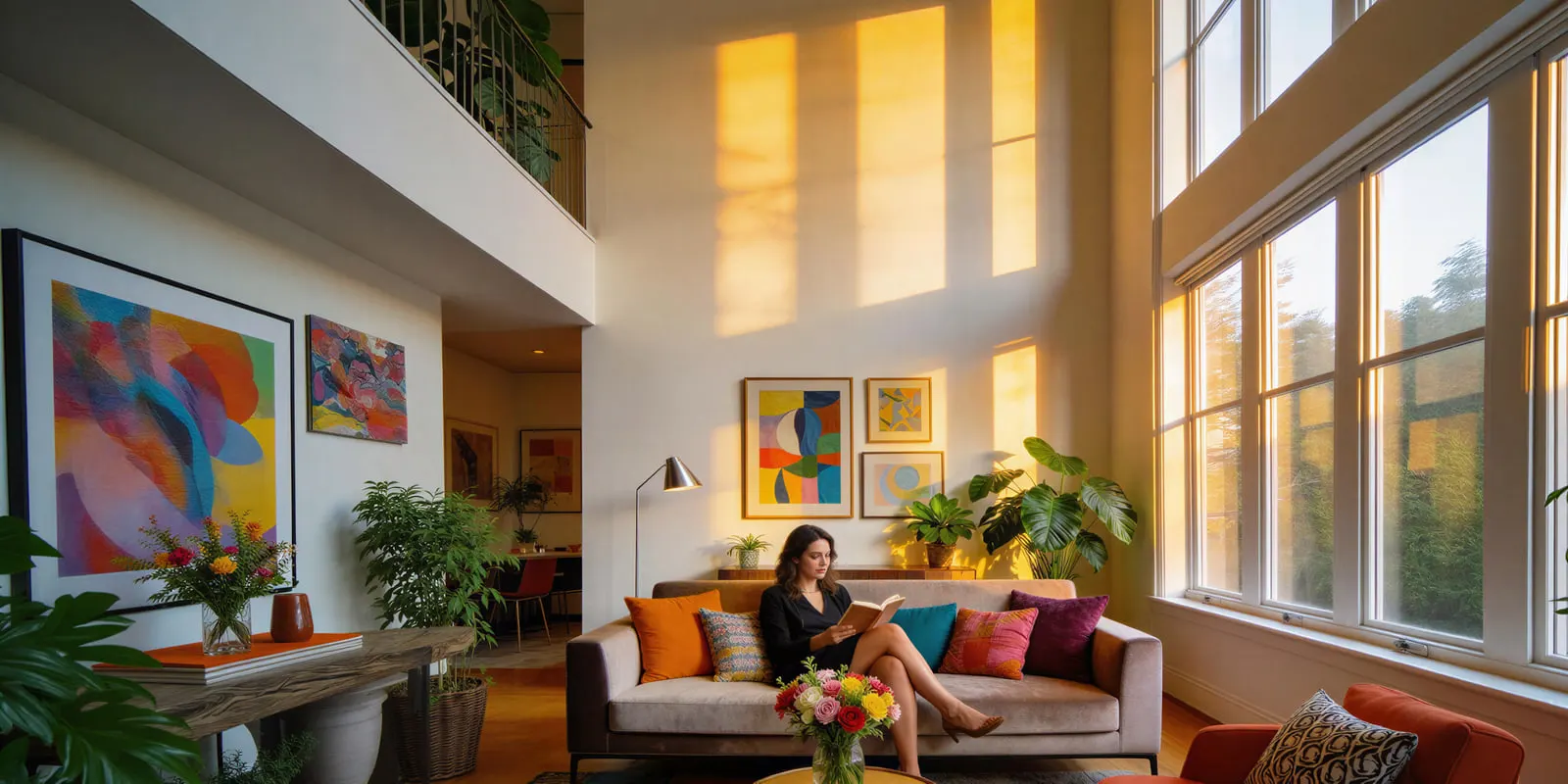
The silhouette is the one Amazon’s main image rule asks for, and the one a buyer learns least from. Amazon wants pure white at RGB 255, 255, 255, with the product as 85% of the image (sellercentral.amazon.com, September 2026), so it has to exist. It is a compliance asset, not a sales asset.
The dimensional shot is the cheap one nobody makes
A dimensional shot puts measurements on the image: width, depth, height, seat height, arm height, clearance underneath.
It is the least glamorous image in the set and it does more work than any other secondary shot, because the thing that goes wrong with furniture bought online is fit. It did not clear the doorway. It swallowed the room. The seat sat lower than the dining table.
Published return-rate figures for furniture vary so widely across sources, from single digits to over twenty percent, and so rarely name a primary methodology, that quoting one would be inventing precision. What is not in dispute is the reason category: size and space mismatch is the recurring driver, and freight makes each of those returns expensive in a way an apparel return is not.
Three rules for a dimensional shot that gets read:
- Put it on the image, not only in the spec table. Buyers scroll images and skim tables.
- Include the measurement that matters for the object. Seat height for chairs, clearance for beds and sofas, extended and closed dimensions for anything that moves, doorway width for large case goods.
- Show it against something human where you can. A silhouetted figure at known height next to an elevation drawing communicates faster than a number with an arrow.
This is the same job the scale shot does in small-product categories, at the opposite end of the size range. In jewelry product photography the buyer guesses too large. In furniture they guess too small. In home decor they have no anchor at all, because a styled shelf holds nothing familiar to measure against. All three are fixed by putting a reference in the frame.
The room scene problem
The zoomed-out environmental shot is the image that sells furniture, and it is the one that cannot scale.
A physical room set means a location or a built set, props, plants, art, rugs, lighting, and a crew to move a two-hundred kilogram sofa into position. Then the next fabric arrives. The set has to hold, unchanged, for as long as the range takes to shoot, which for a seasonal collection can be weeks.
What brands do is shoot a handful of hero scenes and let the rest of the catalog run on silhouettes. That is a rational budget decision and it leaves the long tail of the range selling on the weakest image type. What furniture photography costs across studio, CGI and generated pipelines works the per-variant arithmetic behind that decision.
Generated room scenes change the arithmetic here, because the expensive part is the room and the room is the part that does not need to be real. The product does. Dropping an actual photographed sofa into a styled scene is what a styled scene template does. Save it as a workflow, and the next SKU runs through the same scene set. For the wider field of scene tools, see AI lifestyle photo generators compared. Once the listing shots exist, the same doubts decide your furniture ads, format by format.
The distinction that matters: the room is presentation, the product is the claim. Restyle the room freely. Leave the object alone.
Color and material fidelity is the real constraint
The failure mode with generated furniture scenes is not that the room looks fake. Rooms are easy. The failure is that the product drifts.
Oak becomes walnut. A flat-weave becomes a boucle. A matte powder-coated leg picks up a chrome highlight. Seams move. Tufting count changes. None of it is obvious in a thumbnail and all of it is what the buyer receives.
Four checks before a generated scene ships:
- Material at 100%. Open the crop and look at the weave, the grain and the join. Compare it against the studio shot of the same piece.
- Color against a reference. Photograph a color reference alongside the physical item once, and compare every generated version against that, not against memory.
- Count the details. Buttons, tufts, slats, drawers, castors. A generated scene will happily produce a seven-slat headboard from a six-slat original.
- Hardware and finish. Legs, feet, handles and hinges are small, high-contrast, and the first thing to be reinterpreted.
Lighting drift is the other one. A scene lit warm makes a cool gray fabric look beige, which is a color claim changed by presentation rather than by editing the product. Keeping one light direction and one color temperature across a scene set is the same discipline that keeps a studio catalog consistent, covered in how to fix product photo lighting.
Tools differ in how much they change the piece. AI furniture product photography tools compares eight of them on whether they keep the photographed product or generate it again.
The general test for whether an output still represents the physical object is in what to check before you ship a product photo.
One saved scene for every SKU
In furniture photography, the room is the asset you reuse.
Define a small number of scenes and treat them as fixed sets. Three or four is enough for most ranges: a light neutral living room, a warmer textured one, a compact apartment space, and a plain architectural backdrop for anything that needs to read as contemporary. Each one gets a fixed camera height, a fixed light direction, and a fixed prop list.
Shoot every SKU once, properly, on white. That silhouette is the input for everything downstream, so it has to be sharp, correctly exposed and color-accurate. This is the frame the whole catalog depends on, and it is worth over-investing in.
Generate additional angles from that one frame rather than reshooting. Turning a single product photo into the front, three-quarter, side and detail views is what a multi-angle template handles. Every view starts from the same source photo, so check the geometry of each one against it.
Run each SKU through the same saved scene. Run the workflow again for the next SKU rather than setting the room up a second time. The point of saving it is that fabric eleven gets the same room as fabric three, at the same camera height, under the same light. That consistency is what makes a category page look like a collection instead of a pile of listings. The same logic applies to any set that has to hold across a range, which is covered in keeping locations consistent across AI shots.
Keep the dimensional shot manual. Measurements are data. Generate the room, draw the diagram.
A packaged version of this pattern for furniture ranges sits at furniture lookbook templates. Other scene-led product imagery runs through the same styled scene template.
Channel specs to build against
| Channel | Minimum | Recommended | Image guidance |
|---|---|---|---|
| Wayfair | 1,000 x 1,000 px | 2,000 x 2,000 px | Two or three images to start, a mix of shot types |
| Amazon | 500 px longest side | 1,000 px+ for zoom | Main image on pure white RGB 255, 255, 255, product as 85% of the image |
Wayfair’s guidance is that images need to be at least 1,000 x 1,000 pixels to be featured, and that 2,000 x 2,000 pixels will show every detail (sell.wayfair.com, September 2026). Amazon accepts 500 to 10,000 pixels on the longest side, with 1,000 or more enabling zoom. Only a limited number of product types may use a lifestyle image as the main image, with no text or extra logos (Amazon product image guide, September 2026).
Shoot and generate at the higher number and downsample. Detail on wood grain and weave is where furniture imagery earns the price point, and it is the first thing lost at 1,000 pixels. The channel-by-channel view across the rest of ecommerce is in ecommerce product photography specs, and the Shopify-specific variant math in AI product images for Shopify.
Shoot the piece once, then put it in every room. DesignerBox puts your product photo into a styled scene and saves the steps as a workflow. You build the scene once, then run the same workflow for the next SKU. The eleventh fabric gets the same room as the third, at the same camera height and under the same light. Anyone can make an AI picture. Making hundreds that still look like your brand is the hard part. You set the brand rules once, and the workflow applies them to every room set it makes. You see what a run costs before you start it. The full workflow from the first product photo to the finished ad, in one subscription. The room set, the angles and the video cut are all in one place. The commercial license starts on the Pro plan. The furniture room scenes guide shows the steps for a clean studio shot and a room scene for each piece. Start from a template, add your brand and your products, and run it.
FAQ
How many photos does a furniture listing need?
Five types rather than five files: a silhouette on white, a close environmental shot, a wide room shot, a functional shot if the piece moves or stores, and a dimensional shot with measurements. Wayfair’s Imagery 101 page recommends at least two images to start, another Wayfair page says three, and both suggest a mix of shot types and angles (sell.wayfair.com, September 2026). More images of the same angle add weight without answering anything new.
What is a dimensional shot?
An image with the product’s measurements marked on it: width, depth, height, and whatever else decides fit, such as seat height, clearance underneath, or extended dimensions on anything that folds or reclines. It sits alongside the spec table rather than replacing it, because buyers scroll images and skim tables. It is the cheapest image in a furniture set and the one most often missing.
Can you photograph furniture without a room set?
You can shoot the silhouette, the detail and the functional shots against a plain backdrop. The two environmental shots need context, and that is what a room set provides. Generating the room around an accurately photographed piece is the practical alternative at catalog scale, because the room is presentation and the product is the claim.
Do AI room scenes work for furniture?
For the room, yes. Backgrounds, props, flooring, light and styling are presentation and can be generated freely. The risk sits on the product: wood tone, weave, seam placement, hardware finish and the count of visible details all drift if the output is not checked against the physical piece. Generate from a sharp, color-accurate studio photo so the object carries through, then verify material and color at 100%.
What resolution should furniture product photos be?
Work at 2,000 x 2,000 pixels or higher and downsample per channel. Wayfair says images need at least 1,000 x 1,000 pixels to be featured, and 2,000 x 2,000 shows every detail (sell.wayfair.com, September 2026). Amazon enables zoom at 1,000 pixels or more on the longest side (sellercentral.amazon.com, September 2026). Grain and weave are the detail furniture sells on, and they are the first casualty of a small file.
Why do furniture returns happen even with good photos?
Fit is the recurring reason, and a beautiful room scene can make it worse by flattering the scale. A sofa styled in a large open set reads as smaller than it. Published return-rate figures for the category vary too widely across sources to quote reliably, but size and space mismatch appears consistently as the driver, and freight makes each return expensive. A dimensional shot is the cheapest counter.
How do I keep color consistent across fabric variants?
Photograph a color reference alongside the physical sample once per fabric, and compare every downstream image against that reference rather than against the previous image. Fix one light direction and one color temperature across the whole scene set, because a warm scene shifts a cool gray toward beige without anything having been edited. Drift grows fastest when you build each scene again from the start instead of running one saved set.
Sources
Wayfair imagery guidance verified at sell.wayfair.com (the Imagery 101 page and the product optimization page) and Amazon image requirements in the Amazon product image guide, both as of September 2026. Furniture return-rate percentages were checked and deliberately not quoted: available figures conflict across sources and none names a primary methodology. Individual results vary.