
AI ad style presets are looks you can reproduce on demand, on product one and on product five hundred. Each preset is three things you build once and reuse: a written brief naming the lighting, camera move, pacing and grade, a reference image the model reads as an input, and a saved workflow that runs the sequence around the shot.
Most tools in this category ship a named style list. You click “Luxury” or “Dark & Moody” and get a look. That works until you need something the list does not carry, or until the vendor changes what “Luxury” means in an update and your back catalog stops matching.
This covers what a preset locks, the three artifacts that make a look survive, how to build a small library, and what a run costs before you run it. If you want the looks themselves rather than the machinery, start with the ten cinematic ad styles and come back here to make one repeatable. Anyone can make an AI picture. Making hundreds that still look like your brand is the hard part. DesignerBox keeps the whole job in one place: the template, the workflow, the app and batch.
Key Takeaways
- A dropdown is the weakest form of preset. It locks a look to a menu someone else maintains. The three artifacts below stay yours.
- A reference image is the closest thing a model has to a preset slot. A frame from the clip that worked becomes the reference for every later run.
- Presets fix drift, workflows fix labor. A preset makes shot 40 match shot 1. A workflow means you did not rebuild the nine steps in between.
- Build the library at four looks, not ten. Four covers most catalogs. Ten is a maintenance job nobody does.
- The model you pick moves the bill far more than the brief does. Prototype a look on a low-cost model, then run the final on the model the placement needs.
What an AI ad style preset locks
An AI ad style preset freezes a set of decisions so they stop being decisions. The useful question is which ones.
For a still image, a template freezes the prompt, the model, the aspect ratio, the output size, and the shot count. That is covered in full in what an AI photo template locks in.
Video adds three more variables, and they are the ones that drift: the camera move, the pacing, and the audio. A named preset that only freezes “the look” leaves all three to the model, which is why two runs of the same preset can feel like different brands. The rules that decide whether a product clip works at all are in AI product video.
| What it locks | Dropdown preset | The three artifacts |
|---|---|---|
| Lighting and grade | Yes | Yes |
| Camera move and pacing | Sometimes | Yes, named explicitly |
| The exact visual reference | No | Yes, an image file you own |
| The step sequence around the shot | No | Yes, saved as a workflow |
| Survives a vendor update | No | Yes |
| Portable across models | No | Yes |
Why a named style list reaches its limit
Named lists are genuinely good at onboarding. You pick “Fashion Editorial”, you get something usable, and you did not have to learn lighting vocabulary. That is a real benefit and worth saying plainly. One-click trend effects are a separate case, and the guide to AI video effects covers what they do to a product.
The limits show up later. A list has a fixed length, so the look your creative director wants either exists or does not. The definitions sit with the vendor, so a quality update can shift the output while the label stays the same. And the preset belongs to one product, so it does not travel when you switch models for a shot that needs 4K.
DesignerBox does not ship a named style dropdown. You direct the look in the brief and pick the model. That is more work on shot one and less work on shot four hundred. For stills, there are the image templates. Each one is a whole job someone already built, so you start from a finished result instead of a blank page.
The three artifacts that make a look repeatable
1. The written brief: name four decisions
Every reproducible look is four decisions: the lighting, the camera move, the pacing, and the color grade. Name all four or the model picks for you, differently each run.
A brief that repeats reads like this:
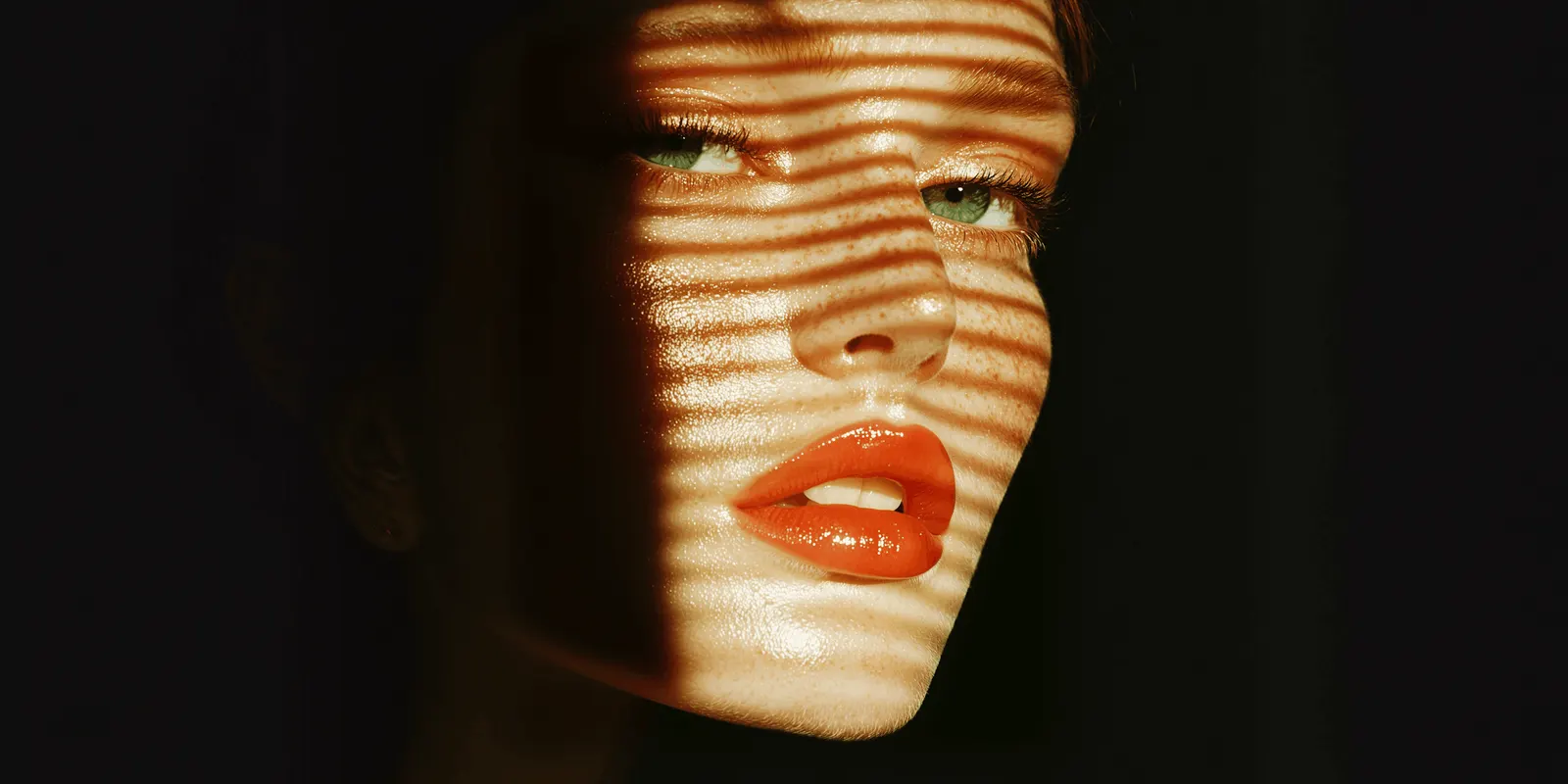
Single hard source from behind at 30 degrees, rim light along the product edge, deep shadow across the surround, atmospheric haze catching the beam, slow 5% push-in over 8 seconds, no cuts, low-key grade with lifted blacks.
That is one preset. Save it as text next to the reference image. If writing the brief is the part you get stuck on, prompt assistance inside the workflow takes a rough description and returns an art-directed prompt, so the four decisions get named even when you cannot name them yourself. The deeper prompt structure sits in our guide to realistic AI video prompts. For still ads, the brief has six parts, with 24 image prompts to copy.
2. The reference image: the model’s own preset slot
The reference image is a documented model input. Read the two vendor pages carefully, because they promise different things.
Google’s Gemini API documents reference images as “up to three asset images of a single person, character, or product” on Veo 3.1 and Veo 3.1 Fast, and not on Veo 3.1 Lite (ai.google.dev, accessed September 2026). DeepMind’s own Veo page goes further in its marketing copy. It says you can “capture your desired aesthetic by providing a style reference image, and Veo will generate videos with the same visual style, from paintings to cinematic looks” (deepmind.google, accessed September 2026). No API page documents a style reference slot, so treat the style claim as DeepMind’s wording and test it before you plan a library around it. The asset image is the input you can rely on.
That input is still your preset. Once one clip lands the way you want, pull a frame from it and feed that frame back as a reference on every future run. Your preset library becomes a folder of stills.
An input image works from the other end. OpenAI’s Sora 2 guide, which OpenAI now keeps for historical reference, says an input image “acts as the first frame of your video” and “must match the target video’s resolution” (developers.openai.com, accessed October 2026). Your packshot becomes frame one rather than a loose mood reference, and the motion grows out of it. Take the mechanic, not the model name: OpenAI removed Sora 2 and Sora 2 Pro from its API on 24 September 2026 (OpenAI API deprecations, accessed September 2026), so check which models your tool runs today.
Both mechanics are model features, so the model in the step decides which one you get. The models DesignerBox runs sit in one workspace, so you can hold a look in one model and a duration in another without rebuilding the job around each one.
3. The saved workflow: the sequence, not the shot
The brief and the reference image reproduce one clip. They do not reproduce the nine steps around it: isolate the product, relight it, generate the clip, extend it, resize for three placements, push the set to the library.
That sequence is a workflow. You put the steps in order once on the workflow canvas, save it, and the whole thing collapses to one job your team runs again for the next product. Build it once, and the ninth product takes one click. Which jobs earn a saved workflow and which do not is covered in AI creative workflow.
Pair it with a brand profile so colors, fonts, and product references load the same way every run. The brand stops being a PDF someone remembers and becomes a record the workflow reads. If the rules are not written down yet, start with a brand guidelines template in 12 sections. Brand drift and how to stop it is covered in AI brand consistency.
A four-look library
Four looks covers most catalogs. Ten becomes a maintenance job nobody does.
- Pick four looks your brand ships. A hero look, a lifestyle look, a detail or texture look, and a launch look. Not ten.
- Write the four-decision brief for each. Lighting, camera move, pacing, grade. One paragraph, no adjectives you cannot film.
- Generate one clip per look until it lands. Budget three or four attempts. This is the only expensive part, and you pay it once.
- Freeze a frame from each winner. That still is now your style reference image. Name the file after the look.
- Save the sequence as a workflow. Whatever ran before and after the generation goes in the graph.
- Re-verify quarterly. Model specs move monthly in this category. A look that held in July can drift by October.
Step 4 makes the library durable. A written brief describes a look. A frame proves it.
What a preset library costs to run
The model and the resolution drive the bill. An 8-second clip costs 40 to 560 credits, depending on the model. The cheapest model and the most expensive one sit fourteen times apart on the same eight seconds, and the brief you wrote does not move that number at all.
Building four looks at three attempts each is twelve clips. That is the only expensive part of the library, and you pay it once, so it is worth picking the model for the job rather than running everything on the model you finish on.
You see the run cost before you press Run, so you choose the prototyping model on a number. Prototype the look on the low-cost end, then run the final at the quality the placement needs. What drives the figure is covered in AI video cost.
Two plan limits apply. AI video starts on the Premium plan. Team features, shared brand kits and white label are on the Ultra plan, and every plan below Ultra is one seat. A shared brand kit lets a team share a preset library without sending files to each other. Plans and credits are on the pricing page.
Where presets stop working
Presets hold a look. They do not hold a story, and they will not save a bad brief.
Duration is capped per clip. Google’s API documents one Veo 3.1 generation at 4, 6 or 8 seconds, and 8 seconds is required for 1080p, 4K or extension. Extension adds 7 seconds at a time, up to 20 times, to 148 seconds in total, and only at 720p (ai.google.dev, accessed September 2026). Until its API removal, OpenAI’s guide listed Sora 2 Pro generations of up to 20 seconds, with extensions to a “maximum total length of 120 seconds” (developers.openai.com, accessed October 2026). Anything longer is an edit, not a generation.
Resolution decides the model, not the preset. Veo 3.1 generates at 720p by default, and at 1080p or 4K when the clip is 8 seconds. Veo 3.1 Lite stops at 1080p (ai.google.dev, accessed September 2026). If the preset needs a 4K master, the preset needs Veo 3.1 or Veo 3.1 Fast rather than Lite. Check the dates too. Google lists 22 October 2026 as the earliest shutdown date for the Veo 3.1 preview models in the Gemini API, and names Gemini Omni Flash as the replacement (Gemini API deprecations, October 2026).
A reference image cannot fix an unclear brief. If the four decisions are vague, the reference image pulls the grade and little else.
Review does not automate. Every preset run still needs a person to reject the clips where the product drifted. That review is the real work at volume, and it is per row: keep it, discard it, or rerun that one row rather than the whole set. Consistency work across shots is covered in keeping characters consistent and keeping locations consistent.
Build the first look on one product, then run the saved sequence on the next forty. An app is that workflow behind one form, so a colleague can run it without opening the canvas. Batch runs the same workflow over a whole sheet of products. The best AI advertising campaigns shows presets applied across a full campaign.
The full workflow from the first product photo to the finished ad, in one subscription. See how the four stages fit together.
FAQ
What is an AI ad style preset?
An AI ad style preset is a saved set of decisions that reproduces one visual look across many ads. In practice it is three artifacts: a written brief naming the lighting, camera move, pacing, and grade, a style reference image the model reads, and a saved workflow that runs the surrounding steps. A vendor dropdown is a weaker version that locks only the look.
Does DesignerBox have cinematic ad style presets?
Not as a named list of styles. You direct the look in the brief by naming the four decisions, then pick a model and save the sequence as a workflow. That gives you looks a fixed menu does not carry, and the saved sequence runs again on the next product instead of being rebuilt.
How do I make an AI video look the same every time?
Feed the model a reference image. Google’s API documents “up to three asset images of a single person, character, or product” on Veo 3.1 and Veo 3.1 Fast (ai.google.dev, accessed September 2026). DeepMind’s Veo page also markets a style reference image, which no API page documents, so test that one before you rely on it. Freeze a frame from the clip that worked and reuse that frame on every later run.
How many ad style presets should I build?
Four is usually enough: a hero look, a lifestyle look, a detail look, and a launch look. Larger libraries look thorough and go stale, because each preset needs re-verification as models update. Build four, use them, and add a fifth only when a real campaign demands it.
What does it cost to build a preset library?
Twelve clips: three attempts across four looks. An 8-second clip costs 40 to 560 credits, depending on the model, so the model sets the total. The cost of a run is shown before you start it. Prototype on the low-cost end and run the final at the quality the placement needs. AI video starts on the Premium plan.
Can I use the same preset across different AI models?
Partly. The written brief travels between models because it is plain language. A reference image travels wherever reference images are supported, which Google documents for Veo 3.1 and Veo 3.1 Fast (ai.google.dev, accessed September 2026). Exact results still differ per model, so treat a preset as portable intent rather than an identical render.
What is a style reference image?
A style reference image is a still you give the model as an input, to guide the look of a new clip. The easiest one to make is a frame from a clip that already has the look you want. Name the file after the look and use it on every later run. Support differs by model, so test it on yours first.
Sources
- Veo 3.1 duration, 720p, 1080p and 4K output, asset reference images and scene extension: ai.google.dev/gemini-api/docs/veo, accessed September 2026
- Earliest shutdown date for the Veo 3.1 preview models in the Gemini API, 22 October 2026, and the named replacement: ai.google.dev/gemini-api/docs/deprecations, accessed October 2026
- Veo style reference wording, quoted as DeepMind’s own marketing copy: deepmind.google/models/veo, accessed September 2026
- Sora 2 Pro input image as first frame, 16- and 20-second generations, extensions to 120 seconds total, read on the guide OpenAI keeps for historical reference: developers.openai.com/api/docs/guides/video-generation, accessed October 2026
- Sora 2 and Sora 2 Pro API removal on 24 September 2026: developers.openai.com/api/docs/deprecations, accessed September 2026
- DesignerBox plan gates and feature availability (DesignerBox pricing, September 2026)