
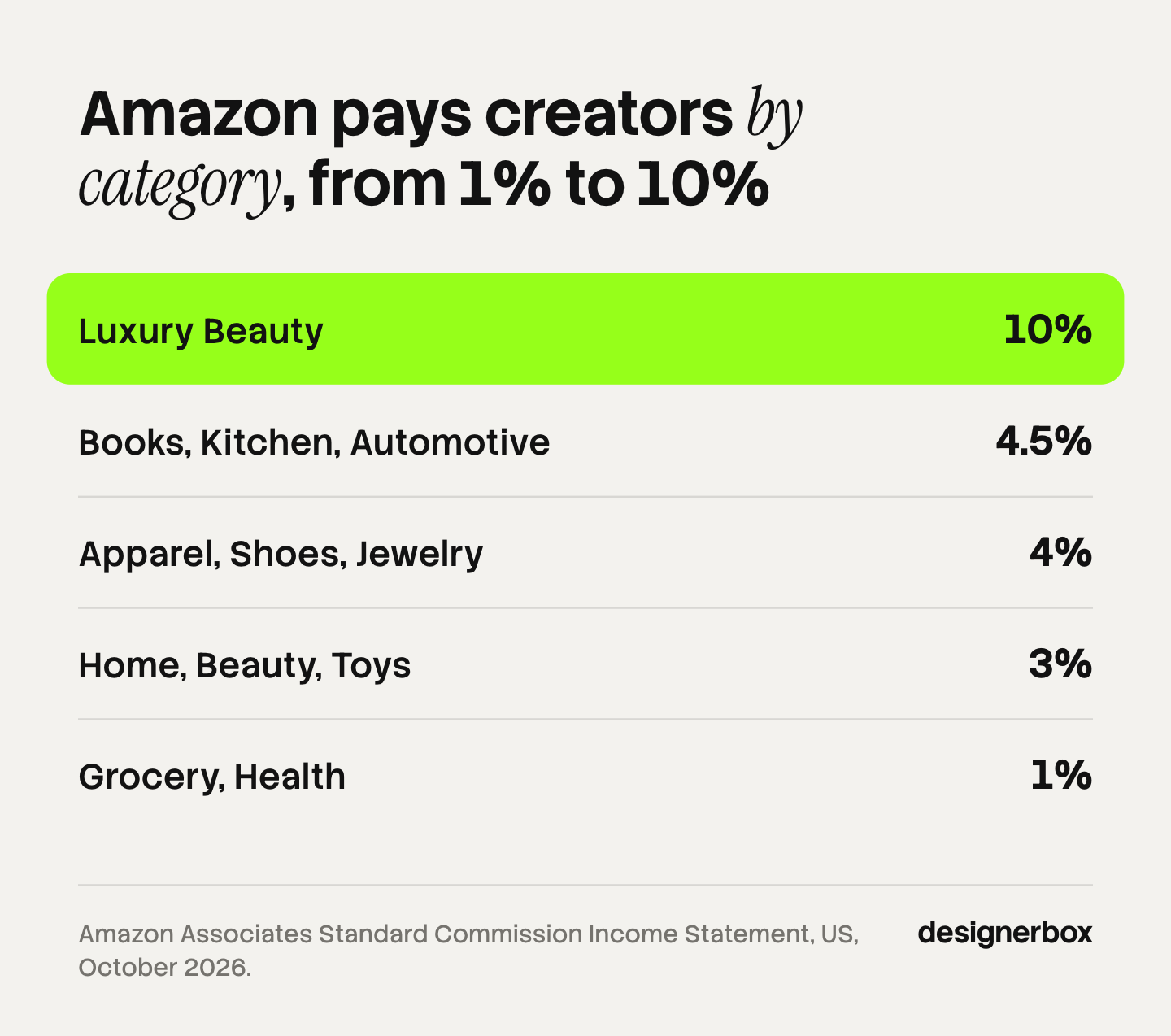
The Amazon Influencer Program is an extension of Amazon Associates for social media creators. You apply with a YouTube, Instagram, TikTok or Facebook account. Amazon gives you a storefront with your own URL, where you publish idea lists, shoppable photos and shoppable videos. You earn a commission on qualifying purchases, at a rate that Amazon sets for each product category, from 1% to 10% for most products.
The application is the short part. The harder part comes after it. A storefront needs new content every week, and Amazon reviews each video before it goes live. A video where the product is never on camera does not meet the guidelines.
This guide is for a creator who runs content as a one-person business. It covers who can join, how the commission is counted, what Amazon’s content rules say, and where AI images fit. Every program fact below was read on Amazon’s own pages in October 2026.
Key Takeaways
- There is no published follower minimum. Amazon says it looks at the number of followers and other engagement metrics.
- Commission depends on the category. Amazon’s schedule lists 10% for Luxury Beauty, 4% for apparel and shoes, 3% for home and beauty, and 1% for grocery.
- Videos must show the real product. Amazon’s best practices say stock or manufacturer footage “falls short”, and each video goes through moderation.
- Disclosure has two parts. A clear label next to each link, and the sentence “As an Amazon Associate I earn from qualifying purchases.” on your account.
- AI helps around the product. Lifestyle stills from your own photo, thumbnails and off-Amazon posts are the fit. A generated clip of a product you never held is not.
What is the Amazon Influencer Program?
The Amazon Influencer Program is the creator version of Amazon’s affiliate program. Amazon’s help page says it lets you “get your own presence on Amazon”, which you fill with the products you recommend, and a vanity URL in the form amazon.com/shop/handle (affiliate-program.amazon.com, October 2026).
An Associate shares links. An influencer also publishes photos, videos and lists on Amazon itself, and Amazon may show that content to shoppers who never follow the creator.
Amazon says the program is available in more than 20 countries (aboutamazon.com, October 2026).
What are the Amazon Influencer Program requirements?
Amazon publishes the account types it accepts and does not publish a follower number. The sign-up page says: “We accept applications from all types of influencers, provided you have a YouTube, Instagram, Facebook, or TikTok account” (affiliate-program.amazon.com, October 2026). Amazon’s September 2026 explainer adds Pinterest to that list.
An Instagram or Facebook application needs a business account. Amazon looks at “the number of followers you have in addition to other engagement metrics”, and its explainer also names content quality. A creator who is not accepted can apply again later.
We found no follower minimum on Amazon’s pages.
How to become an Amazon influencer
The path has five steps. Amazon’s program policy says registration includes giving Amazon access to data about your social accounts (affiliate-program.amazon.com, October 2026).
- Pick your strongest account. For Instagram or Facebook, switch it to a business account first.
- Apply on the influencer page. You sign in with an Amazon account and connect the social account. Amazon reviews it against its thresholds.
- Build the storefront. Add a profile photo and your first idea lists.
- Add payment and tax details. Each Store ID needs its own.
- Publish, then share the URL. Put the storefront link in your bio and add the Associate sentence to your account.
The link in your bio is one tool among several. For the rest of the stack, CreatorFlow’s creator tools directory lists 190+ tools by job, from link-in-bio and email to scheduling and affiliate platforms. CreatorFlow is built by the same team as DesignerBox (creatorflow.so/creator-tools, October 2026).
What goes on an Amazon storefront?
A storefront holds four kinds of content, and each one has its own rules.
| Content | What it is | What Amazon’s pages say |
|---|---|---|
| Idea list | A named group of products, for example “Desk setup” | You add products sold on Amazon and can comment on each one |
| Shoppable photo | Your photo with products tagged in it | At least 105 px wide, .jpg, .jpeg, .png or .bmp, up to 5 MB, more than 72 dpi |
| Shoppable video | A recorded video with products tagged | .mp4 or .mov, under 5 GB, at least 30 seconds recommended, reviewed by moderation |
| Livestream | Amazon Live, with a product carousel | Products must be for sale on Amazon, with at least one in the carousel |
The photo limits come from the image upload guidelines (affiliate-program.amazon.com, October 2026). The video limits come from Amazon’s shoppable video guide for influencers (amazon.com, October 2026).
Approved videos appear on your storefront. Eligible videos can also appear on product detail pages, in search results and on the Amazon home page. Amazon’s pages give two thresholds for that step. The Associates help page says shoppers may find your videos on detail pages after 10 approved videos (affiliate-program.amazon.com, October 2026). The Creator Hub page says three. Plan for 10.
For the formats that work off Amazon too, see shoppable video for creators. For the image a list of products needs, see affiliate roundup images.
How do Amazon influencer commissions work?
You earn a percentage of each qualifying purchase, and the percentage depends on the product category. Amazon publishes the rates in its Standard Commission Income Statement (affiliate-program.amazon.com, October 2026).
| Category | Rate |
|---|---|
| Luxury Beauty, Luxury Stores Beauty | 10.00% |
| Physical Books, Kitchen, Automotive | 4.50% |
| Apparel, Shoes, Jewelry, Watches, Luggage, Handbags, Amazon devices | 4.00% |
| Toys, Furniture, Home, Beauty, Pets, Sports, Baby, Tools, Outdoors | 3.00% |
| Grocery, Health and Personal Care, Physical Video Games | 1.00% |
| All other categories | 4.00% |
Some items pay nothing, including gift cards. These are the US rates, and Amazon can change them. The Walmart Creator program keeps its rates inside the creator account instead. In the TikTok Shop affiliate program, the seller sets the rate for each product.
Three mechanics matter more than the rate.
The session. A session starts when a shopper clicks your link. It ends after 24 hours, when the shopper places an order, or when the shopper clicks another Associate’s link. A product added to the cart in that session can still earn if the order is completed within 89 days of the click.
The whole order. Amazon’s explainer says that if a shopper clicks your link and buys other items, you can earn on those too.
Onsite earnings. When Amazon shows your video or photo to a shopper who was already on Amazon, you earn at an onsite rate, tracked under a separate Store ID that often starts with “onamz”. Amazon says the onsite rates are listed in Associates Central (affiliate-program.amazon.com, October 2026). The public help page gives no number.
Here is our arithmetic, as an example. A 4% commission on a 50 dollar pair of shoes is 2 dollars, so a video that takes an hour needs many orders to pay for that hour.
What do Amazon’s content rules say about influencer videos?
Each shoppable video is reviewed by moderation, and a video that does not meet the guidelines is rejected. The rules sit in Amazon’s video content guidelines for influencers (amazon.com, October 2026) and its best practices page (amazon.com, October 2026).
- The product is in view. “The products you feature should be in view during your video to meet our content guidelines.”
- Your own footage. The best practices say to “get the real product on camera”. Talking with no product shown, showing only the box, or “using stock or manufacturer footage instead of your own” falls short.
- Accurate tags. A video is rejected if the tags do not match the content.
- No prices or promotions. Videos must not contain prices, discount claims or time-sensitive information.
- No copies. Content identical to the media on a product detail page is rejected, and so is content copied from another creator.
- Gifted products are disclosed. You may feature a product a brand gave you if it is sold on Amazon and you clearly disclose the connection in the video.
We found no line that names AI-generated content in the influencer guidelines we read, as of October 2026. The rules above still decide the question. A generated clip of a product is not the real product on camera.
Sellers have separate rules for listing media, covered in our guide to Amazon video requirements.
How should an Amazon influencer disclose?
Amazon asks for two things. First, a disclosure with your links that is clear and conspicuous. Amazon’s help page gives “(paid link)”, “#ad” and “#CommissionsEarned” as examples, placed near the link where people notice it (affiliate-program.amazon.com, October 2026). Second, the Operating Agreement requires this sentence on your site, and on social media it must be associated with your account: “As an Amazon Associate I earn from qualifying purchases.”
The FTC staff guidance says endorsements “must reflect the truthful experiences and opinions of the endorsers”. On a picture supplied by a brand it says: if “the picture communicates that the influencer used the product” and that is not true, “the use of the picture would be misleading” (ftc.gov, October 2026).
That is the line for AI images too. An image of a product you never held, presented as your own experience, is a problem with the FTC and with Amazon. Where a casual product photo becomes a testimonial covers the same line for stills. This is general information, not legal advice.
What AI can do for a storefront, and what it cannot replace
Split your work in two. One part is evidence: the product in your hands, in use. The other part is presentation: the cover, the scene, the post that sends people to the storefront.
| Job | Real product on camera? | Where AI fits |
|---|---|---|
| Shoppable video | Yes, Amazon’s guidelines ask for it | Captions and trims on your own footage |
| Shoppable photo | Use your own photo of the product | A cleaner background on your own photo, with the product unchanged |
| Idea list cover and thumbnail | No rule found on Amazon’s pages | A styled still made from your own product photo |
| Instagram, Pinterest or TikTok post that links to the storefront | The platform’s own rules apply | Lifestyle stills in several formats, labeled where the platform asks |
Start from a photo you took, never from the listing’s images, because Amazon treats detail page media as copyrighted. Keep the product as it is: the color, the logo and the size must match what arrives in the box. For labels on other platforms, see labeling AI-generated images. A Pin that links to your storefront follows Pinterest’s own link and disclosure rules, covered in Pinterest affiliate marketing. For what Amazon asks of a listing image, see Amazon image requirements.
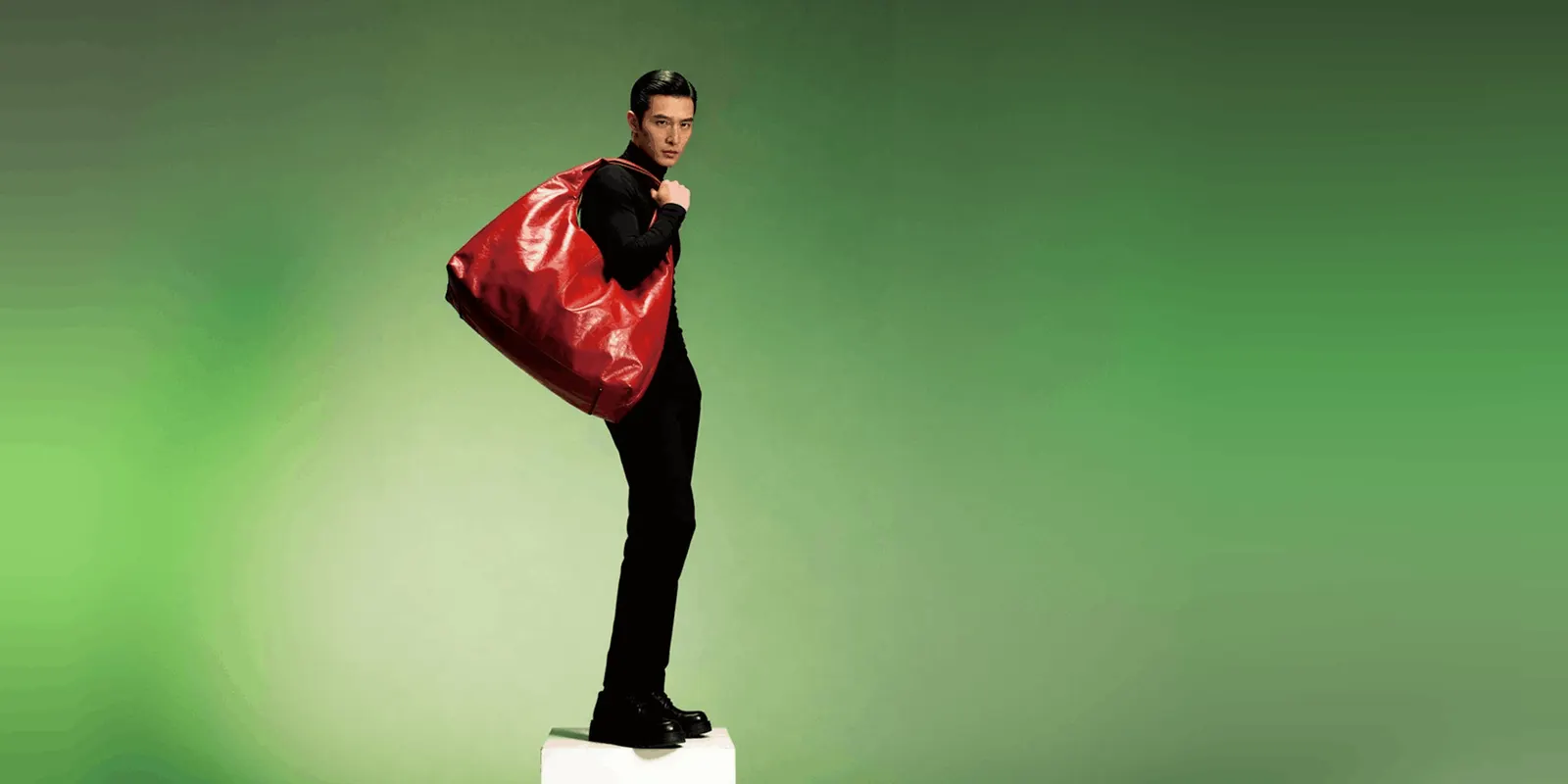
Storefront stills in DesignerBox
Anyone can make an AI picture. Making hundreds that still look like one creator’s feed is the hard part. A storefront needs covers, thumbnails and social posts that share one look, week after week.
DesignerBox is AI creative production for brands, creators and agencies. You upload your own photo of a product you hold. A template places it in a scene, and you can change the background and keep the product as it is. You save the steps as a workflow, so next week’s products get the same light and framing. The same photo can become the formats that social posts need. The full workflow from the first product photo to the finished post, in one subscription. The cost is shown before each run.
There is a free plan, and it runs on sample products. Uploading your own photos and the commercial license start on the Pro plan. AI video, virtual try-on, upscaling, the image editor and the video editor start on the Premium plan. Plans and credits are on the pricing page.
DesignerBox does not film your product, and it does not post to Amazon: you download the results. A creator who posts a few times a month may not need it.
FAQ
How many followers do you need for the Amazon Influencer Program?
Amazon does not publish a number. Its sign-up page says it looks at the number of followers and other engagement metrics, and its September 2026 explainer adds content quality. Creators who are not accepted can apply again later.
How much does the Amazon Influencer Program pay?
It pays a percentage of each qualifying purchase. The US schedule lists 10% for Luxury Beauty, 4% for apparel and shoes, 3% for home and beauty products, and 1% for grocery. Amazon says earnings differ from creator to creator, so no average is reliable.
Can I use AI-generated videos as Amazon influencer videos?
Not as a replacement for filming the product. We found no line that names AI in the influencer video guidelines, as of October 2026. The guidelines ask for the real product in view, and a generated clip does not meet that.
How long does an Amazon affiliate link last?
A session lasts 24 hours from the click, or until the shopper orders or clicks another Associate’s link. A product added to the cart in the session can still count if the order is completed within 89 days.
What does DesignerBox do for an Amazon influencer?
It makes the stills around your content: idea list covers, thumbnails and social posts, from your own photo of the product. It does not replace the video where you show and use the product.
Sources
- Amazon Associates, “Sign Up for the Amazon Influencer Program.” affiliate-program.amazon.com, accessed October 2026
- Amazon Associates Help, “What’s the Amazon Influencer Program?” affiliate-program.amazon.com, accessed October 2026
- Amazon Associates Program Policies, including the Amazon Influencer Program Policy and the Commission Income Statement. affiliate-program.amazon.com, accessed October 2026
- Amazon Associates Operating Agreement. affiliate-program.amazon.com, accessed October 2026
- Amazon Associates Help, Standard Commission Income Statement. affiliate-program.amazon.com, accessed October 2026
- Amazon Associates Help, “Earning Onsite Commissions.” affiliate-program.amazon.com, accessed October 2026
- Amazon Associates Help, “Image upload guidelines for Amazon Influencer Program.” affiliate-program.amazon.com, accessed October 2026
- Amazon Associates Help, “How do I upload videos to my storefront?” affiliate-program.amazon.com, accessed October 2026
- Amazon Associates Help, “Why do I have to identify myself as an Associate?” affiliate-program.amazon.com, accessed October 2026
- Amazon, Live Shoppable Video Content Guidelines. amazon.com, accessed October 2026
- Amazon, Influencer Best Practices for shoppable videos. amazon.com, accessed October 2026
- Amazon, shoppable video guide for influencers, and the Creator Hub page. amazon.com, accessed October 2026
- About Amazon, “What is the Amazon Influencer Program? Your questions answered,” September 2026. aboutamazon.com, accessed October 2026
- US Federal Trade Commission, “FTC’s Endorsement Guides: What People Are Asking.” ftc.gov, accessed October 2026
- CreatorFlow, creator tools directory, 190+ tools in eleven groups. creatorflow.so/creator-tools, accessed 2 October 2026
- DesignerBox pricing page (designerbox.ai/pricing), October 2026
Program rules, commission rates and content guidelines verified from Amazon’s Associates and Amazon.com pages, and disclosure guidance from the FTC, as of October 2026. Rates are for the US program and can change. Individual results vary.