

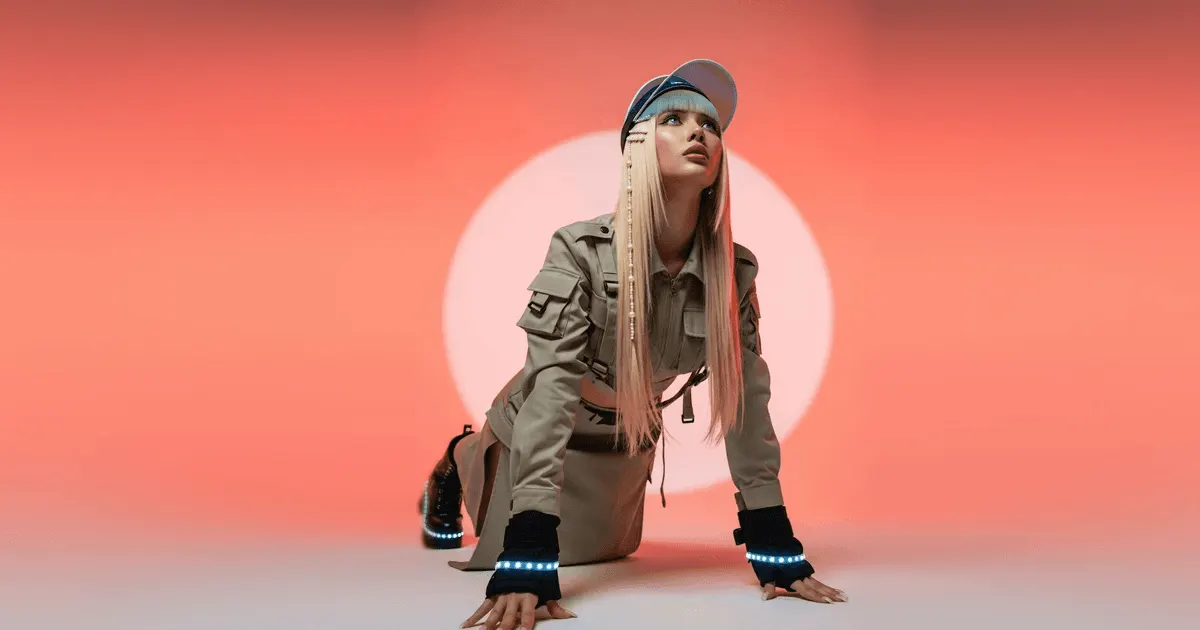
Lingerie product photography is the set of images that sells an intimates product page: a flat or ghost mannequin packshot, on-model shots at several angles, and fabric close-ups. It differs from other apparel in one way that matters. Amazon, Google and Meta each restrict what intimates imagery may show, so the platform decides your shot list before your art director does.
The standard apparel method still applies: light it softly, shoot it on a neutral background, pick a model, retouch. It skips the one constraint that sets this category apart.
Sell a bra on Amazon and the main image rules are not the same as they are for a t-shirt. Run the same photo as a Meta ad and a different rulebook applies. Feed it to Google Shopping and suggestive styling can put the products under adult-content restrictions. This guide covers the rules first, then the shot list, then what AI does well and badly on lace.
Key Takeaways
-
The platform writes half your shot list. Amazon’s product image guide asks for clothing in adult sizes on a standing model in the main image, and says not to show any part of a mannequin (Amazon product image guide, accessed September 2026).
-
Ghost mannequin is the wrong Amazon main image. On Amazon, a main image that does not comply can be removed from search until it is fixed.
-
Google restricts suggestive lingerie promotion, not lingerie. Merchant Center names “sexually suggestive lingerie promotions” as restricted adult content, and expects the adult attribute or an account level setting (Google Merchant Center Help, accessed September 2026).
-
Meta polices the pose and the crop. Its ad standards bar people in explicit or sexually suggestive positions, and ask for 18+ targeting on photorealistic imagery of people in revealing clothing (transparency.meta.com, September 2026).
-
Lace, mesh and sheer are where generative models fail. Repeating fine lace and semi-transparent overlays are the two hardest textures to hold through an edit. Plan a real capture for those.
-
On-model AI can carry an EU disclosure that packshots do not. A photorealistic synthetic person wearing your garment is likely in scope for the EU AI Act deep fake rule. A packshot of the real garment, changed in no misleading way, is not.
-
Cost moves from per day to per variant. A studio day prices the shoot. AI prices each run, so the math changes as colorways add up.
What is lingerie product photography?
Lingerie product photography produces the commercial images an intimates brand lists and advertises with. It covers three image types: off-figure packshots (flat lay or ghost mannequin), on-figure shots showing fit and drape on a body, and macro detail shots of lace, elastic, hardware and stitching. Unlike outerwear, the category is regulated by the platforms that display it, which sets both what you shoot and what you may publish.
What Amazon, Google and Meta allow in intimates images
Three companies control most of where an intimates image is seen. Their rules do not agree with each other.
Amazon
Amazon’s product image guide and its image guidelines for clothing are unusually direct on this category. Two rules do the work, and a third set covers intimates by name.
The first is on-model. Amazon’s product image guide says clothing in adult sizes is shown on a model, and the model must be standing. Children’s and baby undergarments, leotards, swimwear and similar form-fitting items must be photographed lying flat, with no model. Adult lingerie is adult apparel, so the primary image is usually a person. The exceptions sit in Amazon’s clothing guidelines. Thongs and panties that do not give full coverage at the front and back must be shown without a human model, and pasties are imaged off-model (Amazon image guidelines for clothing, accessed September 2026).
The second is what the main image may not contain. The current guide says not to show any part of a mannequin, asks for a pure white background, and asks for the product at 85% of the image. It says Amazon may temporarily remove the listing from search until the main image complies (Amazon product image guide, accessed September 2026). Amazon’s clothing guidelines add a model lying down or kneeling, a background that is not pure white, multiple product views, distracting accessories, and borders, logos, watermarks or text to the main image prohibitions.
A separate prohibition covers all images, not only the main one. Amazon’s product image guide says no nudity or sexually suggestive images, for models and drawings alike. Its clothing guidelines say intimates images must not be sexually explicit or obscene, do not allow suggestive poses, and make the is_adult flag mandatory for exotic or erotic lingerie. Thongs and panties use a front view for the main image, and back views go in the alternate images.
Read those together and the Amazon brief writes itself. On-model, standing, front-facing, white background, product filling the frame, nothing suggestive in the pose.
Google Merchant Center
Google’s adult-oriented content policy restricts Shopping ads for three things: adult merchandise, sexually suggestive content, and images containing exposed skin and nudity. That third bucket names the category directly, listing “sexually suggestive lingerie promotions” as an example.
Restricted does not mean prohibited. Google’s first tool is classification. Products that contain adult content take the adult attribute, or the merchant adjusts account level settings, so the items serve to an appropriate audience.
The enforcement path matters more than the rule. Under account disapproval, Google says it sends a warning email for most violations and gives 7 or 28 calendar days to fix the issue. It may not send a warning for egregious violations (Google Merchant Center Help, accessed September 2026).
The practical risk for a lingerie brand is that the styling, not the garment, pulls products into the restricted group. Google says the restrictions include not serving those ads on Search and not serving them to minors.
Meta
Meta’s advertising standards do not name lingerie. They police the execution. Ads must not contain imagery depicting nudity, sexual activity, people in explicit or sexually suggestive positions, or activities that are sexually suggestive. Ads with photorealistic imagery of people in sexually suggestive poses or revealing clothing, or focused on body parts such as the groin, buttocks or breasts, should target people over 18 (transparency.meta.com, accessed September 2026).
Two shots of the same bra can land on opposite sides of that line based on crop, pose and camera angle. That is why some intimates advertisers keep two edits of every asset: a full-length standing version for paid, and a closer, more editorial version for organic and owned channels.
Why ghost mannequin is the wrong main image for Amazon
Ghost mannequin, sometimes called invisible mannequin, shows three-dimensional shape without a model. It is cheaper than a casting, and it keeps the catalog visually uniform. On Shopify, on your own site, in a wholesale line sheet, it is a good call.
On Amazon, the guide says not to show any part of a mannequin in the main image, in a category it shows on a standing model. A ghost mannequin main image puts the listing at risk of removal from search.
So run both. Ghost mannequin and flat lay carry your own PDP and your wholesale assets. On-model carries Amazon. That is two production paths for one product, which is exactly the cost problem that pushes intimates brands toward generating the second set instead of shooting it.
The lingerie PDP shot list that sells
Intimates buyers ask three questions before they add to cart: what does it look like on, what is the fabric like, and will it fit me. A gallery that answers all three does its job. One that only shows styling leaves the questions open.
| Shot | Purpose | Where it runs |
|---|---|---|
| On-model front, standing, full length | Primary listing image | Amazon main, PDP hero |
| Ghost mannequin or flat, front and back | Shape and construction without a body | Own site, wholesale, Google Shopping |
| Back view on-model | Closure, strap architecture, band fit | PDP gallery |
| Macro on lace, elastic and hardware | Fabric confidence before purchase | PDP gallery, ads |
| Second body type or size | Fit range | PDP gallery |
| Colorway grid | Variant selection | PDP swatches, feed |
| Styled lifestyle frame | Brand register, paid social | Meta, Pinterest, email |
The macro shot carries a lot of weight. Intimates are bought on fabric and returned on fabric. A close crop that shows the actual lace repeat and the actual elastic width answers a question no styled shot can.
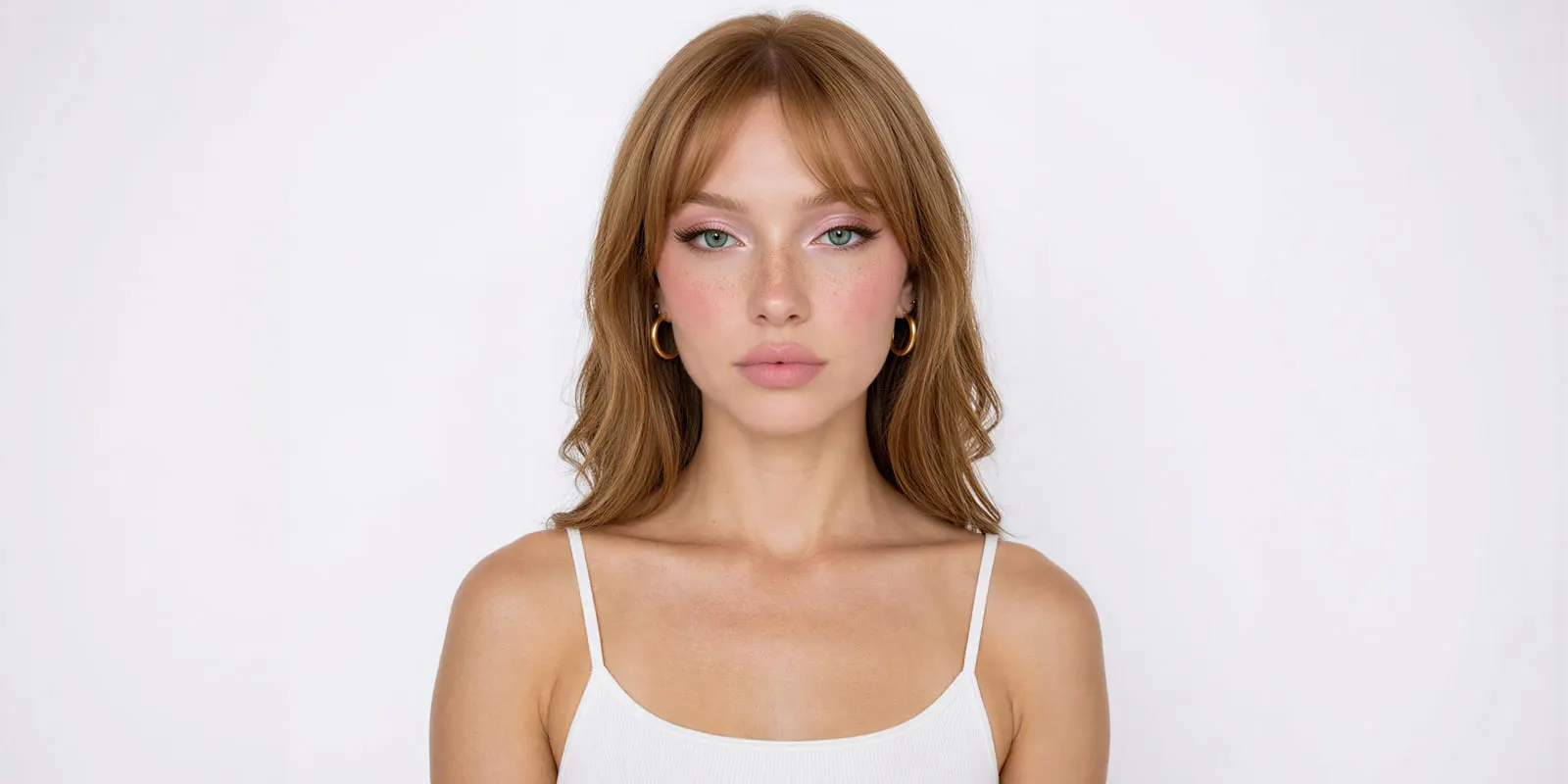
There is one controlled measurement worth knowing here. In live A/B tests on retargeting campaigns across merchant catalogs that were mostly apparel, generated backgrounds on product images lifted click-through about 15% against the original images. The gain ranged from about 4% to 40% across the experiments, and all gains were significant at p<0.05 (Czapp et al., RecSys ‘24, accessed September 2026). Repositioning the product without a new background gave about 5%. That is clicks on warm audiences rather than revenue on cold ones, from one paper, and stills only. It still points one way: the image variant is doing real work.
Where AI breaks on lace, mesh and sheer
Generating intimates imagery is harder than generating a hoodie, and the failure modes are specific.
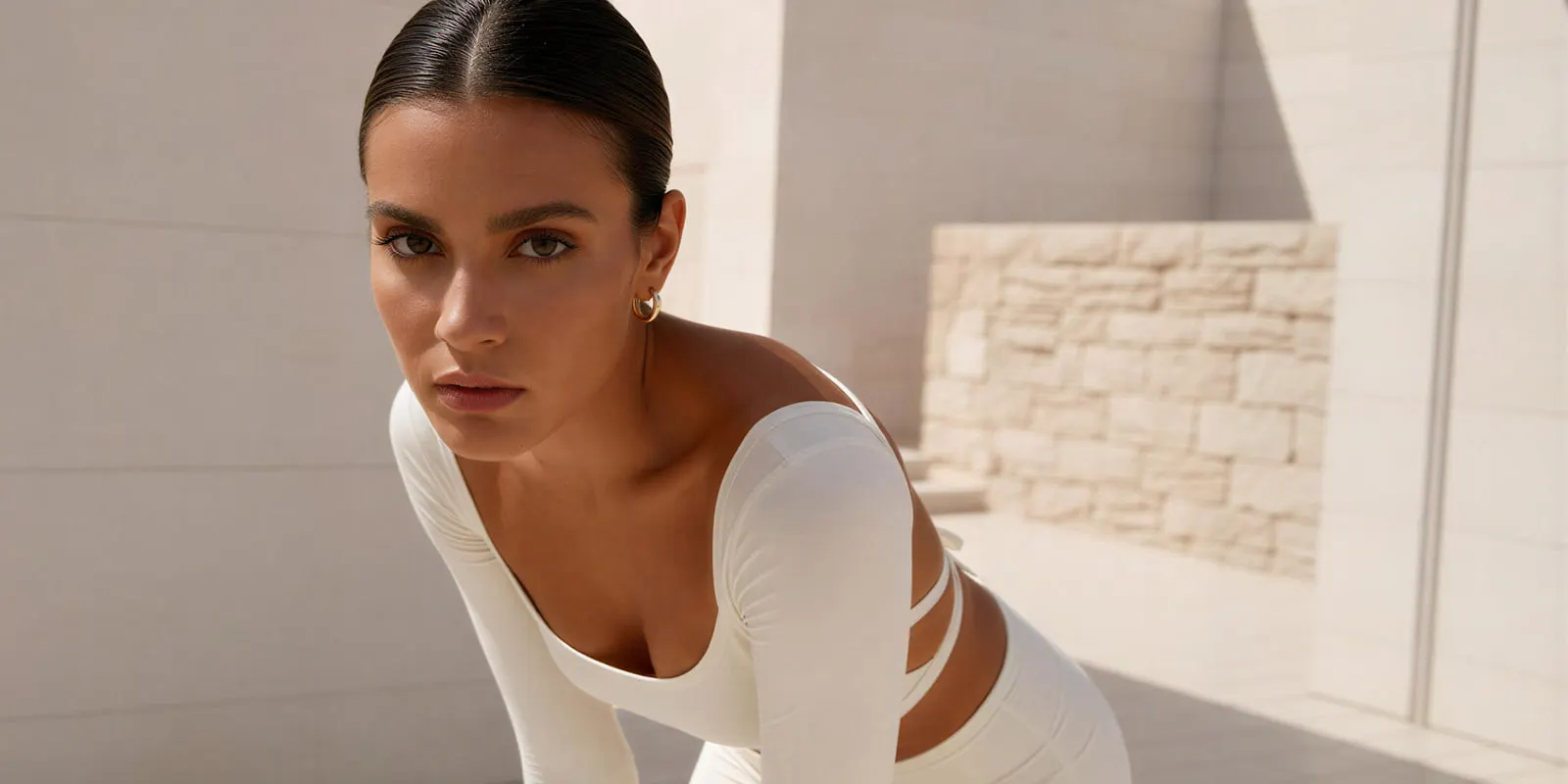
Fine repeating lace. A lace repeat is a regular pattern at high frequency. Models tend to reconstruct the impression of the pattern rather than the pattern itself, so the motif drifts across the garment, scallop edges lose their rhythm, and the repeat does not survive a crop into the macro shot.
Semi-transparent overlays. Mesh and sheer panels require the model to render two things at once, the fabric and what is behind it, at a consistent opacity. Opacity commonly shifts between the panel edge and its center.
Strap and closure architecture. Hook-and-eye rows, sliders, rings and adjusters are small hardware with an exact count. Counts change. This is the same class of failure as hands, for the same reason.
Band and cup geometry. Fit is the product. A cup shape or band tension that reads as generically flattering rather than as the actual garment is a returns problem, not an aesthetic one.
The practical split is this. Generate the scene, the lighting, the angle, the background and the colorway. Capture the fabric truth once, properly, and hold it through every edit as a reference. That is also how AI on-model shots stay consistent with an existing catalog, and the same discipline governs how far virtual try-on can be trusted on fit. Activewear runs the same split against compression and opacity instead of lace, and shooting a gym drop works through where that line falls.
The tools that make these images differ on one point that matters here: whether they will render underwear at all. The AI swimwear and lingerie photography tools compared shows which ones document a filter setting for it.
What lingerie product photography costs
Per-image production pricing rises with complexity. Plain white-background shots cost least, apparel with styling and retouching costs more, and styled images with models, props or custom sets cost most. Intimates sit at the styled end, because the category needs a model, a fitter and careful retouching.
The number that catches brands out is the effective one. Retouching, studio rental, shipping and coordination often sit on top of a quoted per-image rate.
None of that is the real cost driver though. The driver is variants. A studio day prices the session, so shot one and shot forty cost the same day rate, but the eleventh colorway is another day. Generation prices each run, and in DesignerBox the cost of a run is shown before the run. Brands with two styles and one color should keep shooting. Brands with a monthly drop across six colorways are paying for the same setup repeatedly, which is the case examined in cutting fashion photography costs. The lingerie photography page covers the flat lay, the lace cut-out and true nude and blush colors.
Do you have to label an AI model wearing your lingerie?
For intimates this question is unavoidable, because the category is almost always shot on a body.
The short version: a synthetic person is treated differently from a synthetic background. Article 50 of the EU AI Act has applied since 2 August 2026, and it requires whoever publishes a deep fake to disclose it (European Commission FAQ, accessed September 2026). The European Commission published guidelines on 20 July 2026, and they are not binding. They treat realistic AI-generated human avatars or personas as persons, and say it is enough that the person could plausibly exist (Commission guidelines, accessed September 2026). A photorealistic AI model wearing your bra is likely in scope. A flat lay of the real garment, with no misleading change, is not a deep fake.
Marketplaces run a different test again, mostly about accuracy rather than labels. In July 2026 Amazon began asking sellers to tag images of photorealistic people made fully by AI, with the keyword contains-synthetic-performer in the image metadata (Amazon product image guide, accessed September 2026). The full breakdown of each platform’s position sits in marketplace rules and disclosure for AI product photos, and the asset-by-asset call is in labeling AI-generated fashion images.
This is general information, not legal advice. The rules in this area change often. Check the current text before you ship a campaign into the EU.
An intimates set in DesignerBox
In DesignerBox, one real garment photo is the start of the set. The steps below can replace much of the casting and studio work, and the fabric macro stays a real capture.
- Add the real garment photo. Flat, well lit, sharp on the lace. Every later step starts from this file, so the lace, the hardware and the color start from the real product. Check each result against it.
- Run the off-figure pack. Flat lay and angle coverage from the same source shot, matched to your existing catalog background.
- Put it on a body. A virtual try-on template makes on-model frames across body types, which is what fit-anxious buyers look for. Virtual try-on starts on the Premium plan. For Amazon, check the clothing rules before you use an AI on-model image as the main image, and keep thongs and panties without full coverage off a model.
- Run the colorways. The same setup, run again per variant, which is where the economics change.
- Save it as a workflow. For the next drop, you run the same workflow instead of rebuilding it.
Step five is the one that pays. The first style carries all the setup work. A saved workflow runs the same way on the next product, so six colorways on a monthly drop are one workflow run six times. Anyone can make an AI picture. Making hundreds that still look like your brand is the hard part. The brand rules sit in the workflow, so every colorway gets the same light, the same crop and the same background.
An e-commerce studio shoot template is a starting point for the on-model frames, and the fashion brands page shows the same job for apparel catalogs.
There is a free plan. Plans and credits are on the pricing page. The commercial license starts on the Pro plan. AI video starts on the Premium plan, and an 8-second clip costs 40 to 560 credits, depending on the model. The full workflow from the first product photo to the finished ad, in one subscription. The packshot, the on-model frame and the paid social cut come from one place. Start from a template and run it on one garment.
FAQ
Can you use AI-generated lingerie photos on Amazon?
Check the clothing rules first. Amazon’s clothing image guide says only photos are allowed, and it does not say whether a photorealistic AI image counts as a photo. The main image also needs a standing model for adult clothing, and no part of a mannequin. Separately, Amazon asks sellers to tag images of photorealistic people made fully by AI with the keyword contains-synthetic-performer. Rules as of September 2026.
Does Amazon allow ghost mannequin images for lingerie?
Not as the main image. Amazon’s product image guide says not to show any part of a mannequin in the main image, and asks for clothing in adult sizes on a standing model. Ghost mannequin remains useful for your own PDP, wholesale line sheets and secondary gallery slots.
Are lingerie ads allowed on Facebook and Instagram?
Meta’s advertising standards do not name lingerie. They bar nudity and people in explicit or sexually suggestive positions. They say ads with photorealistic imagery of people in revealing clothing or sexually suggestive poses should target people over 18. Crop, pose and camera angle can decide which side of that line an image falls on. Rules as of September 2026.
Why does Google Merchant Center flag lingerie as adult content?
Google’s adult-oriented content policy names sexually suggestive lingerie promotions as restricted. The trigger is the presentation, not the garment. Products carrying adult content take the adult attribute, or the merchant adjusts account level settings. Ignoring it risks disapproval, usually after a warning email that gives 7 or 28 days to fix the issue.
How many images does a lingerie product page need?
Six to eight covers it: on-model front and back, an off-figure flat or ghost mannequin, at least one fabric macro, a second body type or size, and the colorway variants. Keep the macro, because intimates are bought and returned on fabric.
Can AI generate lace and sheer fabric accurately?
Partly. Scene, lighting, angle, background and colorway generate reliably. Fine repeating lace, semi-transparent mesh and small hardware such as hook-and-eye rows are the weak points, because they demand exact repetition and exact counts. Capture the fabric truth once from the real garment and hold it as a reference through every edit.
Do you have to disclose an AI model in lingerie imagery?
In the EU, likely yes for realistic on-model shots. Article 50 of the AI Act has applied since 2 August 2026. The Commission’s non-binding guidelines, published on 20 July 2026, treat realistic AI-generated human avatars or personas as persons, so a realistic invented model can count as a deep fake. An honest off-figure shot of the real garment does not fall in that group.
Sources
- Amazon Seller Central, product image guide: adult clothing on a standing model, no mannequin, 85% of the image, removal from search, flat images for children’s form-fitting items, no nudity or sexually suggestive images, and the contains-synthetic-performer tag (sellercentral.amazon.com, accessed September 2026)
- Amazon Seller Central, image guidelines for clothing: main image prohibitions, only photos, and the rules for intimate clothing, lingerie and swimwear (sellercentral.amazon.com, accessed September 2026)
- Restricted adult content categories, the naming of sexually suggestive lingerie promotions, the adult attribute, account level settings, and the 7 or 28 day warning window: Google Merchant Center adult-oriented content policy (support.google.com, accessed September 2026)
- Meta advertising standards, adult nudity and sexual activity: the prohibition on nudity and sexually suggestive positions, and 18+ targeting for revealing imagery (transparency.meta.com, accessed September 2026)
- Controlled A/B results on generated product imagery and click-through, majority apparel catalogs, October 2024: Czapp, Jani, Domián and Hidasi, “Dynamic Product Image Generation and Recommendation at Scale for Personalized E-commerce”, RecSys ‘24 (arxiv.org, accessed September 2026)
- EU AI Act Article 50 date and the deep fake definition: European Commission FAQ (digital-strategy.ec.europa.eu, accessed September 2026) and the Commission’s Article 50 guidelines, published 20 July 2026 and not binding (digital-strategy.ec.europa.eu, accessed September 2026)
- DesignerBox plans, credits and feature gating (DesignerBox pricing, designerbox.ai/pricing, September 2026)
Amazon, Google Merchant Center and Meta advertising policies verified as of September 2026. EU obligations verified from the European Commission’s Article 50 FAQ and guidelines as of September 2026. Policies in this area change quickly. This is general information, not legal advice. Individual results vary.