 Fabric surface guide

Linen fabric background product photography from one photo

Linen is cloth, so it behaves like cloth. Folds tilt a bottle, the weave absorbs light and the cloth colour reflects onto the product. Upload one photo of your product. DesignerBox builds the linen set, keeps the label sharp and gives you files at 4K.

Start free
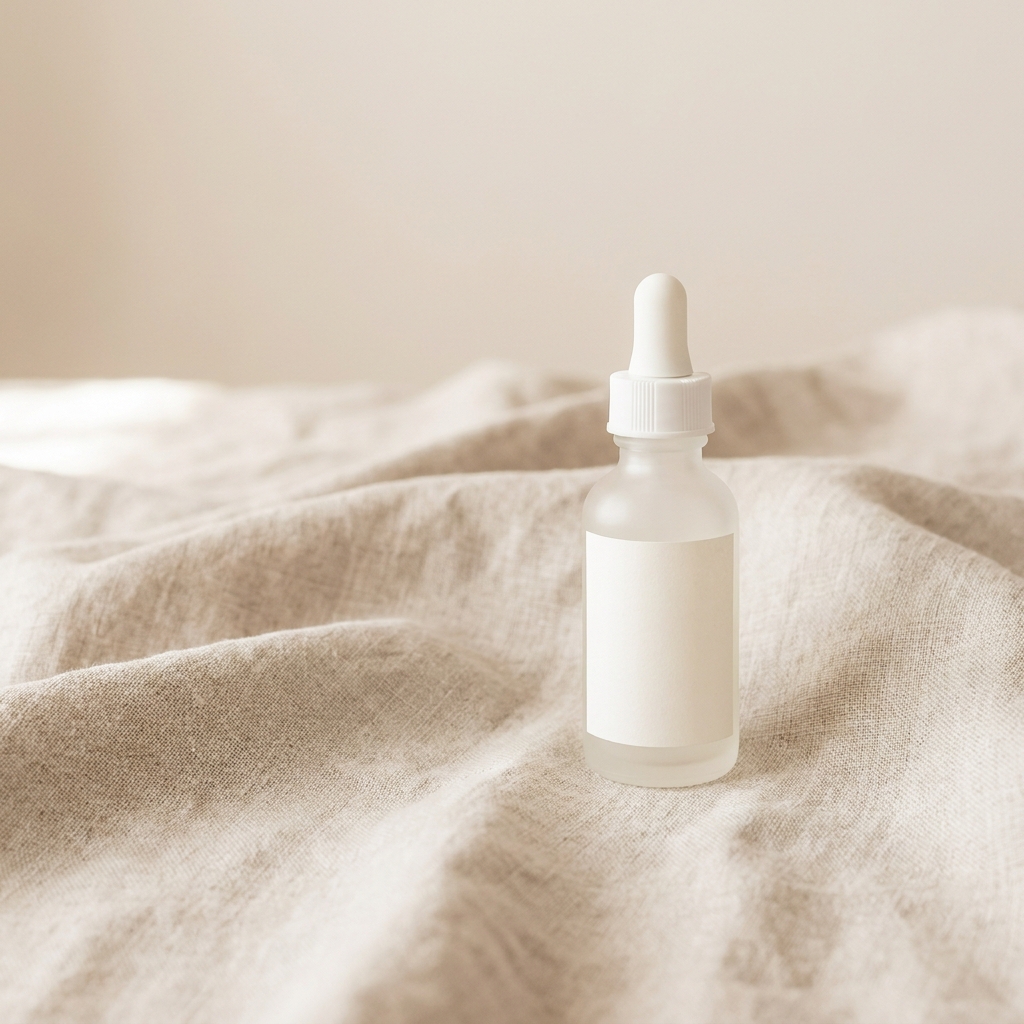
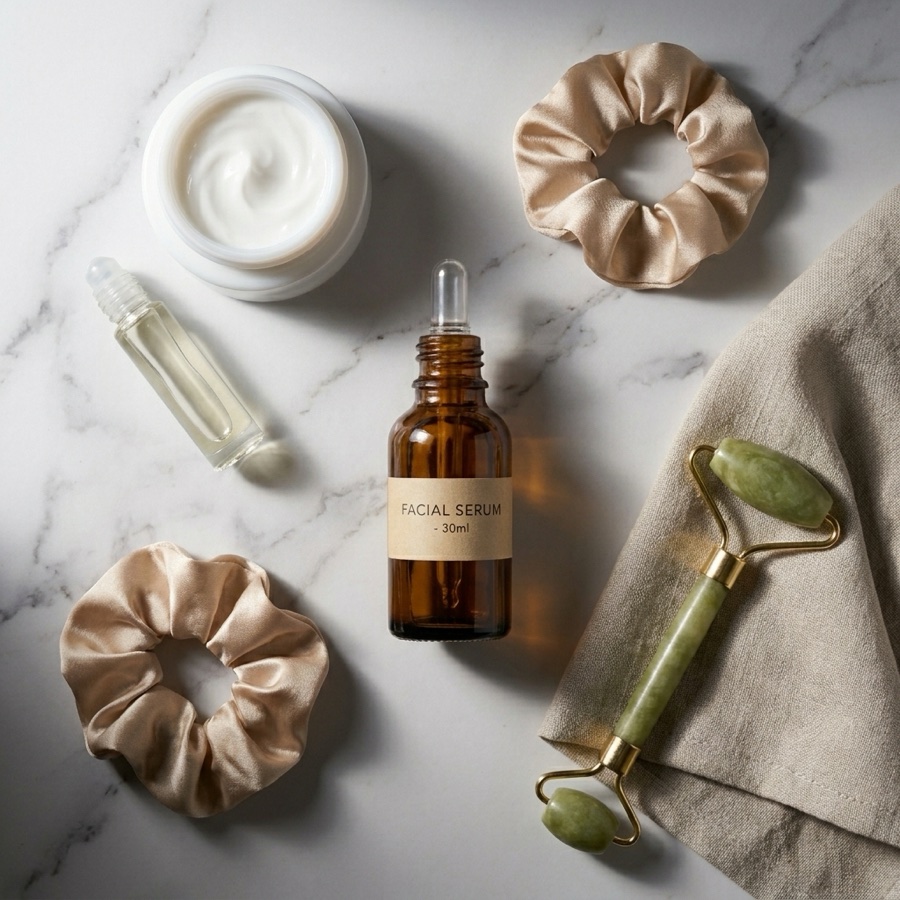
Frosted glass serum dropper bottle resting on softly rumpled oatmeal linen with gentle diagonal folds
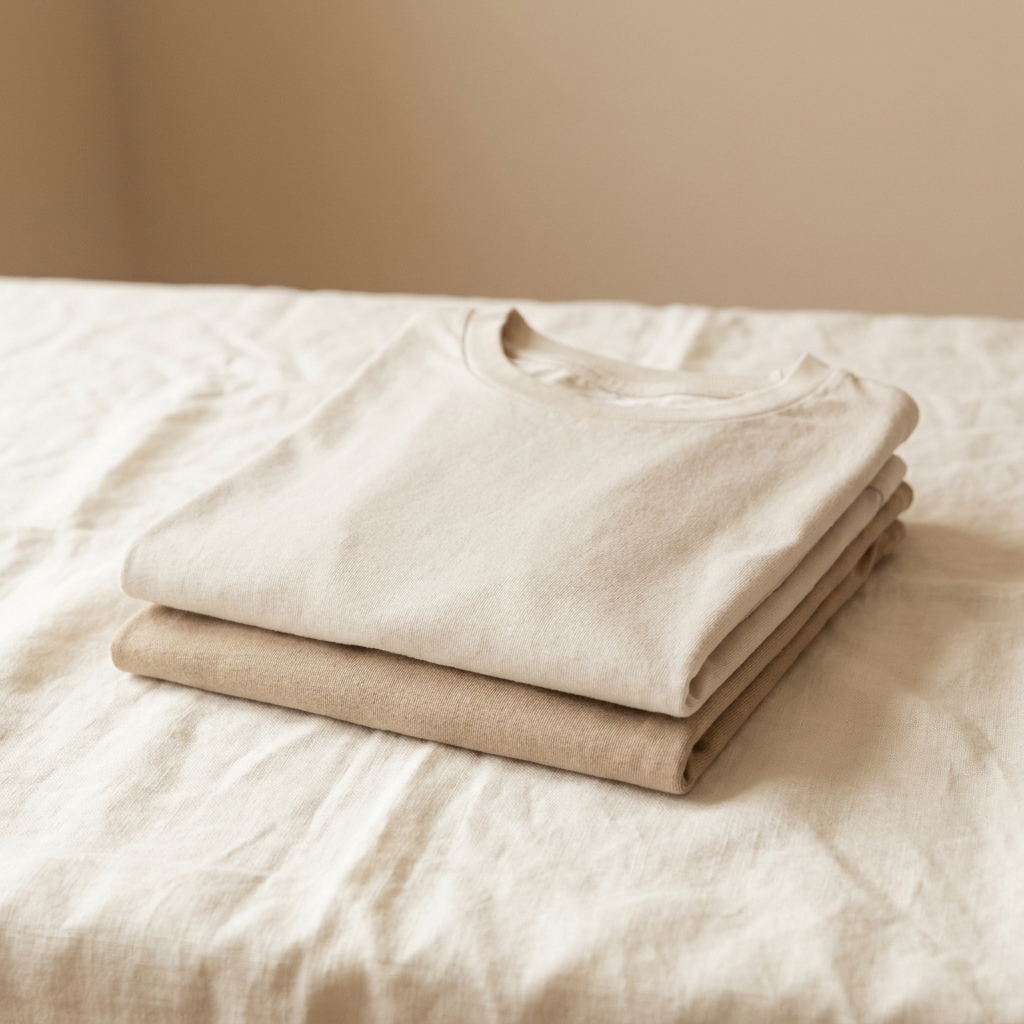
Two folded cotton t-shirts in bone and sand stacked neatly on a pale ivory linen surface
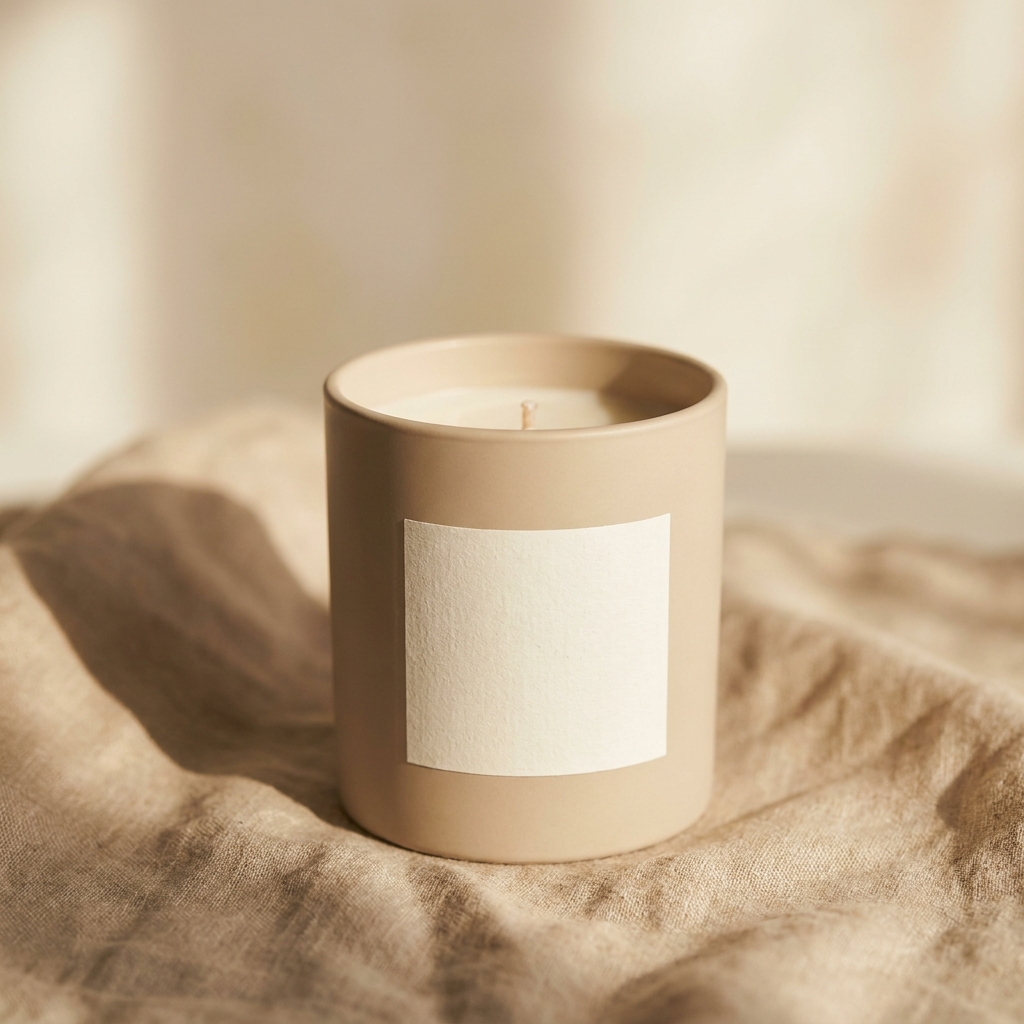
Scented candle in a matte ceramic vessel standing on crumpled natural linen cloth with the wick unlit

A linen fabric background is rumpled cloth used as the surface for product photos of skincare, candles, soap and folded clothing. Fabric absorbs light instead of bouncing it back, so shadows stay soft and contrast stays low. That one fact decides everything else on this page. Soft light flatters wax, glass and matte ceramic, and it lets a small dark product sink into a mid-tone cloth. The weave sets a second rule, because thread scale has to match product size or the cloth reads as a sack. The cloth colour sets a third, because linen reflects its own tone upward and warm oatmeal will tint the bottom of a white jar. Get those three right and the set carries a calm, handmade mood with no props at all.

Craft problems on a cloth surface

Folds, soft light, colour bounce and weave scale decide whether linen works.

Folds lead or they cut

A fold is a line, and the eye follows lines. A fold that runs toward the bottle leads a viewer in. A fold that crosses the label cuts the product in two. Worse, a fold under the base tilts the product, so a straight bottle leans and the label goes off vertical. Press the cloth flat in a patch about the size of the base. Keep the folds diagonal and in the outer third of the frame.

Soft light flattens the product

Cloth absorbs light instead of reflecting it. A hard surface reflects light back into the shadow side of a jar. Linen does not, so shadows go soft and contrast drops. The look flatters wax, glass and cream, but a matte product can read flat. Fix it with one small hard light from the side, or a white card 20 cm from the shadow side. Keep the difference between product tone and cloth tone at two steps or more.

Cloth colour tints the product

Linen reflects its own colour upward. Oatmeal cloth pushes a warm yellow onto the lower third of a white jar, so the white is no longer white. Bone and pale grey linen are safer under white packaging. Warm linen suits amber glass, brass and kraft card. Shoot or generate a version on grey cloth as a control. Set white balance near 5200K and compare the two, then correct the cast on the product only.

Weave scale and thumbnails

Linen has a repeating weave, so scale matters. A coarse, heavy weave next to a small earring makes the cloth look like a sack. A fine weave under a large candle reads as paper. Match the thread scale to the product size, then check the frame at 300 pixels wide. Fine weave can shimmer or ripple once a page shrinks the image. Hard iron creases from a folded cloth read as a mistake. Soft rumples do not.

Tools for a cloth set

Four apps that handle folds, light, colour and crops on linen.

Overhead sets on rumpled linen - Before
Before
Overhead sets on rumpled linen - After
After
Flat Lay Studio

Overhead sets on rumpled linen

Flat Lay Studio builds the overhead arrangement, so a whole range sits on one cloth. Seen from above, every fold becomes a line across the frame. Ask for folds running in one direction and a flat patch under each item. Soap bars, folded shirts and small jars stay level, and the cloth reads as one surface instead of a pile.

Open the tool

Name the cloth and the folds
Styled Scene Generator

Name the cloth and the folds

Styled Scene Generator places your product on a described surface, so describe the cloth in full. Say the colour, the weave and the fold plan: oatmeal linen, medium weave, soft diagonal folds in the outer third, flat under the base. One run costs 4 to 10 credits, so you can test bone, oatmeal and grey cloth before you commit.

Open the tool
Add direction to soft light - Before
Before
Add direction to soft light - After
After
Spotlight Relight

Add direction to soft light

Spotlight Relight changes the light on a photo you already have, so a flat linen frame gains direction. Ask for a low side light at about 20 degrees above the cloth. Raking light catches the weave, so texture appears and the product edge separates from the surface. You can also lift the shadow side of a dark jar without moving anything in the set.

Open the tool
Crops with room for text
Social Media Ad Studio

Crops with room for text

Social Media Ad Studio produces paid and organic formats, so one linen frame becomes 4:5 and 9:16. Cloth helps here because a rumpled field is calm enough to hold a headline. Keep the folds out of the text area, because a fold under a word drops the contrast. Ask for extra cloth above the product so a 9:16 crop has space at the top.

Open the tool

Each before and after above demonstrates the tool named on the card, using that app's own sample image, so the subject you see may not be from this industry. Run the same tool on your own photos to see it on your work.

The build, step by step

From one product photo to a finished linen set at 4K.

1
Remove the old background first
Upload one sharp photo of the product, then run Background Remover to get a transparent file and a clean white file. Uploading your own product photo is on Pro and above. The transparent file matters on cloth, because any pale edge left from the old surface shows against a mid-tone linen. Keep the white file too, because most stores want the first listing image on plain white with nothing else in the frame.
2
Pick the cloth colour
Hold the product against three tones: bone, oatmeal and pale grey. Pick the one that is two steps lighter or darker than the product. White packaging needs bone or grey, because oatmeal will tint it warm. Amber glass and brass suit oatmeal. Record the choice, then reuse it for the whole range.
3
Generate, then check the contact line
Run Styled Scene Generator with the colour, weave and fold plan. Then check three things. Does the base sit in the cloth with a soft shadow, or does it float? Is the label vertical, or has a fold tilted it? Does any fold cross the product? Fix a tilt by asking for a flat patch under the base.
4
Relight, upscale, then save the setup
Zoom to 100 percent and hunt for a repeat in the weave. Fabric is the surface where a model is most likely to tile the same thread pattern twice, and a repeated slub is obvious the moment a buyer pinches in. If the frame still reads flat, Spotlight Relight adds a low side light so the threads gain relief. Image upscale then holds that thread detail at 4K. Both of those tools sit on the Premium plan. Save the run in Workflows with the cloth colour written into the brief, so the next product lands on the same fabric.

Order of work

The cutout comes first because cloth is mid-tone. A white rim left from the old surface is invisible on white, and obvious on oatmeal linen. The cloth colour is chosen second, once the product sits on a transparent file. That choice depends on the product, so it cannot be a default. Folds are planned before generation, because you cannot move a fold afterwards without a new run. Relighting comes after the scene, because adding direction to soft fabric light is easy, while removing a hard shadow from cloth is not. Upscaling goes last, so you pay for 4K once.

Four files from a linen set

What each frame has to prove before you publish it.

A level hero frame

The product stands straight on cloth. Check the label against the frame edge, not against the folds, because folds are never straight. The contact shadow should touch the base and fade within about one centimetre. If the shadow starts away from the base, the product looks like it floats above the linen.

True whites next to warm cloth

A white jar has to stay white beside oatmeal linen. Sample the packaging in the shadow area and check the red, green and blue values sit within about 5 points of each other. If red runs high, the cloth has tinted the product. Correct the product, not the cloth, or the linen turns grey.

A close crop of weave and finish

One frame at 4K, cropped so the weave meets the product edge. A buyer uses this to judge two things at once: how coarse the cloth is, and whether the product surface is matte or glossy. Keep the crop sharp on the product and let the cloth soften behind it.

A quiet panel for text

One version with a calm stretch of cloth beside the product. Folds and shadows stay out of that area, so a headline and a price stay readable. Check the copy at 60 percent brightness, because a fold that looks soft on a bright screen can still break a line of text.

Model traits that matter on cloth

Cloth exposes two weaknesses that a hard surface hides. The first is tiling. A weave is a repeating pattern, and a model that repeats it too neatly leaves a printed grid where fabric should be. The second is banding, because a soft shadow across linen is one long, slow gradient with nothing in it to hide a step. FLUX gives the densest thread detail, so it is the one to try when the crop is close and the weave has to survive a zoom. Nano Banana Pro holds the product shape and the label while it rebuilds the surface around it, which matters when a fold has to pass behind a bottle. Run the same brief through both, then judge the fabric on a full-size crop rather than at page size.

Questions about linen backgrounds

Colour, folds, cost and the limits of a cloth surface.

What colour linen works best for white packaging?
Bone or pale grey linen, not oatmeal and not bright white. Oatmeal reflects a warm yellow onto the lower part of a white jar, so the packaging no longer reads as white. Bright white cloth removes the edge between product and surface, so the shape disappears. Pale grey keeps a tone difference of about two steps, which is enough to hold the outline without adding colour.
Should the linen be ironed flat or rumpled?
Both, in different parts of the frame. Keep a flat patch under the product, about the size of its base, so it stands level. Let the cloth rumple in the outer third, where folds add depth without touching the product. Avoid hard iron creases from a folded cloth. A straight crease line reads as laundry, while a soft rumple reads as a set.
Why do my products look flat on fabric?
Because cloth absorbs light instead of reflecting it back. A hard surface returns light into the shadow side of the product, which holds the contrast. Linen does not return much, so the shadow side goes soft and the edges lose definition. Add one small hard light from the side, or place a white card near the shadow side. You can also do this after the shot with Spotlight Relight.
Is there a visible difference between linen and cotton in a photo?
Yes, and a buyer reads it even without naming it. Linen has slubs, which are thicker threads that show as small bumps across the weave. It creases sharply and a fold holds a hard edge. Cotton is even, softer in the fold and has no slubs. Name the cloth you want in the brief, because a vague word like fabric returns a generic surface that belongs to neither. Heavy linen suits large items such as candles and folded shirts. Fine cotton suits small ones such as a ring or a sample tube.
Which products suit a linen background?
Skincare, candles, soap, tea, ceramics, jewellery and folded clothing. These share soft or matte surfaces, and low contrast light flatters them. Linen also works for anything sold as natural, calm or handmade, because cloth carries that meaning on its own. It works less well for small dark electronics and for shiny metal, because the surface gives them nothing to reflect.
How much does a linen set cost in credits?
Count four runs: bone, oatmeal, grey, then the winner. A run costs 4 to 10 credits and a credit is about one cent, so the colour test is the cheap part of the job. Real cloth is the expensive part. Three fabric colours means three lengths bought, each one washed to soften the finish and pressed again after every fold. Cloth also creases in the drawer, so the fourth shoot never quite matches the first. Save the winning brief in Workflows and every later product lands on the same weave.

All twelve backgrounds

The hub lists all twelve product photo backgrounds side by side, so you can compare cloth against stone, wood and plain white.

See all backgrounds

Build your first linen set

The free plan comes with 112 credits, enough to generate linen sets and see how cloth treats a product like yours. Free frames carry a watermark and cannot be used to sell. Any paid plan drops the watermark. Pro is where your own bottle goes on the cloth.

Start free